

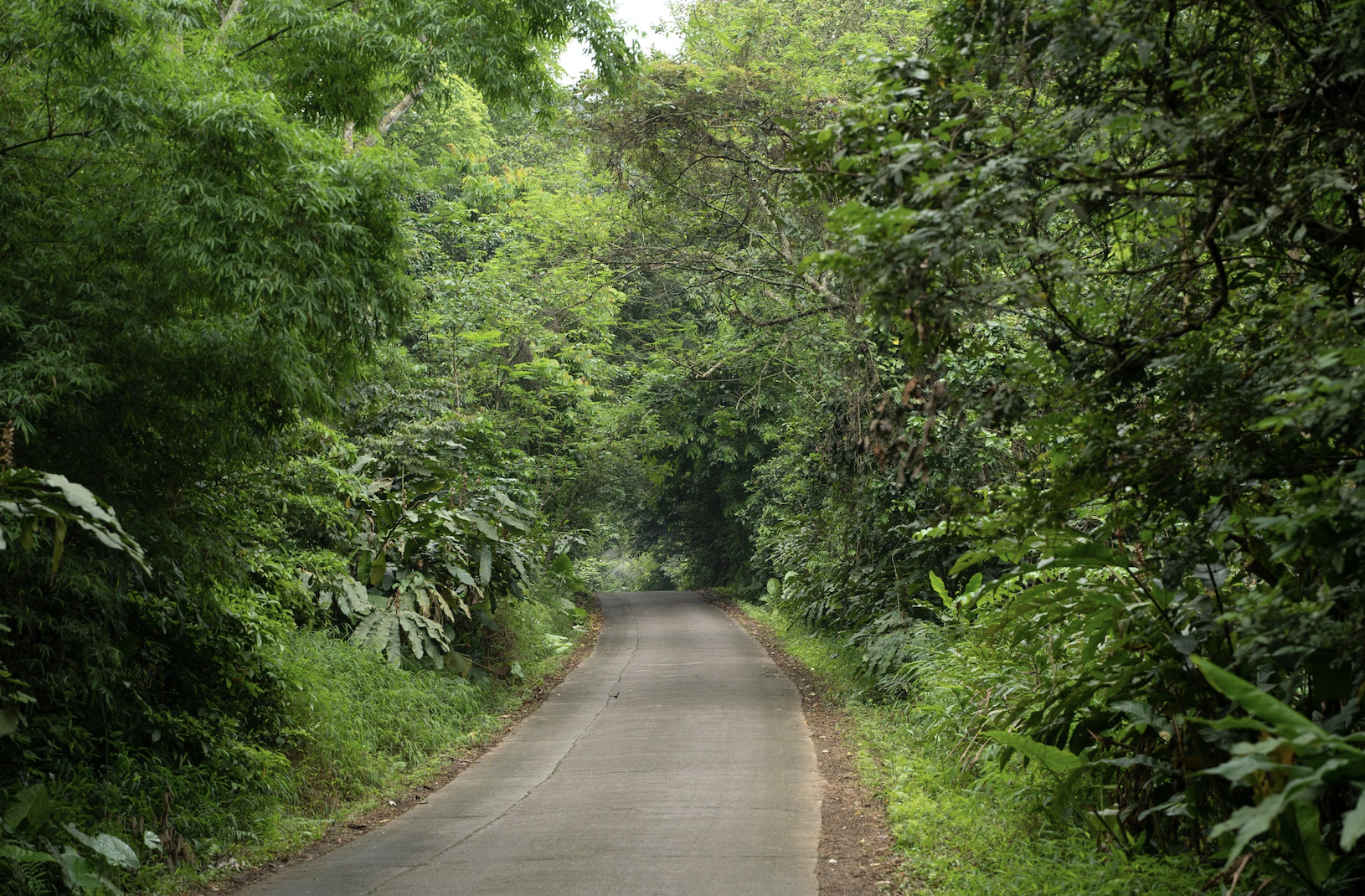
Forestry is the only sector in our country with net negative emissions, resulting in a surplus of 40 million tons of CO2 each year. This is one of the "gold mines" in the forests, so instead of fearing selling "prematurely," a carbon credit mechanism should be introduced soon to facilitate transactions and transfers.
Ranked 5th in the world for carbon credit prospects.
At the seminar "Developing a Green Economy in Agriculture: Viewed from Forest Carbon Credits and EUDR Implementation," held on November 21st, Mr. Tran Hieu Minh from the Forestry Department (Ministry of Agriculture and Rural Development) stated that before 2010, the forestry sector was still emitting carbon. However, from 2010 to the present, the reduction in emissions has been very impressive, approximately 40 million tons of CO2 per year.
In that effort, the potential of carbon credits is fundamental to Vietnam's participation in forest carbon services and has led to the signing of a carbon payment agreement with the World Bank.
According to Mr. Vu Tan Phuong, Director of the Sustainable Forest Management Certification Office at the Vietnam Forestry Science Institute , the forestry sector emits 30 million tons of carbon (CO2) annually. If we consider the amount absorbed, we are actually emitting a negative 40 million tons of CO2.
If we can increase carbon absorption from forests each year, we can improve the productivity and quality of degraded and planted forests, thereby generating 60-70 million tons of CO2 credits per year.
From Baku, Azerbaijan, Mr. Nguyen Dinh Tho, Director of the Institute of Strategy and Policy for Natural Resources and Environment, shared: "I am attending the COP29 conference. The focus of this conference is to mobilize global finance to support countries in adapting to and reducing greenhouse gas emissions."
Vietnam has achieved considerable success in mobilizing financing for emission reduction, particularly in the agricultural sector.
"After nearly 10 years of preparation, we successfully sold our first carbon credit, generating $51.5 million," he recalled the carbon credit transfer at the end of 2023 and said that Vietnam is among the top 5 most promising countries in terms of carbon credits and is continuing to prepare for larger projects.
Regarding the development of the carbon credit market in Vietnam, Mr. Tho believes it is lagging behind due to major bottlenecks in policy regulations and a lack of a clear legal framework. Meanwhile, many countries like Thailand and Singapore already have established carbon credit trading markets with significant and formal investment.
He cited the example of the 2017 Forestry Law, which regulates planted forests and natural forests but fails to clarify mechanisms related to carbon credits. Investors wishing to participate need to understand the benefit-sharing mechanism, but this is currently not specifically regulated, making it difficult to attract investment in natural forest projects.
With plantations that are not harvested, Vietnam has a great opportunity to create double benefits from carbon credits. In fact, 1 hectare of plantation forest from a large timber project has generated an additional 120,000 tons of CO2 over 10 years.
Our country currently has 2 hectares of planted forests for large timber. Therefore, if the benefit-sharing mechanism is not clearly defined, we will find it difficult to achieve the desired results.
The longer you hold carbon credits, the lower their value becomes.
According to Mr. Nguyen Dinh Tho, for the carbon credit market to operate effectively and expand internationally, a clear recognition process is needed. For now, developing a domestic carbon credit market remains the more feasible approach. Businesses can invest in technology to both reduce emissions and generate additional financial resources, promoting sustainable agriculture and green development.
The Director of the Institute for Strategy and Policy on Natural Resources and Environment emphasized that Vietnam has experience from two national forestry development programs and possesses sufficient capacity and personnel to continue implementation. Monitoring the carbon credit market requires strict state management to avoid duplicate transactions.
Regarding the new carbon credit agreements, Mr. Tran Hieu Minh stated that 100% of the credits will contribute to the national target. For the period 2021-2025, Vietnam aims to generate 25 million tons of carbon credits.
"However, if we don't seize this opportunity in time, we could miss a crucial chance. Because the longer carbon credits are held, the more their value decreases, affecting the price when traded," he said. Notably, both international and domestic partners are currently expressing interest in transferring carbon credits.
Regarding concerns about the recent transfer of carbon credits, which has led to fears of selling "prematurely" at excessively low prices, Mr. Ha Cong Tuan, former Deputy Minister of Agriculture and Rural Development and Chairman of the Association of Agricultural and Rural Development Economic Sciences, stated that the price of carbon credits in the South Central and Central Highlands regions ranges from 5-10 USD/ton. More importantly, approximately 95% of the credit value is retained to reduce national emissions, while also directly benefiting the people through income generated from this transaction.
Furthermore, the implementation of carbon credits also contributes to enhancing the country's standing on the international stage. Therefore, he suggested that ministries and agencies should coordinate to submit a proposal to the Government for early decision-making on the implementation of a voluntary carbon credit mechanism, especially in the South Central and Central Highlands regions.
According to him, forest management, protection, and development are considered a crucial task, contributing to the successful fulfillment of Vietnam's commitments to the international community, aiming for Net Zero by 2050.
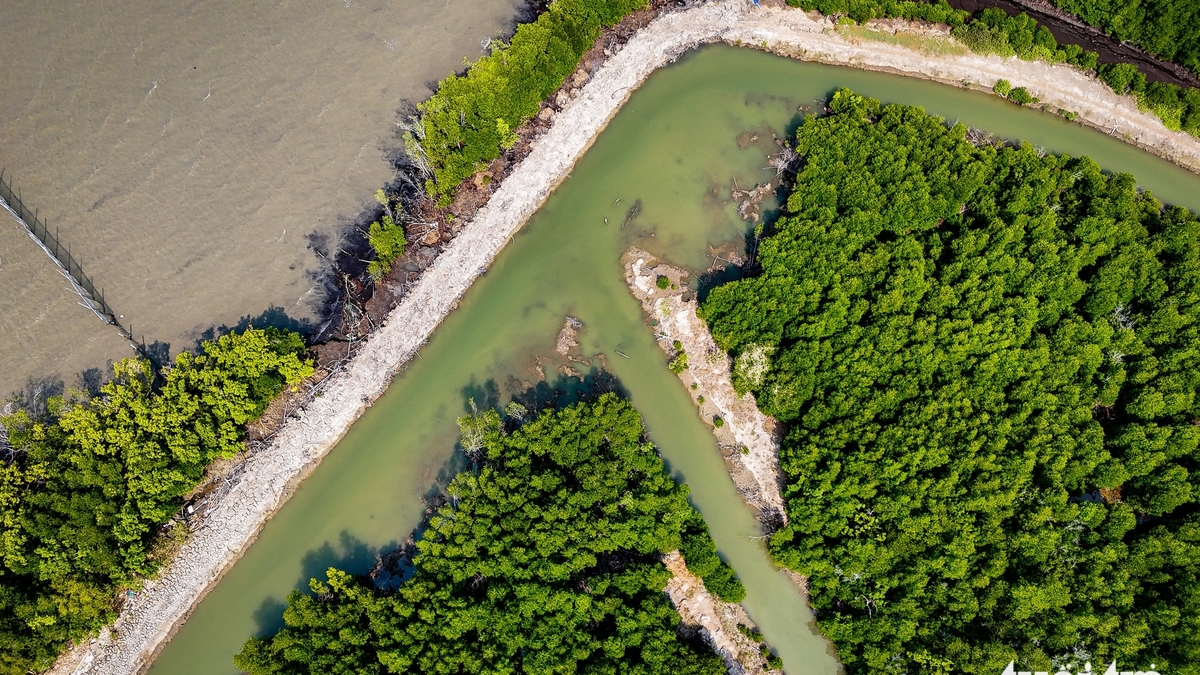
Vietnam's forests are not only places for preserving biodiversity but also hold a "gold mine" deep within their foliage – a source of carbon that forest trees absorb. Mr. Tuan emphasized that this is a sustainable source of funding for forest management, protection, and development.

Source: https://vietnamnet.vn/co-kho-vang-40-trieu-tan-dung-so-ban-lua-non-2344204.html
![[Image] National Assembly discusses the implementation of the socio-economic development plan.](https://vphoto.vietnam.vn/thumb/1200x675/vietnam/resource/IMAGE/2026/04/20/1776696707422_ndo_br_img-20260420-185419-jpg.webp)

![[Photo] General Secretary and President To Lam meets with National Assembly delegates from ethnic minorities.](https://vphoto.vietnam.vn/thumb/1200x675/vietnam/resource/IMAGE/2026/04/20/1776696701056_a1-bnd-8331-3342-jpg.webp)
















































































Comment (0)