

Prime Minister Narendra Modi is confident that India will become the world's third-largest economy within the next five years, within his third term.
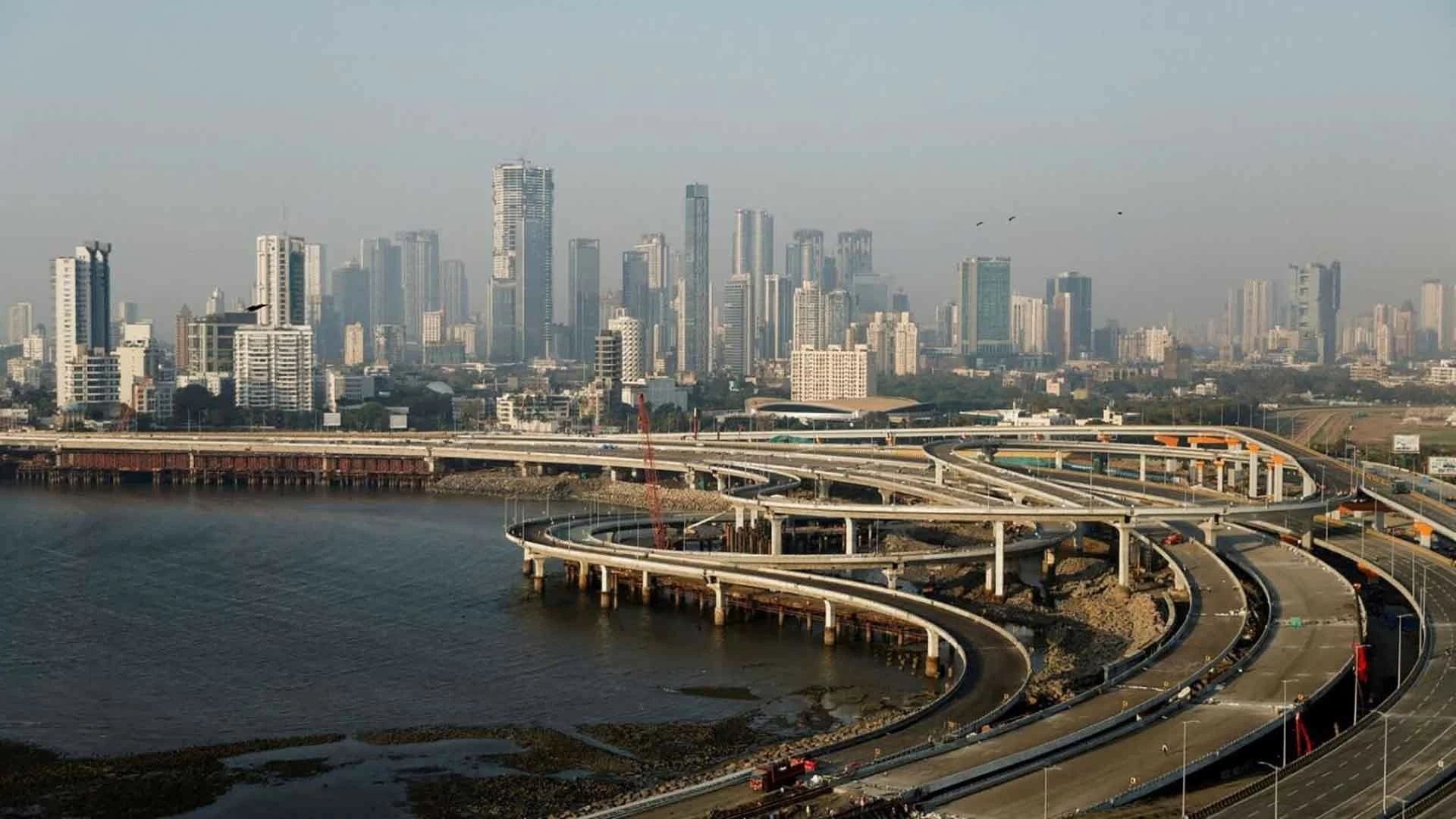 |
| India added nearly 55,000 km to its national highway network across the country, a 60% increase in overall length, between 2014 and 2023. (Source: Reuters) |
Prime Minister Narendra Modi has made history in India, becoming the first leader to hold three consecutive terms since the first Prime Minister, Jawaharlal Nehru. Under his leadership, India – the world's most populous country – has achieved a new level of prominence on the international stage, undertaking large-scale infrastructure reforms to meet the needs of its 1.4 billion people.
The aspiration of "Viksit Bharat" in 2047
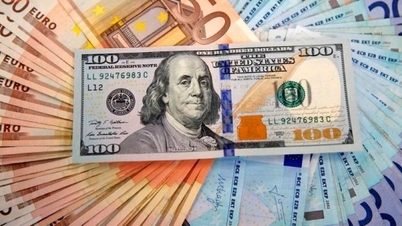
India is currently the world's fifth-largest economy with a GDP of approximately $3.7 trillion, and is emerging as the world's fastest-growing economy in 2022 and 2023, projected to maintain this growth in 2024. In 2023, India achieved an impressive growth rate of 7.6%, while global growth was only 2.6%. Determined to maintain its goal of rapid and stable development, Prime Minister Modi aspires to transform the country into a developed nation by 2047.
“The world of the 21st century is looking to Bharat (Prime Minister Modi uses Bharat as the official name of India instead of India) with much hope. We need to change traditional thinking about reform. Bharat cannot limit reform to the economy alone, but must advance in all aspects of social life in the direction of innovation. These reforms must be in line with the aspiration for a “Viksit Bharat” (developed India) by 2047,” Prime Minister Modi urged.
At the event celebrating his victory in his third term (June 2024), Prime Minister Modi did not forget to reiterate his campaign promise to make India the world's third-largest economy, up from its current fifth position, and to continue successfully implementing his agenda.
According to estimates by the Indian Ministry of Finance at the end of January 2024, the economy of this South Asian nation is predicted to boom in the coming years, becoming the world's third-largest economy by 2028, with a GDP of $5 trillion, surpassing Germany and Japan.
In May 2024, the International Monetary Fund (IMF) raised its forecast for India's economic growth in the 2024-2025 fiscal year from 6.5% (issued in January) to 6.8%, primarily driven by public investment. The IMF report also emphasized, "India is a source of continued positive growth surprises, supported by strong and stable domestic demand."
In fact, to transform India into a new growth pole, the country has focused on attracting FDI, boosting domestic production, from machinery and production lines to infrastructure, while increasing spending on building roads, ports, and airports.
According to plans, in 2024 and beyond, India will focus on developing its logistics infrastructure, further approaching its goal of becoming the world's next major manufacturing hub. The government is preparing favorable conditions to attract global companies to establish massive research, innovation, and manufacturing centers in India. In fact, many of the world's leading technology companies, such as Amazon and Microsoft, are pouring billions of dollars into Bangalore, the "Silicon Valley," while other giant corporations like Verizon, Nokia, and Cisco are doubling their investments in this emerging economic powerhouse.
Furthermore, micro, small, and medium-sized enterprises (MSMEs) continue to be the backbone of the Indian economy, accounting for 95% of businesses, generating 30% of GDP, representing more than half of export value, and employing 110 million people directly.
The country's rapidly developing domestic consumer market, along with its strong industrial sectors, is a long-term factor attracting global investment. This demonstrates that India's focus on industrial development is a sustainable solution.
Solving the "brain-teasing puzzle"
On July 30, in his opening remarks at the 2024-2025 Federal Budget Conference: “The Journey Towards Viksit Bharat,” Prime Minister Narendra Modi proudly affirmed that India is steadily progressing on its path to becoming the world’s third-largest economy.
“India is growing rapidly, and the day when the country becomes the world’s third-largest economy, up from its current fifth position, is not far off. Our government does not lack political will and will make every decision with the motto ‘national interest first’,” Prime Minister Modi stated.
Proud of its achievements in recent years, with high growth and low inflation, India has become a beacon of stable growth in a world facing high inflation, low growth, and a host of geopolitical challenges. Prime Minister Modi believes, “The whole world is watching India, investors worldwide are eager to come here. World leaders have a very positive view of India. This is an opportunity for Indian industry to develop, and we need to rise strongly to seize this ‘golden opportunity’ and contribute to the Viksit Bharat 2047 goal!”, Prime Minister Modi urged.
In fact, observers believe that Prime Minister Modi is entering his third term facing numerous "headwinds," and that the challenges he needs to address are just as numerous as the achievements he has already made.
Despite impressive economic growth, much of the country's increasing wealth is unevenly distributed. While India benefits from a large and high-quality young workforce (40% of the population is under 25, many are tech-savvy and fluent in English), the wealthiest have benefited the most, while the majority of the population faces soaring prices, rising unemployment, and widening income inequality.
With its strategic location in Asia and a booming economy, Prime Minister Modi's government's successes are expected to extend far beyond its borders, attracting the attention of leading global investors. The US has long viewed New Delhi as a crucial bulwark in the region to counterbalance an increasingly assertive China. But India is also a close partner of Russia, despite Western sanctions...
Analysts believe that, under Prime Minister Narendra Modi's leadership, India is poised to become a 21st-century economic powerhouse, but balancing domestic interests and navigating the complex web of relations with major powers for national benefit remains a crucial challenge in the leader's new term.
Source: https://baoquocte.vn/an-do-cuong-quoc-kinh-te-the-ky-xxi-280923.html




![[Photo] General Secretary and President To Lam and the President of the Philippines hold talks.](https://vphoto.vietnam.vn/thumb/1200x675/vietnam/resource/IMAGE/2026/06/01/1780283481955_vna-potal-tong-bi-thu-chu-tich-nuoc-to-lam-va-tong-thong-philippines-hoi-dam-8797519-1429-jpg.webp)


















![[Photo] The General Secretary, President and his wife begin their state visit to the Philippines.](https://vphoto.vietnam.vn/thumb/1200x675/vietnam/resource/IMAGE/2026/05/31/1780230559452_anh-man-hinh-2026-05-31-luc-19-28-11.png)

![[Image] Hanoi Police officially crowned champions of V-League 2025/2026](https://vphoto.vietnam.vn/thumb/1200x675/vietnam/resource/IMAGE/2026/05/31/1780244769054_ndo_br_039d561b692be875b13a-jpg.webp)






























































Comment (0)