

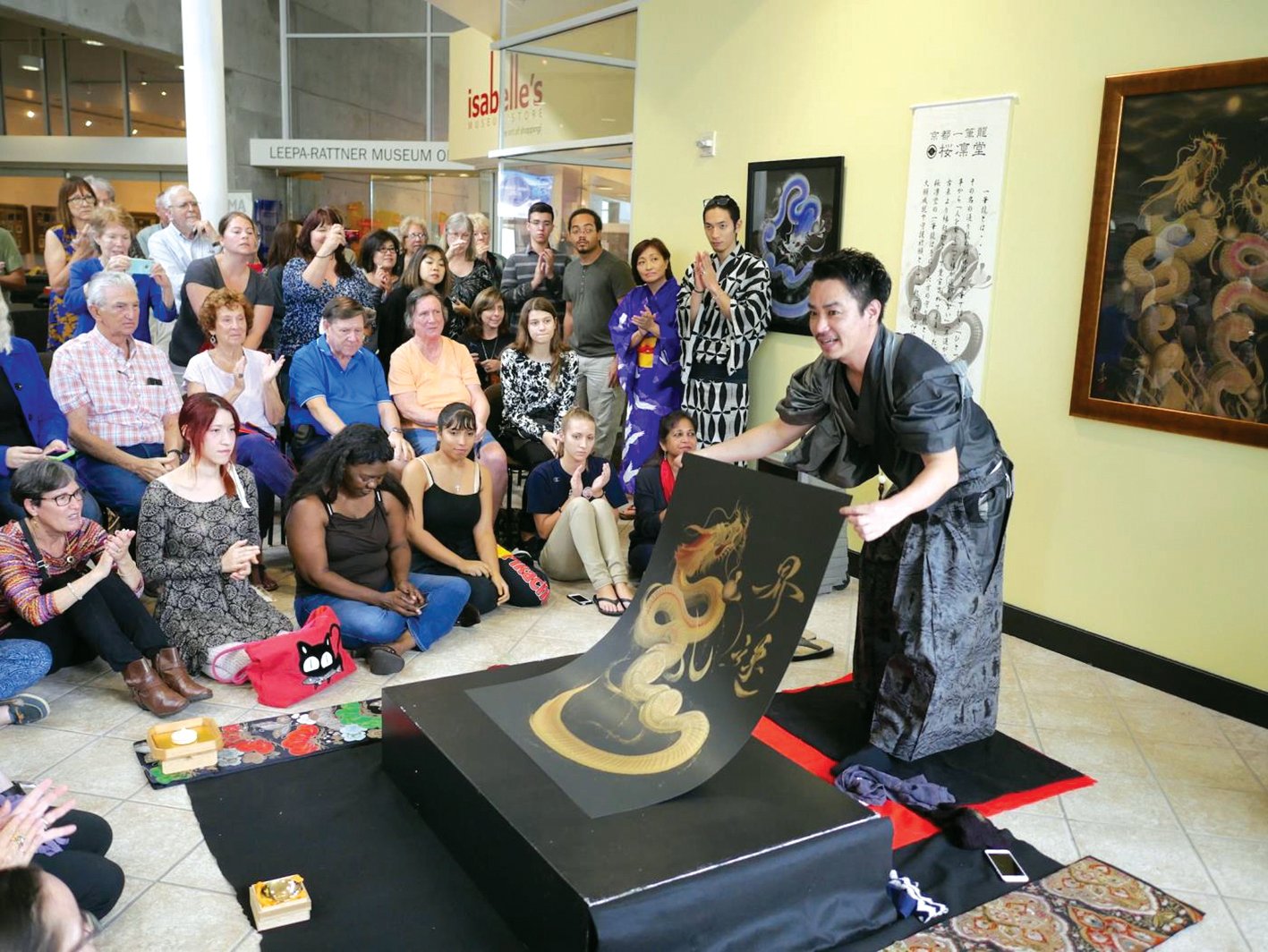
Artist Keisuke Teshima at the exhibition hall.
For centuries, Japanese culture has regarded dragons as symbols of good fortune – representing good health, prosperity, and protection against evil. Historically, dragons have also been revered for their mythical powers.
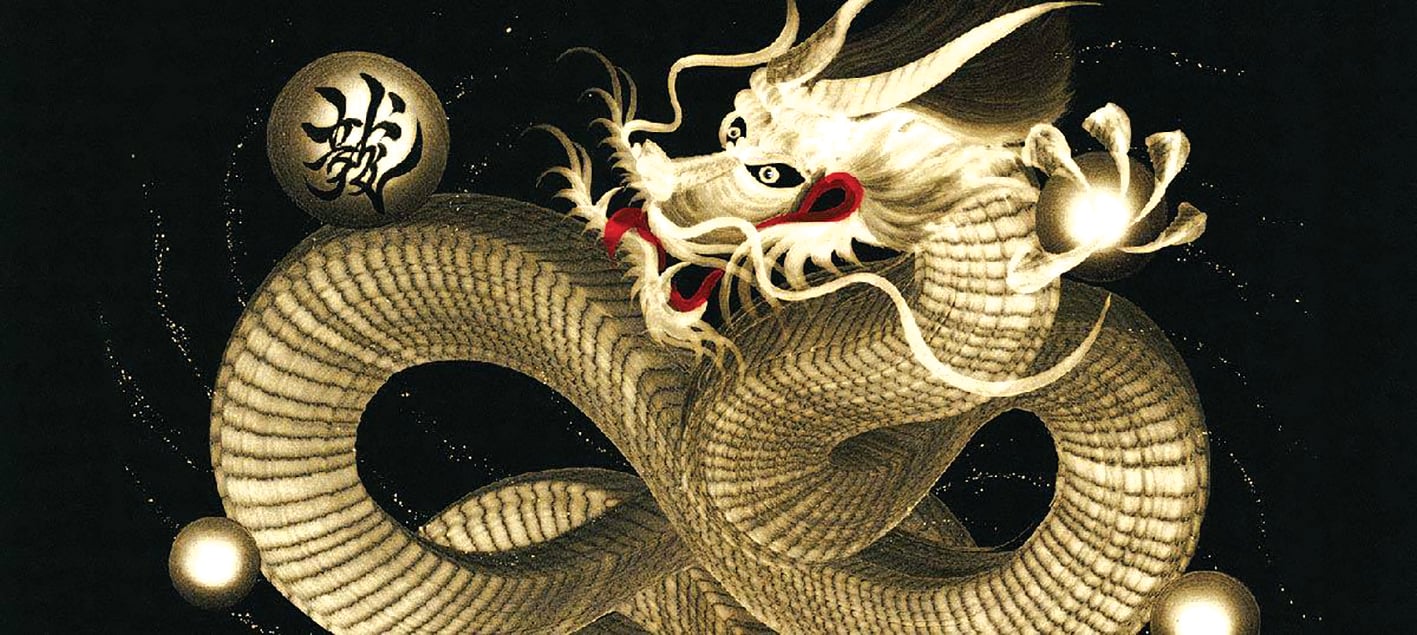
A blank canvas with a single line, looking upwards.
Therefore, in a special form of traditional Japanese ink painting (sumi-e), the art of "One-stroke dragon" has long been created. With this art form, the artist creates the image of a dragon with just one stroke, seemingly simple but actually very elaborate. Many Japanese people at the time believed that a one-stroke dragon symbolized lasting relationships.
This art form emerged in the early 1600s, during Japan's Edo period. Edo culture in Japanese history corresponds to the Tokugawa era (1603-1867). Tokugawa Ieyasu, the first Tokugawa Shogun, chose Edo (modern-day Tokyo) as Japan's new capital. Edo became one of the largest cities of the time and a center of thriving urban culture.
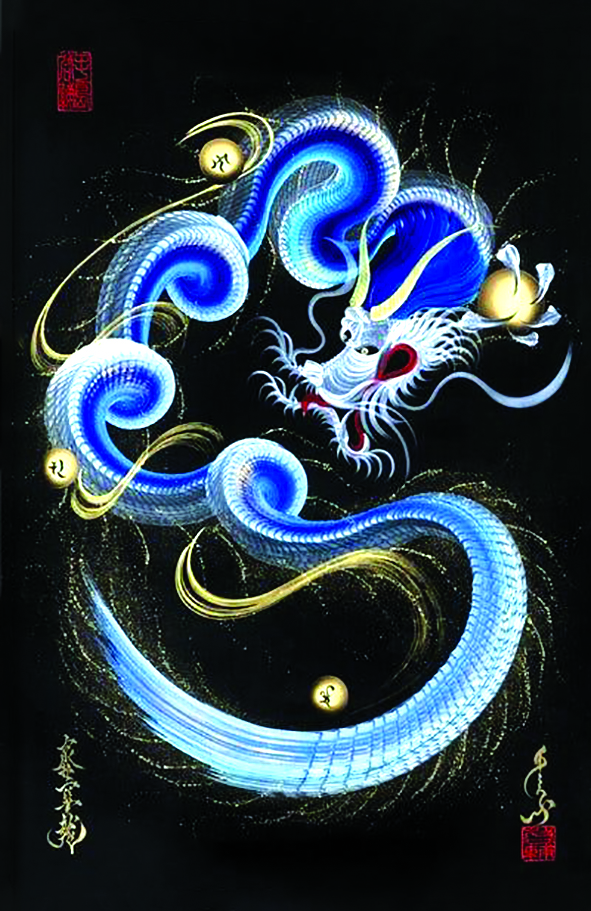
Dragon painting, a single stroke, symbolizes protection.
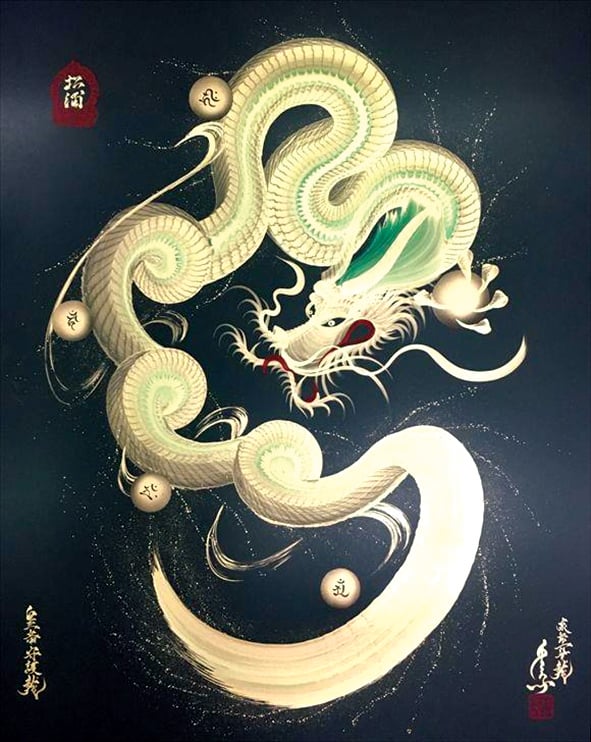
Dragon painting with a single stroke, looking downwards.
During the Edo period, many artists mastered the art of one-stroke dragon painting, and this type of painting can be found in temples and shrines throughout Japan. Traditional Japanese ink painting uses wash brushes and ink, similar to calligraphy. The focus of this art form is the beauty of the brushstroke. Today, only a few "One-stroke dragon" artists in Japan are considered masters. Keisuke Teshima, born in 1975 in Fukuoka, is one of them.
Fascinated by dragon imagery since childhood, Keisuke was immediately captivated when he encountered the technique of one-stroke dragon painting. In his youth, Keisuke honed his skills in traditional Buddhist art before becoming a craftsman restoring Buddhist temples and altars in Japan.
While restoring temples and altars, Keisuke came across the "One Stroke Dragon" style and was immediately captivated, prompting him to research its history and teach the technique himself. To paint a one-stroke dragon, he begins with small strokes. Then, he paints the dragon's scales with just one stroke, moving his hand with incredible precision and patience…
In Keisuke's "One Stroke Dragon," the dragon is depicted facing upwards, symbolizing pride and ambition. Meanwhile, the dragon facing downwards represents prayer, acting as a protector.
The tradition and spirit of the "One Stroke Dragon" style are expressed through contemporary ideals in each of Keisuke's paintings. All of his one-stroke dragon paintings emphasize light and rainwater – symbolizing the belief that dragons, through the power of light, have the strength to bring water for a bountiful harvest.
The majestic dragon motif, depicted through a single stroke in the "One Stroke Dragon" art form, is believed to bring good fortune and wealth to those who possess the painting. Typically, customers order custom dragons, and the artist then adds personalized figures called "bonji." Each bonji symbolizes the blessings and virtues of a Buddha or Bodhisattva, or represents a specific deity relevant to the customer's needs.
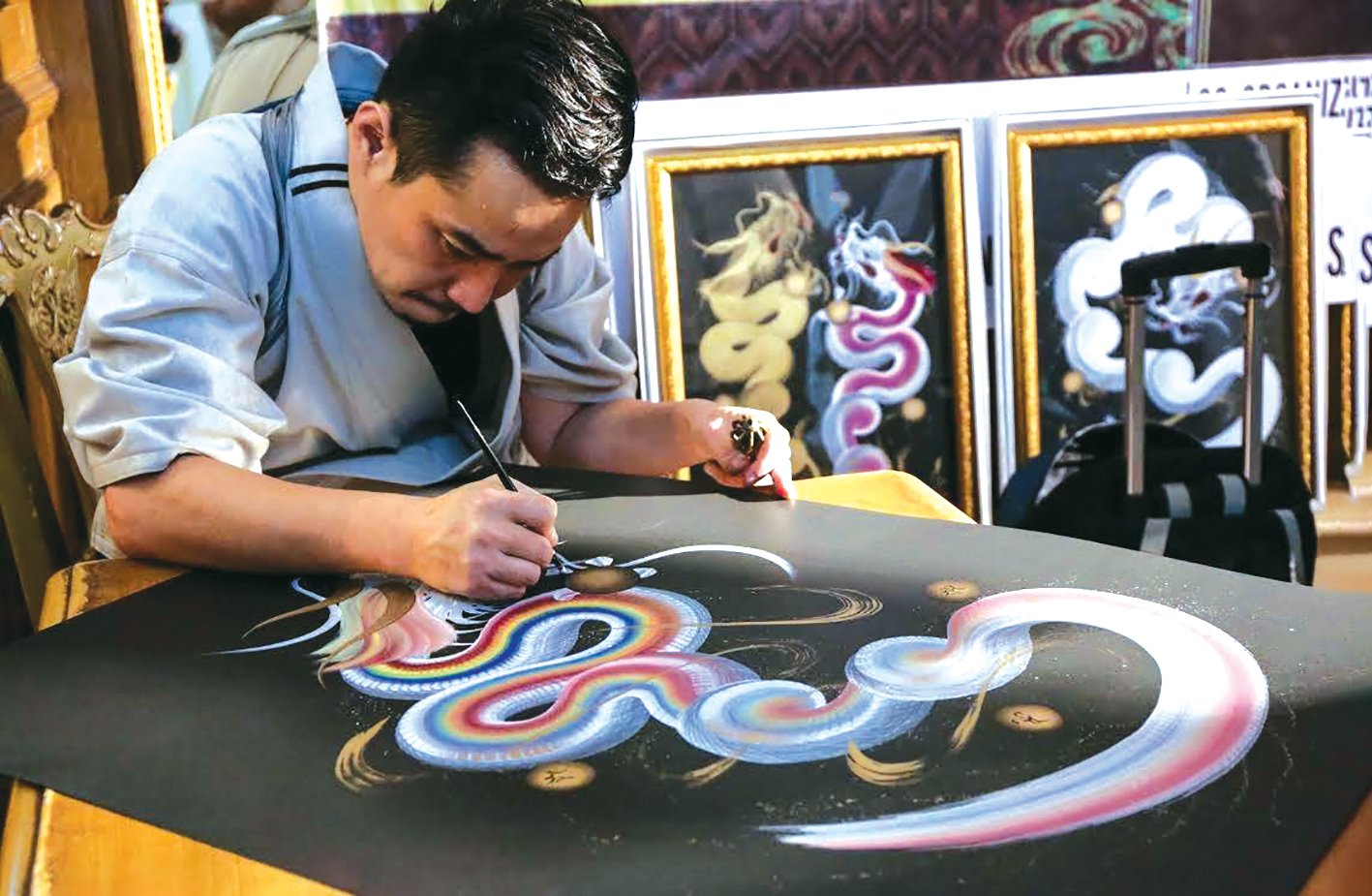
Artist Keisuke Teshima in his studio in Kyoto
Keisuke Teshima is one of only four artists in the world today who are proficient in the "One Stroke Dragon" technique. He began researching this style of one-stroke dragon painting in 2011, and in 2014, he held his first solo exhibition in Ginza, Tokyo, as a "One Stroke Dragon" artist.
After holding his solo exhibition, Keisuke went to the United States. He shared this traditional art form and showcased his talent through exhibitions and performances at 13 locations across the country.
Currently, Keisuke lives in Kyoto, Japan, where he has his own studio and gallery. As one of the few remaining masters of single-stroke dragon painting in Japan, Keisuke has restored over 200 works of art from Buddhist temples. His masterpieces of dragons have attracted the attention of fans worldwide.
Source: https://nld.com.vn/dac-sac-tranh-rong-1-net-196240216095104369.htm









































































Comment (0)