

Phu Tho is a land where many ethnic groups live together, each with its own traditional dishes prepared in their own unique style; this creates a rich, diverse, and attractive culinary landscape in the ancestral land.

Today, in addition to sightseeing, experiencing, or enjoying recreational activities, tourists can also savor the unique local dishes of the places they visit. These dishes are deeply rooted in regional traditions and prepared according to ancient recipes. Hung Lo Ancient Village – a land over 300 years old, located on the banks of the Lo River, about 5km as the crow flies from Hung Temple – has preserved almost intact the architecture of its ancient communal house, a national historical relic recognized since 1990. Legend says that this was originally where King Hung, his princess, and his courtiers stopped to rest during a journey. The King found the place fertile, with lush trees and a sacred energy emanating from the earth, so he considered it a sacred place. On this land, the villagers built a shrine to King Hung to forever honor his merits. During the reign of King Le Hy Tong, the communal house was built, facing Nghia Linh Mountain.
The people here have a long tradition of hospitality. This hospitality is demonstrated by the hosts through traditional dishes from the region along the Lo River, most notably the rustic dish "Lo River Carp Salad." Anyone who has tasted this dish once in their life will surely be impressed by its rich, crispy, and sweet flavor, so characteristic of the countryside.
The ingredients for this dish are very simple, but the preparation process is extremely elaborate and complex. The first step is selecting the fish; the fish used for the salad must be carp from the Lo River, because when living in their natural, vast environment, this type of fish always has fragrant and firm flesh. The average weight of each fish should be between 1.5 and under 3 kg, because larger fish have hard bones and tough flesh, while smaller fish have mushy, soft flesh that is difficult to prepare.
First, the fish is washed, the gills and fins are removed, and the scales are cleaned off. Do not rinse with plain water. Then, fillet the fish, separating the flesh from the sides. Using a sharp knife, carefully separate the flesh from the bones and place it in a bowl of salt and vinegar water for about 10 minutes to remove the fishy smell. The white, slightly pinkish pieces of flesh are then patted dry with a clean cloth and wrapped in thin paper to further dry. Once the fish is dry, slice it into appropriately sized pieces, mix well with pure fresh ginger juice and finely chopped fresh galangal, add a little lime leaves and white salt, and then mix thoroughly with finely ground roasted rice flour.
The next step is to make the sauce, which will accompany the fish. The main ingredient for this dish is snakehead fish. The fish meat is filleted and chopped into small pieces. The bones of the snakehead fish and carp, after being filleted, are pounded in a mortar, strained to remove any residue, and then simmered in an earthenware pot with the snakehead fish meat until thickened.
The water used for simmering is a mixture of tap water from a stone well, molasses, a little sour fermented rice, and a little white salt in the right proportions. A wood-fired stove is used for simmering over low heat, and care must be taken to prevent the pot from burning. This is the core element that brings out the unique and exquisite qualities of Hung Lo fish salad. The final step in the process is preparing the herbs.
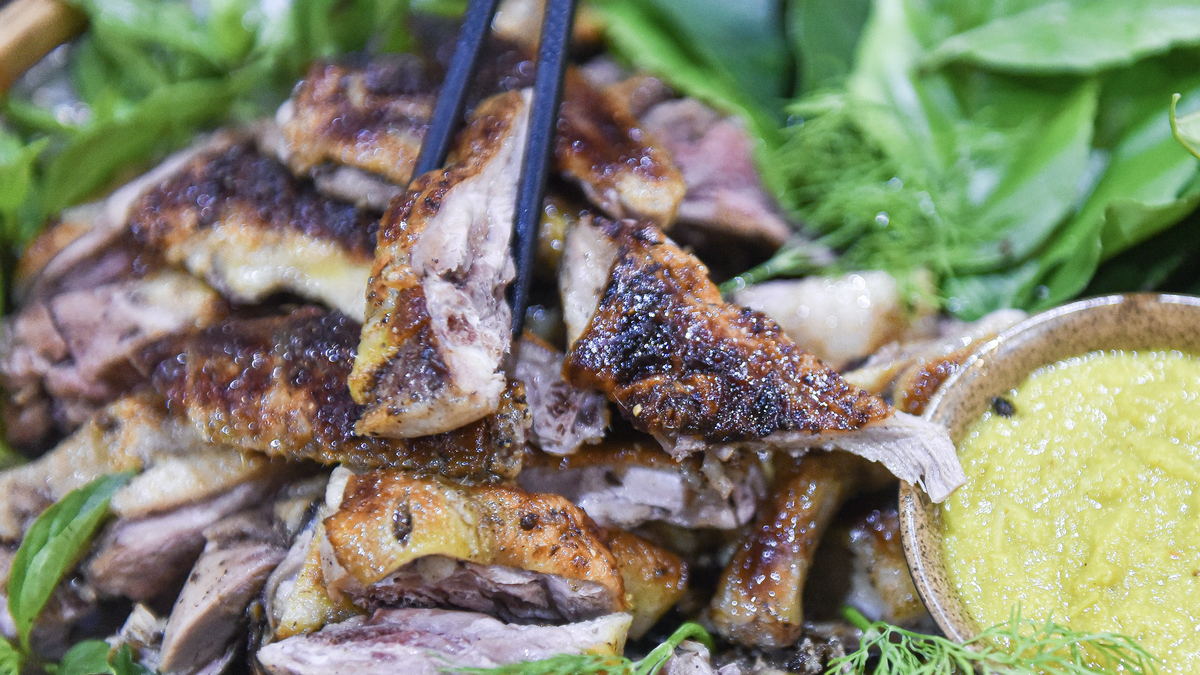
In the village, every family's garden always has a variety of fruit trees, especially herbs and vegetables to accompany the fish. These herbs are not only edible but also traditional medicine, used to treat some common intestinal ailments according to folk experience. There are many types of herbs, including: *Lactuca indica* leaves, *Morus alba* leaves, *Chrysanthemum indicum*, guava buds, *Centella asiatica*, coriander, *Polygonum multiflorum*, betel leaves, fig leaves and fruit, banana blossoms, green bananas, onions, mint… with a full range of spicy, sour, astringent, sweet, and savory flavors, all harvested from the home garden. When all the preparations are complete, the fish is arranged on a plate, the sauce is poured into a bowl, and the herbs are placed next to it. The meal is further enhanced with a bowl of lime and chili dipping sauce or soy sauce, a plate of white salt, thinly sliced onions… depending on the diner's taste.
When eating, you can wrap the fish salad in fresh herbs or use rice paper wrappers. The wrapping method is similar to making bánh Ót (or bánh tò te). Adjust the amount of vegetables and fish according to your taste, wrapping each piece individually. After wrapping, spoon the sauce over the top, fold it, and put it in your mouth. All the flavors blend together, creating an indescribable sensation that stimulates every taste bud.
First, there's the nutty, fragrant, slightly bitter taste of the vegetables. Next comes the crispness and sweetness of the fish meat. Add a touch of spiciness from the chili peppers, blended with the tangy and aromatic flavor of the fish sauce. Enjoying fish salad is not simply about savoring a delicious and nutritious dish; it also holds profound meaning, representing the convergence of the finest flavors bestowed upon the people of this land by nature.
The plate of fish salad, served on a wooden tray along with a bottle of white wine (Hung Lo rice wine), emitting a pungent aroma, and enjoyed while chatting with close friends, is truly delightful.
In contemporary life, amidst worries and the hustle and bustle of work, what could be better than enjoying moments of relaxation, immersing oneself in a peaceful cultural space, savoring the warm atmosphere of a countryside, beside the clear blue waters of the Lo River, listening to the enchanting melodies of Xoan folk songs, and enjoying traditional dishes from ancient times such as: sticky rice cakes, steamed rice cakes, carp salad, rice noodles, rice wine... In Hung Lo, "No matter where one goes, one will always remember the ancestral land." Remembering the simple, rustic dishes that have contributed to preserving and promoting the cultural heritage of a traditional Vietnamese village.




























































































Comment (0)