

Universities have the capacity to train 3,000 high-quality professionals to meet the projected demand for the semiconductor and integrated circuit industry, but they face challenges in attracting students.
On October 17th, Associate Professor Dr. Nguyen Thu Thuy, Director of the Department of Higher Education, Ministry of Education and Training, gave a presentation on training human resources for the semiconductor chip industry in Vietnamese universities, in the context of the semiconductor industry receiving increasing attention, especially after US President Joe Biden's visit to Vietnam.
Currently, more than 50 large FDI enterprises have invested in Vietnam in the microelectronics and semiconductor industry, with the integrated circuit design sector requiring the most high-quality human resources.
Following the establishment of a Comprehensive Strategic Partnership between Vietnam and the United States in September, many corporations are expected to continue investing in Vietnam, leading to increased demand for human resources. Some economic experts from Fulbright University predict that in the next five years, Vietnam will need approximately 20,000 people with a university degree or higher, and in the next ten years, around 50,000.
The current workforce in integrated circuit design is around 5,000. According to experts from technical universities, the training demand in the next few years will be approximately 3,000 per year, consistent with economic forecasts. Of these, at least 30% will be postgraduate graduates. According to Ms. Thuy, the universities have sufficient capacity to meet this demand.
Currently, many fields of study train personnel in semiconductor and integrated circuit design. For example, Chemistry, Physics, and Materials Science provide personnel for research, development, and production of semiconductor materials. For integrated circuit design and manufacturing, the most suitable fields are Electronic Engineering and Electronics & Telecommunications; closely related fields include Electrical Engineering, Control and Automation, and Mechatronics.
Ms. Thuy suggested that training could involve recruiting new students from scratch or having students from related fields switch to specialized training in their final 1-2 years. Additionally, engineers who have graduated from related fields could take supplementary courses ranging from a few months to 1-2 years to meet the requirements of the semiconductor and integrated circuit field.
The Department of Higher Education has separately compiled statistics showing that the number of new students enrolled in relevant fields such as Electronics and Telecommunications, and Microelectronics is currently around 6,000 per year, with approximately 5,000 graduating annually. For related fields, the number of new students enrolled annually is around 15,000, and the number of graduates is around 13,000.
"Therefore, if 30% of students in relevant fields and 10% in related fields pursue microchip and semiconductor specializations, it would be feasible to have 3,000 graduates each year to meet the industry's needs," Ms. Thuy said.
However, the number of students choosing this major has not yet reached that level.

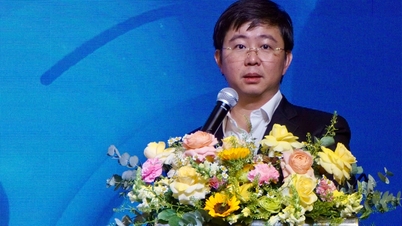
Ms. Nguyen Thu Thuy shared her insights on human resource training in the semiconductor and integrated circuit field on October 17th. Photo: MOET
The Ministry of Education and Training has not yet compiled statistics on the number of personnel that universities have supplied to the semiconductor and integrated circuit market in recent years. However, according to some major universities, not many students choose to specialize in this field.
For example, at Hanoi University of Science and Technology, the Electronics and Telecommunications Engineering program enrolls 780 students each year, but only about 40-50 choose to specialize in integrated circuit design. Meanwhile, most universities mainly offer broader or related fields. Integrated circuit design is a relatively new specialization in the training programs of Hanoi University of Science and Technology, some member universities of the Vietnam National University Hanoi and Ho Chi Minh City, and FPT University.
Speaking to VnExpress in September, Associate Professor Nguyen Duc Minh, Head of the Electronics Department at Hanoi University of Science and Technology, explained that the reason is that learning about integrated circuits is not as easy as learning software; it's not as simple as just having a computer to learn it like Information Technology.
Furthermore, social media rarely mentions the electronics and semiconductor industry in general, and integrated circuit design in particular, so not many people know how great the demand for personnel in this field is. This affects students' career choices.
The Director of Higher Education stated that the labor market in the semiconductor and integrated circuit field is still in its nascent stages, mostly in a potential phase, and therefore has not attracted as many students as booming industries with clear job opportunities. Furthermore, universities also face significant challenges in improving the quality of training to meet the stringent requirements of foreign businesses.
"This requires coordinated and leading support policies from the State," Ms. Thuy said.
Currently, the Ministry of Education and Training proposes three main policy groups. Firstly, to support and encourage students through scholarship policies, tuition fee waivers and reductions, and preferential credit, aiming to improve both the quantity and quality of student enrollment.
Secondly, we need support and breakthrough investments to enhance training and research capacity, primarily the capacity of faculty members, laboratory equipment, and software tools for practical experiments and simulations.
Finally, it is important to encourage and promote cooperation between universities, research institutes, and businesses both domestically and internationally.
Ms. Thuy added that the Ministry is leading the development of a plan to submit to the Prime Minister at the end of this year for the development of high-quality human resources to serve high technology, and a plan to build several centers of excellence in research and training in Industry 4.0 technology, including mechanisms and policies to develop human resources in the semiconductor and integrated circuit field.
The Ministry of Education and Training is also developing an action plan to promote training and research in the fields of semiconductor and microchip technology, which will be reported to the Prime Minister in October. This plan will direct and support universities to cooperate in forming an alliance, sharing and jointly utilizing resources and capabilities in training and research.
Source link
![[Photo] Ba Lang An Lighthouse - the "eye of the sea" amidst the "rock museum" of Quang Ngai province.](https://vphoto.vietnam.vn/thumb/1200x675/vietnam/resource/IMAGE/2026/05/29/1780038698840_anh-man-hinh-2026-05-29-luc-14-10-42.png)




![[Image] Pleasant weather helps students enter the 10th grade entrance exam with confidence.](https://vphoto.vietnam.vn/thumb/1200x675/vietnam/resource/IMAGE/2026/05/29/1780034401612_ngay-1-thi-lop-10-minh-duy-8-5009-jpg.webp)



























































































Comment (0)