

Medical news update August 30th: Ensuring medical examination and treatment services throughout the September 2nd holiday.
The Department of Medical Examination and Treatment Management, Ministry of Health, requires the effective organization of emergency care and medical examination and treatment, ensuring that all emergency patients receive examination and treatment, and that no emergency cases are refused or delayed.
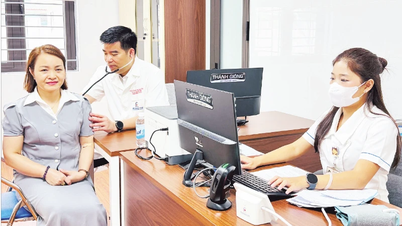
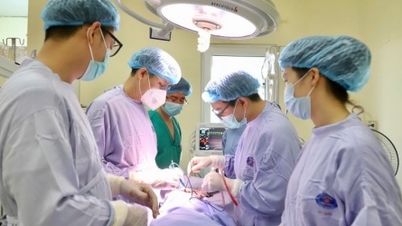
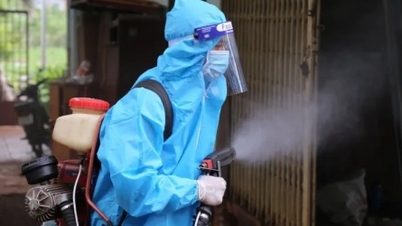
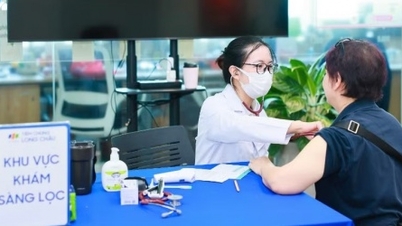
Emergency services on duty, ensuring medical examinations and treatment throughout the holiday period.
Dr. Ha Anh Duc, Director of the Department of Medical Examination and Treatment Management, Ministry of Health, has just signed a document sent to medical facilities requesting them to ensure full on-call duty at four levels: leadership on-call, professional on-call, administrative and logistical on-call, and security and self-defense on-call.
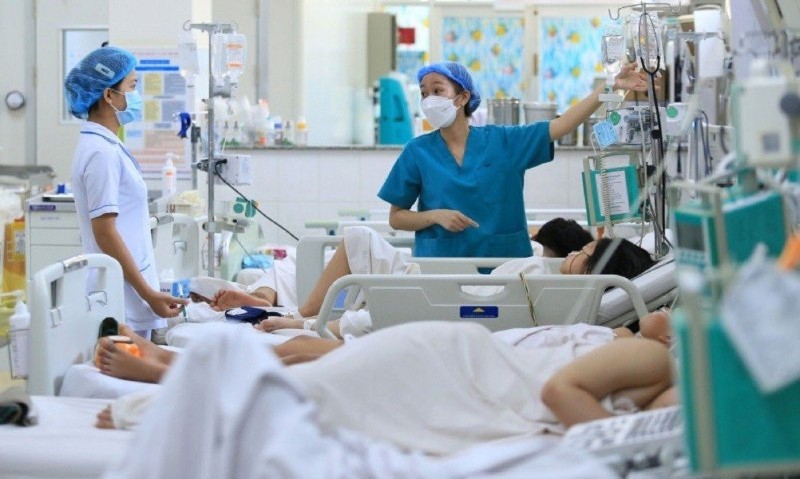 |
| The Department of Medical Examination and Treatment Management, Ministry of Health, requires the effective organization of emergency care and medical examination and treatment, ensuring that all emergency patients receive examination and treatment, and that no emergency cases are refused or delayed. |
Organize emergency care and medical examinations and treatment effectively, ensuring that all emergency patients receive examination and treatment; no emergency cases should be refused or delayed.
If the case involves transferring a patient to a different medical facility or specialty, initial emergency treatment is necessary to stabilize the patient, and a full explanation should be given to the patient and their family before transferring them to another medical facility.
At the same time, we will strengthen our forces, equipment, and medical supplies to ensure the highest possible capacity in treating victims of traffic accidents.
Assigning permanent emergency medical services to be on standby, ready and prompt to respond in case of mass casualty incidents, serious traffic accidents, disasters involving large crowds, etc., if any occur in the locality.
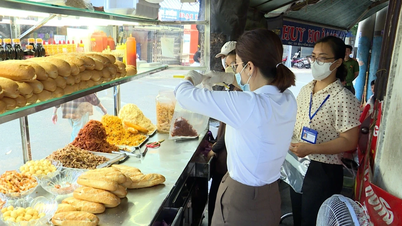
Simultaneously, ensure food safety and hygiene, prevent food poisoning and drowning, and warn against accidents at locations with high concentrations of tourists .
The Department of Medical Examination and Treatment Management also requested that hospitals and medical facilities ensure a 24/7 hotline is available to provide guidance, coordination, support, and emergency response in case of need.
In the event of exceptional circumstances such as outbreaks of other dangerous diseases, disaster emergencies, mass casualties, food poisoning, and other special cases, the unit is requested to urgently report to the direct supervisory agency via the hotline, and at the same time, quickly report in writing about the exceptional circumstances so that they can be addressed promptly.
"We request that all units enhance their sense of responsibility and proactively implement all the above-mentioned contents to ensure healthcare services for the people during the holiday period," the document from the Department of Medical Examination and Treatment Management stated.
A national center for rare drugs should be established soon.
The Director of the Ho Chi Minh City Department of Health, Tang Chi Thuong, proposed that the Ministry of Health should soon establish a national storage center for rare medicines, including drugs for common diseases such as measles, which are often unavailable when needed for various reasons.
During a meeting with leaders of the Ministry of Health, representatives from the Ho Chi Minh City Department of Health stated that the city is currently experiencing a shortage of dopamine, a medication used to treat critically ill children. This vasoconstrictor is used to treat children with severe measles, dengue hemorrhagic shock, severe hand, foot and mouth disease, and septic shock in newborns.
The medication is specifically designed for use primarily in children. A pharmaceutical company imported 30,000 vials, but pediatric hospitals in the South did not use them all and had to discard them.
The last batch of Dopamine expired on August 15th, so Children's Hospital 1 convened a professional council to find alternative medications. The pharmaceutical company has been handling the import procedures, and the drugs are expected to arrive in September.
There were years when Children's Hospital 1 purchased the high molecular weight drug Dextran to treat dengue fever, but the outbreak wasn't severe that year, so the drug wasn't used and had to be discarded. However, if they didn't purchase it, an outbreak would occur, leading to a shortage of the drug.
The head of Ho Chi Minh City's health department said that while waiting, the department will advise the city's People's Committee to establish a reserve of rare medicines using budget funds.
It is expected that next month, Ho Chi Minh City will launch an application for hospitals to search for rare drugs. When needed, patients can look up which hospitals have the drugs.
On the part of the Ministry of Health, Mr. Le Viet Dung, Deputy Director of the Drug Administration Department, said that legal regulations are increasingly creating favorable conditions for localities and hospitals to purchase and stockpile rare drugs.
However, localized drug shortages have still occurred in some areas recently. The process of building and stockpiling rare drugs faces difficulties in determining demand, forecasting reserve quantities, and finding sources of supply due to insufficient quantities and suppliers' reluctance to import them.
Furthermore, another obstacle is that health insurance only covers the actual amount of medication used for the patient. If the medication expires, it must be destroyed, and the healthcare facility must bear the full cost; insurance will not reimburse it. Not to mention, rare medications are rarely covered by health insurance, as they are often specially imported and lack registration numbers.
The ministry is proposing a mechanism for stockpiling rare medicines in three regions, with a method of creating a nationwide network because each region has different needs.
In the coming period, the Ministry of Health will coordinate with Ho Chi Minh City to build a nationwide network to ensure the supply of rare medicines, connecting with treatment facilities around the world such as Thailand, Malaysia, etc., to ensure rapid supply when needed.
Hanoi: Food safety control in school areas.
Regarding the issue of ensuring food safety in school areas, according to Le Thi Hang, Head of the Food Poisoning Surveillance Department of the Hanoi City Food Safety and Hygiene Sub-Department, the inspection and supervision of school cafeterias in the city has been intensified recently.
The goal is to have 100% of establishments inspected and monitored according to regulations, specifically achieving a rate of 84.5% inspections in 2023. Food poisoning has a serious impact on the socio-economic landscape. For individuals, food poisoning causes significant costs such as hospitalization, medication, emergency care, disease prevention, and recovery expenses.
People risk losing income, health problems, job losses, and disruptions to family life. Food poisoning also causes losses to the State in terms of investigation and testing costs to determine the cause of the poisoning.
Ms. Le Thi Hang also added that in 2023, through inspections by inspection teams from the Hanoi Department of Health and the Hanoi Food Safety and Hygiene Sub-Department, awareness of preventing food poisoning in school cafeterias has improved.
According to a representative from the Hanoi Food Safety and Hygiene Department, school cafeterias need to ensure food safety throughout the entire food supply chain (preparation, processing, storage, and use of food in the cafeteria).
Schools enhance knowledge and practices in food safety for managers, food processors, and consumers in collective kitchens; and conduct regular food safety inspections and monitoring in the processing, storage, and use of food in collective kitchens.
Identifying the source of ingredients is crucial, a representative from the Hanoi Food Safety and Hygiene Department emphasized that schools need to sign contracts to import food from food suppliers that have certifications ensuring food safety and hygiene, applying "Good Agricultural Practices - GAP"; Viet GAP, and are businesses that meet food safety requirements.
In addition, controlling food ingredients at the point of production (farming and livestock areas) is crucial.
When receiving ingredients, the school needs to have a certificate (product card) from the supplier and inspect the ingredients upon arrival, such as: performing a three-step inspection (before receiving, before cooking, and before eating); sensory inspection and rapid testing....
Source: https://baodautu.vn/tin-moi-y-te-ngay-308-dam-bao-cong-tac-kham-chua-benh-xuyen-le-29-d223716.html

![[Photo] Secretary of the National Assembly Party Committee, Chairman of the National Assembly presides over the meeting of the Standing Committee and Executive Committee of the National Assembly Party Committee.](https://vphoto.vietnam.vn/thumb/1200x675/vietnam/resource/IMAGE/2026/06/03/1780480353201_ndo_br_bnd-2585-jpg.webp)


![[Photo] General Secretary and President To Lam presides over a meeting with the Central Organizing Committee.](https://vphoto.vietnam.vn/thumb/1200x675/vietnam/resource/IMAGE/2026/06/03/1780482764658_a1-bnd-4741-3342-jpg.webp)


















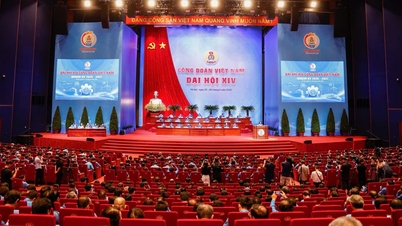
![[Photo] First session of the 14th Congress of the Vietnam Trade Union](https://vphoto.vietnam.vn/thumb/1200x675/vietnam/resource/IMAGE/2026/06/03/1780465947883_ndo_br_img-3852-jpg.webp)





















![[Video] Sunset at Lap An Lagoon – Where the sun sets over the fishing nets](https://vphoto.vietnam.vn/thumb/1200x675/vietnam/resource/IMAGE/2026/05/31/1780192137701_beach-landscape-sea-water-nature-grass-745871-pxhere-com.jpeg)























Comment (0)