

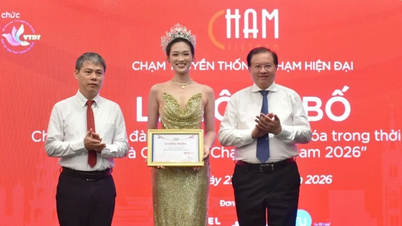
The event brought together a large number of art experts, artisans, researchers, creative businesses, and investors in the field of culture and arts, marking the beginning of a series of activities leading up to the 100th anniversary of Vietnamese lacquer painting entering the world .

Dr. Duong Duy Lam Vien, Director of the Vietnam Institute of Records, believes that Vietnamese lacquer painting is not only a unique art form but also embodies the depth of history, craftsmanship, and national cultural identity. According to Dr. Lam Vien, the journey towards the "Era of Vietnamese Lacquer Painting Heritage" goes beyond simply establishing records; it aims to connect heritage with contemporary creativity, opening up opportunities for Vietnamese lacquer painting to participate more deeply in the global cultural industry ecosystem.
Within the framework of the program, the Project Development Board for Vietnamese Lacquer Painting Heritage was also announced, aiming to build a strategy for researching, preserving, and promoting the value of lacquerware in an interdisciplinary and internationally integrated manner.

At the academic forum, many presentations focused on clarifying the journey of the formation of the unique aesthetics of Vietnamese lacquerware, from indigenous materials and traditional craftsmanship techniques to the unique visual language that has helped Vietnamese lacquerware make its mark on the world art map.
Opinions also suggest that building a dossier for a world record nomination not only contributes to affirming the artistic value but also provides an opportunity to establish a national cultural brand for Vietnamese lacquerware in the context of the strong development of creative industries.


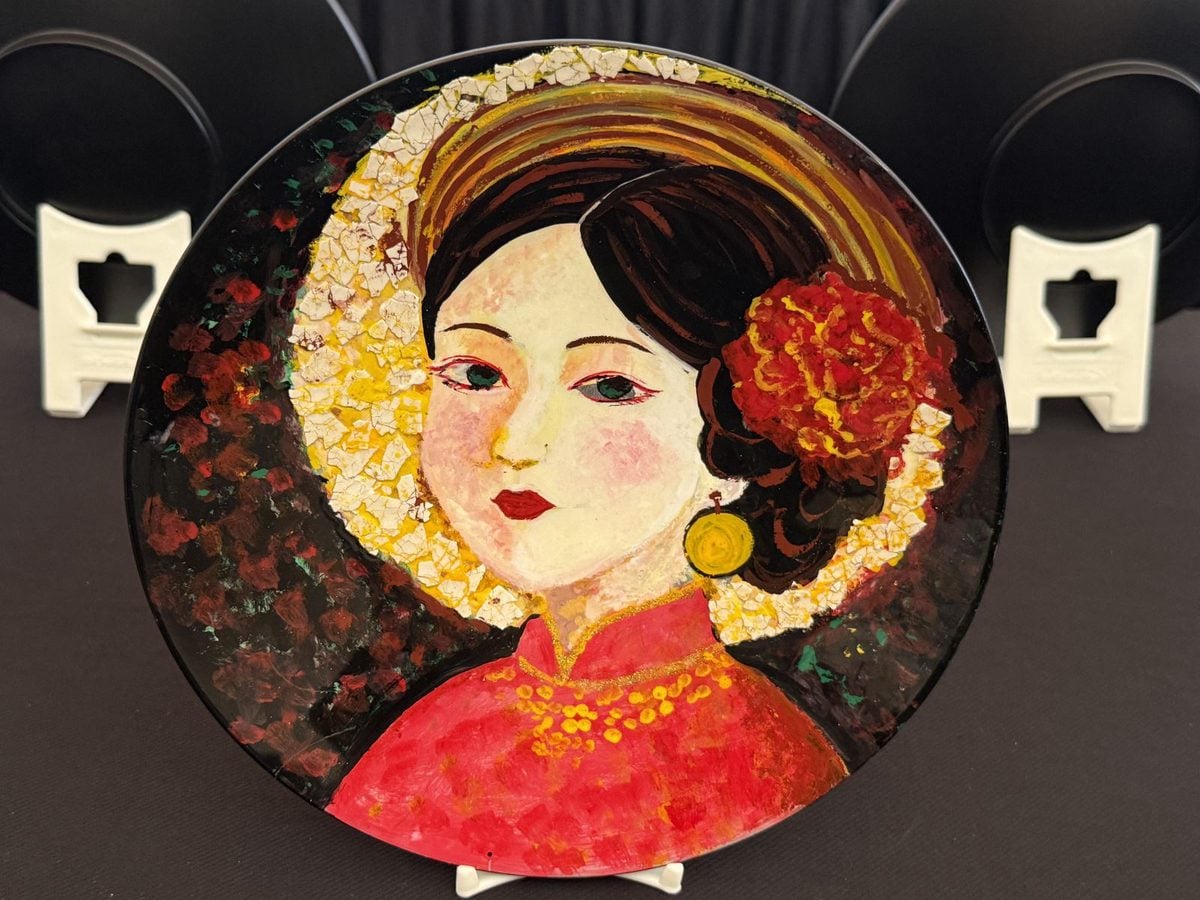
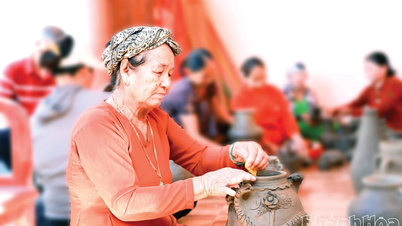
Many presentations emphasized that the painting element is the "soul" that helps lacquerware transcend the boundaries of a mere craft to become a scholarly art form with international value. At the same time, behind each layer of lacquer, the techniques of gold leafing, eggshell inlay, or polishing lie a wealth of folk knowledge accumulated over generations in the craft villages.
Beyond just conservation, the program also opens up new approaches to lacquerware in the technological age. Experts discussed the potential application of new materials and coating technologies on various surfaces to expand the creative scope of lacquerware into interior design, fashion , applied arts, and experiential tourism.
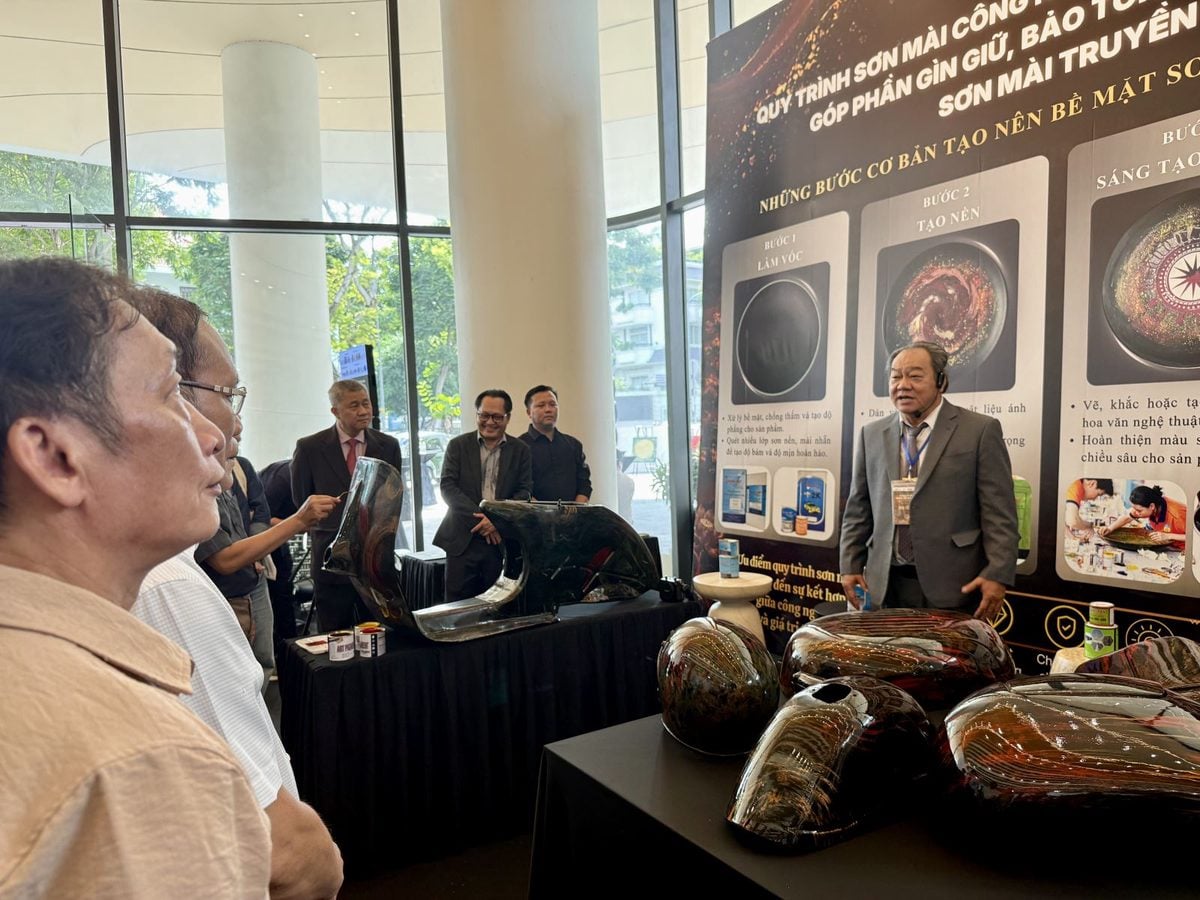
In addition to the professional forum, the series of exhibitions and experiential activities taking place from May 27 to 29 recreates the development journey of Vietnamese lacquerware, from traditional craft villages to contemporary creative spaces.
The exhibition space showcases numerous collections of artifacts, artworks, and valuable documents related to the history of Vietnamese lacquerware, including artifacts associated with the Tuong Binh Hiep lacquerware village; the "Indochina Paintings Painted in Indochina" collection preserving the legacy of artist Marcel Bernanose; and many contemporary lacquer works by lecturers and artists from the Ho Chi Minh City University of Fine Arts.

The community-based creative experience areas also attracted a large number of fine arts students, young artisans, and the public to participate in various activities such as painting lacquer plates with Dong Son bronze drum motifs, recreating folk paintings using technological lacquer materials, or working together on collective works to set Vietnamese records.

Through this series of activities, the organizers hope to contribute to opening up a new creative ecosystem for Vietnamese lacquerware, creating a bridge between tradition and technology, between national heritage and the international market in the era of cultural industry.
Source: https://baosonla.vn/nhan-vat-su-kien/danh-thuc-mach-nguon-di-san-son-mai-viet-nam-nzj8w81vg.html
![[Photo] Standing Committee member of the Party Central Committee Tran Cam Tu working with the Central Inspection Committee](https://vphoto.vietnam.vn/thumb/1200x675/vietnam/resource/IMAGE/2026/05/28/1779969579668_ndo_br_bnd-2495-jpg.webp)

































































Comment (0)