

"Essentially, we're teaching robots to think for themselves," Kenneth Ren, an overseas solutions specialist at RealMan Intelligent Technology, told CNBC while training his robots at the Beijing Humanoid Robot Data Training Center.
 |
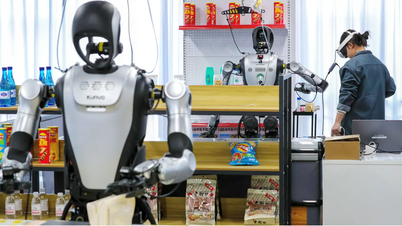
A humanoid robot from Unitree is being trained for household chores. |
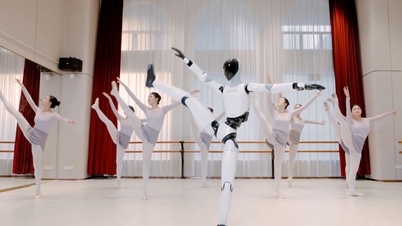
Ren is currently in charge of one of the most crucial stages in the development of humanoid robots at "training schools" opened across the country. After the initial phase of basic data training, these facilities are looking to move these machines beyond the entertainment sector and toward work. Previously, Chinese policymakers identified humanoid robots as a key area for development, ensuring the country's dominance of the global market and supply chain.
"China's next-generation industrial policy represents a significant shift from targeted industry intervention to a comprehensive industrial policy," the U.S. Chamber of Commerce and research firm Rhodium Group wrote in a joint study published on May 11.
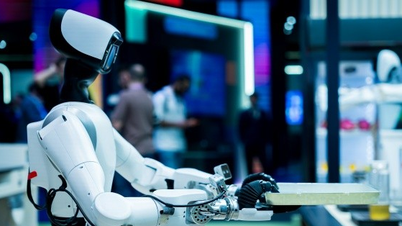
Among the more than 100 instructors at the Beijing Humanoid Robotics Data Training Center, Fudi Luo, a former art teacher, is guiding her robot "students" on how to sort products on a production line. Using cameras, controllers, and motion capture technology, she and her colleagues diligently instruct the machines to perform tasks, repeating the actions many times.
"Initially, the robot had no consciousness, so I had to control it manually," Luo said. "But once my movements generated data, the robot learned and then performed tasks on its own."
The skills Luo teaches include house cleaning, massage, shelving, and appliance repair. Each day, she works eight hours on repetitive tasks. "Robots don't know what fatigue is, but I do," Luo says.
Winston Zou, board secretary of Beijing Inspire-Robots Technology, a company specializing in training humanoid robotic arms using motion tracking and sensor technology, said that on average, a hand needs 10,000 practice sessions to learn a new skill. "Our current robotic arm can pick up an egg, smaller objects, or even lift a strand of hair," Zou said.
Elon Musk, CEO of Tesla – the company behind Optimus – has repeatedly stated that manufacturing the hands is the most difficult part of creating humanoid robots and emphasized that China is a formidable competitor. "To date, the biggest competitor in the humanoid robotics field comes from China. They are extremely good at scaling up production," the American billionaire said in Tesla's financial report earlier this year.
Vocational training centers like the Beijing Humanoid Robotics Data Training Center are gradually emerging in many localities, promoted and funded by the government . On May 16th, another national pilot facility for the application of humanoid robots opened in Hangzhou, Zhejiang province. The center initially has 130 robots operating in more than 30 different occupational scenarios, ranging from food service and automated retail to event performance, power line inspection, fruit picking, and underground operations.
"The center was established to develop a platform to promote extensive cooperation among robotics companies nationwide, as well as upstream and downstream enterprises in the industrial chain, helping to transform individual advantages into synergies," Li Xingtong, deputy general manager of Hangzhou Embodiment Intelligence Pilot Technology Company, the operator of the facility, told Xinhua News Agency.
According to Mr. Xingtong, robotics technology and industrial chains are still quite fragmented, with only a few prominent names in specific fields such as motion control or smart manufacturing. Therefore, this foundation can promote cooperation and coordinated development in the fields of artificial intelligence and physical artificial intelligence.
According to China Daily, the development of humanoid robots represents a significant shift in China's ambition to move AI from the virtual world to practical applications, as the technology is rapidly moving from laboratories to industrial products. This issue has also been identified in China's 15th Five-Year Plan (2026-2030), viewing it as a future industry requiring strategic vision.
Hangzhou currently boasts a large concentration of companies in the humanoid robot supply chain, with over 700 active businesses generating 106.8 billion yuan (US$15.68 billion) in output value by 2025 alone. The city currently accounts for over 80% of quadrupedal robot manufacturers and over 50% of humanoid robot manufacturers in China.
Wang Yaonan, a member of the Chinese Academy of Engineering, said that the combination of technological breakthroughs, AI, and the continuous improvement of the industrial ecosystem is opening up greater opportunities in the field of artificial intelligence and robotics. "We aim to promote Chinese robotics breakthroughs at multiple levels, including platform chips, operating systems, and development tools, thereby creating an ecosystem advantage in the field of physical intelligence," Yaonan emphasized.
Many experts acknowledge that humanoid robots in China are not yet capable of performing even the simplest tasks independently and still require human assistance. However, supporters argue that improvement is only a matter of time.
"Our goal is to help robots take on tasks that are dangerous for humans, or repetitive jobs that no one wants or is afraid to do," Ren told CNBC. "We don't intend to replace humans in any field."
Source: https://baobacninhtv.vn/dao-tao-nghe-cho-robot-hinh-nguoi-postid446455.bbg

![[Photo] General Secretary and President To Lam presides over the meeting to approve the draft report on the results of the second inspection by the Politburo of the Standing Committee of the Hanoi City Party Committee.](https://vphoto.vietnam.vn/thumb/1200x675/vietnam/resource/IMAGE/2026/05/26/1779789811432_a2-bnd-4430-9620-jpg.webp)



















































































Comment (0)