

Identifying barriers
Specifically, the targets set out in Resolution No. 71-NQ/TW for 2030 are that Vietnam will have at least 8 higher education institutions in the top 200 in Asia, at least 1 institution in the top 100 in the world in some fields; by 2035, at least 2 institutions in the top 100 in the world; and by 2045, at least 5 institutions in the top 100 in the world.
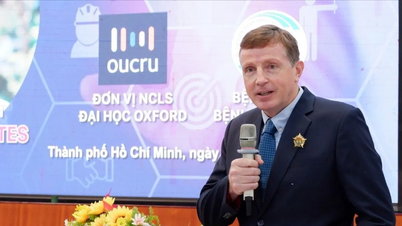
Considering the current context, Master's student Nguyen Vinh San - a member of the VNUR university ranking research team - believes that this goal is not impossible, but it is also very challenging to achieve.
According to MSc. Nguyen Vinh San, Vietnam currently has a number of universities ranked in the top 500 in the world and top 200 in Asia according to QS and THE (2 National Universities, Duy Tan University, Ton Duc Thang University). However, the number is still small, the rankings are not stable, and most are only in the 801-1000 group in the world or 301-500 in Asia.
To rise from its current ranking to the top 200 in Asia and the top 100 globally, comprehensive and synchronized changes and significant investment are needed from both the universities themselves and the government.
Vietnamese universities have advantages in terms of rapid development, new support policies from the Party and State, and the trend of increasingly deep international integration; however, our starting point is still low.
Sharing specific difficulties that Vietnamese higher education faces in achieving its goal of reaching world rankings, Master's student Nguyen Vinh San outlined four groups: finance and infrastructure; human resources; university governance; and academic culture and integration.
Regarding finances and infrastructure: Reputable international rankings (QS, THE, ARWU) highly value criteria such as international publications, citations, research, and investment in R&D. Meanwhile, Vietnam's budget allocation for higher education and scientific research remains limited, at only about 0.4-0.5% of GDP, significantly lower than countries with top 100 universities worldwide. Laboratory infrastructure, electronic libraries, and research data are also lacking and not yet standardized.
Regarding human resources: The proportion of lecturers with doctoral degrees is still low compared to international standards; income and remuneration mechanisms are not attractive enough to attract talent from both within and outside the country; foreign language proficiency and the ability to publish internationally are limited, leading to a lack of sufficient quantity and quality of international publications.
Regarding university governance: University autonomy is still in its initial stages, with many constraints on finance, organization, and personnel; governance mechanisms have not yet caught up with international standards (university councils operate formally, lacking real self-determination); there is no clear long-term strategy for participating in international rankings, and many universities are not yet ready to publicly disclose data.
Regarding academic culture and integration: The culture of international publication and the spirit of scientific research have not yet spread widely; international cooperation, although developing, is not sustainable, lacking deep linkages in research, co-supervision, and co-publication; internationally standardized training programs, dual degrees, and student exchange programs are not yet competitive enough.
It requires very strong political will, specific resources, and a groundbreaking approach.
According to Master's student Nguyen Vinh San, the goal is only achievable with strong political will, coupled with specific resources and a breakthrough approach. Specifically, to realize the goals of Resolution No. 71-NQ/TW, the education sector needs to implement a comprehensive set of solutions:
Firstly, prioritize investment and stratify the system. Select approximately 10 key national universities (Vietnam National University, Hanoi; Vietnam National University, Ho Chi Minh City; Hanoi University of Technology; Da Nang University; Hue University; Can Tho University; Ton Duc Thang University; Ho Chi Minh City University of Economics; National Economics University; and several strong private universities…) to focus investment on, creating mechanisms and avoiding scattered investment; establish specific mechanisms regarding finance, personnel, and organization for this group of universities.
Secondly, we need to improve the quality of our faculty. We need to rapidly increase the proportion of lecturers with doctoral degrees (prioritizing those sent for training at top universities worldwide); expand programs to attract international scholars to teach and conduct long-term research in Vietnam; and improve salaries and working environments to attract and retain talent.
Thirdly, promote international research and publications. This includes establishing a national research fund to support publications in ISI/Scopus journals; developing interdisciplinary laboratories and centers of excellence; building mechanisms to link research with businesses and practical applications; and reducing/exempting taxes for businesses investing in research and collaborating with universities and research institutes.
Fourth, innovate governance and autonomy by removing administrative barriers to university autonomy, scientific research, and business cooperation; increase transparency of operational data, prepare for participation in international rankings; and apply digital technology in university governance.
Fifth, strong internationalization is being pursued through expanding joint training programs with top 200 universities worldwide; encouraging long-term faculty and student exchanges; and attracting international students to key universities.
“The goals set forth in Resolution No. 71-NQ/TW are quite ambitious in the current context, but necessary, reflecting the aspirations for advancement and integration of Vietnam's education system. Whether these goals are achievable depends on political determination, breakthroughs in governance, financial investment, and especially changes in academic culture within each university,” said Master's student Nguyen Vinh San.
Source: https://giaoducthoidai.vn/dat-muc-tieu-nghi-quyet-so-71-nqtw-can-quyet-tam-nguon-luc-cach-lam-dot-pha-post747596.html

![[Photo] Prime Minister Pham Minh Chinh attends the Conference on the Implementation of Tasks for 2026 of the Industry and Trade Sector](/_next/image?url=https%3A%2F%2Fvphoto.vietnam.vn%2Fthumb%2F1200x675%2Fvietnam%2Fresource%2FIMAGE%2F2025%2F12%2F19%2F1766159500458_ndo_br_shared31-jpg.webp&w=3840&q=75)




















































































Comment (0)