

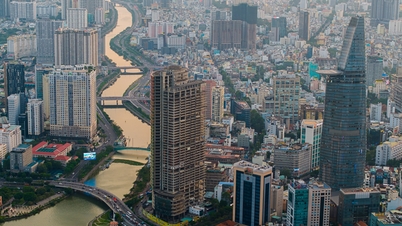
Previously, despite being granted certain powers by the National Assembly through some specific resolutions, Ho Chi Minh City's development had not truly lived up to its potential. The Politburo has agreed to allow Ho Chi Minh City to develop a Law on Special Investment, similar to Hanoi's Law on the Capital City, as a foundation for a new phase of development.
Immediately after the Politburo approved the plan, the Ho Chi Minh City Party Committee quickly established a Steering Committee to research and propose the drafting of the Law on Special Investment. Several agencies were assigned the task of researching and finalizing the detailed outline report, structured with approximately 10 chapters and 50 articles, integrating it seamlessly with the summary of Resolution 31 on the direction and tasks for the city's development until 2030, with a vision to 2045.
According to the latest information, the draft Law is expected to be completed in April; followed by expert consultation workshops in May and June; expected review in July; the Government to issue a resolution to submit to the National Assembly in August; and the Standing Committee of the National Assembly to give its opinion in September 2026. The draft Law is expected to be submitted to the 16th National Assembly for consideration and approval at its Second Session at the end of this year.
Public opinion expects the Law on Special Urban Development to mark a historical milestone, fundamentally shifting from a purely administrative management mindset to the governance of a modern megacity; creating a comprehensive legal basis and opening up mechanisms at the highest level to unleash all resources and promote the development of Ho Chi Minh City. From a national perspective, this draft law also benefits localities, helping Ho Chi Minh City once again take the lead in implementing new policies, and to synthesize effective models that can be applied nationwide.
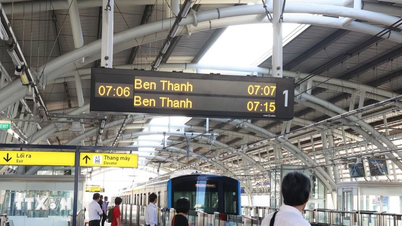
At a recent conference, the leaders of the Ho Chi Minh City People's Committee emphasized that this draft law will mark a shift from requesting mechanisms to mechanisms where authority is granted and responsibility is taken; directly resolving long-standing issues (such as underground space management, public asset use, urban railway development, etc.) instead of continuing to handle them through pilot mechanisms. Once these mechanisms are codified into law, the city will be able to shorten decision-making times and quickly grasp the key issues, all with the aim of promoting socio-economic development and improving the lives of the people.
Given its significance, importance, and practical relevance as mentioned above, we also expect that when the draft law is published for public consultation, it will attract many accurate suggestions, groundbreaking ideas, and frank criticisms, helping Ho Chi Minh City to perfect a law with feasible content, lasting vitality, and a long-term vision.
Source: https://baophapluat.vn/dau-moc-lich-su-tu-du-thao-luat-do-thi-dac-biet.html


![[Photo] Admire the coral "masterpiece" amidst the million-year-old heritage of Dak Lak province.](https://vphoto.vietnam.vn/thumb/1200x675/vietnam/resource/IMAGE/2026/05/31/1780221235105_anh-man-hinh-2026-05-31-luc-16-53-27.png)
![[Photo] The General Secretary, President and his wife begin their state visit to the Philippines.](https://vphoto.vietnam.vn/thumb/1200x675/vietnam/resource/IMAGE/2026/05/31/1780230559452_anh-man-hinh-2026-05-31-luc-19-28-11.png)
![[Photo] Solemn bathing ceremony and Buddha procession in Hue](https://vphoto.vietnam.vn/thumb/1200x675/vietnam/resource/IMAGE/2026/05/31/1780228263543_1-jpg.webp)


















![[Video] Sunset at Lap An Lagoon – Where the sun sets over the fishing nets](https://vphoto.vietnam.vn/thumb/340x192/vietnam/resource/IMAGE/2026/05/31/1780192137701_beach-landscape-sea-water-nature-grass-745871-pxhere-com.jpeg)




































![[Photo] Admire the coral "masterpiece" amidst the million-year-old heritage of Dak Lak province.](https://vphoto.vietnam.vn/thumb/402x226/vietnam/resource/IMAGE/2026/05/31/1780221235105_anh-man-hinh-2026-05-31-luc-16-53-27.png)































Comment (0)