

The above content is from Decree No. 222/2025/ND-CP dated August 8, 2025, of the Government regulating teaching and learning in foreign languages in educational institutions.
For general education institutions implementing the Vietnamese General Education Program, some subjects, educational activities, or content of some subjects and educational activities may be taught and learned in a foreign language, with priority given to subjects in the fields of mathematics, natural sciences , technology, and information technology.
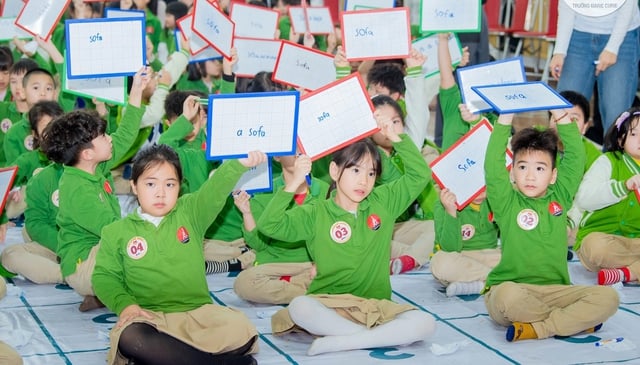
Specific regulations have been established for the implementation of teaching certain subjects in a foreign language from primary school onwards, with plans for the near future.
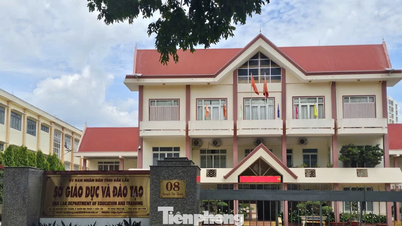
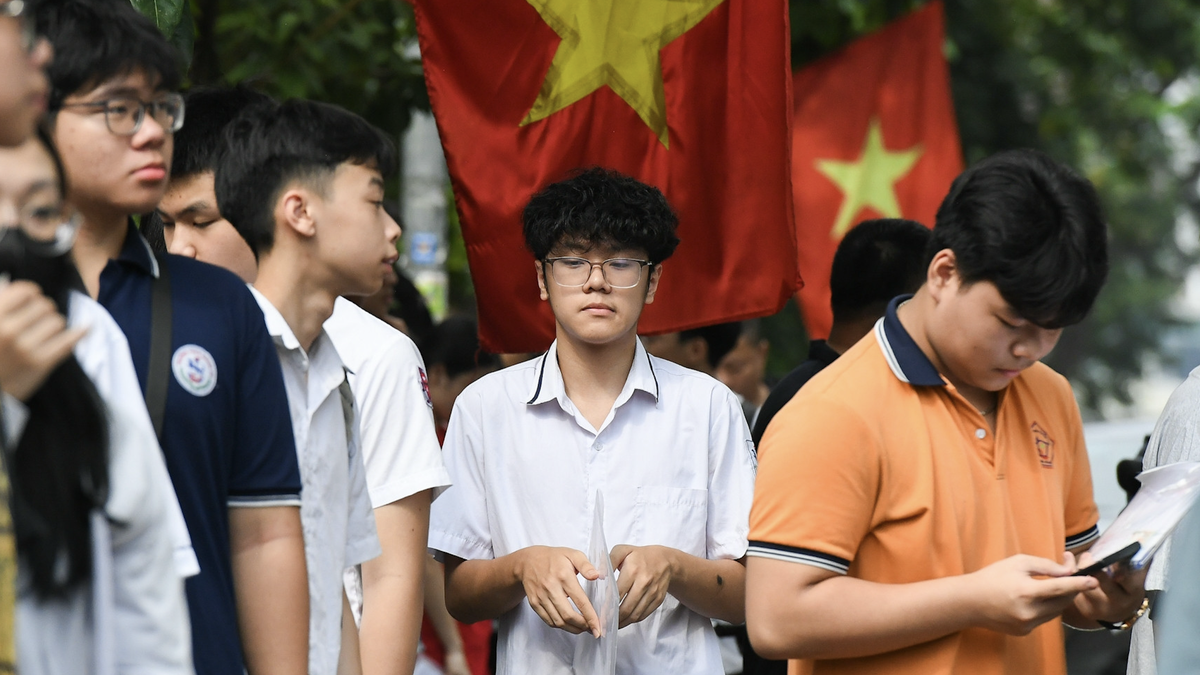
PHOTO: NL
For higher education , programs, curricula, subjects, modules, and courses of higher education that have been approved by competent authorities may be taught in part or in whole in a foreign language.
Textbooks and educational materials used for teaching and learning in foreign languages at higher education institutions are approved by the director or president of the institution based on the assessment results of an evaluation council established by the president, ensuring compliance with the textbook and material evaluation process.
The decree also encourages the application of information technology, artificial intelligence, and digital transformation in teaching and learning in foreign languages in educational institutions through the use of technological tools and platforms.
Teachers must have a minimum foreign language proficiency level of 4.
The decree specifies detailed requirements regarding professional qualifications, skills, and foreign language proficiency for teachers. Accordingly, teachers must meet the professional and technical requirements, as well as the training and development levels stipulated for each educational level and training program.
Regarding foreign language proficiency, primary and lower secondary school teachers must have a minimum foreign language proficiency level of 4 according to the 6-level Foreign Language Proficiency Framework for Vietnam, or equivalent; upper secondary school and vocational education teachers must have a minimum foreign language proficiency level of 5.
Lecturers teaching at the university level must have a foreign language proficiency level that meets the teaching requirements of the training program, at least level 5.
"Individuals who have received full-time undergraduate, master's, or doctoral training abroad with a foreign language as the language of instruction and whose diplomas are recognized according to regulations, or who have a bachelor's degree in foreign languages or foreign language pedagogy in Vietnam, are exempt from the foreign language proficiency requirement," the Decree states.
Regarding tuition fee collection and expenditure, the Decree stipulates: For public general education and continuing education institutions , tuition fees collected to organize teaching and learning in foreign languages shall be implemented according to the principles of accurate and complete calculation, using revenue to cover expenses, and with the consent of the learners.
The collection, use, and management of these tuition fees shall be carried out in accordance with the regulations of the People's Councils of provinces and centrally-administered cities.
For higher education institutions Public higher education institutions determine tuition fees based on their level of financial autonomy and students' ability to pay, using economic and technical norms as stipulated in the Law on Higher Education and the Government's regulations on tuition fee management mechanisms for public higher education institutions within the national education system.
Currently, the Ministry of Education and Training aims for all secondary school students to learn English as a second language by 2035, at levels 1, 2, and 3. At the university level, the target is levels 4, 5, and 6. Some major cities like Hanoi and Ho Chi Minh City are piloting teaching and learning in English in public schools, focusing on natural science subjects.
However, all localities have stated that the biggest difficulty in implementation is the lack of teachers with the required foreign language proficiency to teach subjects in a foreign language.
Source: https://thanhnien.vn/day-mot-so-mon-bang-tieng-nuoc-ngoai-tu-tieu-hoc-185250809164854873.htm
![[Photo] Ba Lang An Lighthouse - the "eye of the sea" amidst the "rock museum" of Quang Ngai province.](https://vphoto.vietnam.vn/thumb/1200x675/vietnam/resource/IMAGE/2026/05/29/1780038698840_anh-man-hinh-2026-05-29-luc-14-10-42.png)
![[Image] Pleasant weather helps students enter the 10th grade entrance exam with confidence.](https://vphoto.vietnam.vn/thumb/1200x675/vietnam/resource/IMAGE/2026/05/29/1780034401612_ngay-1-thi-lop-10-minh-duy-8-5009-jpg.webp)






































































Comment (0)