

Direct terms like "sweet starfruit" of corruption or "resource price paradox" were frankly pointed out by the delegates.
The system of granting favors and favors must be completely eliminated.
Delegate Le Huu Tri ( Khanh Hoa delegation) used evocative imagery to describe the reality of profiteering from public investment. According to the delegate, turning budget funds into a "sweet bunch of starfruit" for personal gain has been and continues to be a widespread phenomenon.
According to the delegates, the selection of consultants for survey and design, cost estimation, cost estimate approval, and construction contractor is fertile ground for inflating quantities, applying incorrect unit prices, and raising project costs higher than the actual value of the project, thereby legitimizing negative practices and corruption.
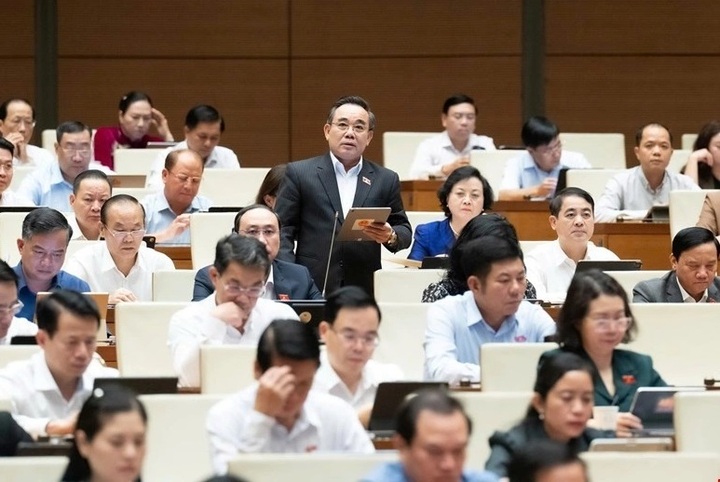
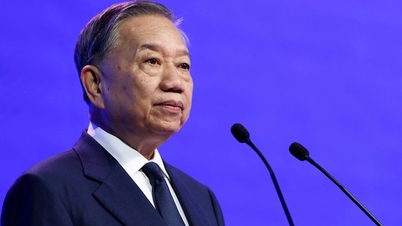
Representative Le Huu Tri, from the National Assembly delegation of Khanh Hoa province.
Therefore, a mechanism for early remote monitoring is needed, with clearly defined responsibilities and strict accountability measures. National public investment management needs to be tightened and there should be no legal loopholes regarding responsibility at these stages. If we wait until violations occur before discovering them through inspections, audits, and investigations, we will lose both personnel and resources, and in reality, it is impossible to inspect, audit, and investigate all projects.
At the same time, it is necessary to continue reviewing and resolutely eliminating projects that are not truly necessary, urgent, or effective, and those that do not comply with investment procedures, in order to prioritize capital for key, urgent projects that create momentum for the rapid and sustainable development of the country.
" We need to completely eliminate the 'request and grant' mechanism and the practice of turning public investment into a 'sweet starfruit' which has been a widespread and vivid manifestation of corruption. We have talked a lot about tightening discipline and order, strengthening inspection, auditing, and supervision to combat corruption and vested interests, but we haven't done it thoroughly, and that's why public investment still has many shortcomings and poor results ," Representative Tri emphasized.
We are determined to eliminate projects that are merely for reserving space.
Concurring with this view, delegate Nguyen Duy Minh (Da Nang delegation) stated that, looking back at the 2021-2025 period, public investment has played a crucial role in stabilizing the macroeconomy and restoring growth. Many strategic infrastructure projects have been implemented, creating a foundation for long-term development.
However, a realistic assessment reveals several limitations: significant capital is available but disbursement is slow, capital absorption capacity is limited, and many projects are prolonged and subject to numerous adjustments, reducing investment efficiency. This indicates that the problem lies not in a lack of capital but in the operational mechanisms and implementation processes.
One of the biggest bottlenecks today is the complex and interconnected investment procedures. In reality, implementing a public investment project requires going through many steps according to different laws such as the public investment law, the planning law, the land law, the environmental law, the construction law, and the bidding law.
These steps are primarily carried out in a sequential order, with each stage being a separate, unconnected set of documents, leading to often prolonged project preparation times.
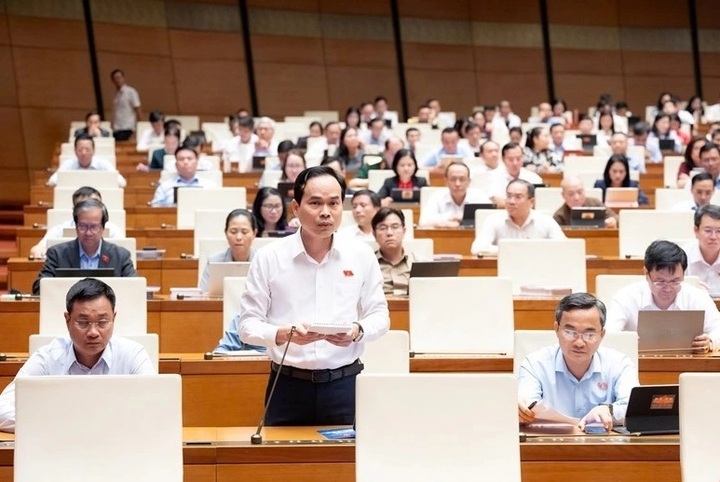
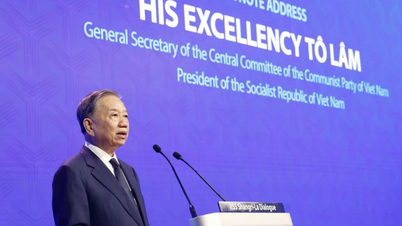
Representative Nguyen Duy Minh, from the Da Nang City National Assembly delegation.
This process applies almost identically to all projects, regardless of scale. A project worth only a few billion dong at the grassroots level must follow all the same steps as a project worth hundreds or thousands of billions of dong. Some small projects take one to two years to complete the procedures, while construction only takes a few months. This not only slows down progress but also increases costs and reduces investment efficiency.
Therefore, the delegates proposed that the Government prioritize the comprehensive amendment of laws directly related to public investment in 2026, aiming to establish a unified and interconnected process, minimize intermediate procedures, and allow for the parallel implementation of appropriate steps.
Continue reforming administrative procedures, especially classifying projects by scale and risk level. For small projects, simplify processes, shorten procedures, and promote decentralization to localities, coupled with enhanced inspection and supervision mechanisms.
Continue to review and resolutely remove from the list projects that are merely for reserving land. In reality, there are many projects that have been allocated capital in multiple medium-term public investment plans but have yet to complete land clearance. People in the project areas have been stuck in a situation for decades, unable to leave and unable to stay.
These stalled projects not only waste resources but also seriously affect people's lives, leaving behind many practical difficulties and negative consequences.
In addition, delegates raised concerns about the availability of raw materials for public investment projects, such as land, sand, and stone. According to regulations, mineral resources are owned by the entire population and managed by the state. However, when implementing public investment projects, raw materials must be purchased through market mechanisms.
This process is actually creating a cost loop that is detrimental to the budget. The state is having to use revenue to buy back its own resources at high prices. This paradox increases the total investment, and the shortage of materials in projects causes delays in disbursement, affecting the ICOR (Incremental Capital-Output Ratio). In addition, the high price of raw materials also affects people who need to repair or build houses.
Although we now have a plan for mineral resources, including construction material mines, the reality shows that the approach is still heavily reactive and has not yet become a proactive strategy to serve public investment.
In many cases, projects only begin sourcing materials, applying for mining permits, and adjusting planning when they start implementation. When shortages occur, problems are addressed; when obstacles arise, they are resolved, but there isn't truly prior preparation tailored to the specific needs of each project and region. This shows that current planning only focuses on resource management and isn't closely integrated with public investment planning and strategies.
To address this issue in the context of the enormous investment needs for the 2026-2030 period, the delegate suggested that the Government should have a mechanism to regulate prices or establish strategic reserves, similar to the approach taken for gasoline or food.
Strategic reserves of construction materials can be achieved through good planning of mines with cleared land, streamlined mining licensing procedures, and the government granting mining rights immediately when materials are needed and costs are to be reduced, without having to wait for land clearance and compensation, which often takes many years.
Simultaneously, implementing a circular economy model in the construction materials sector is crucial. This is not only an environmental solution but also an economic strategy to reduce dependence on natural resource extraction, thereby lowering costs and stabilizing the market.
We need to shift strongly from a mindset of disbursing all available funds to one of using funds effectively, because rapid but ineffective disbursement is still wasteful.
Source: https://vtcnews.vn/dbqh-du-an-dau-tu-cong-khong-phai-la-chum-khe-ngot-ar1014166.html
![[Image] Pleasant weather helps students enter the 10th grade entrance exam with confidence.](https://vphoto.vietnam.vn/thumb/1200x675/vietnam/resource/IMAGE/2026/05/29/1780034401612_ngay-1-thi-lop-10-minh-duy-8-5009-jpg.webp)

![[Photo] Ba Lang An Lighthouse - the "eye of the sea" amidst the "rock museum" of Quang Ngai province.](https://vphoto.vietnam.vn/thumb/1200x675/vietnam/resource/IMAGE/2026/05/29/1780038698840_anh-man-hinh-2026-05-29-luc-14-10-42.png)






































































Comment (0)