

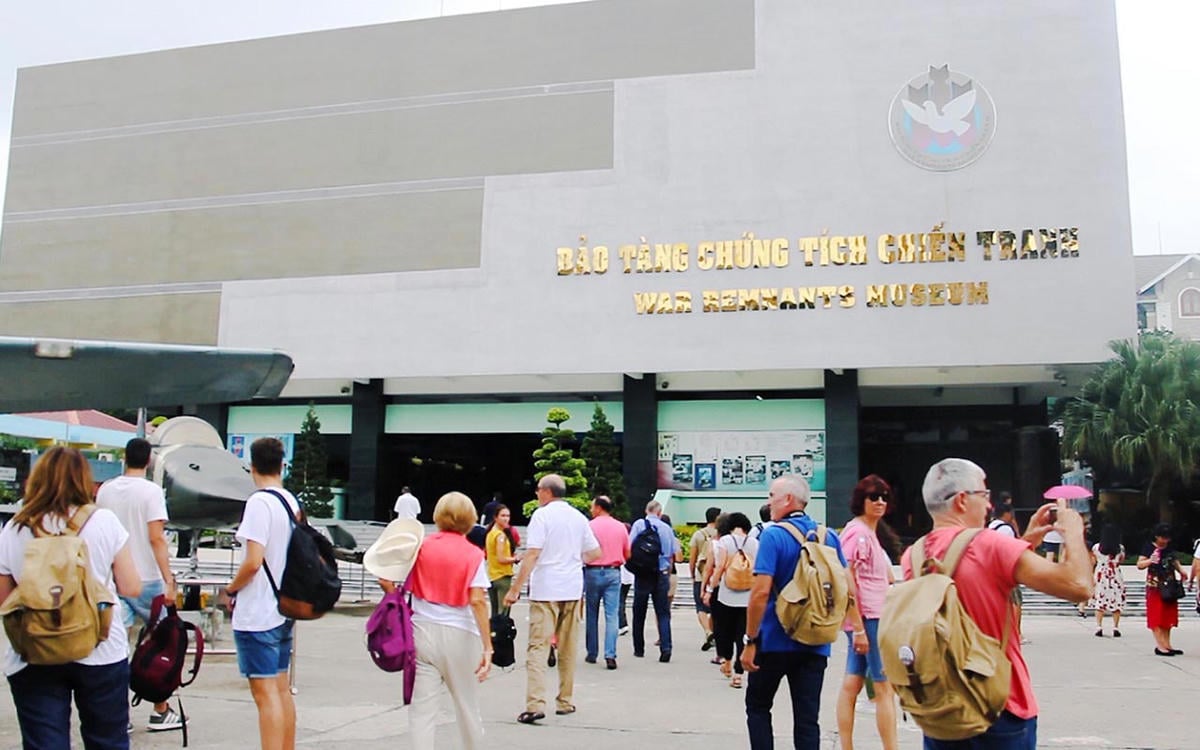
Building a museum ecosystem
According to Mr. Nguyen Minh Nhut, Deputy Director of the Ho Chi Minh City Department of Culture and Sports , the city currently has a total of 25 museums, including 14 public and 11 private museums, housing nearly 700,000 artifacts and documents, of which nearly 300,000 are original artifacts and documents, along with 24 national treasures. Notably, among the 9 museums under the Ho Chi Minh City Department of Culture and Sports, 7 are ranked first in the national museum system. This is considered an important foundation for the city to develop its museum system towards modernization and international integration.
In recent years, many museums in Ho Chi Minh City have begun implementing digital technology , multilingual automated audio guides, and virtual experience spaces to enhance the visitor experience.
Dr. Nguyen Thi Hau, Secretary General of the Ho Chi Minh City Historical Science Association, believes that urbanization and the expansion of development space are creating a need to restructure the museum system towards a more interconnected and multi-centered approach. According to her, although Ho Chi Minh City possesses a fairly diverse network of museums, many limitations still exist, such as overlapping content, monotonous exhibition formats, a lack of connection between museums, and a failure to create engaging experiences for the public. Many museums currently focus more on displaying artifacts than on storytelling and interpreting history.
Dr. Nguyen Thi Hau proposed building a museum ecosystem comprising four components: a central museum acting as the "brain" telling the overall story of the city; specialized museums in various fields; community heritage spaces such as markets, alleys, and craft villages – considered "living museums"; and a digital museum system applying virtual reality technology, open data, and heritage maps.
Furthermore, many experts believe that Ho Chi Minh City currently lacks a museum that fully reflects the long history and distinctive cultural identity of Saigon - Ho Chi Minh City as a major metropolis that was formed early and is one of the most dynamically developing cities in the country. Therefore, a bold change in operation and public engagement is needed if the museum system is to develop in a more modern direction. Dr. Ma Thanh Cao - former Director of the Ho Chi Minh City Museum of Fine Arts - stated that, in the context of globalization, the effectiveness of a museum is measured not only by its ability to preserve artifacts but also by its capacity to innovate experiences for the public. Therefore, museums in Ho Chi Minh City need to continue modernizing their exhibition activities, promoting research on artifacts, and strengthening connections with training institutions to apply technology in preserving and promoting heritage values.
Dr. Nguyen Thi Tu Anh from the University of Social Sciences and Humanities in Ho Chi Minh City emphasized that digital transformation is no longer a trend but has become an essential requirement for museums to adapt and develop in the digital age. However, according to Dr. Nguyen Thi Tu Anh, digital transformation activities in many museums are still inconsistent, fragmented, and lack a long-term strategy. Museums need to implement digital transformation systematically, while also focusing on training a workforce that is both knowledgeable in museum expertise and capable of mastering new technologies.
Developing an open museum model
Mr. Pham Dinh Phong, Deputy Director of the Department of Cultural Heritage (Ministry of Culture, Sports and Tourism), assessed that Ho Chi Minh City is one of the localities with dynamic museum activities and a rapid adoption of modern museum trends worldwide. Mr. Phong stated that the current trend is to develop an open museum model, focusing on the public, increasing experiential learning, and fostering community connection. Accordingly, museums need to shift strongly from managing artifacts to serving the public, from simply providing information to storytelling and sharing, from a viewing space to an experiential and creative space. This is the prevailing trend of modern museums worldwide today.
According to Tran The Thuan, Director of the Ho Chi Minh City Department of Culture and Sports, museums today are no longer just places to preserve artifacts but are gradually becoming spaces for creativity, community education, and social dialogue. Besides its preservation function, museums need to play a role as a space for cultural creativity, a space for lifelong learning, a place to guide diverse knowledge, and contribute to shaping the unique identity of Ho Chi Minh City.
During the period 2026-2030, the city's museum system will improve the quality of its professional museum operations; focus on scientific research, collecting original artifacts, and acquiring exceptionally rare artifacts to propose for recognition as national treasures; concentrate on inventorying and managing artifacts using software, aiming for synchronized artifact management.
Simultaneously, the museum will innovate its content and modern exhibition methods, using artifacts to tell stories, educate, and communicate cultural heritage in order to better serve the needs of visitors, learners, and experiential tourists. The ultimate goal is to build the museum into a repository of urban memory, a community education space, a cultural creativity space, and an attractive tourist destination in Ho Chi Minh City.
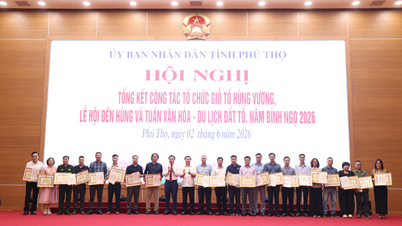
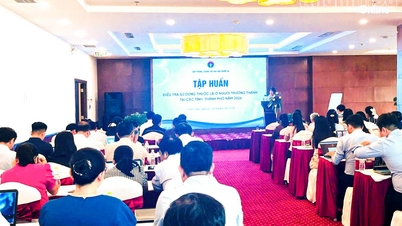
Last weekend, at the Ho Chi Minh City Exhibition and Convention Center, the Department of Culture and Sports of Ho Chi Minh City organized the conference "Current Situation and Solutions for Building and Developing the Museum System in Ho Chi Minh City," aiming to assess the current situation and propose solutions for modernizing museum operations, enhancing public experience, promoting digital transformation, and linking them with the development of the cultural industry.
Source: https://bvhttdl.gov.vn/de-bao-tang-la-diem-den-hap-dan.htm

![[Photo] Delegation attending the 14th Congress of the Vietnam Trade Union visits the Mausoleum of President Ho Chi Minh.](https://vphoto.vietnam.vn/thumb/1200x675/vietnam/resource/IMAGE/2026/06/03/1780451842301_ndo_br_img-3824-jpg.webp)















































Comment (0)