

Clean water is not guaranteed in some areas.
In recent years, rural clean water programs have been widely implemented in many provinces and cities. As a result, rural residents have had access to clean water as an alternative to often contaminated well water. Although some progress has been made, the quality of clean water in rural areas remains inadequate in many places. This is particularly serious in areas that draw water from surface sources, such as rivers, which are heavily polluted.
For example, several water treatment plants in Binh Luc district, Ha Nam province, have been receiving significant public attention recently. According to residents, for the past two years, they have discovered red worms and a strange odor in the cool water they use. Concerned about water quality, some residents had their water tested and received shocking results: nitrite levels in the water in many areas exceeded permissible standards by many times.
Notably, nitrite is a toxic substance that can cause diseases such as cancer, methemoglobinemia (blue blood disease), and affect the nervous system. Long-term use of nitrite-contaminated water can lead to birth defects in children.
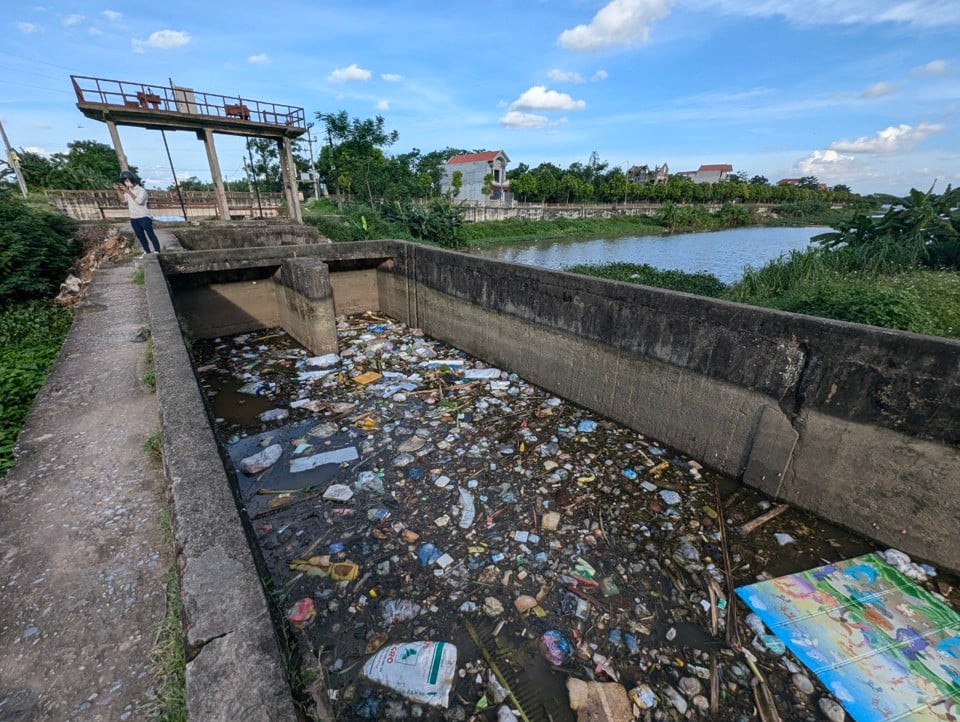
It is precisely because of concerns about water quality that most households here, despite spending a considerable amount of money to buy clean water, dare not use it for drinking or cooking. They only dare to use it for daily bathing and washing clothes.
Not only are water treatment plants using surface water sources facing problems, but even areas that use groundwater for purification are encountering issues. In many places, groundwater is polluted by industrial and agricultural waste, resulting in water quality that does not meet safety standards. This leads to a situation where many households, even those who have purchased clean water, are hesitant to use it for drinking or cooking due to concerns about its safety.
There are many reasons why the quality of clean water in rural areas is not guaranteed. First, surface water sources in many areas are severely polluted by industrial, agricultural, and domestic waste. Rivers and canals have become dumping grounds, polluting water sources without proper treatment.
Furthermore, many rural areas lack effective water treatment systems, resulting in the water supplied to residents not meeting safety standards. Another cause is the lack of investment in clean water infrastructure and poor management. Many rural clean water projects have not been implemented comprehensively and effectively, forcing people to continue using unsafe water sources. In addition, the limited awareness and knowledge of the people regarding water resource protection and clean water usage also contribute to exacerbating this situation.
Fundamental and comprehensive solutions
According to experts, addressing the issue of rural clean water quality requires comprehensive and effective solutions. First and foremost, significant investment is needed in clean water infrastructure, including the construction and renovation of modern, standardized water treatment systems. This will not only ensure the quality of water supplied to the population but also minimize the impact of water pollution on the environment.
Investment projects need to be implemented synchronously and closely monitored to ensure efficiency and sustainability. Another solution is to strengthen the management, monitoring, and treatment of water pollution. Authorities need to take stronger measures to control and treat waste from industry, agriculture, and daily life, preventing direct discharge into the environment. At the same time, increased inspection and monitoring of water quality in rural areas is necessary to detect and address problems promptly.
In particular, experts believe that the most important and sustainable solution is to raise public awareness through propaganda and education about protecting and using clean water. This can be clearly seen when considering the clean water issue in Binh Luc district, Ha Nam province.
Previously, when planning the construction of clean water treatment plants in this district, the Chau Giang River was chosen as the water source for the plants. At the time of the survey, the Chau Giang River water met all the criteria for use as input water for the clean water treatment plants. However, in recent years, the rapid pace of urbanization, along with the habit of littering and indiscriminate waste disposal, has caused the Chau Giang River to become increasingly polluted. This has also affected the quality of the input water for the clean water treatment plants.
The story from Binh Luc district, Ha Nam province, illustrates that widespread communication and education programs are needed to raise public awareness of the importance of clean water and how to protect water resources. This will play a crucial role in the overall water conservation strategy, particularly for rural clean water. Communities need to be equipped with the knowledge and skills to use water efficiently and safely, while also understanding that protecting the water environment will significantly contribute to their own health.
Associate Professor Bui Thi An, Director of the Institute of Environmental Resources and Community Development, stated that although very specific standards for water quality exist, compliance with these standards remains lax. This is the reason why many places are facing concerns about the quality of drinking water. “There are many reasons leading to the situation of unsafe drinking water sources. Among them, two main reasons are management and science and technology,” Associate Professor Bui Thi An noted.
Experts believe that national security concerns the need to ensure water supply for people's daily lives, agricultural production, industry, etc., and to guarantee water quality in both urban and rural areas. To ensure the quality of drinking water for the people, two factors are necessary: infrastructure and management. Infrastructure must meet the needs of increasing population growth to avoid overload, which could affect water quality. Management, on the other hand, must be thoroughly and clearly decentralized.
“Public administration, project management, construction management, technology management, output management. We need thorough and clear decentralization,” Associate Professor Bui Thi An stated.
The use of unclean water has serious consequences for human health. First, people's health is affected by waterborne diseases such as diarrhea, skin infections, and bacterial infections. These diseases not only harm health but also reduce the quality of life and increase healthcare costs for families and society. Furthermore, people's economic lives and daily activities are also affected, as they have to spend a portion of their income on clean water or medical treatment. In addition, the natural environment and ecosystems are also negatively impacted by water pollution.
![[Photo] National Assembly Chairman Tran Thanh Man working with the Standing Committee of the National Assembly's Delegation Affairs Committee.](https://vphoto.vietnam.vn/thumb/1200x675/vietnam/resource/IMAGE/2026/05/20/1779294340023_ndo_br_1-1691-jpg.webp)



![[Image] "Journey of Hope" promotes the organ and tissue donation movement in Vietnam.](https://vphoto.vietnam.vn/thumb/1200x675/vietnam/resource/IMAGE/2026/05/20/1779294400833_1-8910-jpg.webp)
![[Photo] General Secretary and President To Lam works with the Party Committee of the Ministry of Health on the work of Vietnamese traditional medicine.](https://vphoto.vietnam.vn/thumb/1200x675/vietnam/resource/IMAGE/2026/05/20/1779294323718_a1-bnd-2978-3319-jpg.webp)












































































Comment (0)