

The Ministry of Health has proposed including dengue fever vaccination in the Expanded Immunization Program after a trial period in the community.
The Ministry of Health has proposed including dengue fever vaccination in the Expanded Immunization Program after a trial period in the community.
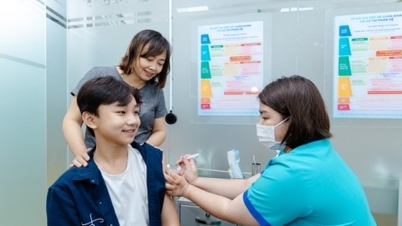
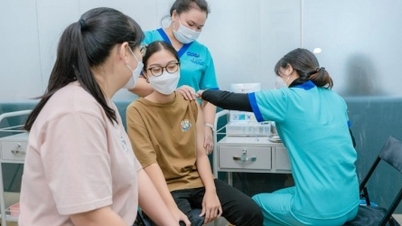
Currently, Vietnam has the Qdenga vaccine for dengue fever prevention, which is included in the list of vaccines licensed for circulation according to Decision 308 dated May 14, 2024, of the Drug Administration of Vietnam. This vaccine is being administered as a private service in Vietnam.
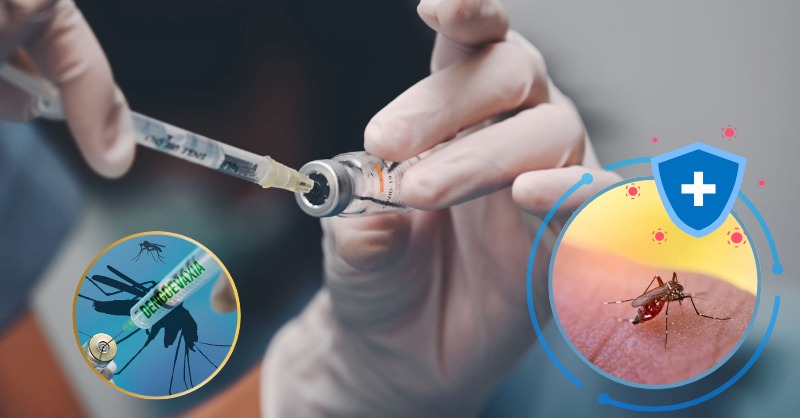 |
| The Ministry of Health has proposed including dengue fever vaccination in the Expanded Immunization Program after a trial period in the community. |
Several domestic and international vaccine studies are also continuing to be developed and tested to provide people with more disease prevention options.
According to data from the World Health Organization (WHO), the number of dengue fever cases has increased tenfold in the last two decades, from 500,000 in 2000 to more than 5 million in 2019.
While Vietnam previously experienced peaks in the pandemic every 10 years between 1980 and 2018, it has gone through two peaks in 2019 and 2022 during the period from 2019 to 2023. In 2022 alone, the country recorded over 367,000 cases, ranking second globally after Brazil.
From having no vaccine or specific treatment for dengue fever, Vietnam now has a weapon to prevent this disease: the vaccine. The dengue fever vaccine aims to reduce the number of cases and limit severe cases requiring hospitalization or death due to dengue fever.
The Ministry of Health believes that including dengue fever vaccines in the Expanded Immunization Program should be done in accordance with the Law on Prevention and Control of Infectious Diseases, which is to add infectious diseases to the list of diseases for which vaccines are available, ensuring free vaccination for the population.
To include the dengue vaccine in the Expanded Immunization Program, assessments of disease burden, safety, immunogenicity, community acceptance, and the economic viability of the dengue vaccine are necessary.
The Ministry of Health is currently coordinating with relevant units to evaluate and research these factors, and will then submit the findings to the Government if deemed appropriate. Before implementing the free vaccination program for the public, the Ministry of Health plans to conduct a community-based trial for approximately two years.
The dengue fever vaccine is currently being administered as a private service at a cost of 2.7 million VND per dose, with two doses given 3 months apart, which is a burden for many people.
Although dengue fever is a very old disease, the concern is that each outbreak presents its own unique challenges. One of these challenges is that when infected, people often go directly to private clinics or hospitals, instead of public hospitals or health centers.
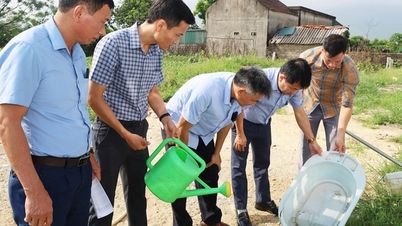
Many people believe that mosquitoes that transmit dengue fever only live in stagnant public ponds, sewers, etc. However, Aedes mosquitoes thrive in stagnant water sources such as fish tanks, flower vases, rock gardens, and rainwater collected in broken pieces of pottery in gardens, neighborhoods, or on rooftops and construction sites. Therefore, it is necessary to eliminate these stagnant water containers that provide breeding grounds for Aedes mosquitoes.
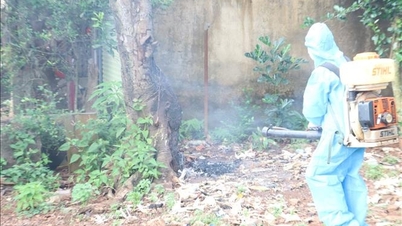
It is necessary to clean the house, turn over all mosquito breeding grounds to kill mosquito larvae, before spraying insecticide to kill adult mosquitoes.
For more effective mosquito control, spraying should be done in the morning, as dengue mosquitoes are active during the day, most actively in the early morning hours and before sunset. It's important to note that insecticides remain effective for up to 6 months after application.
Many people believe that once someone has had dengue fever, they won't get it again. This is not entirely true. Dengue fever is caused by the Dengue virus, which has four strains: DEN-1, DEN-2, DEN-3, and DEN-4. All four strains are capable of causing the disease.
Therefore, if a person has previously had dengue fever, their body may produce antibodies during the illness. However, the immunity formed is specific to each individual strain. The patient may not be reinfected with the old strain of the virus but can still be infected with a new strain, thus potentially contracting dengue fever again.
Regarding treatment, many people believe that when suffering from dengue fever, only electrolyte replacement should be given, and coconut water should be avoided because it does not help with rehydration and makes it difficult to identify complications.
This is completely wrong. In dengue fever, high fever for many consecutive days will cause the patient to become dehydrated and lose fluids. The simplest way to replenish fluids is to give the patient Oresol.
However, many patients find it difficult to drink Oresol. This can be replaced with coconut water, orange juice, grapefruit juice, or lemon juice to replenish lost fluids. Furthermore, these fruits contain many minerals and vitamin C, which help boost immunity and strengthen blood vessel walls.
Source: https://baodautu.vn/de-xuat-tiem-mien-phi-vac-xin-sot-xuat-huyet-d229661.html


![[Image] Pleasant weather helps students enter the 10th grade entrance exam with confidence.](https://vphoto.vietnam.vn/thumb/1200x675/vietnam/resource/IMAGE/2026/05/29/1780034401612_ngay-1-thi-lop-10-minh-duy-8-5009-jpg.webp)
![[Photo] Ba Lang An Lighthouse - the "eye of the sea" amidst the "rock museum" of Quang Ngai province.](https://vphoto.vietnam.vn/thumb/1200x675/vietnam/resource/IMAGE/2026/05/29/1780038698840_anh-man-hinh-2026-05-29-luc-14-10-42.png)





















































































Comment (0)