


The Ministry of Industry and Trade proposes the development of a Law on Commodity Derivatives Trading.
The Ministry of Industry and Trade stated that the drafting and promulgation of the Law on Commodity Derivatives Transactions stemmed primarily from the following reasons:
Firstly , regarding the scope and specialized nature of the law: The 2005 Commercial Law is a framework law, providing general regulations on commercial activities, with only a few provisions dedicated to the buying and selling of goods through commodity exchanges. These regulations are principled in nature and do not fully encompass the specifics of derivative commodity transactions, which are a complex and specialized field, linked to margin mechanisms, clearing, settlement, and systemic risk management. Amending and supplementing only within the framework of the Commercial Law will hardly create a comprehensive, detailed, and specialized legal framework, easily leading to a piecemeal and inconsistent approach.
According to the draft, commodity derivatives are financial instruments whose value depends on the value of the underlying commodity, traded in the form of derivative contracts such as futures contracts, options contracts, swap contracts, contracts for difference (CFDs), and other derivative products as prescribed by law.
Secondly , regarding market development and integration requirements: Commodity derivatives trading has been developing rapidly, becoming an important risk management tool for businesses, investors, and the economy . Many countries have enacted specific laws regulating derivative markets to ensure safety, transparency, enhance risk management, and create a legal basis for international interoperability. If Vietnam continues to maintain regulations within the framework of the 2005 Commercial Law, it will lack a legal framework compatible with international standards, limiting its ability to connect with and attract foreign investors.
Thirdly , regarding the relationship with other specialized laws: The Securities Law of 2019, the Law on Credit Institutions, the Law on Anti-Money Laundering, and related documents have all been amended and supplemented in a modern direction, specifically regulating financial derivative products, clearing organizations, transaction supervision, and investor protection. Meanwhile, the current regulations of the 2005 Commercial Law on commodity trading through commodity exchanges are no longer appropriate, creating legal gaps and the risk of overlapping in state management. The enactment of a separate Law on Commodity Derivative Trading will help clearly define the scope of regulation, the managing agency, and the inter-agency coordination mechanism, ensuring consistency and uniformity within the legal system.
Fourth , regarding the requirements for state management: Commodity derivatives trading inherently carries systemic risks that can impact the financial and monetary markets and affect national economic security if not managed effectively and promptly. A separate law would allow for the comprehensive design of management and supervision tools, sanctions for violations, dispute resolution mechanisms, and regulations on the responsibilities of market participants. If amendments are only made within the framework of the Commercial Law, these specific mechanisms will be difficult to fully implement, leading to ineffective management.
Fifth , the current legal system lacks regulations and a legal framework for trading in commodity derivatives such as carbon credits; cultural and artistic products; precious metals; green financial products; and other new types of transactions.
Policy for developing the derivatives trading market
According to the draft Law on Commodity Derivatives Trading, the State has a policy to develop a diverse, modern, transparent, safe, and internationally integrated commodity derivatives trading market, serving the risk hedging and investment needs of organizations and individuals.
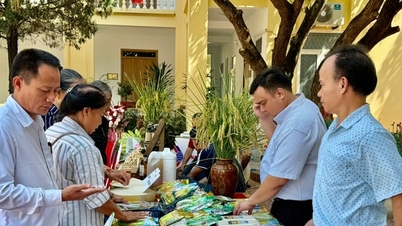
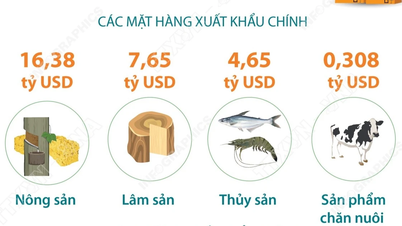
The government encourages the development of derivative commodity products that meet the practical needs of the economy, especially for Vietnam's key agricultural export products.
The government facilitates the interconnection of commodity exchanges with international exchanges, attracting domestic and foreign investors to participate in the market.
The government invests in developing information technology infrastructure and enhancing the capacity for monitoring and managing systemic risks in the commodity derivatives trading market.
The government has a policy of training and developing high-quality human resources for the commodity derivatives trading market.
The draft policy document for the Law on Commodity Derivatives Transactions is currently open for public comment on the Ministry of Industry and Trade's electronic portal.
Source: https://baochinhphu.vn/de-xuat-xay-dung-luat-giao-dich-hang-hoa-phai-sinh-102260225144614255.htm

![[Photo] General Secretary and President To Lam presides over a meeting with the Central Organizing Committee.](https://vphoto.vietnam.vn/thumb/1200x675/vietnam/resource/IMAGE/2026/06/03/1780482764658_a1-bnd-4741-3342-jpg.webp)
![[Photo] First session of the 14th Congress of the Vietnam Trade Union](https://vphoto.vietnam.vn/thumb/1200x675/vietnam/resource/IMAGE/2026/06/03/1780465947883_ndo_br_img-3852-jpg.webp)


![[Photo] Secretary of the National Assembly Party Committee, Chairman of the National Assembly presides over the meeting of the Standing Committee and Executive Committee of the National Assembly Party Committee.](https://vphoto.vietnam.vn/thumb/1200x675/vietnam/resource/IMAGE/2026/06/03/1780480353201_ndo_br_bnd-2585-jpg.webp)













































![[Video] Sunset at Lap An Lagoon – Where the sun sets over the fishing nets](https://vphoto.vietnam.vn/thumb/1200x675/vietnam/resource/IMAGE/2026/05/31/1780192137701_beach-landscape-sea-water-nature-grass-745871-pxhere-com.jpeg)































Comment (0)