

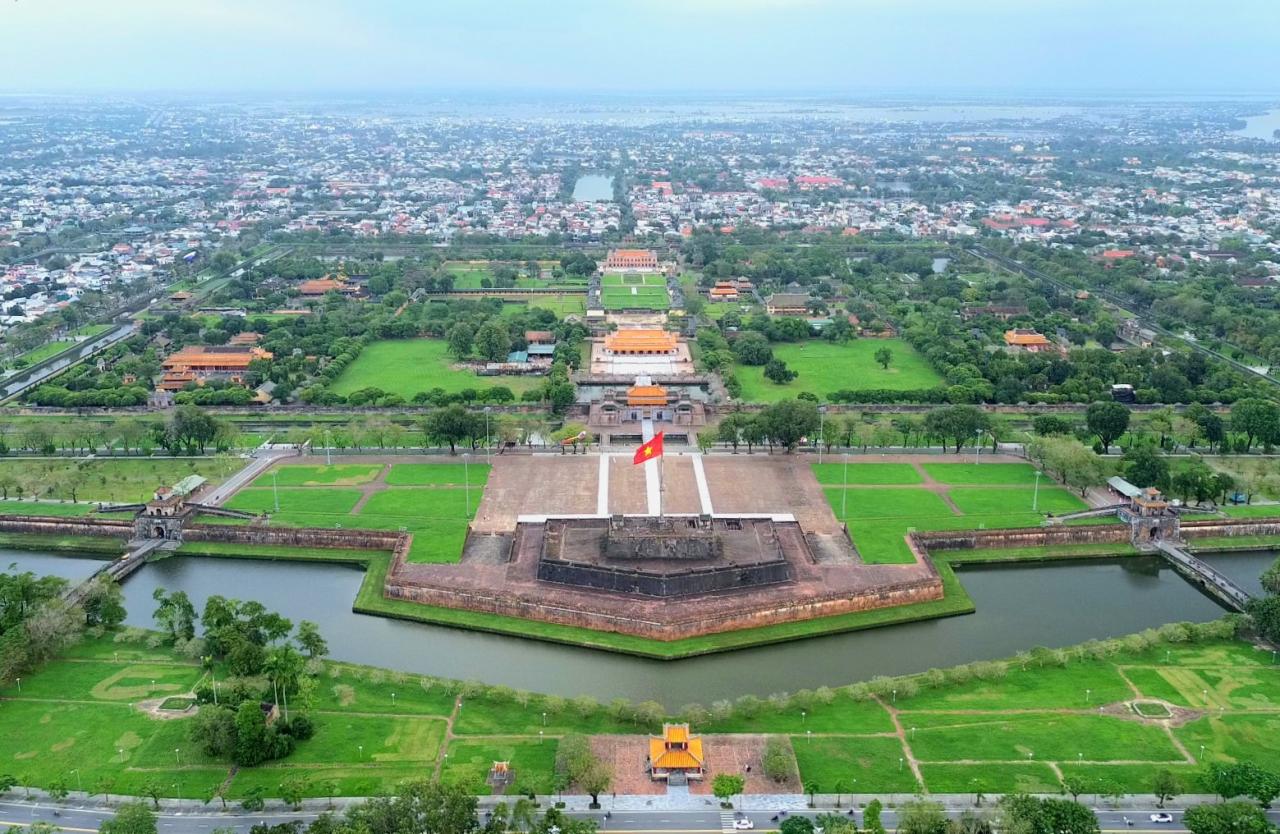
At 8:30 AM on November 30, 2024, the National Assembly passed a resolution establishing Hue City as a centrally-governed city. This milestone marks the culmination of the efforts of a region rich in heritage, history, and culture.
Heritage City
Stretching from North to South and East to West, Hue possesses all the necessary natural conditions and a rich cultural heritage, from the legacy of our ancestors to the strengths of its mountains, forests, scenic spots, rivers, lagoons, and the sea.
Hue is also a city with 8 tangible and intangible world cultural heritage sites, along with nearly 1,000 historical relics... This confirms the brand: "One destination - 8 heritage sites".
The designation of Hue as a centrally-governed city presents an opportunity for the city to become one of the major and distinctive centers in Southeast Asia for culture, tourism, and specialized healthcare – as outlined in the Politburo 's resolution.
Recognizing that its rich cultural heritage is a legacy left to Hue by its ancestors, it is also a "challenge that is always given careful attention to ensure thorough and sustainable resolution."
Following the National Assembly's adoption of the Resolution, the Chairman of the People's Committee of Thua Thien Hue province, Nguyen Van Phuong, said: "We will always strive to seize difficulties as opportunities and gradually overcome them, aiming to make Hue a city that is not only beautiful in architecture but also rich in cultural values."
The local government leader hopes to develop a heritage economy linked to tourism and cultural industries. The city's economic foundation will be built on three pillars: tourism economy, heritage economy, and circular economy; promoting the value of heritage through cultural, landscape, urban, and ecological tourism.
"Spatial planning should aim to make each heritage site a driving force for development," Mr. Nguyen Van Phuong affirmed.
The city by the Perfume River
The center of Hue city is still built around the Perfume River as its main axis. The Perfume River is considered the "backbone" of Hue urban area. Currently, after more than 3 years of implementing the detailed planning project, both banks of the Perfume River have undergone significant changes towards preservation and harmonious development in terms of space, architecture, and landscape. Projects to renovate Vong Canh Hill, Da Vien islet, and pedestrian walkways along the south and north banks of the Perfume River... all adhere to the natural principles of the Perfume River and Ngu Mountain.
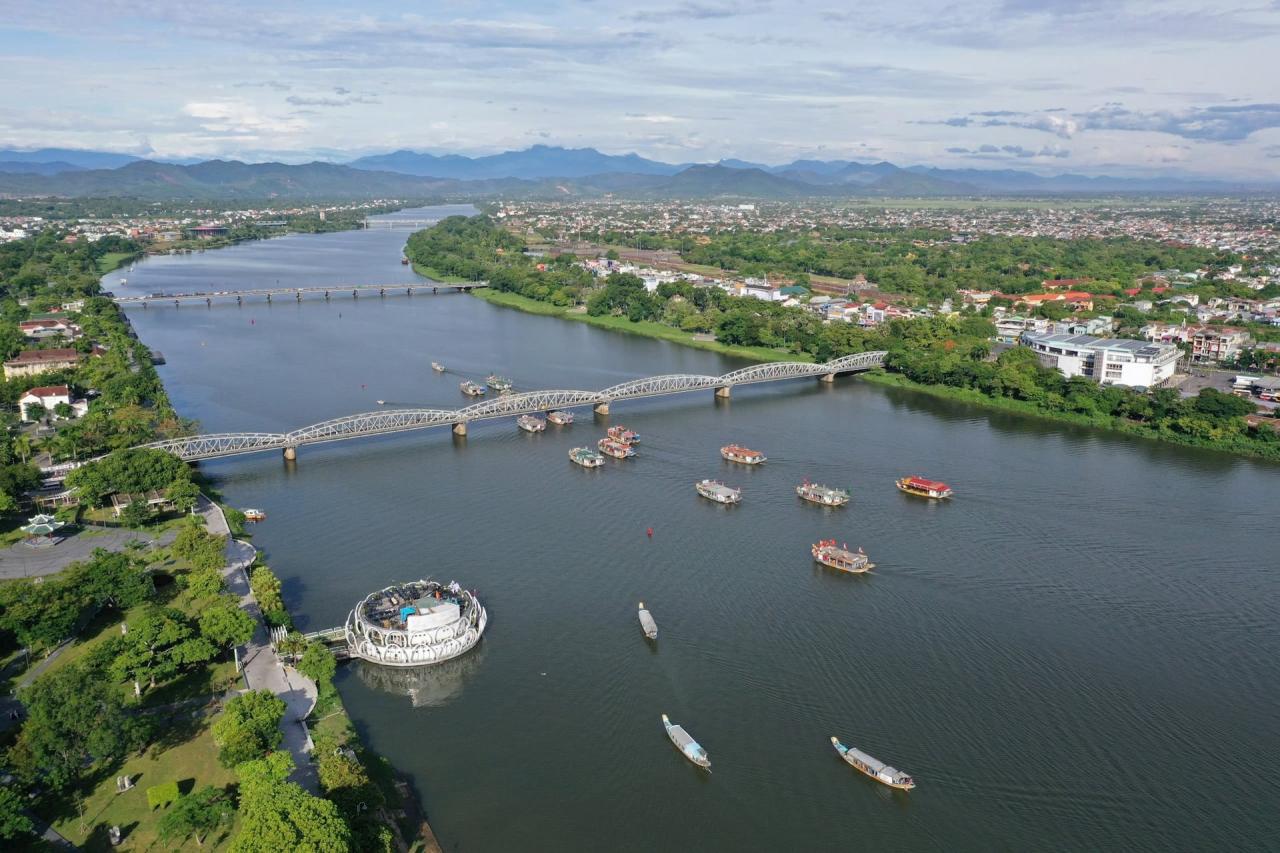
On the north bank of the Perfume River, the requirement to avoid disrupting the landscape and to prevent high-density residential and housing development, or to create a compact urban environment, will harmoniously resolve the dilemma of preservation and development. Relocating residents from the Thượng Thành and Eo Bầu areas, and moving some government agencies within the Hue citadel, is a way to address the government's objective of "avoiding high-density residential and housing development."
The southern bank of the Perfume River, moving eastward, will see stronger development in southern Hue, with modern constructions so that "Hue will no longer be boring."
To create a beautiful and environmentally friendly urban landscape for Hue, emphasis must be placed on planting and protecting trees. The streets, filled with greenery and shaded by trees, are a source of pride for Hue. This city has been honored as a "National Green City" and an "ASEAN Sustainable City"—these serve as guiding principles for the government to treat nature and trees with respect.
Heritage sites are meant to be admired and appreciated, allowing locals and tourists to learn about the long history and development of the ancient capital. But greenery is what brings peace to people's lives and provides a clean environment. Along the Perfume River, from upstream to downstream, wherever you sit, you can feel the fresh air from the sky and earth, from the trees, and the cool breeze of the river.
Hue becoming a centrally-governed city is not just about a title; it's also about finding a sustainable development model – where cultural heritage is protected and promoted within a modern development environment.
Previously, the Thua Thien Hue provincial government had rejected several heavy industry projects because it wanted to develop sustainably without sacrificing the environment. Mr. Phuong emphasized that the goal of attracting investment for economic development will always be to develop while preserving the landscape and conserving heritage and cultural values.
Hue's culture and heritage define it; losing this foundation will make it difficult for the city to stand out. According to the Chairman of the Thua Thien Hue Provincial People's Committee, Nguyen Van Phuong, the challenges facing Hue in this new era include balancing development and preservation, and the impact of climate change. This is a difficult problem because Hue is home to many cultural and historical heritage sites, requiring skillful planning, management, and preservation.
Source: https://baoquangnam.vn/di-san-nen-mong-cho-do-thi-hue-3145487.html
![[Photo] Admire the coral "masterpiece" amidst the million-year-old heritage of Dak Lak province.](https://vphoto.vietnam.vn/thumb/1200x675/vietnam/resource/IMAGE/2026/05/31/1780221235105_anh-man-hinh-2026-05-31-luc-16-53-27.png)
![[Photo] Solemn bathing ceremony and Buddha procession in Hue](https://vphoto.vietnam.vn/thumb/1200x675/vietnam/resource/IMAGE/2026/05/31/1780228263543_1-jpg.webp)

![[Image] Hanoi Police officially crowned champions of V-League 2025/2026](https://vphoto.vietnam.vn/thumb/1200x675/vietnam/resource/IMAGE/2026/05/31/1780244769054_ndo_br_039d561b692be875b13a-jpg.webp)
![[Photo] The General Secretary, President and his wife begin their state visit to the Philippines.](https://vphoto.vietnam.vn/thumb/1200x675/vietnam/resource/IMAGE/2026/05/31/1780230559452_anh-man-hinh-2026-05-31-luc-19-28-11.png)












![[Video] Sunset at Lap An Lagoon – Where the sun sets over the fishing nets](https://vphoto.vietnam.vn/thumb/340x192/vietnam/resource/IMAGE/2026/05/31/1780192137701_beach-landscape-sea-water-nature-grass-745871-pxhere-com.jpeg)































![[Photo] Admire the coral "masterpiece" amidst the million-year-old heritage of Dak Lak province.](https://vphoto.vietnam.vn/thumb/402x226/vietnam/resource/IMAGE/2026/05/31/1780221235105_anh-man-hinh-2026-05-31-luc-16-53-27.png)






























Comment (0)