The comprehensive review and mapping of archaeological sites with detailed descriptions is considered essential to help managers and scientists easily understand the current state of the sites and propose effective conservation and development solutions when conditions are favorable.
Lack of restoration solutions after excavation.
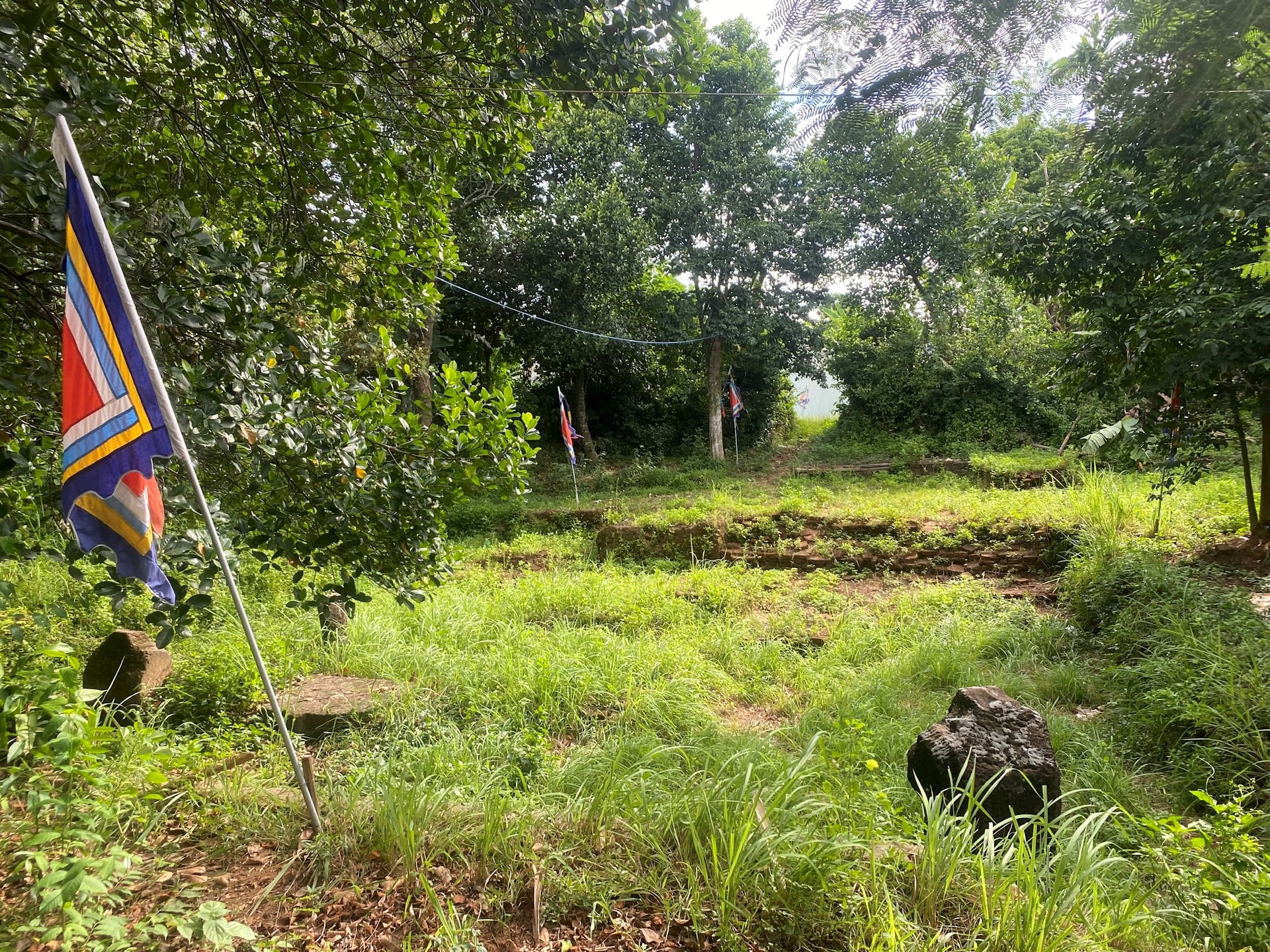
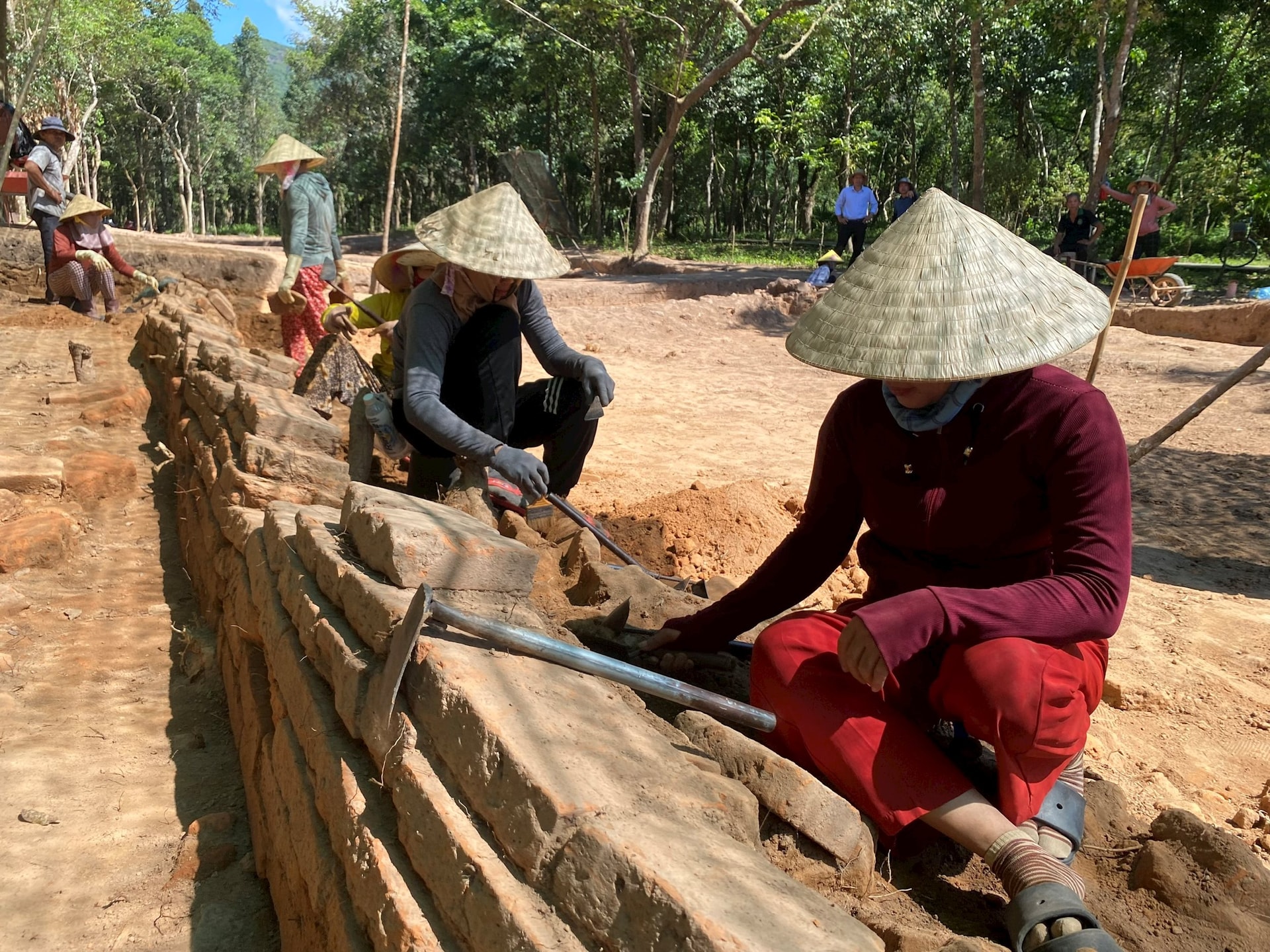
In 2011, during house foundation excavation, residents discovered traces of a Cham architectural structure in Phong Le, Cam Le district (formerly). The Cham Sculpture Museum conducted an emergency archaeological excavation, uncovering the foundations of a complex of towers at the site. At the end of 2020, the Phong Le Cham site was recognized as a city-level archaeological site. However, since then, the site has been overgrown with weeds, and moss has appeared on the bricks and stones.
Previously, in 2003, the F1 tower in My Son (Thu Bon commune, Da Nang city) was excavated, revealing many beautiful patterns on the base walls. However, due to a lack of funding and expertise, the structure was not restored. To date, the F1 tower has seriously deteriorated; the wall joints are crumbling; the bricks at the base of the tower have faded and discolored.
The Phong Le Cham relics and the F1 tower in My Son are just two examples of archaeological excavations that, without restoration, have resulted in damage to the relics. In addition, several other archaeological sites and relics, mainly Cham architecture and Sa Huynh culture, are in similar condition or have been damaged by moss and mildew, such as the Duong Bi, Khuong My, and Chien Dan towers (mandapa, wall base sculptures, etc.).
According to Master's student Nguyen Van Manh from the Vietnam Institute of Archaeology, the best way to preserve archaeological sites is to combine excavation with restoration and the enhancement of the site's value. However, the previous approach focused primarily on collecting artifacts and then backfilling the excavations, without emphasizing the enhancement of the site's value. Today, with different socio-economic conditions and more readily available resources, the trend of combining excavation with restoration and value enhancement has been emphasized, including the application of technology, data digitization, and 3D reconstruction films of the site, which helps to develop excavation ideas and even restoration models for the future.
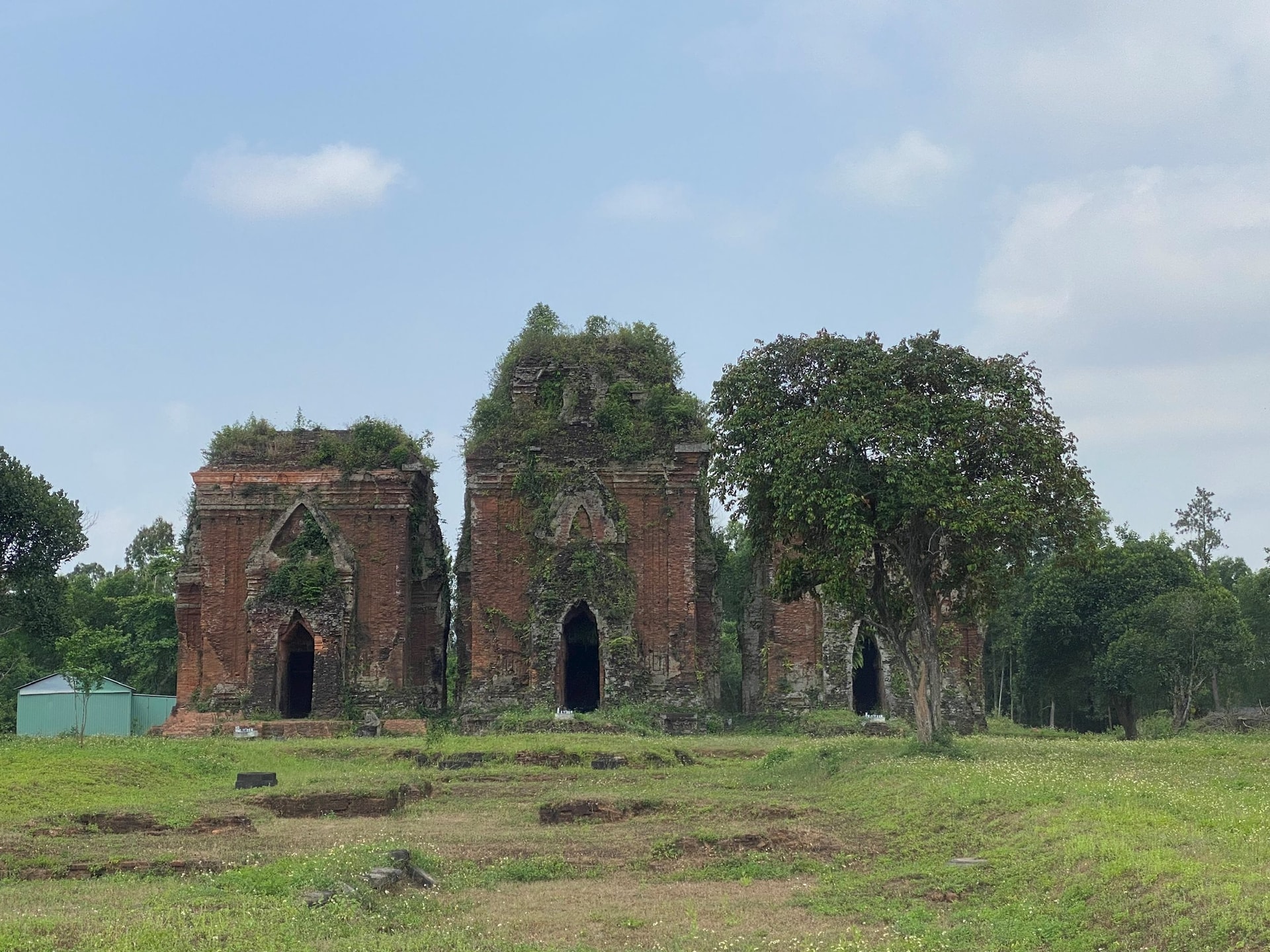


“Archaeology and restoration must always go hand in hand. Archaeology helps in discovering and processing relics, while restoration is about preserving and conserving them. These two aspects must be closely linked, even mandatory,” said Master Nguyen Van Manh.
Da Nang city has a high density of historical relics and diverse cultural layers ranging from Sa Huynh and Champa to Dai Viet (mainly from the Nguyen Lords and Nguyen Dynasty). In some places, there is even an overlap between ancient Vietnamese and Champa relics.
Associate Professor Dr. Le Dinh Phung, an expert in archaeology with many years of research and excavation of Cham relics and ruins in Da Nang city, observes that very few localities possess such a complete range of relic types as Da Nang. However, because it possesses so many different types of relics from various periods, the locality has only focused on addressing the issue of Cham relics due to their prominent and unique characteristics.
“As the central hub of Champa civilization, Da Nang has become a melting pot of many types of Champa architecture. If we connect all the remaining Champa relics in the area, from Tra Kieu and My Son to Dong Duong, Bang An, Chien Dan, Khuong My, and dozens of other ruins, we will see the continuity and diversity of this architectural style, which is not found everywhere,” Associate Professor Dr. Le Dinh Phung observed.
Mapping of historical sites
In fact, about 25 years ago, the Da Nang Museum, in collaboration with the Department of History, Faculty of Social Sciences and Humanities, Hanoi University, conducted an archaeological survey in Quang Nam and Da Nang and discovered several sites with traces of Cham culture, such as An Son Pagoda and Cam Mit Pagoda.
The Cham Sculpture Museum also implemented the project "Survey, collection of artifacts and mapping of Cham relics in the former Da Nang city area". Based on the thematic reports of the project, in August 2014 the book "Cham relics in Da Nang city and new discoveries" was published.
The book is presented with numerous maps and detailed images of relics and artifacts, making it easy for readers to compare them. The editorial team also described seven main relic sites with clear evidence of the Cham architecture that once existed, and where valuable artifacts have been found, including An Son, Cam Mit, Khue Trung, Ngu Hanh Son, Phong Le, Qua Giang, and Xuan Duong.



Previously, in 1998, author Ho Xuan Tinh also published the work "Cham Ruins in Quang Nam" (formerly), listing 25 ruins widely distributed throughout the former Quang Nam province, from Dien Ban, Duy Xuyen, Thang Binh to Tam Ky, Nui Thanh... such as Mieu Ba, Trien Tranh, Chua Vua, Go Loi, An Thai, Go Gach... thereby helping to shape a preliminary "map" of the system of Cham relics and ruins at the present time.
According to MSc. Nguyen Van Manh, archaeological exploration, fieldwork, and excavations have provided a clear view of the high density of Cham relics in Da Nang. In particular, the system of relics extending from Tra Kieu through Chiem Son to My Son demonstrates the continuous development of the Champa dynasty over many centuries (4th-13th centuries), and offers many insights into the cultural and political landscape of the ancient Champa kingdom.
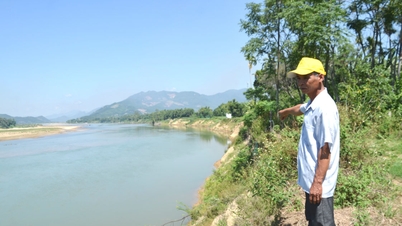
It can be affirmed that creating archaeological site maps is essential now and for the future, especially for sites related to Champa culture. Statistics show that along the Thu Bon River alone, there is a dense concentration of architectural structures from Dai Chiem estuary to Tra Kieu capital, Chiem Son royal palace and cathedral, My Son temple complex, etc.
Source: https://baodanang.vn/di-tim-tieng-noi-tu-nhung-phe-tich-3301444.html




![[Photo] Strengthening character and expertise: Intense training for artillery soldiers.](https://vphoto.vietnam.vn/thumb/1200x675/vietnam/resource/IMAGE/2026/06/30/1782815602541_lu-368-1875-4571-jpg.webp)