

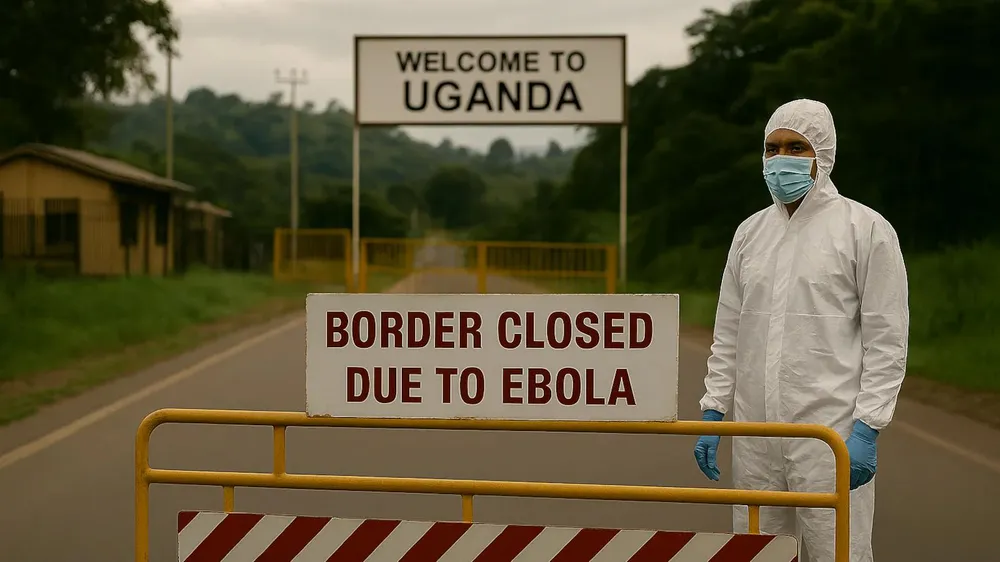
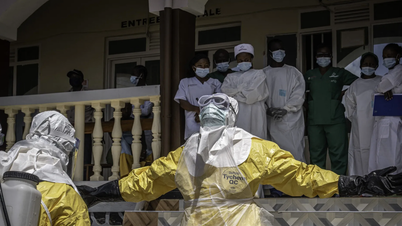
Ugandan officials said the decision was made after several of the country's healthcare workers contracted the virus from patients who crossed the border from the Democratic Republic of Congo before the outbreak was announced on May 15.
However, the WHO argues that closing borders could lead to people and goods being diverted to unofficial routes, thereby increasing the risk of the disease spreading out of control.
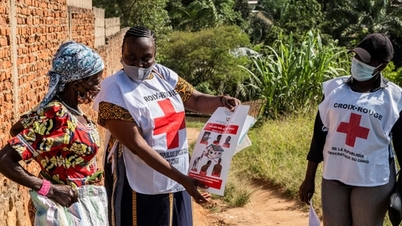
According to WHO data released on May 24, health authorities have recorded more than 1,000 suspected and confirmed cases of Ebola in the Democratic Republic of Congo and Uganda. Of these, the Democratic Republic of Congo has 906 suspected cases, and Uganda has recorded 12 cases. The total number of deaths related to the disease is 224, mostly in the Democratic Republic of Congo.
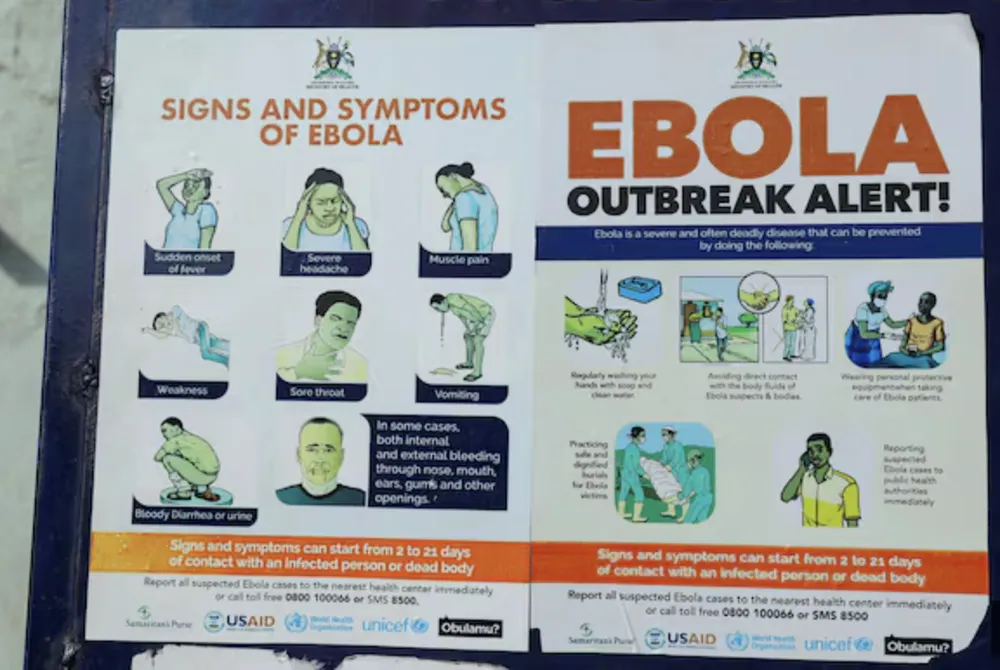
Against this backdrop, on May 28, the Korea Disease Control and Prevention Agency (KDCA) held its first inter-ministerial meeting of 2026 to assess the situation of overseas entry and review its capacity to respond to Ebola.
KDCA stated that it has conducted a comprehensive review of the emergency response system, including the 24/7 disease surveillance mechanism, quarantine procedures at border crossings, epidemiological investigations, and treatment capacity at designated medical facilities.
The South Korean government said it will continue to closely monitor the global Ebola outbreak to adjust travel advisories, expand priority quarantine areas, and strengthen entry controls for passengers, ships, and aircraft arriving from high-risk areas.
Source: https://www.sggp.org.vn/dich-ebola-dien-bien-phuc-tap-post854799.html
![[Photo] The heat at the fireworks display site on the opening night of the Da Nang International Fireworks Festival 2026](https://vphoto.vietnam.vn/thumb/1200x675/vietnam/resource/IMAGE/2026/05/27/1779889741485_ndo_br_z7872039145157-fecaba5112f39e8352544099d7ef4738-5140-jpg.webp)

![[Photo] Life on both banks of the river returns to its bustling pace on the day the Long Bien Bridge opens to traffic.](https://vphoto.vietnam.vn/thumb/1200x675/vietnam/resource/IMAGE/2026/05/28/1779949763708_cau-long-bien-minh-duy-7-3610-jpg.webp)





![[Podcast] World News May 26: Details of US-Iran negotiations in Qatar revealed.](https://vphoto.vietnam.vn/thumb/402x226/vietnam/resource/IMAGE/2026/05/26/1779786517798_khung-thumbnail-tham-khao-tu-mau-cu-500-x-500-px-900-x-600-px-5.jpeg)










































































Comment (0)