

Energy sector
Today, May 26th, Dan Tri newspaper published the following information: Accelerating the progress of key power projects and works to ensure energy security.
At the May 26, 2026 meeting on the implementation of the revised Power Development Plan 8, Deputy Prime Minister Pham Gia Tuc decisively directed ministries, sectors, and corporations to focus on resolving obstacles and "absolutely ensure there is no electricity shortage under any circumstances" to meet the double-digit economic growth target for the 2026-2030 period. Given the current situation where many key power generation and transmission projects are behind schedule due to cumbersome procedures, difficult land clearance, and the avoidance of responsibility by some units, the Deputy Prime Minister requested an urgent review and elimination of unfeasible projects to replace them with more efficient base power sources. He also authorized the application of streamlined procedures, special mechanisms, and emergency measures under the 2024 Electricity Law. The Ministry of Industry and Trade was given full responsibility to the Prime Minister for energy security, and must develop flexible supply-demand scenarios, strengthen on-site monitoring, and resolutely handle investors who fail to meet committed deadlines to ensure a safe and continuous electricity supply for socio-economic development.
The Tuoi Tre newspaper reported: The Ministry of Industry and Trade is seeking opinions on immediately implementing a mechanism for electricity pricing based on peak and off-peak hours.
The Ministry of Industry and Trade is seeking feedback on a draft amendment to Circular 60/2025 to immediately apply the new peak-off-peak electricity retail pricing mechanism (according to Decision 963) during this year's hot season, aiming to resolve issues regarding the effective date of the last electricity price adjustment. This change stems from the actual needs as the national power load curve and power source structure have undergone significant changes since 2019, especially the strong increase in renewable energy and changes in electricity consumption structure (industrial group increased significantly, residential group decreased). According to Decision 963, peak hours are adjusted to evening (5:30 PM - 10:30 PM), normal hours (6:00 AM - 5:30 PM and 10:30 PM - midnight), and off-peak hours (0:00 AM - 6:00 AM daily), with the aim of optimizing system operation, encouraging customers to adjust their consumption behavior, reducing pressure on the power system during peak hours, and promoting investors to develop energy storage equipment.

The website petrovietnam.petrotimes.vn published an article titled: Vietnam Registering and Inspection Department: There is no truth to the claim that "vehicles cannot run on E10 gasoline".
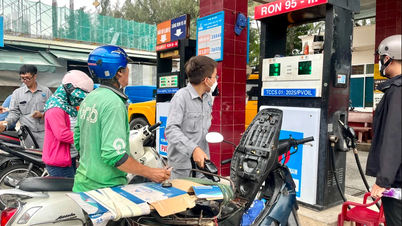
Amid lingering consumer concerns about vehicle compatibility with biofuels, the Vietnam Registering and Inspection Department has officially confirmed that there is no information regarding car or motorcycle models that cannot use E10 gasoline. They also emphasized that most vehicles currently in circulation can operate stably with this type of fuel without requiring technical modifications. A review of major manufacturers such as Honda, Yamaha, Piaggio, SYM, and other automobile manufacturers shows that modern vehicles are designed to meet ethanol-blended fuel standards, thus alleviating concerns about biofuels damaging engines or reducing vehicle lifespan. Promoting the use of E10 gasoline is not only a strategic step to ensure national energy security and reduce dependence on imported fossil fuels amidst unpredictable global market fluctuations, but also a crucial solution to promote green transition and support agricultural economic development through the use of ethanol made from domestically sourced materials. According to the roadmap in Circular 50/2025/TT-BCT, from June 1, 2026, unleaded gasoline circulating in the market will be required to be blended into E10 gasoline. However, to support consumers, the Ministry of Industry and Trade still allows the parallel use of E5RON92 gasoline until the end of 2030, affirming that the transition roadmap is being implemented cautiously, ensuring consumer rights and aiming for a net emission of "zero".
Domestic market sector
The website thegioianh.diendandoanhnghiep.vn published the following information: When fuel reserves are no longer an internal matter of businesses.
The Department of Domestic Market Management and Development has decided to fine a total of 450 million VND to three petroleum distribution companies: Phuc Lam Fuel Joint Stock Company, Long Hung Trading and Service Company Limited, and Anh Phat Petro Joint Stock Company, for violating regulations on circulating reserves, mandatory reserves, and registration of distribution systems.
This incident is not merely a matter of handling administrative violations, but also a warning about the responsibility for national energy security. In the petroleum sector – an essential commodity directly impacting life and production – maintaining reserves according to regulations is no longer an internal matter for individual businesses, but a crucial link in ensuring stable supply, especially during periods of market volatility. Tightening supervision and strictly penalizing violations (including a lack of transparency in the distribution system) is considered a necessary measure to build a fair and transparent petroleum market, protect consumer rights, and ensure the sustainable operation of the economy in the face of unpredictable energy market developments.
Tuoi Tre newspaper reports: Counterfeit goods trap Vietnamese consumers: Businesses must not be left alone.
Counterfeiting is becoming increasingly sophisticated in Vietnam, especially in e-commerce and social media. Counterfeiters not only copy the designs and packaging of genuine products but also employ various deceptive tactics such as running advertisements with real images, creating fake interactions, and exploiting KOLs (Key Opinion Leaders) to gain consumer trust. In light of this situation, experts and business representatives affirm that combating counterfeiting cannot be the sole responsibility of any one party, but requires a concerted effort. Core solutions include tightening seller identification management (such as using VNeID), strengthening the control responsibilities of e-commerce platforms, linking data between regulatory agencies (tax, customs, market management), and increasing consumer vigilance. Only through close cooperation can counterfeit goods be combated, contributing to the protection of legitimate businesses and the sustainable development of the digital economy.
The website vneconomy.vn published an article titled: Vietnamese products reach young consumers through a multi-channel strategy.
Faced with the dramatic shift in shopping behavior among young consumers—a group that prioritizes convenience, transparency, and real-world experiences—Vietnamese businesses are actively moving towards omnichannel sales models. Instead of relying solely on traditional channels like supermarkets, markets, or convenience stores, businesses are now expanding their presence on e-commerce and social media through methods such as livestreaming, short videos, and zero-cost marketing. The "youthful" approach to product design, focusing on brand storytelling, regional culture, and sustainability (green consumption), has helped Vietnamese products reposition their image, increase engagement, and successfully win over Generation Z in the domestic market. Combining digital technology with traditional values not only helps businesses expand their market but also plays a crucial role in promoting the development of digital human resources and the national digital economy.
Trade defense sector
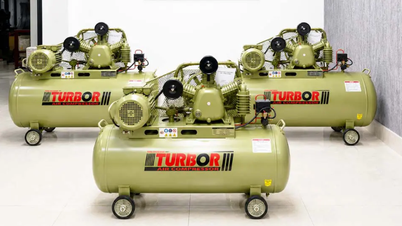
The website taichinhdoanhnghiep.net.vn reported: The US is investigating anti-dumping and anti-subsidy measures on air compressors imported from Vietnam.
The U.S. Department of Commerce (DOC) has officially initiated an anti-dumping and countervailing duty investigation into air compressor imports from Vietnam, along with Malaysia and China. The case stems from a complaint filed by MAT Industries, LLC (received April 30, 2026), alleging that 12 Vietnamese companies engaged in dumping and government subsidies, harming the U.S. domestic industry. Because the U.S. considers Vietnam a non-market economy, the DOC will use surrogate values from a third country (such as Indonesia, Tunisia, or El Salvador) to calculate the dumping margin, with alleged levels ranging from 22.06% to 140.39%. In the coming period, relevant businesses need to proactively monitor information, prepare documentation, and fully cooperate with the U.S. investigating agency to avoid being subjected to adverse measures or the highest possible tariffs.
Source: https://moit.gov.vn/tin-tuc/diem-bao-nganh-cong-thuong-ngay-27-5-2026.html



![[Photo] Ba Lang An Lighthouse - the "eye of the sea" amidst the "rock museum" of Quang Ngai province.](https://vphoto.vietnam.vn/thumb/1200x675/vietnam/resource/IMAGE/2026/05/29/1780038698840_anh-man-hinh-2026-05-29-luc-14-10-42.png)
![[Image] Pleasant weather helps students enter the 10th grade entrance exam with confidence.](https://vphoto.vietnam.vn/thumb/1200x675/vietnam/resource/IMAGE/2026/05/29/1780034401612_ngay-1-thi-lop-10-minh-duy-8-5009-jpg.webp)




































































Comment (0)