

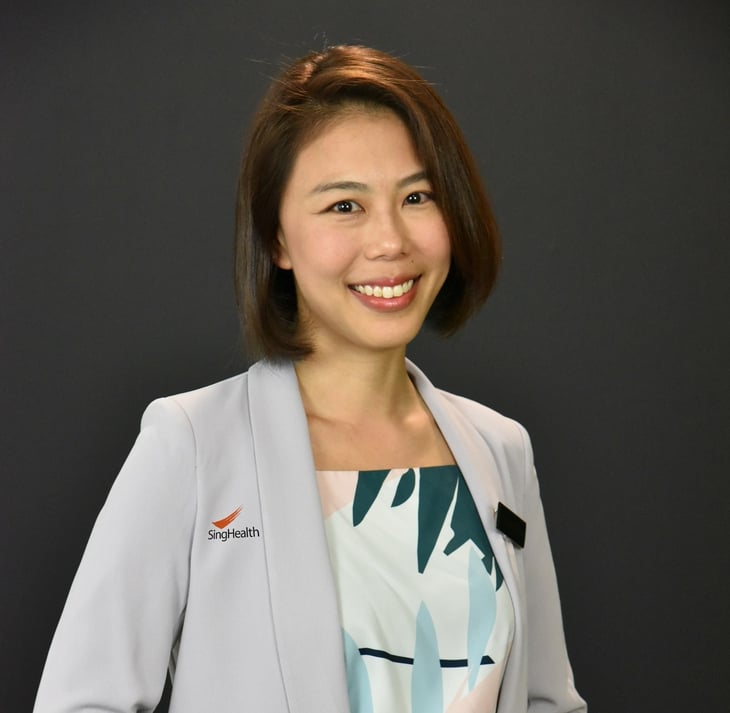
Associate Clinical Professor Tan Si Ying, Consultant Physician at SingHealth Duke-NUS Breast Cancer Centre and the Department of Surgical and Surgical Oncology at Singapore General Hospital and National Cancer Centre Singapore
Individualized breast cancer treatment: A multidisciplinary approach.
Effective breast cancer treatment requires close collaboration among multiple specialties, including surgery, medical oncology, radiation therapy, diagnostic imaging, pathology, and psychological support.
The SingHealth Duke-NUS Breast Cancer Centre operates as a "one-stop shop," allowing for the development of personalized treatment plans based on disease stage, tumor biology, and individual patient preferences.
Associate Clinical Professor Tan Si Ying, consultant physician at the SingHealth Duke-NUS Breast Cancer Centre and the Department of Surgical and Surgical Oncology at Singapore General Hospital - National Cancer Centre Singapore, said that over the past decade, breast cancer treatment has shifted from a standardized model to a highly individualized, multidisciplinary approach focused on intervention efficacy.
Today, treatment decisions are based not only on the patient's condition but also on the tumor's biological characteristics, genetic analysis, and its response to therapy.
Applying systemic therapy before surgery allows doctors to monitor the tumor's response in real time, thereby adjusting the treatment strategy more appropriately, improving survival rates and limiting unnecessary side effects.
According to Associate Professor Tan Si Ying at the SingHealth Duke-NUS Breast Cancer Centre, each case is discussed in a multidisciplinary tumor panel, involving breast surgeons, oncologists, radiation therapists, as well as imaging specialists, pathologists, and other relevant medical professionals.
This approach helps build a personalized and consistent treatment plan right from the start, rather than a piecemeal approach.
Furthermore, integrating patient-reported outcome measurement tools (PROMs) into daily care processes helps to identify unmet needs early, thereby improving care effectiveness and putting the patient at the center.
Intraoperative radiotherapy: An advanced solution to shorten breast cancer treatment.
Breast cancer surgical techniques have advanced significantly. Currently, the Center employs selective axillary approaches, which help reduce complications such as lymphedema.
Simultaneously, minimally invasive and endoscopic surgeries ("keyhole" surgery) are becoming increasingly common in suitable patients. These methods help reduce incision size, improve aesthetics, while still ensuring effective cancer treatment.
"One of the highlights at the SingHealth Duke-NUS Breast Cancer Centre is intraoperative radiotherapy (IORT). This is an advanced method in which a single dose of radiation is delivered directly to the tumor area during surgery, after the cancerous tumor has been removed," added Associate Professor Tan Si Ying.
Traditionally, patients who undergo breast-conserving surgery need to undergo several weeks of radiation therapy. With IORT, suitable patients can receive radiation therapy during surgery, significantly reducing the overall treatment burden.
This method offers several benefits, such as reducing the number of visits, maximizing convenience for patients, and precisely focusing radiation on the area with the highest risk of recurrence, minimizing the impact of radiation on surrounding healthy tissues.
For appropriately selected patients with early-stage breast cancer, IORT can provide local control comparable to traditional radiation therapy, while minimizing treatment time and reducing disruption to daily life.

Image of breast cancer that has metastasized to the liver - Photo courtesy of the National Cancer Institute
Comprehensive care in breast cancer treatment
At SingHealth, patients receive comprehensive and continuous care from diagnosis to recovery. Breast specialists provide ongoing support, counseling, health education , and ensure connectivity throughout the treatment process.
According to Associate Professor Tan Si Ying, the current trend is not just about treating diseases, but also about long-term recovery and improving quality of life. The center integrates patient-reported metrics (PROMs) to understand the experience, thereby adjusting and improving the quality of care.
One highlight is the YoWo program for young women with breast cancer. This initiative aims to address the needs of patients diagnosed at a young age. This represents a major shift in breast cancer treatment, moving from a focus solely on survival to emphasizing holistic recovery and enabling patients to live more meaningful and fulfilling lives.
In addition, patients also have access to other comprehensive support services from medical social workers and psychologists for emotional support; peer support groups; nutritionists and rehabilitation teams to support physical recovery throughout the treatment process.
The goal is not only to treat cancer, but also to help patients recover as best as possible and maintain a healthy life after treatment.
Source: https://tuoitre.vn/dieu-tri-ung-thu-vu-khong-con-mot-cong-thuc-20260526133150087.htm




![[Photo] Standing Committee member of the Party Central Committee Tran Cam Tu working with the Central Inspection Committee](https://vphoto.vietnam.vn/thumb/1200x675/vietnam/resource/IMAGE/2026/05/28/1779969579668_ndo_br_bnd-2495-jpg.webp)













































































Comment (0)