

In the context of a volatile global economy , traditional poverty reduction models based solely on financial aid are gradually revealing their limitations. The new global trend is to apply "behavioral economics" to social welfare.
Activate self-reliance and discipline.
Lessons from Singapore, China, the UK, and the US show that for sustainable poverty alleviation, public policy must act as the "architect," redesigning the environment so that the poor can change their own mindset and behavior.
Singapore employs a model of empowering individuals to activate accountability. Singapore does not follow the Western welfare state model. Instead, the island nation adopts a strategy of "empowerment" through individual accounts.
Instead of offering free vocational training courses on a large scale, where learners often enroll but drop out because it's free, the Singaporean government launched the SkillsFuture Credit program. Under this program, all Singaporean citizens aged 25 and above receive an initial credit of SGD 500 (over VND 10 million) in their account.
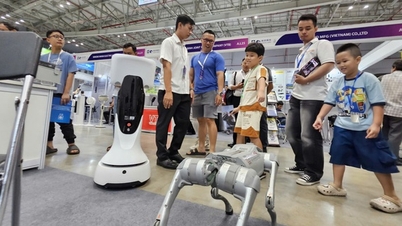
According to Channel NewsAsia, training providers say demand has surged as learners flock to courses ranging from artificial intelligence and cybersecurity to drone control.

Training providers say demand has surged as learners flock to courses ranging from artificial intelligence and cybersecurity to drone control. Photo: CNA
This money cannot be converted into cash, but can only be used to pay for approved courses. Singaporean policymakers believe that when people pay for their own money, even if it's government funds deposited into their accounts, it gives them a sense of ownership.
Behavioral changes are evident as employees are no longer passively waiting for the company to send them for training. They proactively seek out courses in digital skills, foreign languages, or management because they want to use their "money" in the most effective way. This is a shift from a beneficiary mindset to an investor mindset.
For low-income groups, Singapore implements the Workfare Income Supplement (WIS) program. This policy stipulates that the government will supplement cash and CPF (pension fund) savings for the poor, but with the prerequisite that they are employed. This policy eliminates the mindset of staying home and receiving unemployment benefits. It sends a strong signal that labor is the only way to receive state support.
Meanwhile, China has lifted 800 million people out of poverty over the past 40 years. The World Bank considers this an unprecedented scale of poverty reduction in history. A report titled "Four Decades of Poverty Reduction in China," jointly published by the Ministry of Finance , the Development Research Center of the State Council of China, and the World Bank, identifies two main factors contributing to this poverty reduction effort.
Firstly, widespread economic transformation has opened up many new development opportunities for the poor and continuously increased their incomes. Secondly, targeted government policies aim to eradicate persistent poverty in areas constrained by geographical location and other factors.
The report also notes that this targeted poverty reduction strategy plays a crucial role in eradicating absolute poverty, according to the World Bank's global absolute poverty line of $1.90 per person per day.
Manuela Ferro, Vice President of the World Bank for East Asia and the Pacific, stated that poverty reduction in China is also a story of sustainable growth through economic transformation. As China's economic reforms deepen, social policies need to be adjusted to better support labor mobility, improve the quality of the workforce, adapt to market demands, and protect vulnerable groups from the impacts of this transformation.
In February 2021, China declared a comprehensive victory in eradicating absolute poverty. According to Xinhua News Agency, the country had completed the poverty eradication target set in the United Nations' 2030 Agenda for Sustainable Development 10 years ahead of schedule.
Specifically, the government stopped providing unconditional cash handouts. Instead, they provided seedlings, livestock, and sent agricultural experts to provide guidance. People had to work on their own land. If they were lazy and let the plants die, they would not receive further assistance. This forced farmers to change their outdated farming practices and poor work discipline.

China has lifted 800 million people out of poverty over the past 40 years. Photo: VCG
Breaking the "poverty trap" through mechanisms.
Unlike the strict discipline of Asia, Western countries use psychology to encourage people to make the right decisions.
He adopted a "default" model to secure his future. One of the biggest successes in changing financial behavior in the UK is the automatic pension scheme. Before 2012, low-income workers often didn't save because the pension registration process was complicated and inefficient. The UK government reversed the process, allowing workers to be automatically enrolled in a pension fund by default. If they didn't want to, they had to apply to withdraw. Because of this inertia, most people were reluctant to withdraw and opted to save instead. The rate of workers participating in pension savings has skyrocketed, especially among low-income groups, helping them avoid hardship in old age.
Furthermore, the UK's Behavior Insights Team (BIT) demonstrated the power of words. In employment centres, instead of asking unemployed people "Where did you fail?", they changed it to "What are your plans for next week?". This small change triggered a forward-thinking mindset, significantly increasing job placement rates.
Meanwhile, Germany applies the principle that the state will provide support but in return requires workers to make an effort to find work. Long-term unemployed individuals must sign an "Integration Agreement". If they refuse a suitable job or refuse to participate in training, their benefits will be partially or completely cut off.
This policy was socially controversial, but from a behavioral economics perspective, it dramatically reduced long-term unemployment, forcing those with a "wait-for-benefits" mindset to enter the labor market.
In the United States, the Income Tax Credit (EITC) is used to break the "poverty trap." If workers earn low wages, the government refunds their taxes. The higher their income (up to a certain threshold), the greater the refund. As a result, the EITC has helped more than 5 million people escape poverty each year. It is considered the most effective tool for combating poverty and encouraging employment in the United States.
The US also conducted a large-scale social experiment called "Moving to Opportunity." The government provided housing vouchers to poor families, but on the condition that they move from slums to neighborhoods with lower poverty rates. Upon moving to a more positive environment, they were forced to adjust their behavior to integrate. Research from Harvard University showed that children from these relocated families earned 31% higher incomes and had significantly higher college admission rates compared to those who remained in slums.
Conditional Transfer (CCT) models like Opportunity NYC have also been effectively implemented in New York, USA. Under this model, impoverished families receive money if they exhibit good behavior such as taking their children for regular health checkups, ensuring their children attend school regularly, and parents attending parent-teacher meetings.
The program aims to alleviate immediate income-related hardship for poor families, assist and encourage poor families to strengthen or sustain positive efforts to improve their own future, and support poor families as they invest in their children's future.
Source: https://nld.com.vn/giam-ngheo-ben-vung-thay-tu-duy-doi-cuoc-doi-19625122700211981.htm





![[Photo] The heat at the fireworks display site on the opening night of the Da Nang International Fireworks Festival 2026](https://vphoto.vietnam.vn/thumb/1200x675/vietnam/resource/IMAGE/2026/05/27/1779889741485_ndo_br_z7872039145157-fecaba5112f39e8352544099d7ef4738-5140-jpg.webp)































































































Comment (0)