

Schools are a crucial foundation for nutritional interventions.
Presenting at the recent workshop "School Nutrition – From Policy to Intervention Program," Dr. Nguyen Duy Son from the United Nations Children's Fund (UNICEF) in Vietnam stated that 2025 will be the first time that the rate of overweight and obese school-aged children globally will exceed the rate of underweight children. Currently, there are approximately 391 million children aged 5–19 who are overweight or obese.
In Vietnam, one in five children aged 5–19 are overweight or obese. Meanwhile, while the rate of stunting has decreased significantly over the past 20 years, it remains high, having long-term impacts on children's health, psychology, and academic performance.
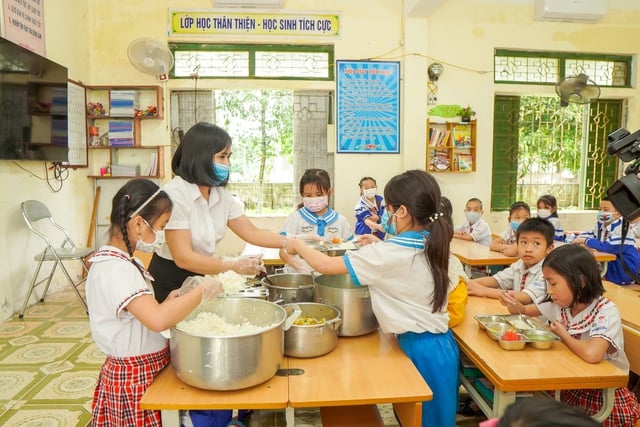
School nutrition needs a holistic approach.
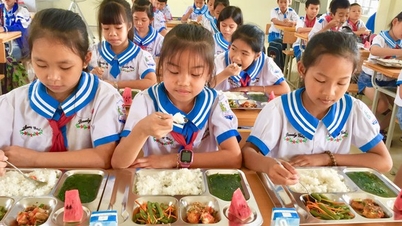
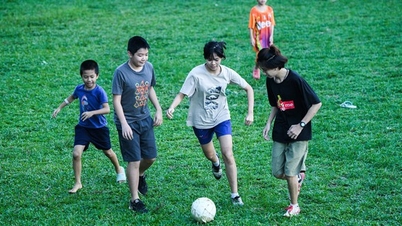
UNICEF recognizes that schools are an effective platform for improving children's nutrition and health. In Southeast Asia, over 90% of children attend primary school. While only about 71% continue on to lower secondary school or higher, this remains a crucial level for implementing nutritional interventions for children and adolescents, such as school meals, access to clean water, multivitamin supplementation, nutrition education , and physical activity.
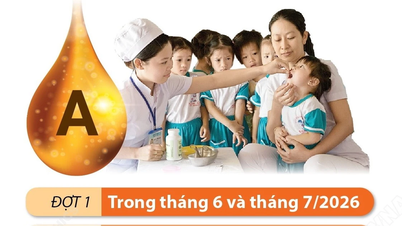
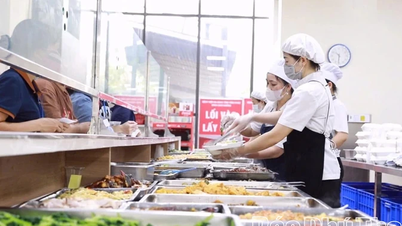
According to UNICEF, school nutrition is not just about school meals but should include various other aspects such as: nutrient-rich food; a healthy food environment inside and outside of school; multivitamin supplementation and deworming; nutrition education in schools; and healthy nutrition practices for school-aged children and adolescents.
Specifically, school food needs to ensure adequate nutrition and food variety; be safe and limit unhealthy foods; be suitable to local tastes and culture; and aim for sustainability and equity.
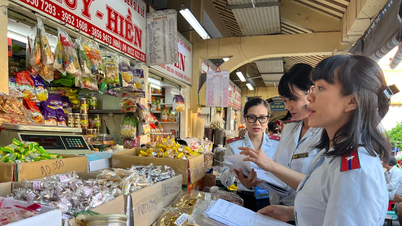
Dr. Nguyen Duy Son argues that a healthy food environment needs to be built both inside and outside of schools, including an environment that supports healthy choices, food and beverages within schools, the food environment around schools, and the policy environment.
This organization also raises many issues regarding the current school environment, such as whether schools are actually providing healthy food, whether sugary drinks are sold on school grounds, whether there is nutrition education, or whether there is space for students to exercise.
There is a need to develop tools for assessing and monitoring the school nutrition environment. One of the tools introduced is the National Nutrition Assessment Toolkit for the Asia-Pacific region (NEAT-S). This tool helps identify factors that promote or hinder healthy eating habits in schools, and supports the development of evidence-based school nutrition policies and interventions.
NEAT-S was tested in Vietnam in 2022 at 16 primary and secondary schools in Hanoi , Dien Bien, Ha Tinh, and Soc Trang. The test results showed clear differences between urban and rural schools regarding school nutrition environments. Many unhealthy foods were still sold in and around the schools.
Experiences in developing school meals in Japan and Indonesia.
Dr. Nguyen Duy Son shared that the school lunch program in Japan began in 1889 at a private elementary school in Yamagata Prefecture to support impoverished children. From 1932, the Japanese Ministry of Education began providing financial assistance to expand the program nationwide. After World War II, the program was revived in 1947 with the support of UNICEF and other international aid organizations.
Currently, the program is implemented in 99.2% of elementary schools and 87.9% of junior high schools in Japan. All students in the same school are served the same menu consisting of rice or bread, a main course, a side dish, milk, and dessert.
The menu is designed according to nutritional standards to ensure a balance of carbohydrates, protein, fats, vitamins, and minerals. Students are educated about healthy eating habits and reducing food waste. The rate of food waste is only about 6.9%.
School meals in Japan are also part of life skills education, with students serving themselves, cleaning up, and eating together in the classroom.
Another example cited by Dr. Son is that Indonesia is currently facing multiple nutritional problems among its youth. Approximately 25% of teenagers are stunted, 8% are underweight, while 15% are overweight or obese. In addition, 10% of male children and 23% of female children suffer from anemia. Many students skip breakfast, frequently consume sugary drinks and processed foods, while their physical activity levels are low.
UNICEF and the Indonesian Government have implemented the Aksi Bergizi program, which combines iron supplementation, nutrition education, and behavior change in schools through a multidisciplinary approach. Core activities of the program include weekly iron supplementation combined with school breakfasts; interactive nutrition and health education; behavior change through student-led activities; and a multidisciplinary approach to enhance sustainability.
Mobilizing students to act as "peer supporters" helps increase engagement, spread the message, and maintain healthy behavior both inside and outside of school. Effective interventions require a combination of education and a supportive environment, and the commitment of schools and local authorities is crucial to the program's effectiveness and sustainability.
Following a pilot phase, the Indonesian government included Aksi Bergizi in the national school health program.
In Brazil, the National School Meal Program (PNAE) currently benefits approximately 40 million public school students. School meals in Brazil are considered a children's right and are legalized. Under this program, at least 30% of food must be purchased from local family farms to support livelihoods and a sustainable food system.
For Vietnam, experts suggest prioritizing the development of school meal guidelines suitable for mountainous areas, disadvantaged regions, and ethnic minority communities. They also recommend strengthening measures to improve the nutritional environment in schools; and continuing or expanding school nutrition interventions that prioritize girls, children with disabilities, ethnic minorities, mountainous areas, and disadvantaged regions.
In addition, UNICEF recommends strengthening inter-sectoral coordination mechanisms between the Ministry of Health, the Ministry of Education and Training, local governments at all levels, and relevant departments and organizations; and establishing an effective monitoring and accountability system.

Source: https://suckhoedoisong.vn/dinh-duong-hoc-duong-can-duoc-tiep-can-toan-dien-169260531205545956.htm























![[Photo] Reception to welcome General Secretary and President To Lam and his wife on their State visit to the Philippines](https://vphoto.vietnam.vn/thumb/1200x675/vietnam/resource/IMAGE/2026/06/01/1780295488620_vna-potal-chieu-dai-chao-mung-tong-bi-thu-chu-tich-nuoc-to-lam-va-phu-nhan-tham-cap-nha-nuoc-toi-philippines-8798060-7855-jpg.webp)


















































Comment (0)