

Necessity is the mother of invention.
Due to the characteristics of mountainous districts, with their rugged terrain, reservoirs and dams are few and scattered, and streams and creeks have steep slopes. Therefore, storing water and combating drought during the dry season is extremely difficult; moreover, using gasoline-powered pumps for rapid irrigation is a luxury due to the high cost…
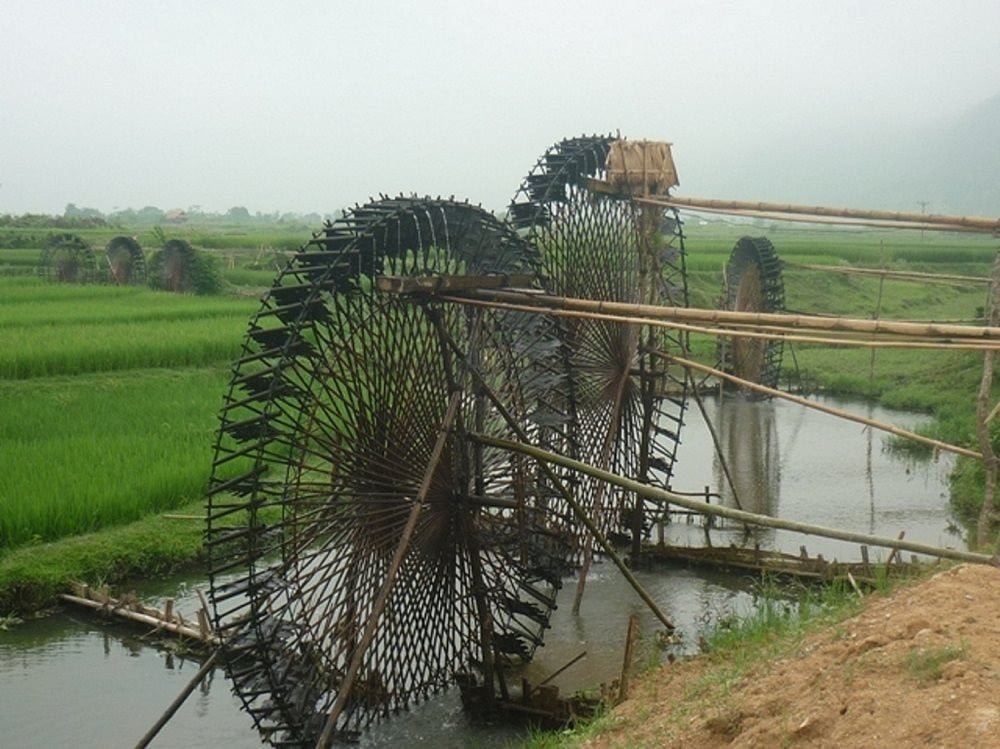
Necessity is the mother of invention. For many years now, the Thai ethnic people in the western districts of Nghe An province, such as Que Phong, Quy Chau, Tuong Duong, and Con Cuong, have devised a unique and simple solution to combat drought: homemade water wheels made of wood and bamboo. These wheels are inexpensive yet highly effective.
In Hoa Tien 1 and Hoa Tien 2 hamlets of Chau Tien commune (Quy Chau district), people living along the Hieu River mainly cultivate sandy soil. Using water pumps only provides water for one or two days, and the poor cannot afford to buy them, as they also waste fuel. Therefore, their method of combating drought using simple, homemade water wheels is much more effective and inexpensive.
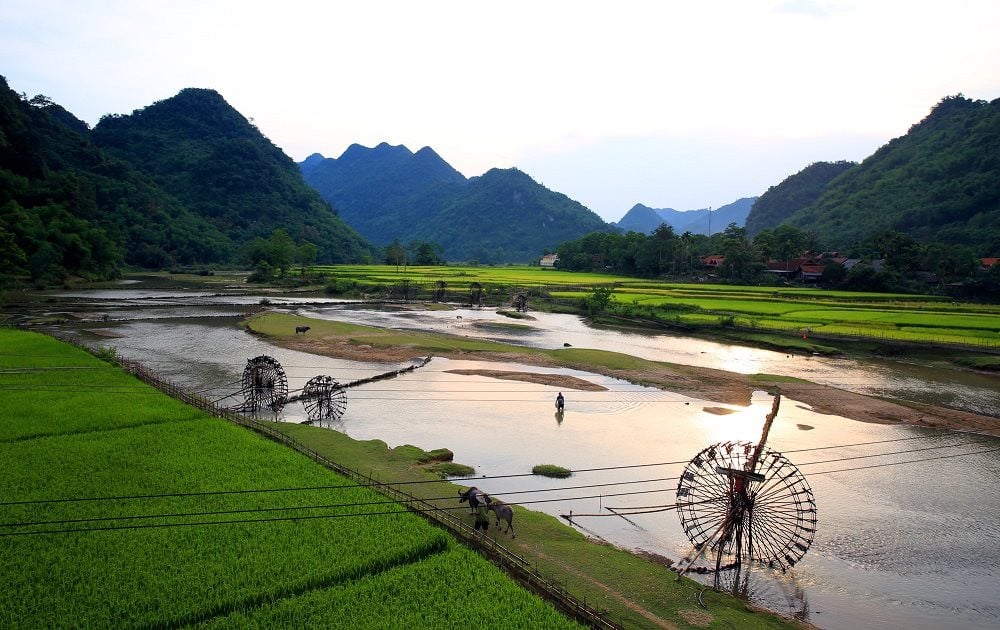
Mr. Sam Van Tam, from Hoa Tien I village, said: "Water wheels have been around since our ancestors' time. Making a water wheel isn't difficult; the tools are simple, and it only takes 2 to 3 days to complete. The cost is also lower. On average, there are 70-80 water wheels in the village, serving to irrigate more than 40 hectares of rice fields."
Each waterwheel costs an estimated 2-3 million VND. A normal waterwheel can be used for 2 years, after which it needs to be repaired and can be used again. Waterwheels are very convenient for bringing water to irrigate dry fields in high-lying areas.
Throughout the year, the sight of waterwheels, like giant wheels, slowly and steadily turning on both banks of the Hieu River, has become very familiar to locals and visitors alike. The unique and striking image of the waterwheels often prompts passersby to stop and take photos as souvenirs. Waterwheels have become a distinctive feature of the Thai people in the western districts of Nghe An province.
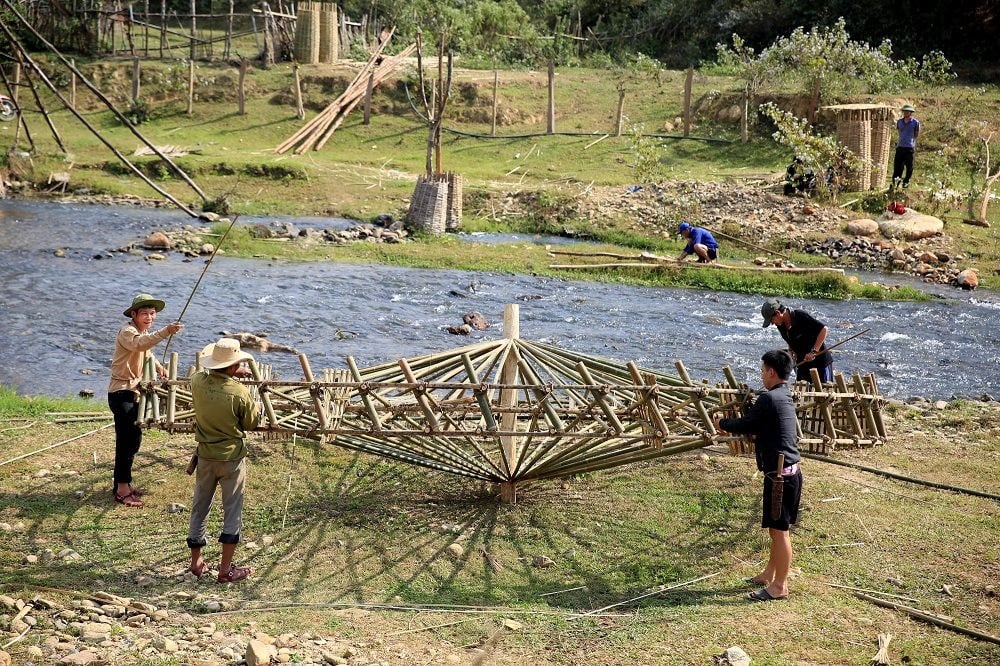
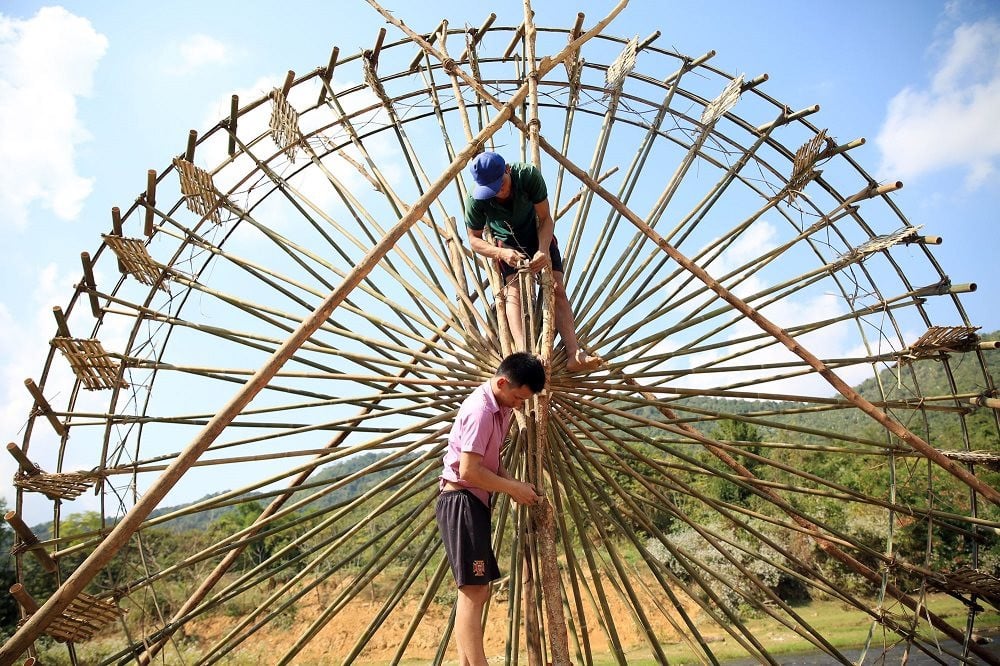
Waterwheels are cleverly designed from materials found in the mountains and forests, such as bamboo and rattan. These waterwheels, used by the mountain people, have become unique, self-made irrigation structures, serving agricultural production and combating drought for the local population.
Mr. Sam Van Tuc, Vice Chairman of the People's Committee of Chau Tien commune (Quy Chau district), said: "Chau Tien commune has nearly 280 hectares of rice fields, of which about half regularly suffer from water shortages. Ensuring irrigation water through irrigation canals is impossible. The people have built their own water wheels to combat drought, which is very effective and saves on the cost of building irrigation systems. With these water wheels, the people have solved the difficulties for the government in combating drought."
Water wheels... for tourism
In recent years, an unexpected benefit of waterwheels has been that tourists from all over the world are fascinated by their unique and eye-catching appearance. Upon seeing waterwheels, many tourists linger by the streams and creeks in the western districts of Nghe An province to take photos and videos as souvenirs. Therefore, some localities have taken advantage of this to maximize the benefits of waterwheels. And, besides providing water to combat drought, waterwheels have unexpectedly become a tool to help people develop tourism.
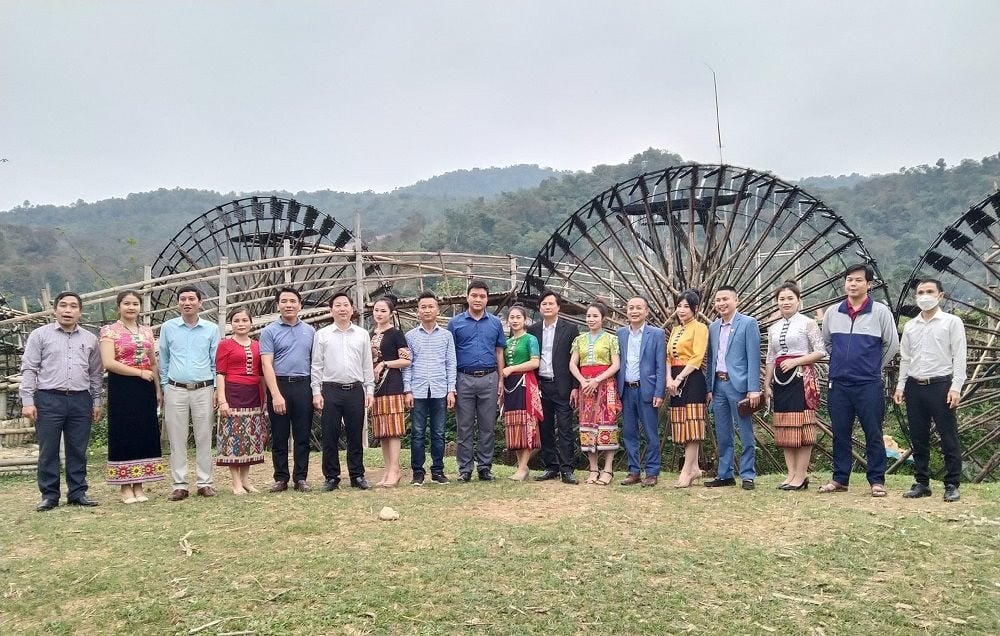
Pioneering the construction of "multi-purpose" waterwheels are Yen Na and Yen Hoa communes in Tuong Duong district. Here, along the peaceful Cha Ha stream, hundreds of waterwheels stand side by side, creating a beautiful and picturesque scene to welcome tourists.
Mr. Vi Thanh Tung, Chairman of the People's Committee of Yen Na commune, shared that since ancient times, people have known how to build water wheels to irrigate the fields along the Cha Ha stream. Indeed, these water wheels are "machines" that are both inexpensive and "environmentally friendly," invented by the people of the mountainous region to effectively combat drought.
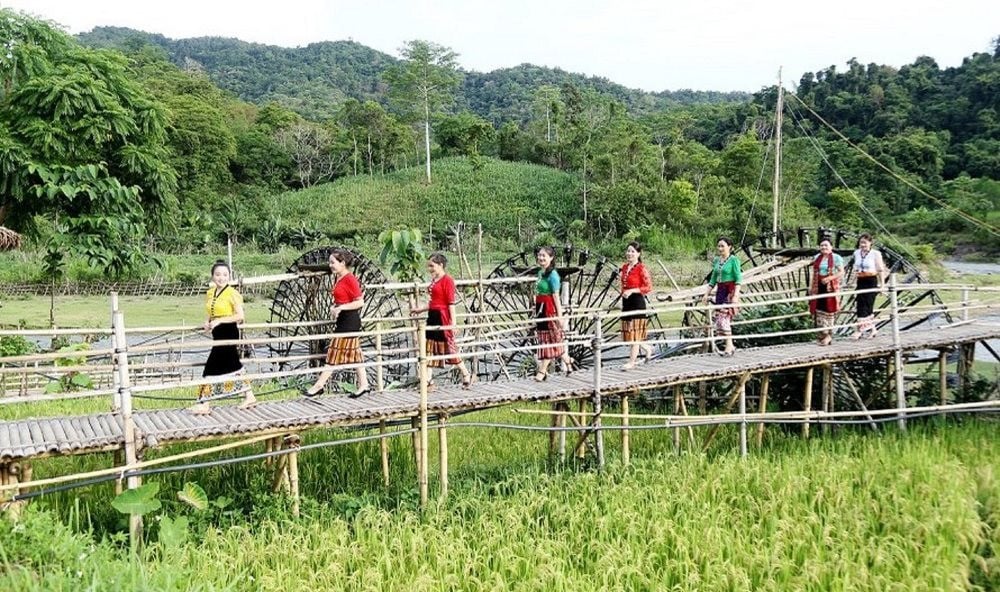
“In recent years, we have noticed that this scenery is very beautiful, attracting many tourists to visit and take photos… so the commune has discussed with the people to invest in more wooden bridges, rest stops, and food services to attract tourists in the summer and develop eco-tourism for the locality,” Mr. Vi Thanh Tung added.
Not far from there, in Yen Hoa commune, what is most impressive is that the Thai people here have also begun to develop tourism, relying on the landscape and cultural life and customs to attract tourists. Now, visitors to Yen Hoa are captivated by the rice paddies laden with grain, the nearly 50 waterwheels that run day and night along the Cha Ha river, the beautiful Săng Lẻ forest in Yen Tan village, and the songs and dances of the Thai girls. Many believe that with its scenic advantages, Yen Hoa will be one of the most outstanding community tourism destinations in western Nghe An in the near future.
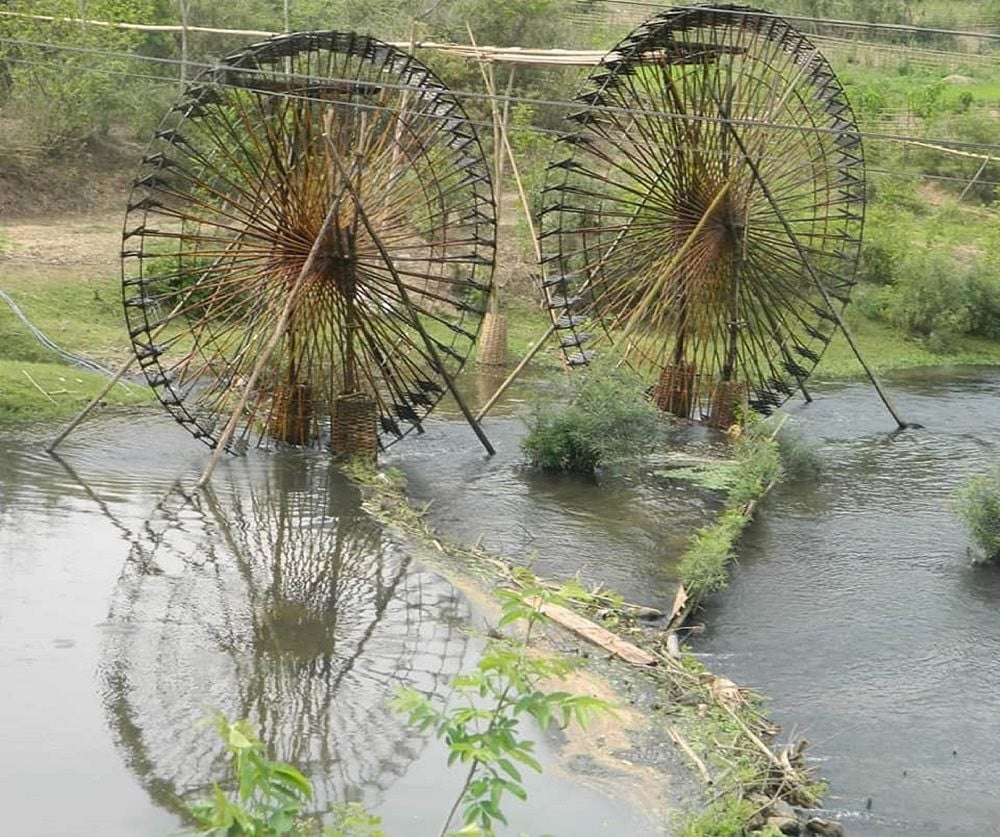
Speaking about waterwheels, Mr. Nguyen Huu Hien – Vice Chairman of the People's Committee of Tuong Duong District – expressed his high hopes that, in addition to their excellent drought-fighting function, waterwheels will continue to be utilized by local authorities in the district to attract tourists and develop tourism. “In the coming time, we will direct communes to coordinate with experienced units in community tourism and ecotourism to create tours that attract tourists by combining many landmarks and locations, from cultural to scenic sites, including the waterwheel complex, to boost tourism development in the district,” Mr. Hien said.
Source














































































Comment (0)