


The ceremonial pole - the soul of traditional festivals.
The ceremonial pole is usually erected during important festivals such as the Thanksgiving to the deities (Pơríh), the New Rice Festival (Chaha roo tamêê), the Opening of the Harvest Season, the New Village Construction Festival (Pơrắh đh'đhăng), the New Year Thanksgiving Festival for the forest, etc.
In particular, the New Rice Festival, usually held in the twelfth lunar month, is one of the largest ceremonies, lasting for many days and nights and involving the entire village. Here, beside the majestic ceremonial pole, solemn rituals and offerings, captivating dances and songs, exciting folk games, and a warm rice wine feast create a vibrant and captivating festival atmosphere.
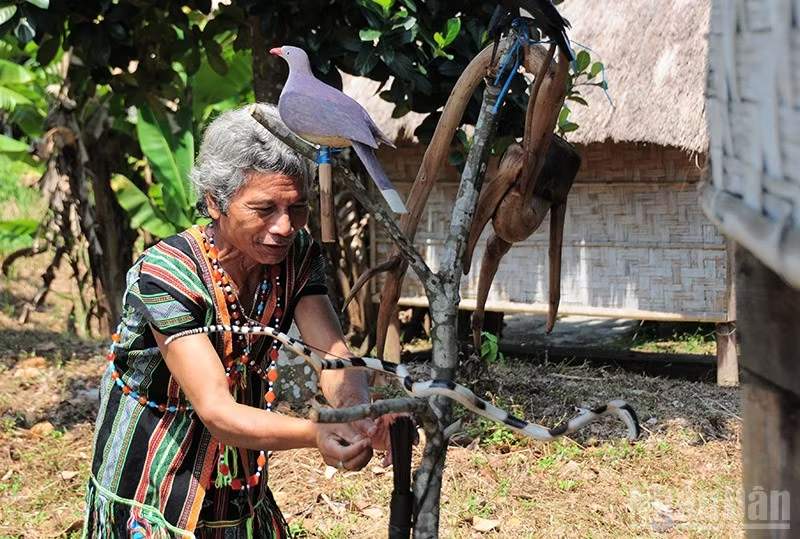
He shared about the significance of the ceremonial pole: In the living space of the Co Tu people, the ceremonial pole is the soul of the festival. Every carving, every thread, every ear of rice hung on the pole conveys the sincere prayers of the villagers to the deities. Decorating the ceremonial pole is not simply about beautification, but also about conveying the wishes of the Co Tu people to the sacred forest, to Mother Earth, and for abundant harvests.
The art of decorating the ceremonial pole is a folk painting that preserves cultural stories. Each detail skillfully depicted by the Co Tu artisans carries meaningful messages from life, such as: The pheasant head atop the pole, reaching high, symbolizes the guidance of the gods, leading people to good things.
The soft red tassels woven from forest bamboo symbolize ancestral blood, reminding us of our origins and community bonds. The sharp, symmetrical geometric patterns—like birds, wild animals, the radiant sun, the sacred eye of a deity, and swirling clouds—not only adorn the ceremonial pole but also represent the close and harmonious connection between humanity and the universe.
The materials used to make the New Year's pole are also carefully selected from the mountains and forests. The trunks of mature, straight, evenly spaced bamboo, whether giant bamboo or long-stemmed bamboo, are peeled and sun-dried to increase durability. They are then hand-carved by skilled artisans using only machetes and small knives.
The decorative colors are also entirely derived from nature, carrying symbolic meanings: Red from forest bark: a symbol of abundant vitality and vigorous life. Black from charcoal: representing sacredness and mystery. White from clay: representing purity and innocence. Yellow-brown from basalt red soil and decaying tree bark: implying prosperity, abundance, and well-being.
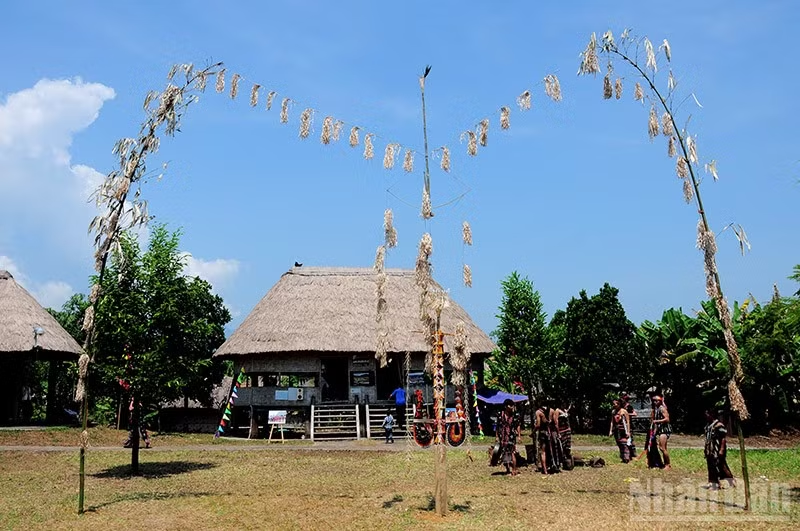
The New Year's pole - the "spiritual pillar" of the community.
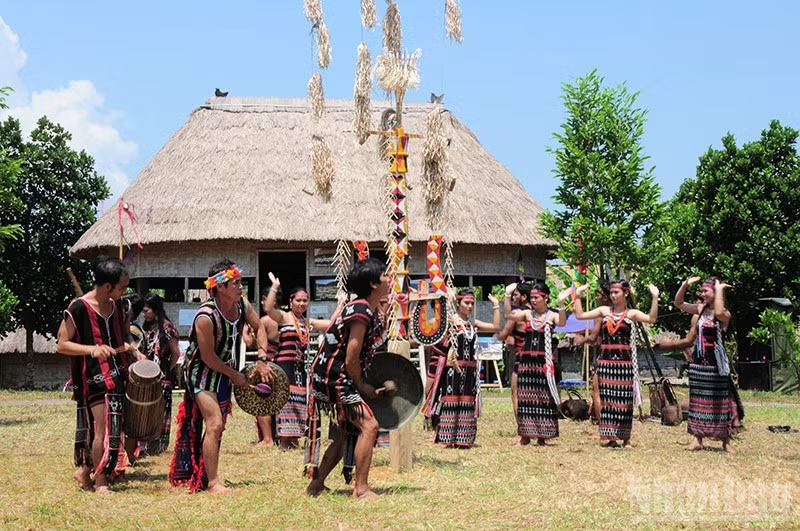
More than just a ceremonial item, the ceremonial pole is a religious symbol for the entire community. Erected in the center of the village square, where the majestic Gươl house stands, the large, warm hearth burns, the gongs and drums resound, rice wine is offered, and the vast open space is used for the Tung Tung Da Dá dance, the ceremonial pole becomes the heart, the central point connecting people with their ancestors and the universe.
The moment the ceremonial pole is erected also marks the opening of the festival, signifying the sacred presence of the deities and the beginning of important, joyful celebrations. After the festival, the pole is usually kept as a sacred symbol, signifying that the deities remain to support and protect the villagers.
At the "Common House" of 54 Vietnamese ethnic groups in Dong Mo (Son Tay, Hanoi ), the Co Tu people's ceremonial pole is a frequent feature in major cultural events. The graceful and supple Tung Tung Da Da dances, the solemn rituals of worshipping the forest spirits, and the resounding gong performances around the pole... not only carry the echoes of the vast forest but also serve as magical bridges, bringing Co Tu culture closer to the public and international friends. These vivid experiences contribute to igniting love and pride in the ethnic cultural heritage in the hearts of the younger generation.
Today, the art of decorating the ceremonial pole (cây nêu) remains a vibrant part of the festival life of the Co Tu people in Nam Giang, Tay Giang, and Dong Giang districts (Quang Nam province). Beyond its profound religious significance, the ceremonial pole is also a distinctive cultural symbol, reflecting the strong pride of the community and enriching Vietnam's precious cultural heritage.
Spreading national cultural identity
Within the flow of national culture, traditional values such as the art of decorating the ceremonial pole of the Co Tu people vividly demonstrate the pure traditional cultural identity. Resolution No. 5 of the 8th Central Committee affirmed the paramount role of culture as the spiritual foundation of society, serving as both a goal and a driving force for the sustainable development of the country. In this context, Vietnamese culture is defined as both unified and diverse – unified in ideals, goals, and national origins; and diverse in the vibrant cultural colors of the 54 ethnic groups.
Along with 53 other ethnic groups, the Co Tu people have been and are building an advanced Vietnamese culture rich in identity, where each ethnic cultural color is not only preserved, spread, and promoted, but also supplements, enriches, and deepens the common identity of the entire Vietnamese nation.
Preserving and spreading the traditional values of the Co Tu people—the ceremonial pole—is not only about safeguarding a part of the soul of the Co Tu ethnic group in Quang Nam province, but also a contribution to building a Vietnamese culture that is rich in identity, humanistic spirit, and enduring over time.
Source: https://nhandan.vn/doc-dao-nghe-thuat-trang-tri-cay-neu-cua-dong-bao-co-tu-post885420.html
![[Image] Pleasant weather helps students enter the 10th grade entrance exam with confidence.](https://vphoto.vietnam.vn/thumb/1200x675/vietnam/resource/IMAGE/2026/05/29/1780034401612_ngay-1-thi-lop-10-minh-duy-8-5009-jpg.webp)
![[Photo] Ba Lang An Lighthouse - the "eye of the sea" amidst the "rock museum" of Quang Ngai province.](https://vphoto.vietnam.vn/thumb/1200x675/vietnam/resource/IMAGE/2026/05/29/1780038698840_anh-man-hinh-2026-05-29-luc-14-10-42.png)




































































Comment (0)