

 |
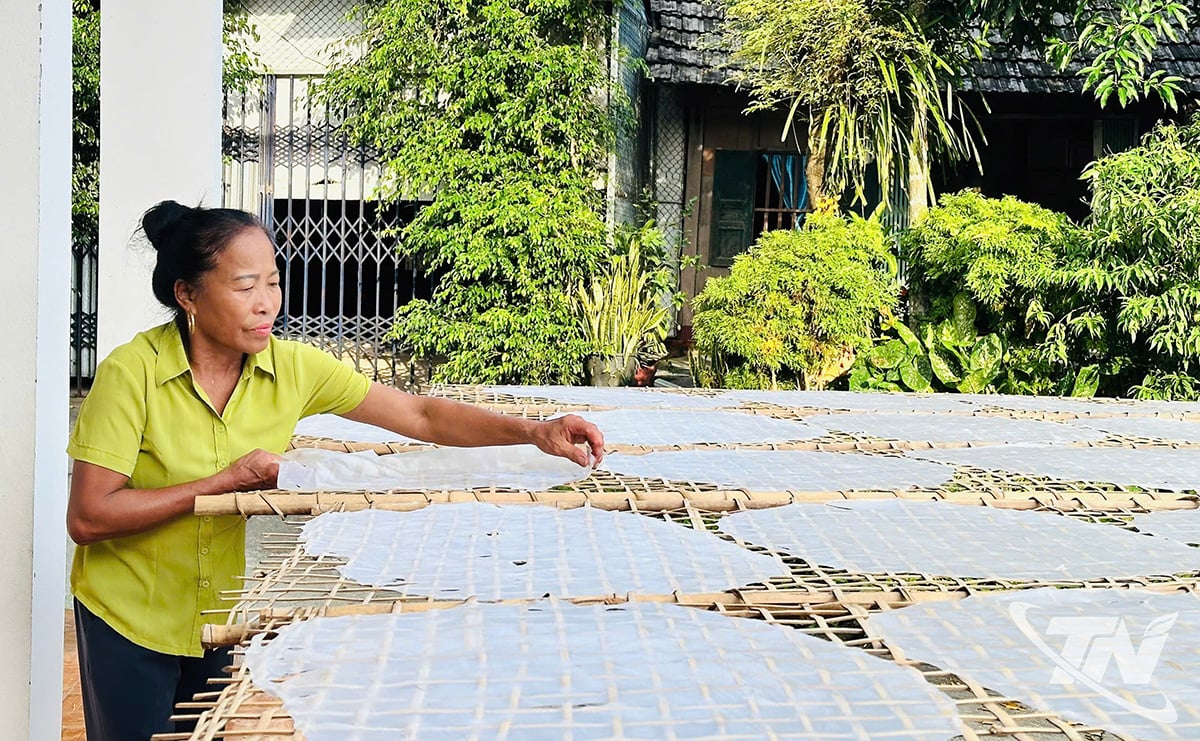
| Drying the rice noodles is a crucial step in creating the chewy texture and aroma of Phu Thong pho. |
Unlike industrially produced dried pho noodles that are quickly machine-rolled and packaged in bulk, Phu Thong pho retains its traditional handcrafted method: from soaking the rice, grinding the flour, making the noodles, to sun-drying, everything is done by hand. Because of this, the noodles here are soft, chewy, and have the distinctive rich aroma of pure Bao Thai rice.
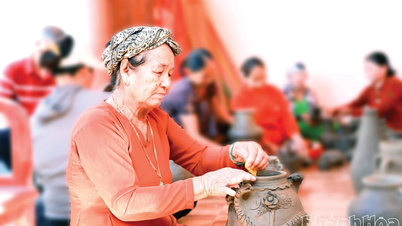
To learn about the art of making pho, we visited Chinh residential area, where many families are involved in the traditional pho noodle-making craft. Ms. Lang Thi Hoan, who has been involved in the craft for over 40 years, still maintains the habit of waking up at 5 am to start making pho noodles. She said: "The rice must be soaked for 8 hours before grinding. Mixing the flour also has its own secret to give the pho noodles their characteristic delicious and chewy flavor. Making pho noodles must be done over a wood fire to preserve the aroma of the rice. If the noodles are too thin, they will break; if they are too thick, they will be tough."
After being steamed, pho noodles are divided into three types: fresh pho noodles that can be eaten immediately with broth; sun-dried pho noodles that can be used within 1-2 days; and dried pho noodles, which are sun-dried for 3-4 hours, then cut into small pieces and dried again for longer preservation.
The finished dried pho noodles are off-white, with a natural, slight sheen. When cooked, they retain their chewy texture without becoming mushy or sticky. Making pho requires a large yard. Families always take advantage of sunny days to dry the noodles, because prolonged rain can ruin an entire batch due to insufficient drying. Therefore, making pho is not just a profession, but also a deep connection to the rhythm of the weather and life in the countryside.
Nowadays, with the help of machinery such as grinders and noodle slicers, pho makers have less strenuous work and achieve higher productivity. Even so, the locals still make the pho noodles by hand over wood-fired stoves, ensuring that each noodle retains its original delicious and chewy texture.
Despite its long history, Phu Thong dry pho only truly became widely known outside the local area about 10 years ago. Previously, people only made it for their own consumption or to give as gifts to relatives during holidays and Tet (Lunar New Year). Since 2012, Ms. Hoan began accepting small orders from breakfast eateries, and gradually, Phu Thong pho became available in markets, grocery stores, and neighboring provinces such as Cao Bang and Lang Son...
Currently, Mrs. Hoan delivers an average of 30kg of dried pho noodles daily, which can reach up to 50kg during the Tet holiday season. The price of pho noodles fluctuates around 35,000 VND/kg. Not only Mrs. Hoan's family, but more than 20 households in Dau Cau village now make pho noodles, earning an average income of 7-8 million VND per month. This has gradually formed a small craft village, creating livelihoods and fostering community cohesion.
However, the traditional pho-making craft in Phu Thong has not yet fully developed to its potential. Currently, many households involved in the craft lack drying areas, are dependent on the weather, lack professional packaging, and do not have a clear brand in the market.
Building collective brands, obtaining OCOP certification, and bringing products into modern distribution channels still face many difficulties. Therefore, in addition to the perseverance and efforts of the people, practical support policies from the local authorities are essential.
Source: https://baothainguyen.vn/dat-va-nguoi-thai-nguyen/202508/doc-dao-pho-phu-thong-b5a3487/



![[Photo] Standing Committee member of the Party Central Committee Tran Cam Tu working with the Central Inspection Committee](https://vphoto.vietnam.vn/thumb/1200x675/vietnam/resource/IMAGE/2026/05/28/1779969579668_ndo_br_bnd-2495-jpg.webp)








































































Comment (0)