

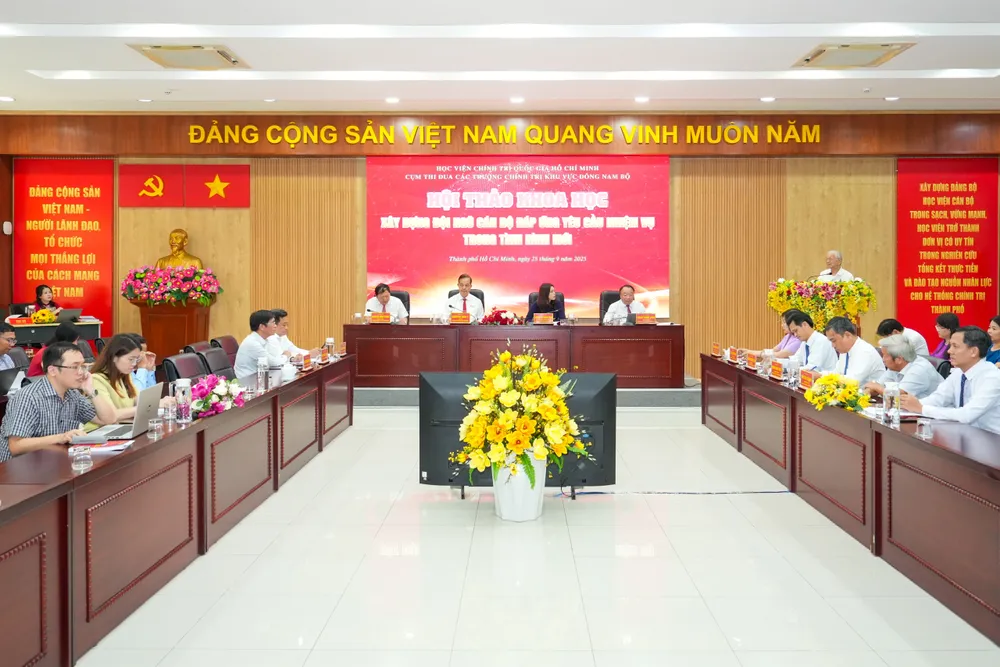
Reforming the mindset regarding the allocation of cadres and civil servants.
Mr. Tran Van Danh, Deputy Head of the Personnel and Organization Department of the Ho Chi Minh City Department of Industry and Trade, shared that after the merger, the workload at the department increased, the scope of management expanded, while some staff members did not uniformly meet the requirements in terms of work style and procedures. To overcome this, the department has been reviewing its organizational structure, eliminating overlapping responsibilities, clearly defining the responsibilities of each department, and applying the principle of "one task - one responsible person".
In particular, the Department of Industry and Trade focuses on training in digital skills, big data management, information security, and leveraging AI in market management, energy forecasting, and import-export analysis. In-depth training programs help form a core team of "digital officers" in each department, leading the comprehensive digital transformation process. This demonstrates that building a workforce goes beyond just professional expertise; it also includes the ability to apply modern technology.
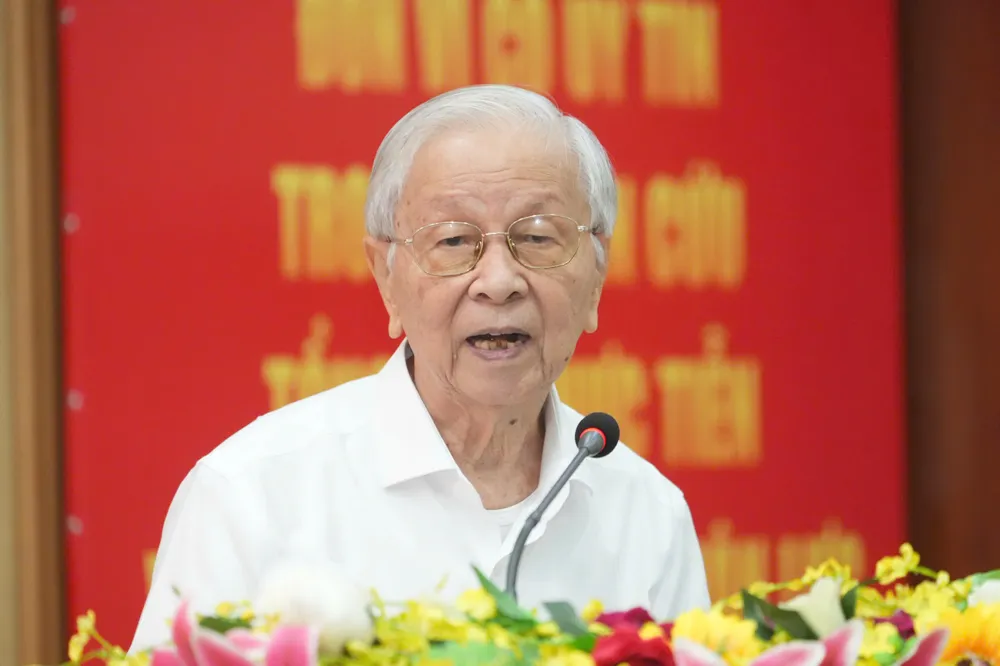
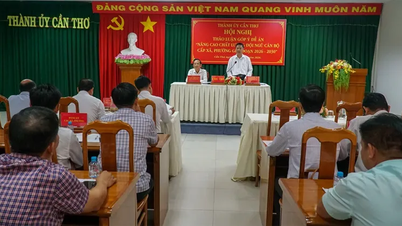
Ms. Dau Ngoc Linh, a Master's degree holder from the Ho Chi Minh City Academy of Cadres, also thoroughly analyzed the current state of cadre and civil servant development in Ho Chi Minh City in the context of implementing a two-tiered local government system. According to Ms. Dau Ngoc Linh, the city needs to shift from a mindset of allocating cadres and civil servants on an average basis to a selection mechanism based on competence, job position, and practical requirements.
Planning and personnel rotation must be linked to institutional reform and modern urban governance, ensuring a balance between continuity and innovation. In particular, the total number of civil servants allocated to the commune level should be assigned soon, without rigidly separating the Party and government sectors, allowing the commune-level People's Councils to proactively allocate personnel according to actual needs. Simultaneously, training and professional development for officials and civil servants should be intensified, focusing on standardization, professionalism, and practical application.
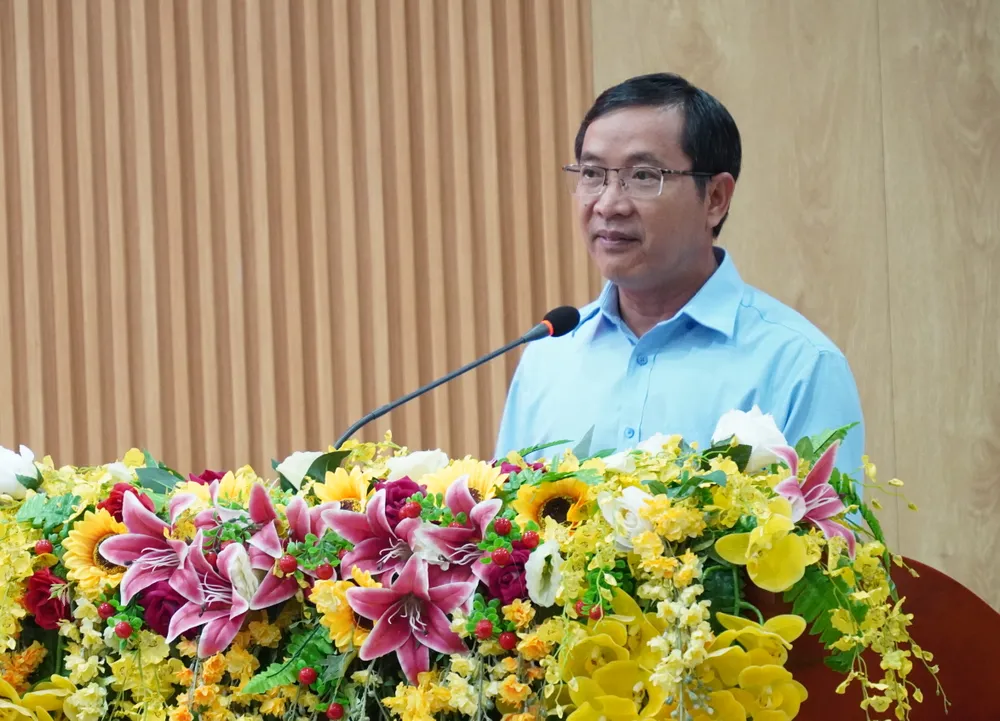
seconding officials to grassroots levels.
In her paper submitted to the conference, Ms. Nguyen Thi Tan, M.A., from the Regional Political Academy II, stated that the current cadre evaluation process remains a "weak point," therefore, it is necessary to improve the policy mechanisms and the legal system to ensure transparency and fairness so that all cadres are openly selected based on their abilities and work results; and at the same time, design training and development programs that are suitable for new requirements.
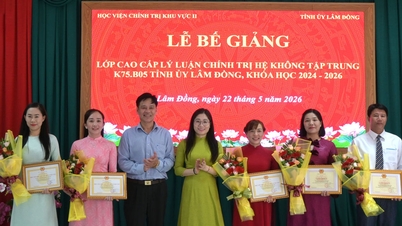
Coming from Lam Dong province, Ms. Nguyen Thi Nhu Yen, Deputy Head of the Department of Basic Theory at the Lam Dong Provincial Political School, shared the reality that some communes and wards in the province still lack specialized staff, and the capacity of some officials is limited.
Ms. Nguyen Thi Nhu Yen, M.A., proposed developing and implementing a scientific job position scheme for each agency and unit after the merger, clearly describing the functions, tasks, and required qualifications for each position. This would provide an objective basis for evaluating and assigning personnel, avoiding subjective factors and factionalism, and overcoming the situation where "those who know the job don't have a place, while those who have a place don't know the job."
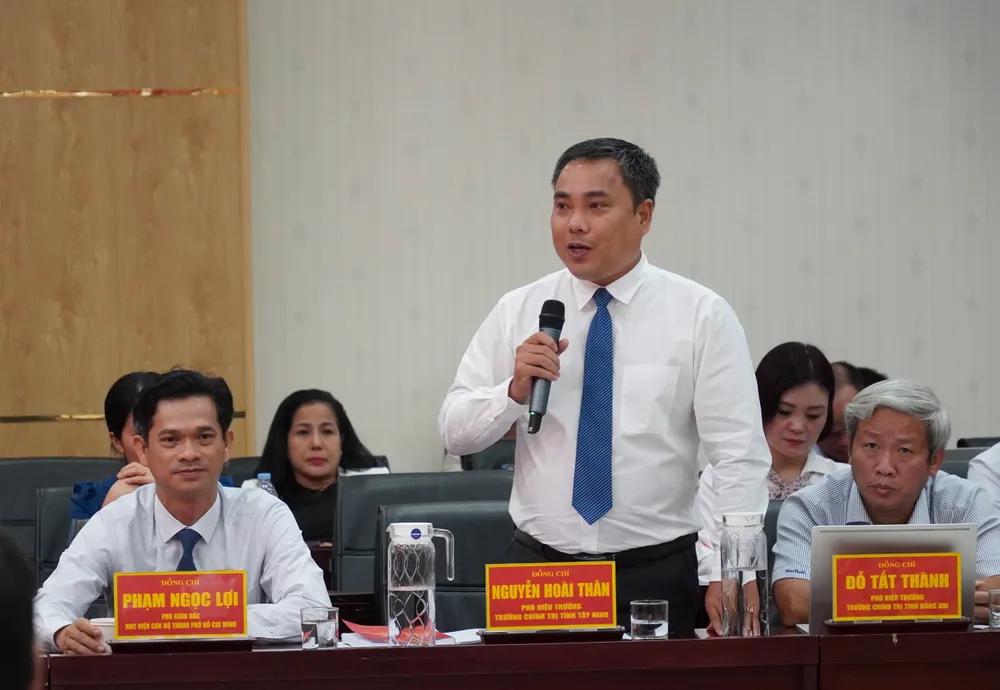
Ms. Nguyen Thi Nhu Yen also proposed a fundamental reform of the evaluation process, building a set of criteria based on work efficiency and specific products, and boldly appointing young, capable officials to deserving positions. At the same time, it is necessary to continue rotating and seconding experienced officials from the provincial level to the commune level where there is a shortage, with the task of both working, guiding, and training on the job.
Ms. Nguyen Thi Nhu Yen also suggested establishing specialized working groups at the provincial level to support clusters of 3-4 communes/wards in handling complex issues, and immediately organizing hands-on training courses on land management, construction permits, financial and budgetary management, and information technology application, helping grassroots officials hone their skills and improve the quality of service.
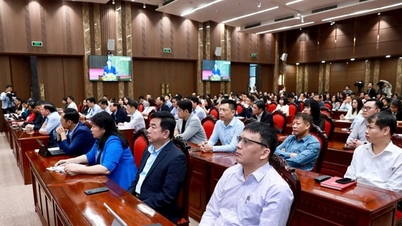
Associate Professor Dr. Nguyen Van Y, Director of the Ho Chi Minh City Academy of Cadres, commented that the rich analyses and sharing at the workshop affirmed that cadre work is the "key" task and "pillar" of the political system, determining the strength of the state apparatus during the period of profound transformation.
Associate Professor Dr. Nguyen Van Y affirmed that the information recorded at the workshop will be compiled and sent to the competent authorities for research during the process of advising the city.
Source: https://www.sggp.org.vn/doi-moi-cong-tac-quy-hoach-dao-tao-va-ung-dung-cong-nghe-post814706.html
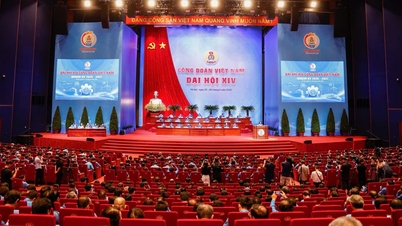
![[Photo] First session of the 14th Congress of the Vietnam Trade Union](https://vphoto.vietnam.vn/thumb/1200x675/vietnam/resource/IMAGE/2026/06/03/1780465947883_ndo_br_img-3852-jpg.webp)
![[Photo] Secretary of the National Assembly Party Committee, Chairman of the National Assembly presides over the meeting of the Standing Committee and Executive Committee of the National Assembly Party Committee.](https://vphoto.vietnam.vn/thumb/1200x675/vietnam/resource/IMAGE/2026/06/03/1780480353201_ndo_br_bnd-2585-jpg.webp)

![[Photo] General Secretary and President To Lam presides over a meeting with the Central Organizing Committee.](https://vphoto.vietnam.vn/thumb/1200x675/vietnam/resource/IMAGE/2026/06/03/1780482764658_a1-bnd-4741-3342-jpg.webp)












































![[Video] Sunset at Lap An Lagoon – Where the sun sets over the fishing nets](https://vphoto.vietnam.vn/thumb/1200x675/vietnam/resource/IMAGE/2026/05/31/1780192137701_beach-landscape-sea-water-nature-grass-745871-pxhere-com.jpeg)




























Comment (0)