

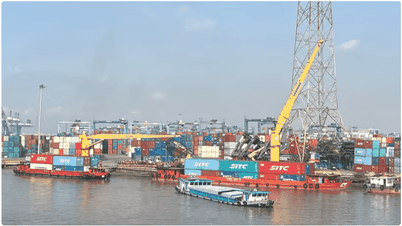
Experience shows that whenever the global economy falters, the domestic market acts as a "fortress" protecting the economy. The Covid-19 pandemic was a harsh test. When global supply chains broke down and trade stalled, it was domestic consumption and the domestic distribution system that helped maintain production, preserve jobs, and ensure social security.
That lesson is even more valuable in the current period, when protectionist trade trends are increasing; international tax and trade policies are undergoing many changes; and especially with the recent conflict in the Middle East. With over 100 million people, a young population structure, and a rapidly growing middle class, our country possesses a consumer market with great potential. Domestic consumption is projected to be the main driving force, compensating for the slowdown in exports due to global fluctuations.
This assessment is entirely justified, given that the middle class is projected to double between 2023 and 2026; personal consumption growth is expected to reach approximately 9% in 2025, with a value of around $270 billion. For Vietnamese businesses, the domestic market is their "home turf," offering advantages such as understanding the culture, tastes, and consumer behavior of their customers. The cost of accessing and developing the market is lower than exporting, while the "Vietnamese people prioritize using Vietnamese goods" movement has reinforced domestic consumption trends. In the context of escalating conflicts in the Middle East and increased trade protectionism in many countries, effectively exploiting the domestic market helps businesses overcome immediate challenges and build a long-term brand foundation.
However, for the domestic market to truly become a growth engine, we need synchronized, long-term policies. The primary focus should be on increasing disposable income and strengthening consumer confidence. Expanding social security – health insurance, pensions, unemployment benefits – will help reduce the tendency to hoard for emergencies and encourage spending. Progressive tax reforms and increased support for low- and middle-income groups will stimulate genuine purchasing power.
Simultaneously, it is necessary to promote sustainable urbanization and invest in regional connectivity infrastructure, creating a large market space, increasing productivity and income. Reforming the capital and land markets will allow for efficient resource allocation; developing the private sector and enhancing the capacity of domestic enterprises; and orienting FDI towards domestic market needs and technology transfer… thereby increasing domestic added value and strengthening domestic supply chains.
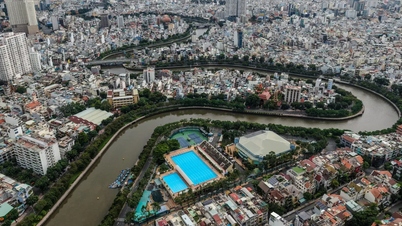
Training high-quality human resources, formalizing the informal labor sector, and creating sustainable jobs will be the foundation for boosting purchasing power and expanding the middle class. Ho Chi Minh City, with its development model of "three regions - one special zone - three corridors - five pillars," has favorable conditions to take the lead in activating the domestic market through the digital economy, high-quality services, and innovation.
The domestic market is not opposed to exports; on the contrary, a strong "home turf" will be a springboard for businesses to expand globally . Better exploitation of the domestic market of over 100 million people is not just a temporary solution in the face of global fluctuations, but a long-term strategy to strengthen national capabilities.
As domestic potential is further awakened, as businesses become deeply rooted in the domestic market, as purchasing power is nurtured by consistent policies and confidence is strengthened, the economy will have a more solid foundation. Developing the domestic market is therefore also about self-reliance and self-strengthening, contributing to building a strong and prosperous nation in the new era.
Source: https://www.sggp.org.vn/don-bay-thi-truong-noi-dia-post840972.html

![[Photo] General Secretary and President To Lam presides over a meeting with the Central Organizing Committee.](https://vphoto.vietnam.vn/thumb/1200x675/vietnam/resource/IMAGE/2026/06/03/1780482764658_a1-bnd-4741-3342-jpg.webp)

![[Photo] First session of the 14th Congress of the Vietnam Trade Union](https://vphoto.vietnam.vn/thumb/1200x675/vietnam/resource/IMAGE/2026/06/03/1780465947883_ndo_br_img-3852-jpg.webp)
![[Photo] Secretary of the National Assembly Party Committee, Chairman of the National Assembly presides over the meeting of the Standing Committee and Executive Committee of the National Assembly Party Committee.](https://vphoto.vietnam.vn/thumb/1200x675/vietnam/resource/IMAGE/2026/06/03/1780480353201_ndo_br_bnd-2585-jpg.webp)










































![[Video] Sunset at Lap An Lagoon – Where the sun sets over the fishing nets](https://vphoto.vietnam.vn/thumb/1200x675/vietnam/resource/IMAGE/2026/05/31/1780192137701_beach-landscape-sea-water-nature-grass-745871-pxhere-com.jpeg)




























Comment (0)