

The Biên Hòa - Vũng Tàu, Khánh Hòa - Buôn Ma Thuột, Châu Đốc - Cần Thơ - Sóc Trăng expressways, along with Ho Chi Minh City's Ring Road 3, are all expected to be launched, boosting regional connectivity.
On the morning of June 18th, the Ho Chi Minh City Ring Road 3, the Bien Hoa - Vung Tau Expressway, and the Khanh Hoa - Buon Ma Thuot Expressway projects were simultaneously launched. The groundbreaking ceremonies were streamed online from the main location in Ho Chi Minh City to locations in Ba Ria - Vung Tau and Dak Lak.
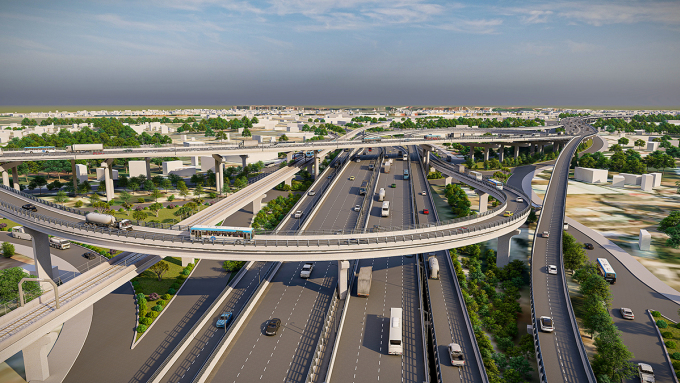
Perspective view of the Tan Van interchange, part of the Ring Road 3 project, upon completion. Photo: Department of Transportation .
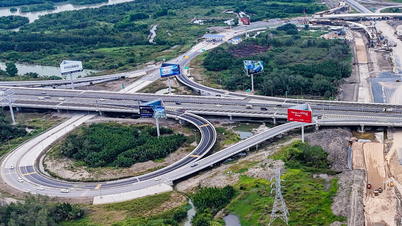
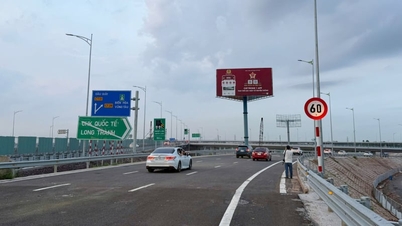
Of these, the Ho Chi Minh City Ring Road 3 is the largest project in terms of funding, costing nearly 75,400 billion VND and spanning over 76 km. The route passes through Ho Chi Minh City, Binh Duong, Dong Nai , and Long An provinces, and is divided into eight component projects, with each province/city implementing two projects: land acquisition and construction.
Ho Chi Minh City was the first locality to start the project, and it also has the longest section of the ring road, spanning over 47 km, with a total investment of over 41,400 billion VND. The three provinces of Binh Duong, Dong Nai, and Long An also plan to start construction on the remaining segments of the route in June.
The Ring Road 3 starts at the Ben Luc - Long Thanh Expressway interchange (Nhon Trach district, Dong Nai province) and ends at the Ben Luc - Long Thanh Expressway interchange (Ben Luc district, Long An province). Upon completion, this ring road, along with the Ben Luc Expressway, will create a transportation axis encircling Ho Chi Minh City, reducing the need for vehicles to travel through the city center.
In phase 1, the project will construct the first four lanes of the expressway in the middle, with parallel roads on either side passing through residential areas. The entire route is expected to be completed in 2026, opening up space for the development of industrial corridors, connecting many seaport clusters, reducing travel time and logistics costs... The project is expected to create regional connectivity and promote the development of the Southern Key Economic Region.
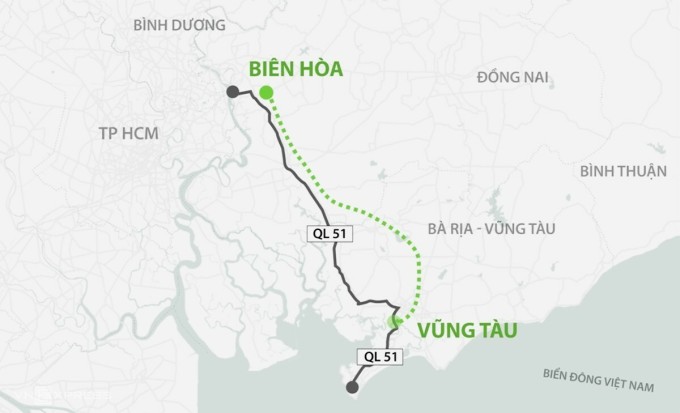
Route of the Bien Hoa - Vung Tau expressway. Graphic: Thanh Nhan
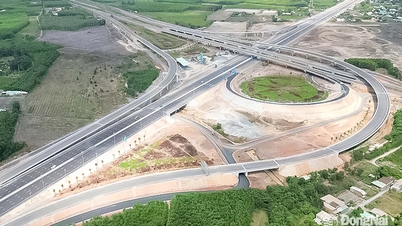
The Bien Hoa - Vung Tau Expressway is approximately 53.7 km long, passing through the provinces of Dong Nai and Ba Ria - Vung Tau. The starting point connects to the National Highway 1 bypass, the section through Bien Hoa City (Dong Nai province); the end point is at the intersection with National Highway 56 in Ba Ria City (Ba Ria - Vung Tau province).
The project has a total investment of VND 17,837 billion from the state budget, divided into three components, jointly implemented by the localities through which the route passes and the Ministry of Transport. In the first phase, this expressway will be built with 4-6 lanes, expected to be completed in 2026. When put into operation, the road will connect with the Eastern North-South Expressway, Long Thanh Airport, seaports, and economic centers, contributing to the development of the entire Southeast region.
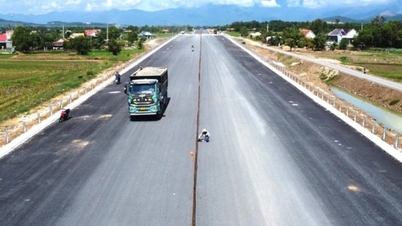
The Khanh Hoa - Buon Ma Thuot Expressway has a total investment of VND 21,935 billion, is approximately 117.5 km long, and connects the two provinces of Khanh Hoa and Dak Lak. The route is divided into three component projects, with implementation delegated to the Ministry of Transport and the two localities through which the route passes. The project starts from the intersection of National Highway 26B and National Highway 1 (Ninh Hoa town, Khanh Hoa province) and ends at the intersection with the Ho Chi Minh Highway, east of Buon Ma Thuot city (Dak Lak province).
The project, initially constructed with 4 lanes and a width of 17 meters, is expected to be operational in 2027. Upon completion, this expressway will create a horizontal axis linking the Central Highlands with the South Central coastal region and connect to the North-South expressway, Ho Chi Minh Highway, National Highway 1, and the coastal road, contributing to regional development.
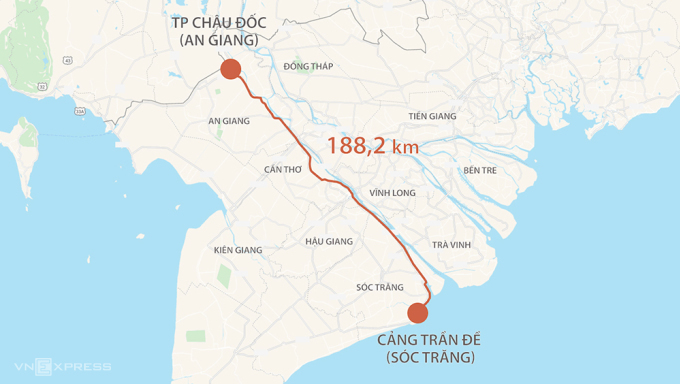
Route of the Chau Doc - Can Tho - Soc Trang expressway. Graphic: Thanh Huyen
A day earlier, the Chau Doc - Can Tho - Soc Trang expressway, over 188 km long and passing through four provinces in the Mekong Delta, with a total investment of nearly 44,700 billion VND, was also officially launched. The route starts at its connection with National Highway 91 in Chau Doc City, An Giang province, and ends at Tran De port in Soc Trang. The section through An Giang is nearly 57 km long, Can Tho nearly 38 km, Hau Giang about 37 km, and over 56 km through Soc Trang.
In the first phase, the project will construct 4 lanes, 17 meters wide, allowing cars to travel at 80 km/h. Upon completion, the road will be widened to over 32 meters with 6 lanes. The entire route is expected to be completed in 2027, forming a vital horizontal transportation artery in the Mekong Delta region.
This route will connect the North-South Expressway along the vertical axis, reducing congestion on National Highway 1, Route N1, National Highway 91, etc. At the same time, the project will contribute to completing the regional transportation network, connecting the economy and society of the Western provinces with Cambodia and other Southeast Asian countries.
Gia Minh
Source link

![[Photo] General Secretary and President To Lam presides over a meeting on preparations for the review of one year of operation of the three-tiered government system.](https://vphoto.vietnam.vn/thumb/1200x675/vietnam/resource/IMAGE/2026/06/02/1780391821195_a1-bnd-4595-9717-jpg.webp)




























































































Comment (0)