

BLOCKAGES THAT NEED TO BE REMOVED
It can be seen that, after nearly a year of implementation, Dong Thap province has recorded many positive changes. The system is gradually operating stably and smoothly, without causing bottlenecks in direction and management, contributing to maintaining social stability and ensuring security and order in the area.

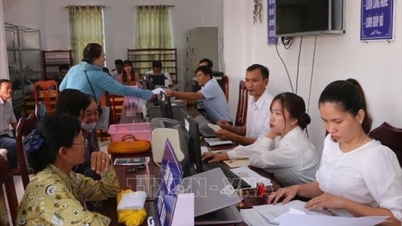
Despite the achievements, the practical implementation of the two-tiered local government model still reveals some difficulties and obstacles that need to be addressed promptly to ensure the smooth and efficient operation of the administrative apparatus.
The main challenges arising during the implementation of tasks at the grassroots level include: While the two-tiered local government structure has basically stabilized, some inadequacies still exist in the operation of socio -political organizations under the new model; the management of mass organizations transferred to the Vietnam Fatherland Front Committee lacks a unified and appropriate operating mechanism; the staff of officials and civil servants has been reorganized but still suffers from localized surpluses and shortages; transfers are difficult due to a lack of mechanisms, and since the 2026 staffing quota has not yet been allocated, there is no basis for recruitment; the capacity of commune-level officials is uneven, and there is a shortage of specialized personnel in fields such as information technology, land management, accounting, and construction, affecting the progress and quality of work...
In addition, some technical and technological "bottlenecks" still arise during operation. The information system for handling administrative procedures still experiences connection errors with central ministries and agencies, leading to passive delays in processing applications and putting immense pressure on local authorities who have to both manually process and update the system.
Furthermore, the facilities and offices after the merger are inadequate, with both surplus and shortage of space and functionality, resulting in increased operating costs during the transition period. While the digitization of archival documents has been implemented, the rate remains low due to limitations in funding, human resources, and technical infrastructure…
These issues require continued comprehensive review and assessment to find appropriate solutions, contributing to improved operational efficiency of the model and better meeting development needs and serving the people in the future.
IMPROVING THE QUALITY OF THE STAFF
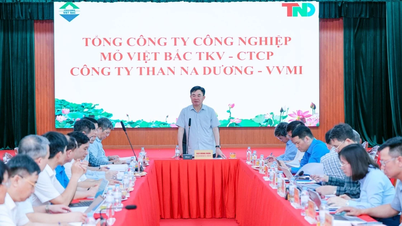
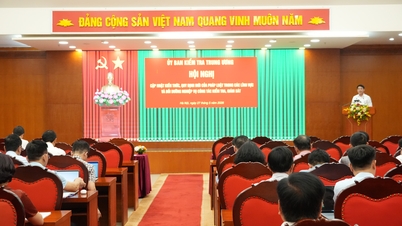
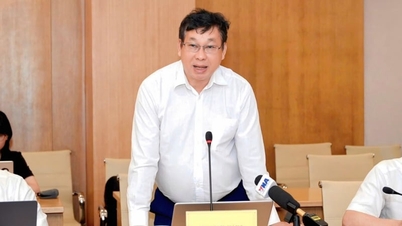
Responding to and addressing the opinions of delegates at the conference summarizing one year of operation of the overall organizational model of the political system and the two-tiered local government model, Comrade Pham Thanh Ngai, Deputy Secretary of the Provincial Party Committee and Chairman of the People's Committee of Dong Thap province, emphasized that Party committees at all levels need to enhance responsibility in recruitment, ensuring the quality of the cadre from the outset; paying attention to and focusing on training and developing cadres; especially in the field of handling complaints and denunciations, which will be implemented regularly and continuously.
Regarding the arrangement and supplementation of personnel at the commune and ward levels, Comrade Pham Thanh Ngai requested the Department of Internal Affairs to conduct a comprehensive review of the staff at the commune and ward levels; with a focus on information technology personnel to find appropriate solutions for strengthening and supplementing them, including deploying provincial-level officials to support the grassroots level when necessary.
Comrade Ho Thuy Hien, Deputy Director of Department III of the Central Organization Committee, suggested that localities continue to improve the decentralization and delegation of power mechanisms to suit practical realities; at the same time, innovate management thinking, promote digital transformation and improve the quality of cadre evaluation based on specific work products, thereby contributing to building a team of cadres that meets the requirements of tasks in the new situation… |
Regarding the issue of decentralization and delegation of power, the Central Government has also directed a review and reorganization to align with current decentralization and delegation requirements. Based on this, the province will continue to concretize and implement it synchronously, ensuring clarity of responsibilities, tasks, and accountability, avoiding overlapping in the performance of duties between different levels and sectors.
Chairman of the Provincial People's Committee Pham Thanh Ngai noted that a segment of officials have not yet kept pace with the demands of innovation, especially in terms of thinking and working methods in the new context. Therefore, it is necessary to continue to innovate thinking, improve capabilities, and meet the requirements of tasks in the current period.
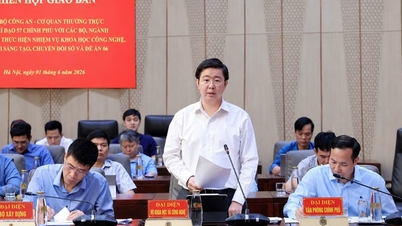
Clarifying the issue of decentralization and delegation of authority, Deputy Director of the Department of Internal Affairs Tran Thi Thanh Tuyet stated: The Department of Internal Affairs has taken the lead in coordinating with relevant agencies to advise the Provincial People's Committee and the Chairman of the Provincial People's Committee to promote decentralization and delineate authority at the commune level, ensuring the principle that "the level that is closest to reality, most people-oriented, and most convenient and effective in resolving issues should be given authority."
Regarding local decentralization, the Provincial People's Committee and the Chairman of the Provincial People's Committee have issued 16 Decisions on the decentralization of state management in various fields, with 55 tasks decentralized to provincial-level agencies and units, and to the People's Committees and Chairmen of commune-level People's Committees.
In addition, the province has issued 37 decisions delegating the performance of state management tasks to agencies, organizations, units, and individuals to carry out state management activities within the province. Monitoring shows that, to date, the volume and nature of the assigned tasks are generally consistent with the provincial level's implementation capacity…
To enhance the effectiveness and efficiency of the political system in the coming period, Comrade Ngo Chi Cuong, Member of the Central Committee of the Party, Secretary of the Provincial Party Committee, and Chairman of the Provincial People's Council, emphasized that the entire political system needs to focus on implementing key tasks and solutions in a coordinated manner.
First and foremost, it is necessary to continue improving the quality of the cadre, considering this a crucial task in building the political system.
The staff must undergo a strong transformation in mindset, shifting from a managerial approach to a constructive, developmental, proactive, and creative one, all for the common good of the locality.
Therefore, the Provincial Party Committee's Organization Department, Party committees at all levels, and relevant agencies should conduct a comprehensive review of the current cadre; accurately assess each cadre according to their job position and specific work output; and resolutely overcome the situation of vague, biased, and superficial assessments.
Specifically, it requires Party committees, agencies, units, and localities to focus on completing the reorganization of villages and residential areas before June 30, 2026, and to promptly assign officials from provincial departments and agencies to strengthen the positions of Vice Chairmen of communes and wards; and to quickly implement the increase in departments and offices in some localities where the policy has been approved.
At the same time, attention should be paid to the training and development of cadres in a practical manner, closely aligned with the requirements of the tasks.
Training content must shift strongly towards practical skills, situational problem-solving skills, local governance skills, digital transformation, administrative reform, as well as skills in interacting with and engaging with the people.
In addition, it is necessary to select communes and wards that have performed well in order to replicate their practices, creating opportunities for other units to learn from and draw lessons from their experiences.
Along with training and development, we must boldly implement a screening process for the workforce. Cases of stagnation, irresponsibility, avoidance of work, low credibility, and failure to meet job requirements must be resolutely considered for timely replacement, ensuring the development of a workforce with sufficient qualities and capabilities to meet development needs.
Simultaneously, we will continue to strongly orient the political system's activities towards the grassroots, placing the people at the center of service; continue to improve the mechanism of decentralization and delegation of power coupled with inspection, supervision, and control of power; concretize the inter-agency coordination process; the responsibility for coordination between departments and between the provincial and commune levels…; strengthen inspection and supervision work in the direction of "Supervision to support, inspection to accompany, prevention to develop"; focus on building digital government and improving the efficiency of local governance.
Comrade Ngo Chi Cuong noted that it is necessary to focus more on building a digital government in an efficient, stable, and modern direction; the team of officials and civil servants must be equipped with and proficient in digital skills to meet the requirements of digital transformation in management and administration; gradually forming an electronic working environment, processing work on a digital platform, ensuring smooth and transparent operation, reducing administrative procedures, and improving the effectiveness and efficiency of services for citizens and businesses.
LE NGUYEN - LE MINH
Source: https://baodongthap.vn/dong-thap-can-doi-moi-tu-duy-kien-tao-va-phat-trien-a241537.html

















































































Comment (0)