

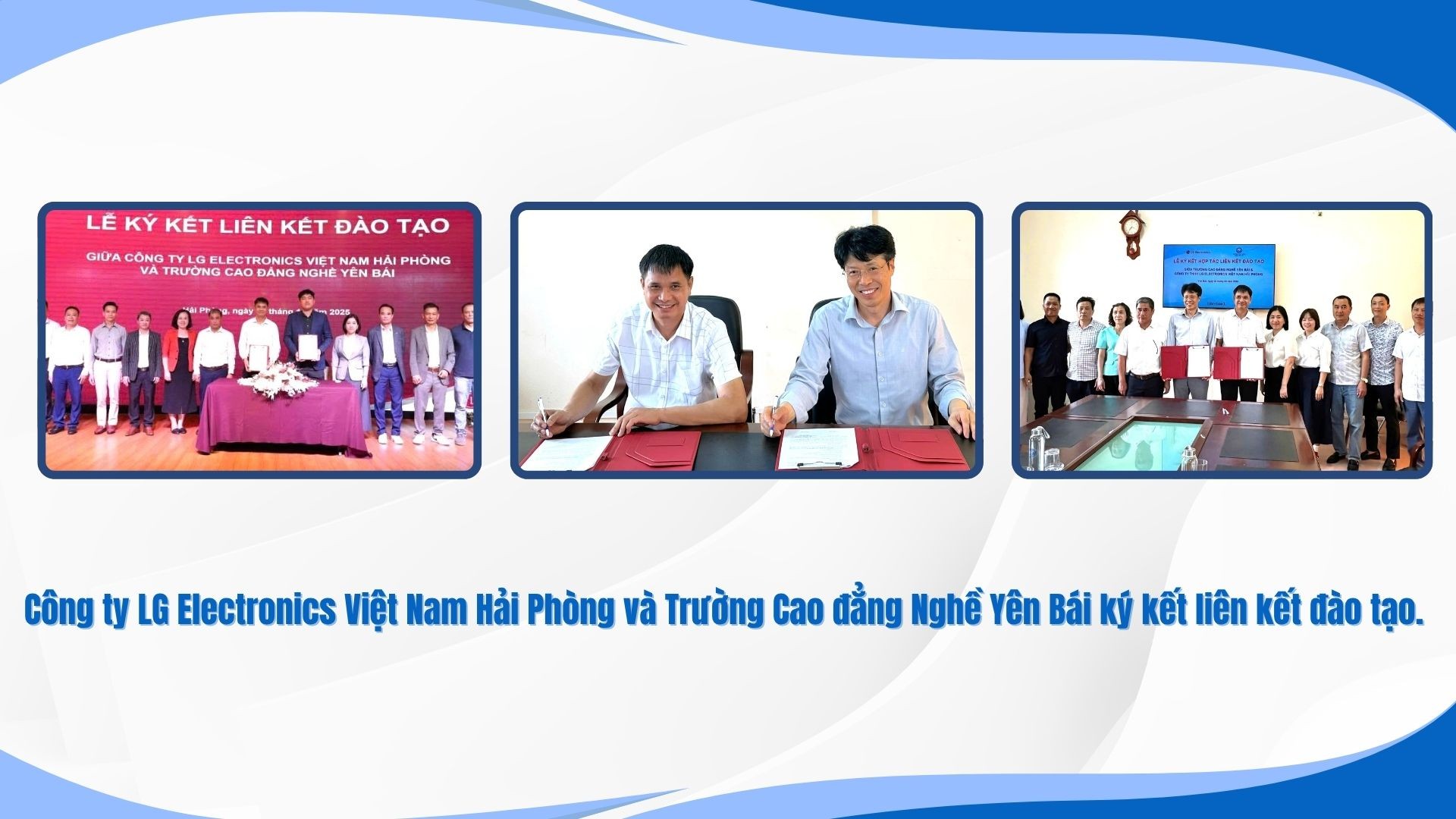
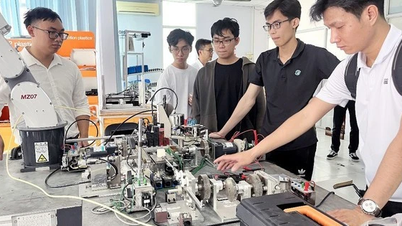
The model's content includes businesses collaborating with schools to develop learning outcomes and design training programs; organizing training using a blended learning model, with 30-50% of the time dedicated to practical training at the business; and businesses participating in graduation assessments and prioritizing the recruitment of graduates.
In 2019, the school implemented this model in the following majors: Industrial Electrical Engineering, Refrigeration Engineering, Industrial Electronics, and Automotive Technology, with 35 students participating. To ensure compliance with the regulations of the Ministry of Education and Training while meeting the requirements of businesses, the training program framework incorporated some business requirements into relevant course modules.
In some modules, instead of traditional written exams, the school switches to assessment based on case studies provided by businesses. To integrate with practical training at businesses, the school restructures the timeframe to allow students approximately 3-4 months of internship at a company. These credits are counted as equivalent to the practical modules in the curriculum.
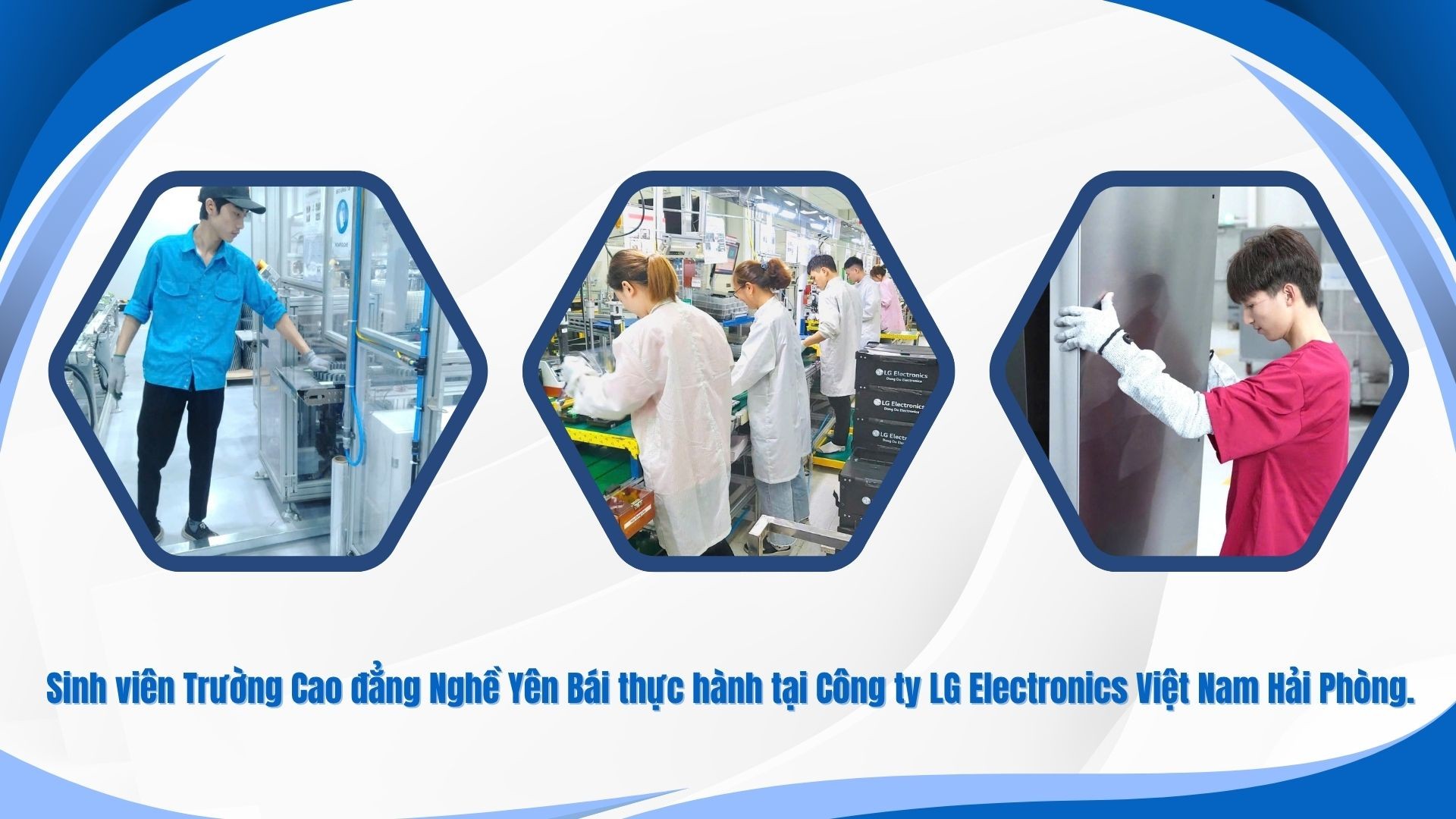
To ensure effective collaboration, the school guarantees a systematic and logical understanding of the subject matter for students; businesses provide real-world scenarios and practical equipment. School instructors closely monitor and teach based on theory; businesses provide on-site technical guidance and practical skills training. The school covers the basic training costs, and businesses provide internship allowances and practical materials.
From the business perspective, they have supported the school in developing learning outcomes or investing in equipment; helped teachers update their knowledge of practical technologies and sent leading engineers and experts to participate in guest lectures; provided paid internships or stipends for students and provided personal protective equipment and free industrial safety training.
Lecturer Luong Duc Thanh from the Department of Electrical and Electronic Engineering said: “By participating in this model, teachers and students gain a lot of practical knowledge. Electrical, refrigeration, and electronics professions are practiced in depth. The fact that practical training at businesses accounts for up to 50% of the time does not diminish the role of teachers; on the contrary, it demands that teachers be more multi-tasking and practical.”

Before implementing the model, approximately 50% - 60% of the school's students found jobs in their field after graduation. Now, the employment rate immediately after graduation has reached 85%.
When the curriculum aligns with business needs, students are often hired by companies during their final internship. This internship period serves as a "trial period," during which students learn to adhere to work discipline; use equipment and tools proficiently; adapt and integrate quickly; and learn how to work according to reporting procedures, collaborate with colleagues in the production line, and handle arising problems. Importantly, companies have ample time to observe the students' abilities and attitudes before signing a formal contract.
Vu Manh Ky, a student in the Industrial Electrical Engineering College Class 1, K31, shared: “My biggest progress is developing discipline, work ethic, and skills after my practical training at the factory on the production line for refrigerators, televisions, and car screens… I understand that being 5 minutes late can affect the entire production line. I learned how to present complex technical issues concisely and effectively. In a business, mistakes can cause economic losses. This strictness has helped me cultivate carefulness and a sense of responsibility for the products I create.”
According to the school's Vice Principal, Do Duy Thai, the success of the model is measured not only by the employment rate of graduates but also by the "satisfaction index" of employers, who only need one month of retraining, or even no retraining at all. More importantly, what pleases business managers most is the maturity in the students' awareness and attitude. In addition, the school has affirmed its reputation within the national and international education system, linking education with practice and training to the global supply chain.
Source: https://baolaocai.vn/dong-thiet-design-dong-dao-tao-post896838.html



















































































Comment (0)