

AI infrastructure still has many bottlenecks.
Recently, the Government issued a list of 20 strategic technology development tasks linked to major national challenges. Notably, Vietnam aims to build national AI capacity, gradually mastering several models and platforms, primarily the Vietnamese big language model, virtual assistants, specialized AI, edge AI, and platforms for AI research, training, evaluation, and deployment.
This direction is entirely logical, as in recent years, AI has been penetrating every aspect of life and the Vietnamese economy , not only globally but also globally. According to reports, the Vietnamese AI market is projected to grow at an average rate of approximately 15.8% per year and could reach a size of $1.52 billion by 2030. Furthermore, AI is expected to contribute up to $130 billion to the Vietnamese economy by 2040, with AI infrastructure alone potentially accounting for around $25 billion.
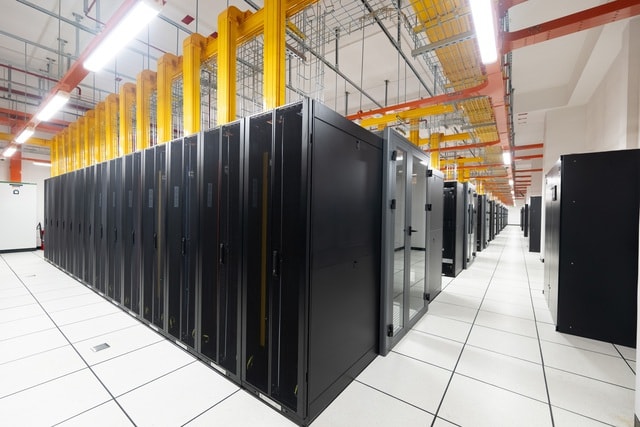
If we imagine AI as the "brain," then technological infrastructure is the "backbone." When this "backbone" is not strong enough, ambitions to achieve breakthroughs in AI will face many obstacles because the full potential of this technology cannot be realized. And this is precisely the "bottleneck" that Vietnam is currently facing.
In fact, despite the rapidly increasing demand for AI, Vietnam currently only has about 15 data centers that meet international standards. This is far fewer than Singapore, a leading Southeast Asian country in AI, has 70 data centers. Most current data centers in Vietnam primarily serve conventional data storage and cloud computing needs, and are not optimally designed for large-scale AI.
Furthermore, electricity is considered a crucial factor for AI. Calculations show that a large AI model can consume 2-3 times more electricity than other technological infrastructures. It's worth noting that globally, data centers serving AI currently account for less than 1% of the total number, but consume approximately 25% of the industry's total energy. This raises concerns about Vietnam's ability to meet the electricity demands of the future AI wave, especially since some northern localities still experience localized power shortages during peak seasons.
Furthermore, another bottleneck is the fact that the majority of domestic businesses still have to rent AI processing resources from foreign platforms such as AWS, Google Cloud, or Microsoft Azure. This reliance on foreign infrastructure increases costs, making it difficult for many small businesses to access this technology, and also raises concerns about data security.
According to Dinh Van Hoang, Director of the Institute for Business Development and Policy, most Vietnamese businesses currently still use information technology systems designed for 10 years ago instead of specifically for AI. While this might be suitable for small-scale AI deployment, it can lead to problems such as data bottlenecks and inability to perform tasks, resulting in increased costs and significantly reduced efficiency.
If the infrastructure bottleneck is not resolved, AI, instead of being a driver of growth, will become a financial burden for businesses, according to Mr. Dinh Van Hoang.
A long-term infrastructure strategy is needed.
According to expert Dinh Van Hoang, for sustainable AI development, Vietnam needs to consider digital infrastructure as part of its national strategic infrastructure, similar to transportation or energy. The first solution is to promote the development of large-scale AI data centers. This is considered a crucial foundation for building domestic computing capacity and reducing dependence on foreign platforms.
In recent years, many large technology companies such as Viettel, VNPT, FPT, and CMC have begun investing in expanding their cloud infrastructure and data centers to support AI. However, this pace is still insufficient to meet the exponentially growing demand for AI.
Mr. Dinh Van Hoang stated that Vietnam urgently needs more data centers optimized for AI from the outset, featuring high-density processing units (GPUs), modern cooling systems, and flexible scalability. Building a synchronized AI infrastructure ecosystem, including data centers, cloud computing, data platforms, and security systems, is mandatory.
In parallel with the need to focus on developing energy infrastructure to support AI, Vietnam needs a separate power plan for digital infrastructure, while also encouraging green data center models that utilize renewable energy.
Offering an alternative solution, expert Dinh Van Hoang suggested that a shared AI model is also a suitable direction for Vietnam. In reality, most small and medium-sized enterprises (SMEs) lack the capacity to invest in their own data centers. If there were a national infrastructure platform allowing the leasing of AI resources at reasonable costs, technology startups would have more opportunities for growth.
The government needs to have incentive mechanisms for businesses investing in AI infrastructure, and training high-quality human resources to operate AI is also a problem that needs to be solved collaboratively - Mr. Dinh Van Hoang shared.
Vietnam is clearly facing a great opportunity to participate more deeply in the global AI value chain. However, this opportunity can only become a reality if the infrastructure is properly invested in and a long-term strategy is in place. In the AI race, algorithms can change very quickly, but infrastructure is the foundation that determines the sustainable competitiveness of each country.
AI is an intelligent infrastructure. AI is not just an applied technology; it's becoming a national infrastructure, like electricity, telecommunications, or the internet. Those who master AI will have a significant advantage in manufacturing, business, healthcare, education, national governance, and even defense and security. Vietnam must have its own AI intelligent infrastructure. Vietnam is rapidly building a national AI supercomputing center and open AI data.
Former Minister of Science and Technology Nguyen Manh Hung
Source: https://hanoimoi.vn/dua-ai-thanh-cong-nghe-chien-luoc-nut-that-ha-tang-so-794189.html

![[Image] Hanoi's urban life under the challenge of a "scorching hot" environment](https://vphoto.vietnam.vn/thumb/1200x675/vietnam/resource/IMAGE/2026/05/25/1779706979265_nang-nong-t5-2026-minh-duy-7-4636-jpg.webp)
![[Image] Close-up view of the interchange connecting the two expressways and Long Thanh Airport.](https://vphoto.vietnam.vn/thumb/1200x675/vietnam/resource/IMAGE/2026/05/25/1779703378210_ndo_br_z7863716673926-224453a31600126cce10622af6290afd-4549-jpg.webp)


























































































Comment (0)