Green gems in the middle of the sea
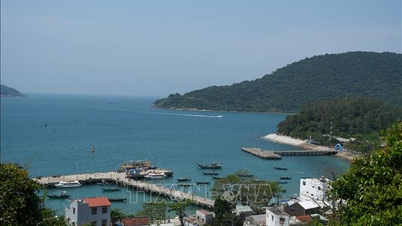
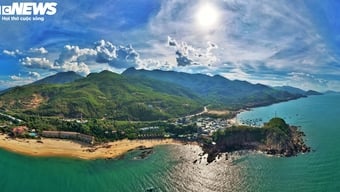
From the East Sea Park in the heart of Da Nang city, visitors can admire the Cham Islands (Tan Hiep commune) in the distance, acting as a natural barrier protecting the mainland from storms and strong winds. Cham Islands consist of eight islands of varying sizes: Hon Lao, Hon Dai, Hon Mo, Hon Kho Me, Hon Kho Con, Hon La, Hon Tai, and Hon Ong, intertwined to create a unique natural landscape with a relatively pristine forest and marine ecosystem.
Stepping into the clear blue waters of Bai Lang beach, about 10 meters in, visitors can witness vibrant, colorful coral reefs and a variety of marine life. Statistics show that hundreds of hectares of natural coral reefs thrive around the Cu Lao Cham island cluster, demonstrating the biodiversity and the local people's commitment to environmental preservation. With over 90% of its area covered by primary forest, Cu Lao Cham boasts a rich terrestrial flora and fauna, including the long-tailed golden monkey and swiftlet, both listed in the Red Book of Vietnamese Animals. Furthermore, the island contains cultural relics from the Champa and Dai Viet cultures, with several ancient wells, temples, and shrines built hundreds of years ago. Because of these outstanding values, in 2009, Cu Lao Cham was recognized by UNESCO as a World Biosphere Reserve.
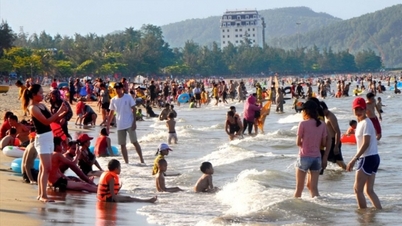
According to Mr. Dinh Ngoc Luc, Vice Chairman of the Tan Hiep Commune People's Committee, during the peak of the summer tourist season, Cu Lao Cham Island receives an average of 2,000-3,000 visitors per day, mostly foreign tourists. Despite the development of tourism, local people still preserve their traditional culture and are at the forefront of the movement to protect the marine environment, limiting the use of plastic bags in daily life, creating a safe and friendly tourism environment.
South of the city, Tam Hai is an island commune located in the An Hoa and Cua Lo estuary area, surrounded by the sea on three sides and the Truong Giang River on one side. Tam Hai has a natural area of over 16 square kilometers, with 10,278 inhabitants, comprising 7 villages, including 2 "island" villages: Xuan My and Long Thanh Tay.
Mr. Huynh Van Ba, a resident living near the ferry terminal on Tam Hai Island, shared that in recent years, life on the island has changed significantly compared to before. On weekends and holidays, cars belonging to tourists from the mainland line up in long queues, waiting for their turn to board the ferry to the island to enjoy themselves, explore the mangrove forests, the towering coconut groves, or the rhythm of life in the fishing village. Many roads around the island have been and are being expanded, contributing to the improvement of transportation infrastructure and expanding the space for tourism development.
In particular, Tam Hai island commune is famous for the Ban Than - Hon Mang - Hon Dua National Scenic Area, a geological formation dating back approximately 400 million years, featuring dark, jet-black rock formations shaped like unique works of art standing out in the open sea. With its majestic and pristine landscape, this scenic area is becoming a valuable resource for Tam Hai to develop into a distinctive marine and island ecotourism center of Da Nang city.
Located at the foot of the majestic Hai Van Pass, Son Cha Island covers an area of 1.6 square kilometers and is approximately 10 nautical miles from the mainland. Considered a "rough gem" of Da Nang city, it boasts fine white sand beaches, crystal-clear waters, hundreds of colorful coral species, and lush primary forests amidst the open sea. Da Nang city is aiming to develop Son Cha Island into an isolated eco-tourism resort, catering to high-paying and luxury tourists. Currently, the city is reviewing and assessing the current state of its forest resources and land, ensuring a balance between biodiversity conservation and economic development, thereby attracting strategic investors to realize its transformation into a world-class resort paradise.
With its geographically dispersed location and rich ecological, natural, and cultural values, this "chain of pearl islands" is being "awakened" by Da Nang city to become an important piece in the journey of building an ecological, smart city, a livable tourist city of regional Asian class.
Enhance high-quality tourism infrastructure.



Tan Hiep (Cu Lao Cham) and Tam Hai are two island communes with long-standing populations in Da Nang city. Despite having many advantages for developing resort tourism, they still lack high-quality tourism infrastructure to meet the needs of tourists, especially international visitors.
Bai Nom is the most beautiful beach in Tam Hai island commune. From here, visitors can follow the rocky shores to reach the Ban Than National Scenic Area and admire Hon Dua and Hon Mang islands in the distance. With such a prime location, it was once expected to be the site of a high-quality resort project, creating a breakthrough for the island commune's tourism. However, to date, it remains only a row of abandoned buildings belonging to a project that has been "stalled" for over 20 years. This is the project to build the "Language and Time" Ethnic Culture, Cuisine and Music Center, covering 8.6 hectares of land, owned by Viet Ngu Tourism Joint Stock Company, which was granted a 50-year land lease. The Tam Hai authorities and residents have repeatedly petitioned the competent authorities to review and address this delayed project, as it not only wastes already limited land resources but also hinders the development opportunities of the island commune. During a recent meeting with the Secretary of the Da Nang City Party Committee, Le Ngoc Quang, the leaders of Tam Hai commune also requested that the city promptly direct the resolution of outstanding issues and obstacles at this project.
On Cu Lao Cham Island, the Bai Bim Marine Ecotourism Project covers an area of 26 hectares with 42 structures. Of these, 37 villas, invested in and built by Sun Group since 2004, have had their structural work completed but remain unfinished and unoperational. During a recent site inspection, Da Nang City Party Secretary Le Ngoc Quang requested that the investor restart the project soon, aiming for operational completion in 2028.
Currently, upgrading waterway infrastructure to connect the mainland with the "island chain" is a priority for Da Nang city, with significant investment resources allocated to it. Tam Hai commune has recently put into operation two steel-hulled ferries, with a total investment of nearly 25 billion VND. Each ferry has a total carrying capacity of over 30 tons, making travel for residents and tourists much more convenient than before. This brings the island commune closer to the mainland, contributing to the promotion of socio-economic development, especially in the local tourism sector, which has great potential.
Located approximately 15 km from the mainland, the biggest challenge currently is transportation between Cu Lao Cham Island and the mainland. The main means of transporting tourists to the island are small canoes, departing from the Cua Dai sea area and only operating in favorable weather conditions. When sea winds exceed level 5, all transportation must cease operation.
According to the leaders of Tan Hiep island commune, the city has approved the opening of a transportation route from the central area of Da Nang to Cu Lao Cham to attract high-end tourists for sightseeing and relaxation, with tourist boats capable of carrying 300 people or more. The city is focusing on directing the acceleration of related procedures to soon implement investment and upgrade the inland waterway port and dock system at Cu Lao Cham, ensuring seamless connectivity between the mainland and the island, serving the needs of the people, tourism, and national defense and security.
The vision and requirements set by Da Nang city leaders for the development of this "pearl island chain" are rapid but sustainable development, without sacrificing the ecological environment for purely economic growth, and preserving local cultural identity for tourism development. In particular, protecting the environment and preserving the marine ecosystem is a vital task and a prerequisite for sustainable tourism development. At the same time, emphasis is placed on improving service quality and extending the length of stay on the islands, rather than just focusing on increasing the number of tourists.
Da Nang has identified tourism as a key economic sector, playing a crucial role in the city's double-digit growth cycle, focusing on developing high-quality tourism and services. The "pearl island chain" of Tam Hai, Cu Lao Cham, Son Cha, along with the Son Tra peninsula, are becoming unique competitive advantages, enabling the city's coastal and island tourism to make a strong breakthrough in the coming years.



Source: https://baotintuc.vn/du-lich/dua-chuoi-dao-ngoc-tro-thanh-diem-nhan-moi-cua-du-lich-da-nang-20260624101041206.htm

![[Photo] Prime Minister Le Minh Hung presides over the thematic session on promoting science and technology development and innovation.](https://vphoto.vietnam.vn/thumb/1200x675/vietnam/resource/IMAGE/2026/06/23/1782207872934_ndo_br_dsc-1724-jpg.webp)