


Integrating human rights content into the national education system. (Illustrative image)
Since 2017, the Prime Minister has approved the Project to integrate human rights content into the national education system's curriculum for the period 2017-2025. According to the approved plan, by 2025, 100% of educational institutions within the national education system will organize human rights education for students. Therefore, the Ministry of Education and Training has been actively coordinating with localities and schools to incorporate this content into the curriculum, tailored to each educational level, contributing to strengthening the practice of human rights in schools, preventing school violence and discrimination, and combating human dignity.
Issuing a framework for educational content at each level.
For many years, human rights content has been incorporated into the curriculum of several subjects, such as Ethics and Civic Education, through lessons within the legal education framework. However, this content lacks a systematic and comprehensive approach, and does not fully encompass all values, principles, and standards. Furthermore, teaching and learning materials on human rights in educational institutions within the national education system, especially those guiding the integration of human rights, are insufficient, affecting the quality and effectiveness of education.
At the end of 2022, the Ministry of Education and Training issued a framework for educational content, compiled guidance materials, and conducted training on teaching human rights at the primary, secondary, and high school levels.
According to Mr. Thai Van Tai, Head of the Primary Education Department: The 2018 general education program is built on the orientation of developing students' qualities and competencies, aiming to create a learning and training environment that helps students achieve harmony in physical and mental well-being, becoming active and confident learners. This orientation is consistent with the development and integration of human rights education in all subjects.
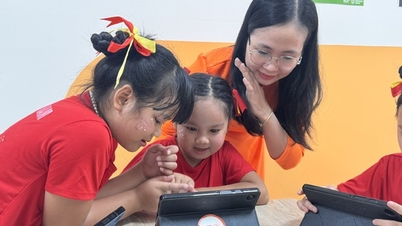
To date, at the primary school level, the new general education program has been implemented up to grade 4. The teaching of children's rights has been elevated to a human rights component. Specifically, teachers have focused on ensuring equal opportunities for students' rights to care, protection, education, and development; their right to be heard, respected, and to participate; and have implemented various solutions to help students fully develop their competencies and qualities.
According to Mr. Thai Van Tai, schools can develop plans to organize human rights education content within their educational plans through proactive and flexible methods, such as organizing separate lessons on specific topics or integrating it into arts and culture activities, club activities, competitions, etc.; or integrating it into subjects in the general education curriculum.
Regarding the orientation for implementing human rights content in the curriculum and educational activities at the secondary school level, Deputy Director of the Secondary Education Department, Do Duc Que, shared: Human rights education in the curriculum and educational activities empowers learners, enabling students to recognize social issues they face both in school and in society, and to develop attitudes, behaviors, and conflict resolution methods based on human rights. Empowerment education is the best way to resolve conflicts between students, and between students and teachers, in the school environment, in a peaceful , friendly, understanding, and tolerant manner, minimizing the risks of conflict.
The Deputy Director of the Department of Secondary Education emphasized the importance of ensuring consistency, uniformity, and comprehensiveness in human rights education when implementing teaching and educational activities. This includes considering factors such as students' psychological characteristics, gender, age, learning abilities, regional culture, and religious beliefs when designing and developing learning activities. Integrating human rights content into the secondary education curriculum must foster the autonomy, activeness, and creativity of teachers; avoiding rigid and mechanical approaches when incorporating this content into lessons and educational activities within each subject.
Raising awareness among teachers and students.
To effectively integrate human rights content into the curriculum and educational activities, the agencies participating in the Project have completed a large volume of tasks through various activities. The Project's activities have been incorporated into reports on the implementation of human rights in Vietnam, such as the Universal Periodic Review Report, as well as in human rights dialogues between Vietnam and international organizations and other countries, contributing positively to the human rights dialogue between the Vietnamese Government and other countries and international organizations.
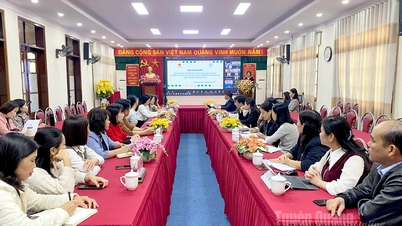
Local authorities have been organizing numerous training courses for management staff and key teachers. Through these training sessions, the staff and teachers have been taught about human rights, civil rights, and children's rights, particularly the differences between human rights and civil rights. Emphasis has been placed on children's rights such as the right to life, the right to protection, the right to education, and the right to express opinions. Teachers have also received practical training in developing illustrative lesson plans integrating human rights information for students at all levels.
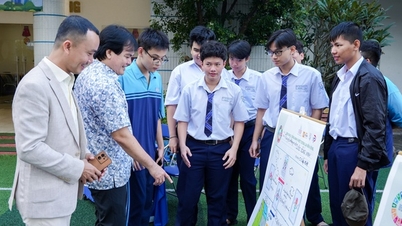
Ms. Tran Thi Xuan Ha, Deputy Principal of My Van High School (Tam Nong, Phu Tho), shared: "Human rights education for high school students is especially important in the context of fundamental and comprehensive reform of education and training. Schools have been implementing this for a long time, through integrating the dissemination of school regulations; the duties and rights of high school students within the school so that they can understand and comply with them during their studies."
However, according to Ms. Xuan Ha, high school students' understanding of human rights is still limited. They lack the skills to apply human rights and human rights law in practice. Therefore, when faced with situations of violation, students are unable to protect themselves or speak up to protect themselves and others.
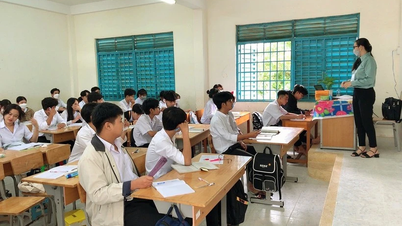
Representatives from the Ho Chi Minh City Department of Education and Training stated: During the implementation process, in addition to skillfully integrating human rights content into lessons, teachers simultaneously set a good example for students to follow. Teachers incorporate thought-provoking questions into educational activities, helping students grasp basic knowledge about human rights.
Many schools also organize thematic communication activities for students to learn, explore, and experience through flag-raising ceremonies and themed activities; focusing on children's rights, the right to live safely, educating students on preventing and combating domestic violence and abuse, etc.
In Bac Giang, to assess the current state of human rights education in the curriculum, the Provincial Department of Education and Training organized professional development sessions to identify advantages and difficulties, and subsequently propose solutions for effectively teaching human rights content.
In the long term, incorporating human rights content into the national education system's curriculum should aim to foster a culture of respect for the law and help each Vietnamese citizen understand their rights and responsibilities towards the country and society.
Source

























































Comment (0)