

Recently, there have been numerous false rumors circulating about the health and private lives of current and former Party and State leaders, as well as information about restructuring the apparatus and changing policies, all with deliberate intent. Looking directly at the facts, it's clear that this is not just a lack of honesty, but also a form of undermining public trust.
It's not difficult to find several foreign media outlets recently focusing on the health and private lives of Vietnamese leaders. Some channels report directly, using shocking language. Others choose a more indirect approach, using phrases like "speculation" and "guess," then cleverly expanding on the issue to raise serious questions about the country's political situation. Phrases like "speculation" and "guess" inherently contain uncertainty, but when placed together, they can confuse readers, blurring the line between information and hypothesis, easily leading to misunderstandings of the true nature of events.
This situation is even more pronounced on social media. Numerous accounts belonging to individuals who call themselves "fighters for democracy" or "lawyers" have spread misinformation about high-ranking leaders being "elderly, prone to health problems," "recently suffered a stroke," or "disappeared for days," without any verifiable sources or confirmation. Some accounts even brazenly make sweeping accusations: "Is this insider information about a high-ranking leader's 'stroke' a tool for political infighting or a genuine concern?" These statements are accompanied by inflammatory, sensationalist, and subversive language, supported by vague evidence, giving readers the impression they are about to witness a major upheaval.
In a short time, such news received many shares and continued to spread. This spread was not accidental, but indicated that there were ulterior motives behind it.
A closer look reveals a common thread: it's not without reason that rumors surge before important national events, often focusing on familiar topics such as the health of high-ranking leaders, internal party issues, or sensitive matters. This deliberate repetition suggests that this is not simply a spontaneous phenomenon.
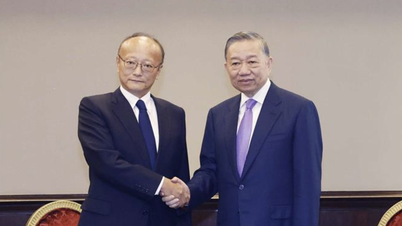
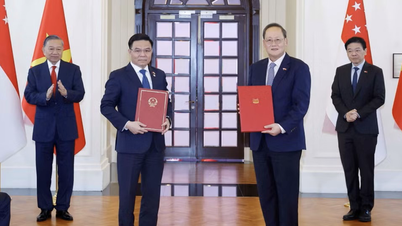
However, reality is always the clearest measure. Just days after the rumors surfaced, images of high-ranking leaders appearing, chairing important meetings, participating in scheduled activities, or working with leaders of other countries were clearly published by domestic and international media outlets.
When compared in this way, the rumor itself reveals to be unfounded!
From this, it can be seen that the core values of journalism lie in objectivity, accuracy, honesty, humanism, and public service. Journalism is an essential tool for providing knowledge, monitoring power, providing social critique, and spreading positive values, helping to shape public opinion, educate ideology, and encourage positive actions. In short, journalism is based on truth. Conversely, malicious information often "borrows the guise of truth," blurring the lines between truth and falsehood to deceive readers.
In fact, it's not difficult to identify signs of fake news because it lacks official sources, uses inflammatory language, speculation, lacks verification, and most importantly, doesn't reflect current events. Today's readers are not lacking in information. What's needed is the ability to receive, filter, and compare information with that from official news sources. When information is unverified, one must be extremely cautious, not believe it immediately, and certainly not share it hastily.
It's important to emphasize that fake news isn't just about whether a story is true or false. It can have far greater consequences. When trust is shaken, societal perceptions are affected. A false rumor doesn't just impact an individual; it can also disrupt the general perception and understanding of many people regarding the social situation.
However, fake news only thrives when people unwittingly contribute to its spread. A single click to share, an unverified comment, can cause misinformation to spread further. Therefore, each social media user is also a "gatekeeper" for themselves.
The ancients taught: "Hearing is not as good as seeing." Therefore, when faced with unverified information, be vigilant, listen carefully and consider ten things before you speak, so as not to fall into the trap of fake news!
A modern society needs a healthy flow of information. We cannot allow dishonest sources to dominate, nor can we rely on solutions once fake news has spread. More importantly, we must cultivate responsible information reception and filtering habits in each individual. Combating fake news is not solely the responsibility of authorities or the press, but a shared responsibility of the entire community and society. In this context, mainstream media plays a particularly crucial role: providing timely, accurate, relevant, and transparent information.
When the truth is conveyed promptly and clearly, fake news will have little chance of thriving.
Source: https://baotintuc.vn/van-de-quan-tam/dung-de-tin-gia-dan-dat-niem-tin-20260415090516063.htm
![[Photo] Solemn bathing ceremony and Buddha procession in Hue](https://vphoto.vietnam.vn/thumb/1200x675/vietnam/resource/IMAGE/2026/05/31/1780228263543_1-jpg.webp)
![[Image] Hanoi Police officially crowned champions of V-League 2025/2026](https://vphoto.vietnam.vn/thumb/1200x675/vietnam/resource/IMAGE/2026/05/31/1780244769054_ndo_br_039d561b692be875b13a-jpg.webp)


![[Photo] The General Secretary, President and his wife begin their state visit to the Philippines.](https://vphoto.vietnam.vn/thumb/1200x675/vietnam/resource/IMAGE/2026/05/31/1780230559452_anh-man-hinh-2026-05-31-luc-19-28-11.png)
![[Photo] Admire the coral "masterpiece" amidst the million-year-old heritage of Dak Lak province.](https://vphoto.vietnam.vn/thumb/1200x675/vietnam/resource/IMAGE/2026/05/31/1780221235105_anh-man-hinh-2026-05-31-luc-16-53-27.png)














![[Video] Sunset at Lap An Lagoon – Where the sun sets over the fishing nets](https://vphoto.vietnam.vn/thumb/340x192/vietnam/resource/IMAGE/2026/05/31/1780192137701_beach-landscape-sea-water-nature-grass-745871-pxhere-com.jpeg)


























![[Photo] Admire the coral "masterpiece" amidst the million-year-old heritage of Dak Lak province.](https://vphoto.vietnam.vn/thumb/402x226/vietnam/resource/IMAGE/2026/05/31/1780221235105_anh-man-hinh-2026-05-31-luc-16-53-27.png)

























Comment (0)