

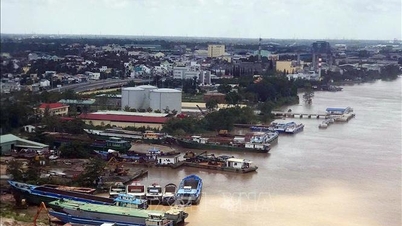
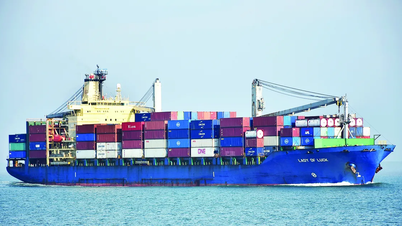
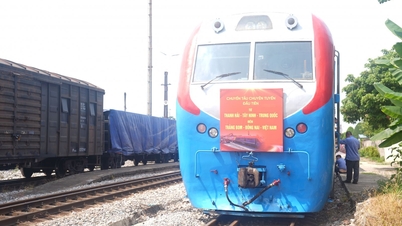
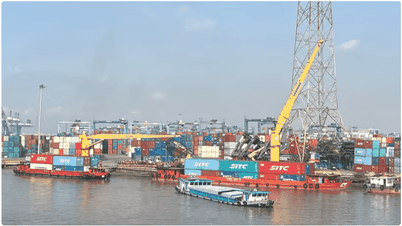
According to the Ministry of Construction 's assessment, Vietnam does not lack transportation means or investment projects, but it lacks effective connectivity between different modes of transport and between economic regions. While road transport still carries the majority of goods traffic, lower-cost methods such as rail and inland waterways have not been exploited adequately. As a result, goods are transported via the most expensive route instead of the most optimal one.
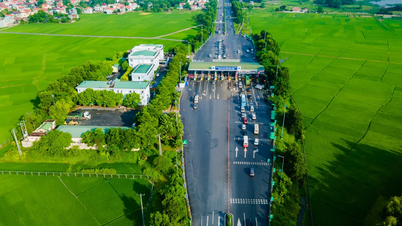
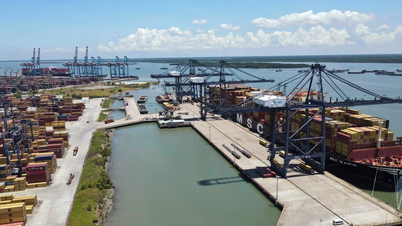
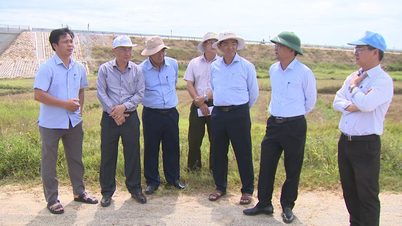
In this context, the North-South expressway projects, the routes connecting seaports, airports, and economic zones that the Prime Minister personally inspected in Central Vietnam, are crucial links in resolving bottlenecks. When infrastructure is seamlessly connected, transportation time is shortened, fuel and transshipment costs are reduced, and logistics efficiency will be significantly improved.
The Prime Minister 's directive also emphasized the need for close coordination among ministries, agencies, and localities. Lessons from many countries show that, to solve the problem of reducing logistics costs, infrastructure management agencies must ensure that transportation projects are planned according to the logic of the supply chain, avoiding situations where roads are completed but lack connections to ports, cargo terminals, or logistics centers. The industry and trade sector must link logistics development with distribution networks, e-commerce, and the domestic market to reduce circulation costs. Localities must also shift from a mindset of individual development to regional linkages.
Another crucial factor is institutional reform and digital transformation. In reality, high logistics costs stem not only from transportation but also from administrative procedures and waiting times. When transportation data, ports, warehouses, and specialized management are seamlessly connected, businesses will significantly reduce unnecessary costs. Therefore, building a national logistics data system and promoting the digitalization of transportation management should be considered an urgent task. Alongside this, the early establishment of national logistics centers should be implemented to fulfill their function of connecting multimodal transport, rather than simply developing warehouses. These centers must become hubs for organizing the flow of goods between road, rail, waterway, maritime, and air transport, thereby optimizing the supply chain and sustainably reducing costs.
The logistics development strategy until 2035 has set a clear direction. However, given its role as a key to resolving the "cost bottleneck" of the economy, the construction industry should accelerate the progress of all key projects. When important hubs are seamlessly connected, goods will have an optimal route, and Vietnam's geographical advantages will truly be transformed into competitive advantages. This will also create conditions for the Vietnamese economy to enter the regional supply chain in a more proactive position, instead of continuing to face the pressure of high costs as it does now.
Source: https://www.sggp.org.vn/duong-di-toi-uu-cho-hang-hoa-post841158.html
![[Photo] General Secretary and President To Lam presides over a meeting with the Central Organizing Committee.](https://vphoto.vietnam.vn/thumb/1200x675/vietnam/resource/IMAGE/2026/06/03/1780482764658_a1-bnd-4741-3342-jpg.webp)


![[Photo] Secretary of the National Assembly Party Committee, Chairman of the National Assembly presides over the meeting of the Standing Committee and Executive Committee of the National Assembly Party Committee.](https://vphoto.vietnam.vn/thumb/1200x675/vietnam/resource/IMAGE/2026/06/03/1780480353201_ndo_br_bnd-2585-jpg.webp)
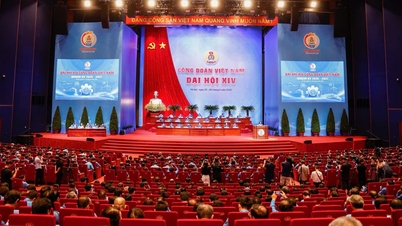
![[Photo] First session of the 14th Congress of the Vietnam Trade Union](https://vphoto.vietnam.vn/thumb/1200x675/vietnam/resource/IMAGE/2026/06/03/1780465947883_ndo_br_img-3852-jpg.webp)












































![[Video] Sunset at Lap An Lagoon – Where the sun sets over the fishing nets](https://vphoto.vietnam.vn/thumb/1200x675/vietnam/resource/IMAGE/2026/05/31/1780192137701_beach-landscape-sea-water-nature-grass-745871-pxhere-com.jpeg)


























Comment (0)