

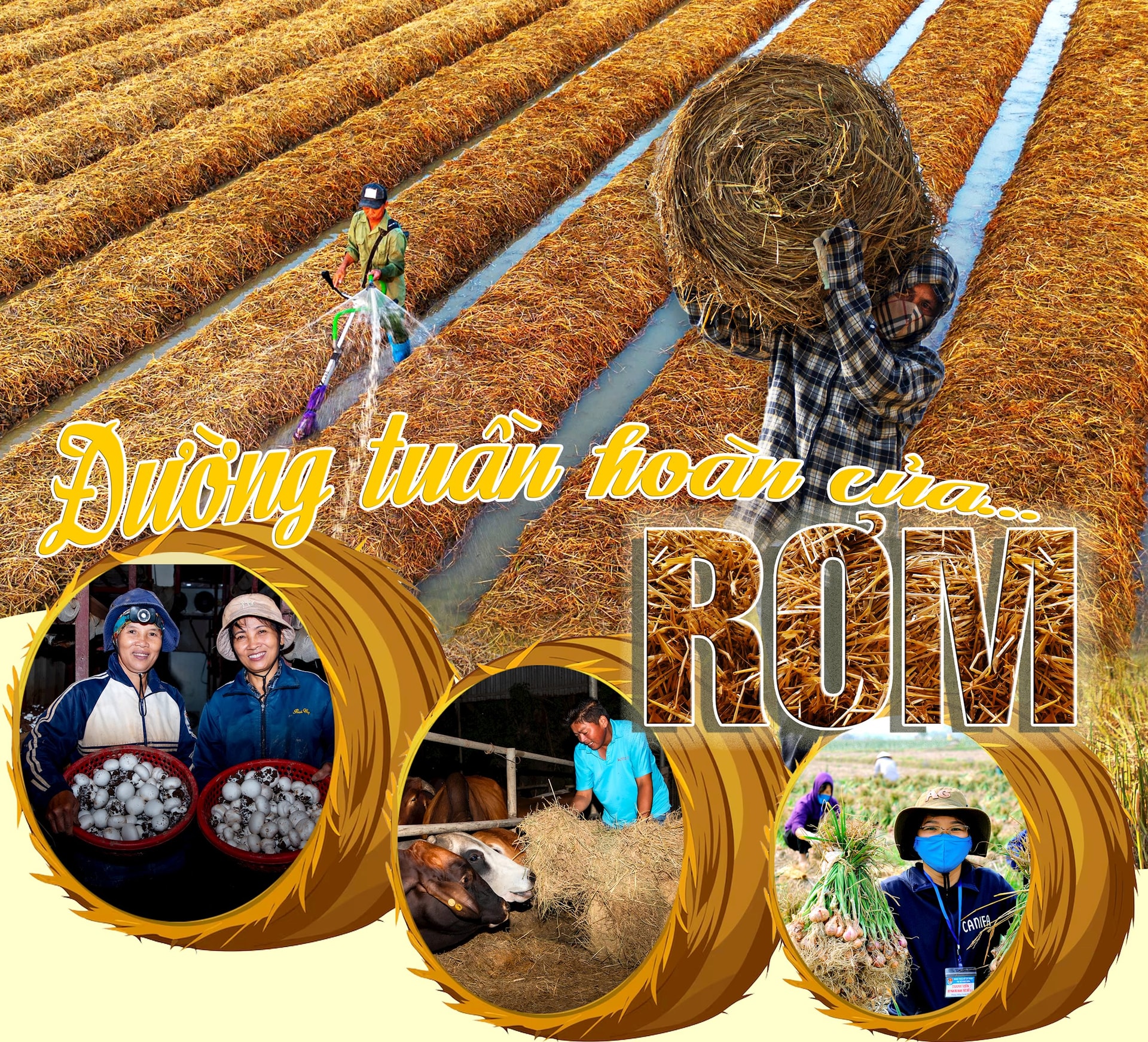
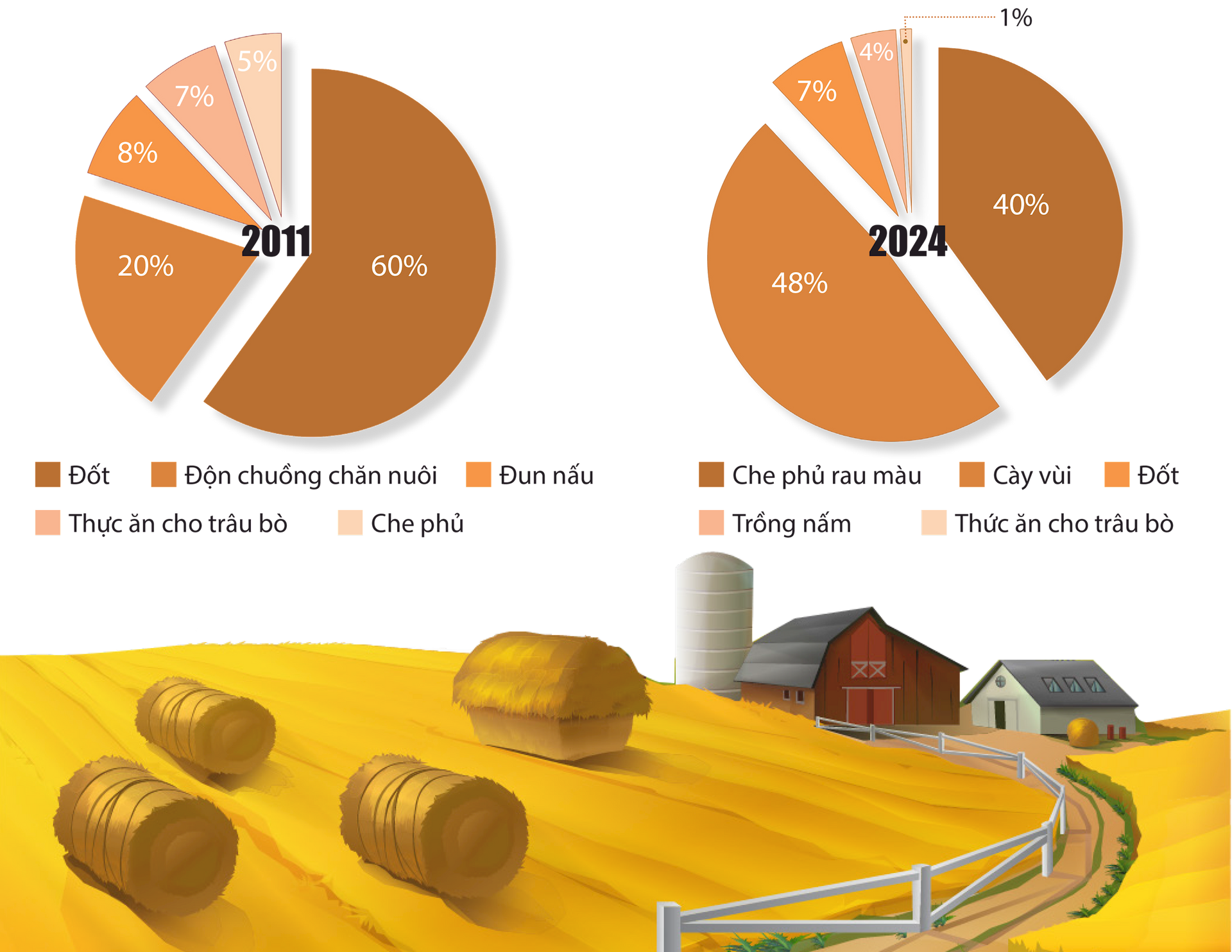
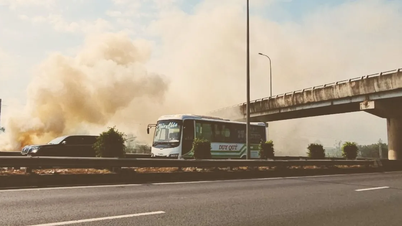
Hai Duong used to be one of the "hot spots" for the burning of excess rice straw after each harvest, which was wasteful and harmful to the environment and people's health. Currently, most of the straw in the province is reused to serve circular, green, and sustainable agricultural production.
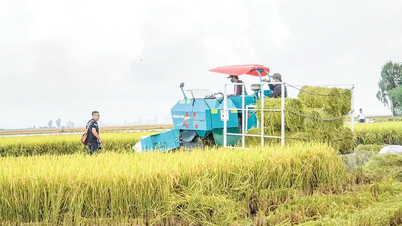
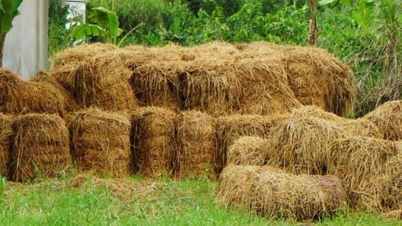
After the 2024 rice harvest, the fields along Provincial Road 390D in An Thuong Ward (Hai Duong City) and Hong Phong and Minh Tan communes (Nam Sach District) are basically free from the thick smoke and dust from burning straw and stubble as before. Instead, we see straw baling machines running smoothly across the fields, occasionally stopping to release bales of golden straw.
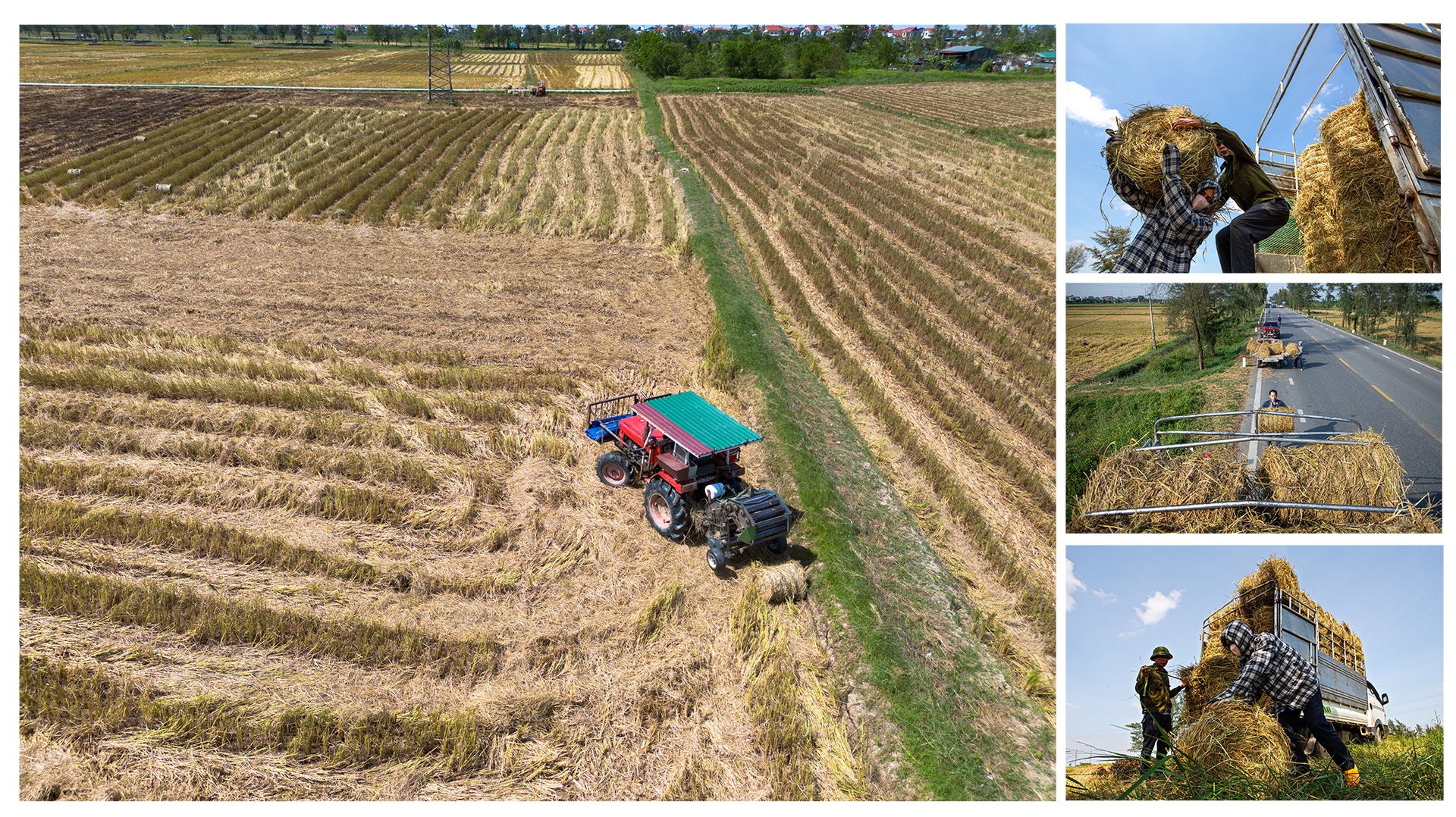
Mr. Nguyen Ngoc Ngoi from Minh Tan commune, along with several laborers, passed bundles of straw from the field onto a truck parked by the roadside. Once the truck was full, he drove straight to Kinh Mon town to sell the straw to onion and garlic growers. The others returned to continue baling the straw, waiting for the next truck.
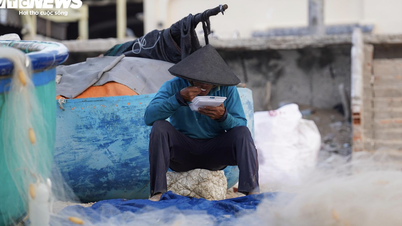
Since the beginning of the rice harvest season, Mr. Ngoi's straw collection team has been working from morning till night almost every day. They eat lunch right in the fields. "There's still a lot of straw left, but the farmers need it immediately to plant their winter crops, so we have to collect it as quickly as possible," Mr. Ngoi shared.
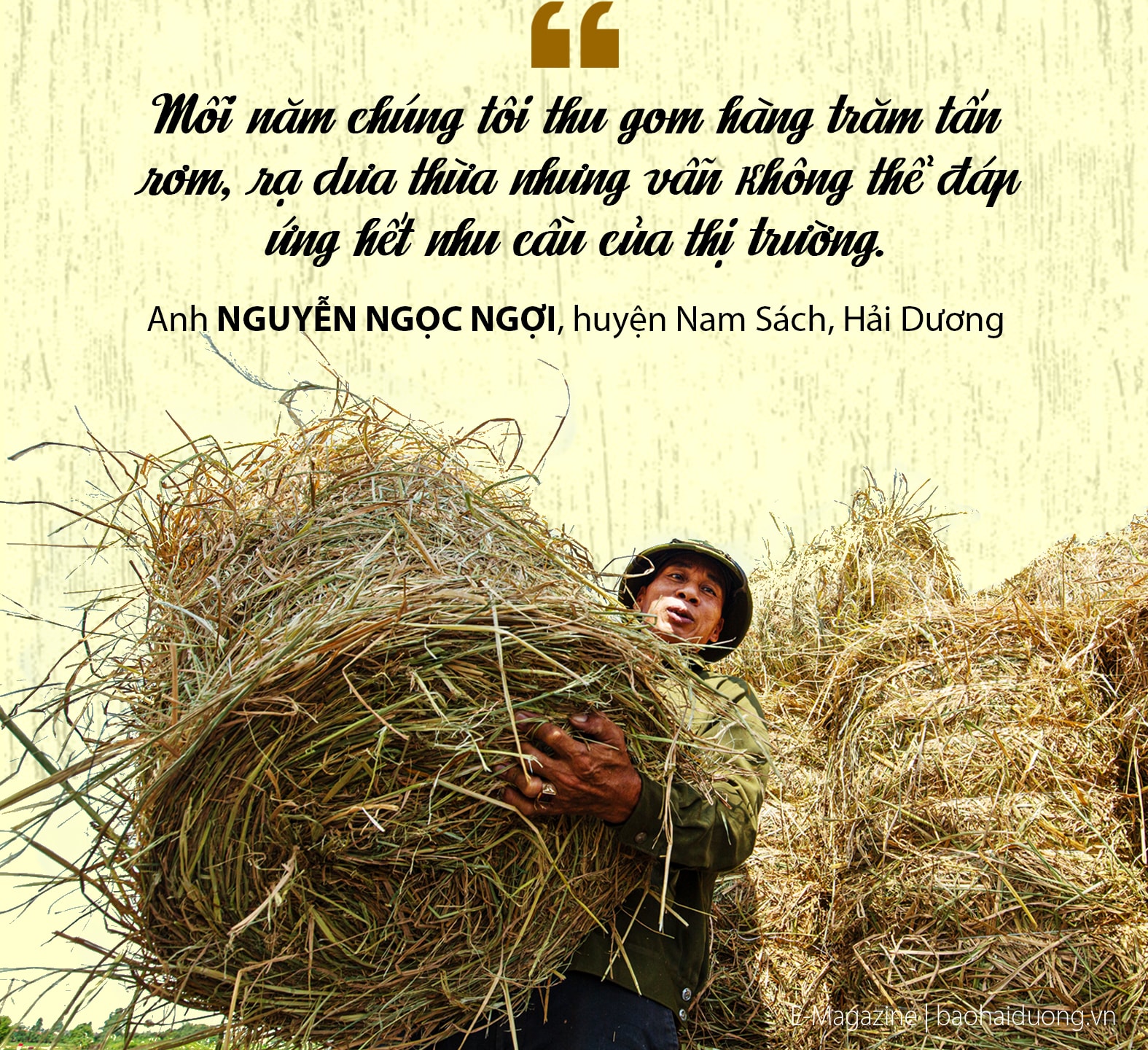
Mr. Ngoi started collecting straw in 2021. At that time, most of the straw and rice stalks after harvest were burned by farmers in the fields. Seeing that this was both environmentally polluting and wasteful, he rallied his relatives to form a team to collect straw and sell it for profit.
Mr. Ngoi traveled to many places to learn about the demand for straw. Upon returning home, he invested 80 million VND in a straw baling machine and installed it on his tillage machine. He then asked people to spread the word to farmers to stop burning straw, paying them 2,000 VND per bale. The villagers agreed, and many gave their bales away for free.
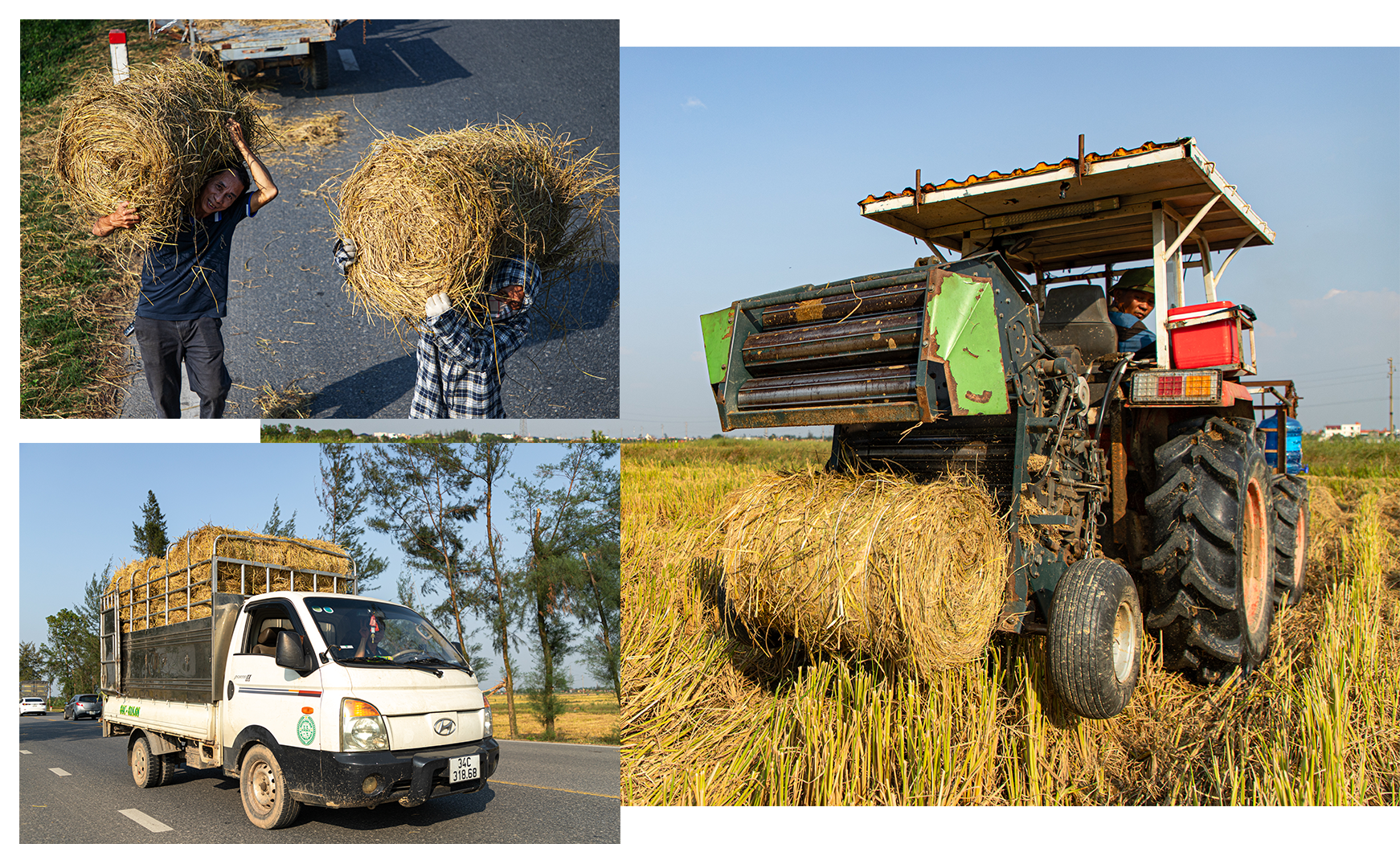
Besides Hai Duong, Ngoi's group also collects straw in provinces such as Nam Dinh and Bac Ninh ... Each year, his group collects 14,000-17,000 bundles, each weighing about 20kg, equivalent to 280-340 tons. "We transport this straw throughout the northern provinces, all the way to Nghe An, to serve people growing vegetables, raising buffalo and cattle, and cultivating mushrooms. The demand for straw in the market is currently very high. Besides our group, there are many other groups in the province that also collect straw," Ngoi informed.
Visiting many other fields in Gia Loc, Cam Giang, Binh Giang districts, Chi Linh city... everywhere we went, we encountered straw baling machines operating at full capacity.
In the fields of Cam Van commune, a group of six people led by Nguyen Tuan Phan (from Duc Chinh commune, Cam Giang district) are collecting straw to supply Daily Farm Moc Chau (Son La province). After collecting straw in Hung Yen and Bac Ninh provinces, the group has just returned to this field.
Since 2019, Mr. Phan has invested 360 million VND to buy a self-propelled straw baling machine and a truck for collecting straw. He signs contracts with farmers inside and outside the province who cultivate rice on large-scale model fields to purchase straw at a price of 10,000-20,000 VND per sao (approximately 1000 square meters).
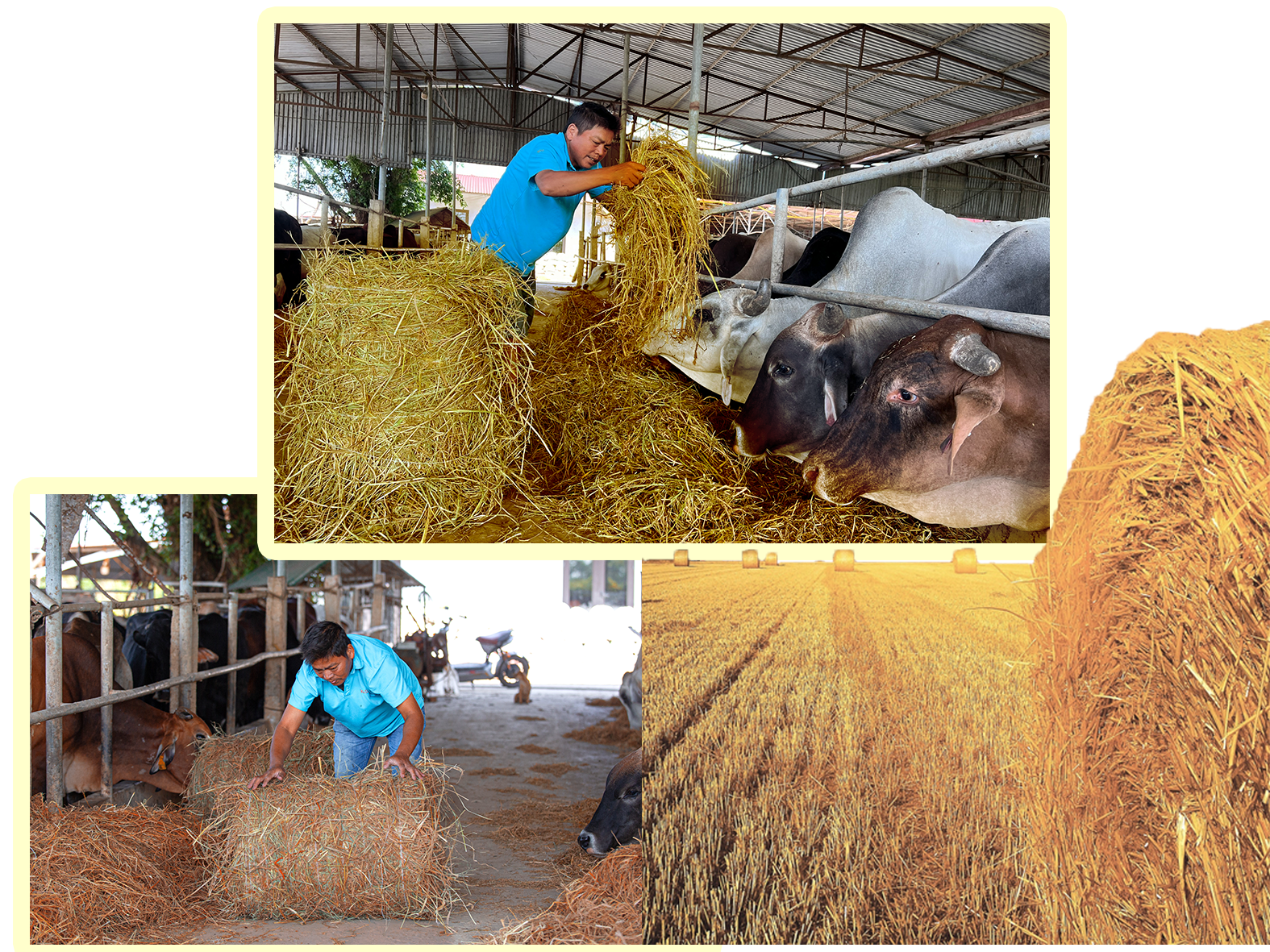
In Duc Chinh commune, there are still two other groups of workers collecting straw. Phan's group alone collects about 20,000 bales (equivalent to 400 tons) each year. Initially, he mainly bought straw to supply local farmers for crop cultivation, gradually expanding to serve the livestock and edible mushroom farming markets. "Even working at full capacity, we still can't meet all the market demand, so this season I've partnered with three other groups in Nam Dinh province to better serve our customers," Phan said.
The practice of burning excess rice straw after harvest in Hai Duong has significantly decreased thanks to the formation of straw collection teams in many localities. Besides the straw being collected for various purposes, most of the remaining rice stubble (for fields harvested horizontally) is plowed into the soil, becoming a source of nutrients for the crops.
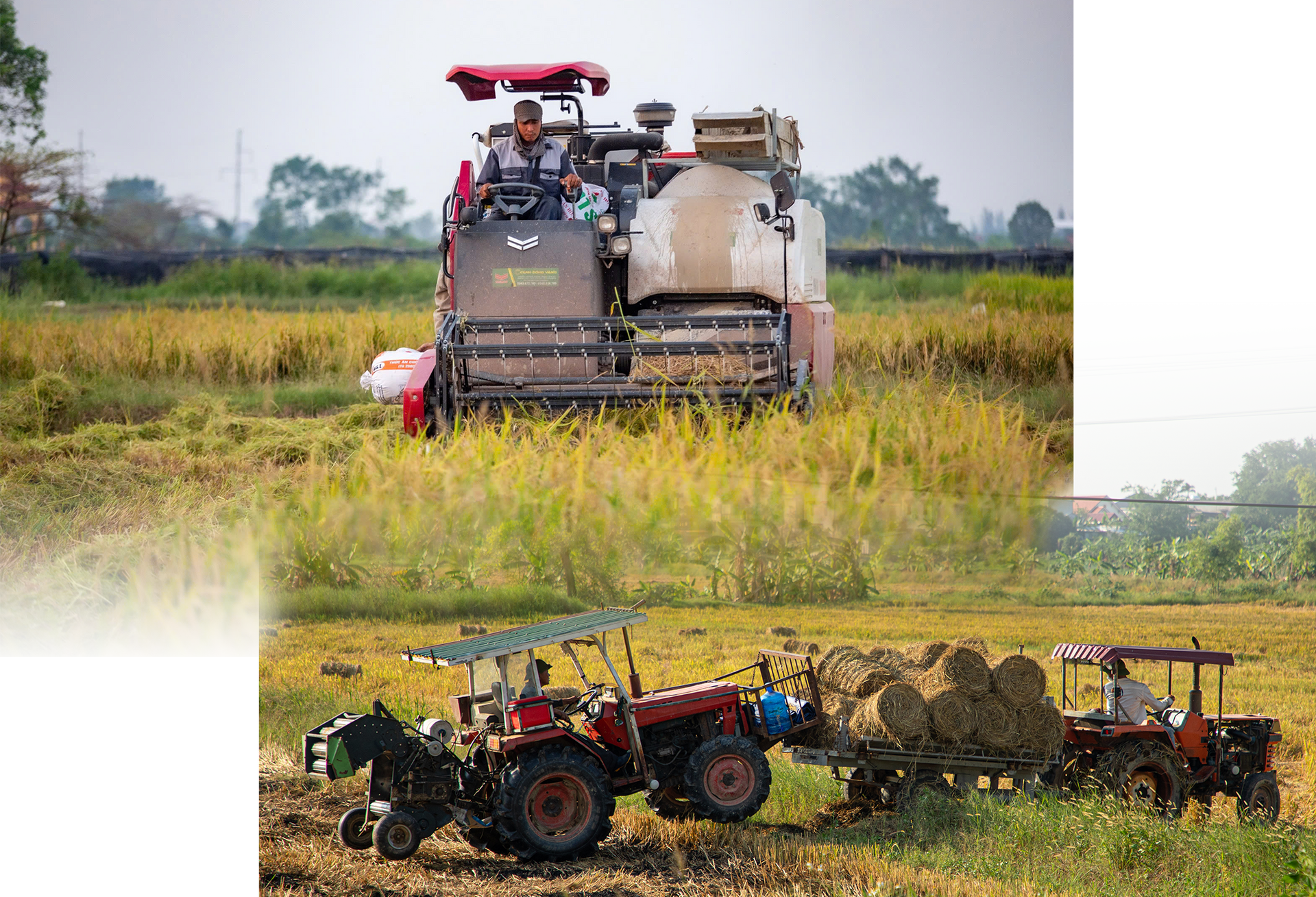
Smoke and dust from burning straw and stubble no longer engulf the villages of Hai Duong as before. People and vehicles traveling on the roads are less worried about the smoke obscuring visibility, thus reducing the risk of traffic accidents.
Ms. Nguyen Thi Thao from An Thuong commune (on the outskirts of Hai Duong city) commented: "Previously, people burned straw all over the fields, making the air very stuffy. Many elderly people and young children suffered from respiratory illnesses. Now it's different; the environment is much cleaner."
Mr. Phan said that since starting the straw collecting business, he and his colleagues have had a significant additional source of income. He pays the two drivers of the straw bales 1 million VND per person per day, while the loaders and transporters earn 500,000 VND per person per day.
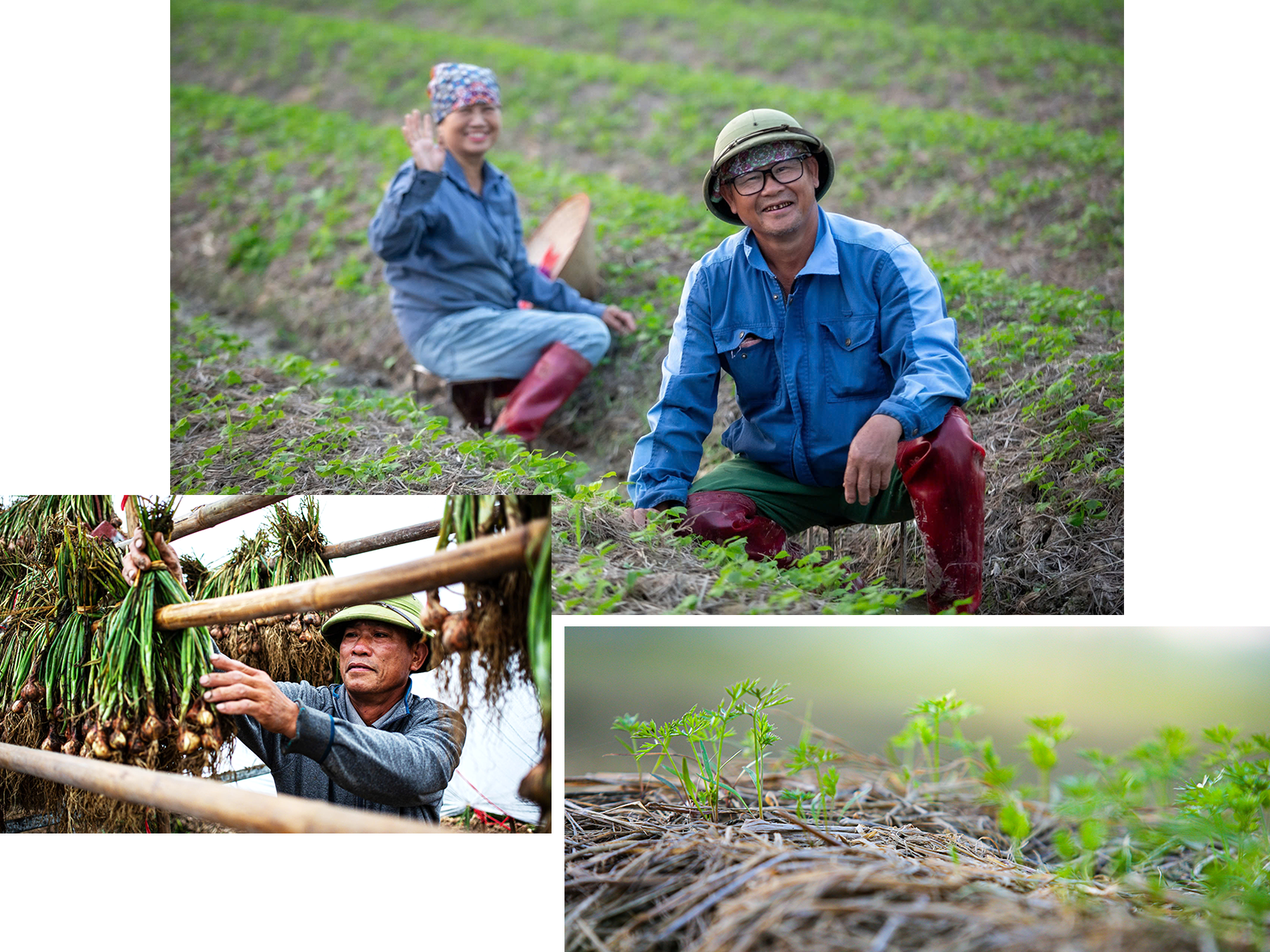
We visited the vegetable farming areas on the banks of the Thai Binh River, in the communes of Duc Chinh and Cam Van (Cam Giang district), and Thai Tan (Nam Sach district). These days, farmers are busily planting carrots for the winter crop. As soon as the seeds are sown, they cover the rows with a layer of straw for protection. The yellow color of the straw, blended with the afternoon sunlight, makes these farming areas look like a painted picture.
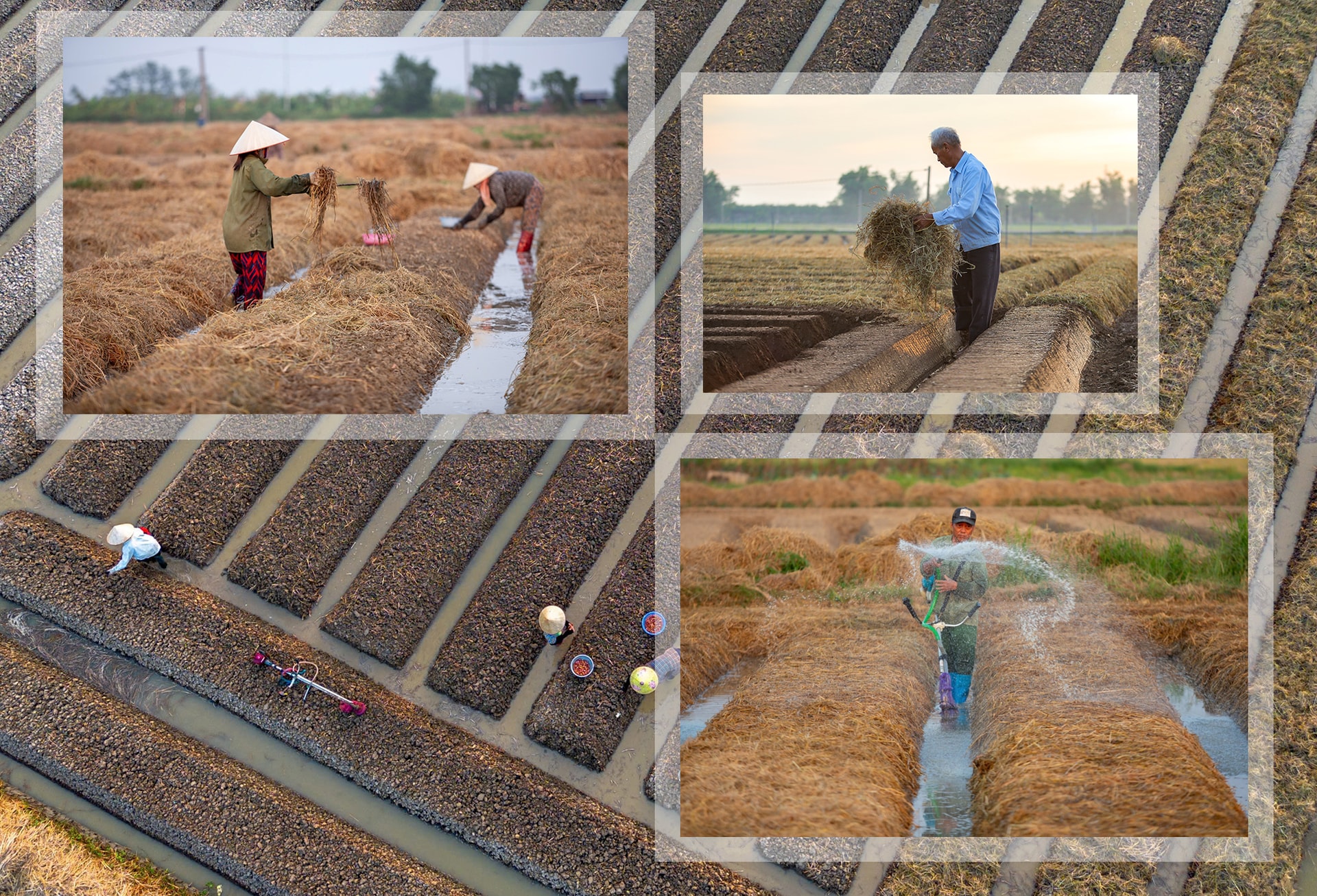
In some early carrot fields in Duc Chinh commune, green sprouts have begun to push through the gaps in the straw, reaching for the sunlight. The straw on the rows is also slowly decomposing, dissolving into the soil to provide nutrients for the plants to grow.
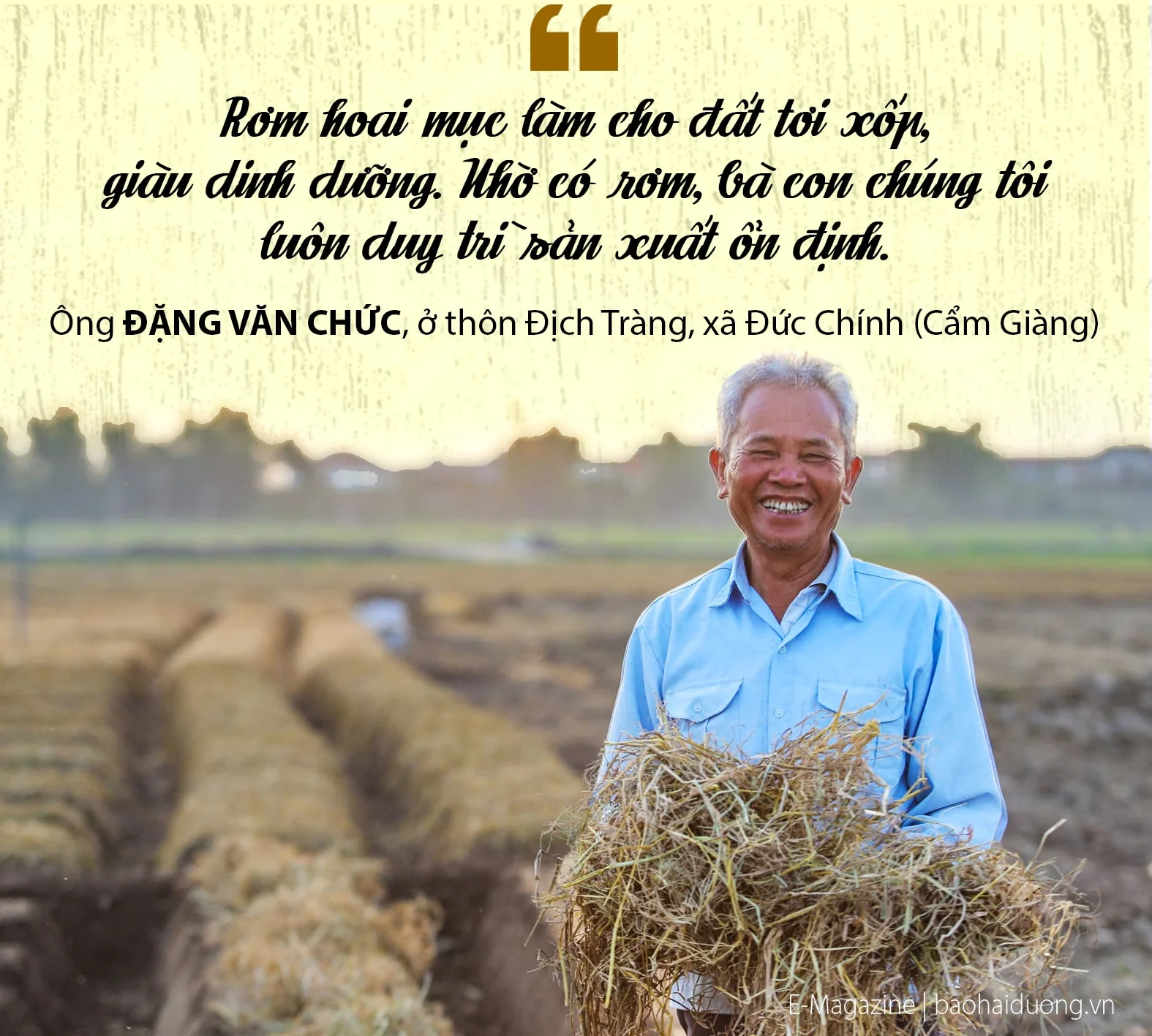
Mr. Dang Van Chuc from Dich Trang village, Duc Chinh commune (Cam Giang district) shared: "Every year, people in this area utilize thousands of tons of surplus straw for production. Straw has many uses, from retaining moisture and protecting seeds to helping carrot roots retain their red color, preventing them from turning green, and ensuring beautiful appearance, meeting export standards. The decomposed straw makes the soil loose, porous, and nutrient-rich. Thanks to straw, we farmers always maintain stable production, earning a profit of 5-6 million VND per sao (approximately 1000 square meters) every season."
In many fields in districts such as Nam Sach and Kinh Mon town, straw is an indispensable material for planting onions and garlic. According to research, each plot of land used for growing these two crops requires 10-12 bales of straw. The entire province has approximately 1,600 hectares of carrot cultivation and 6,500 hectares of onion and garlic cultivation. Every year, thousands of hectares of these crops consume a very large amount of straw.
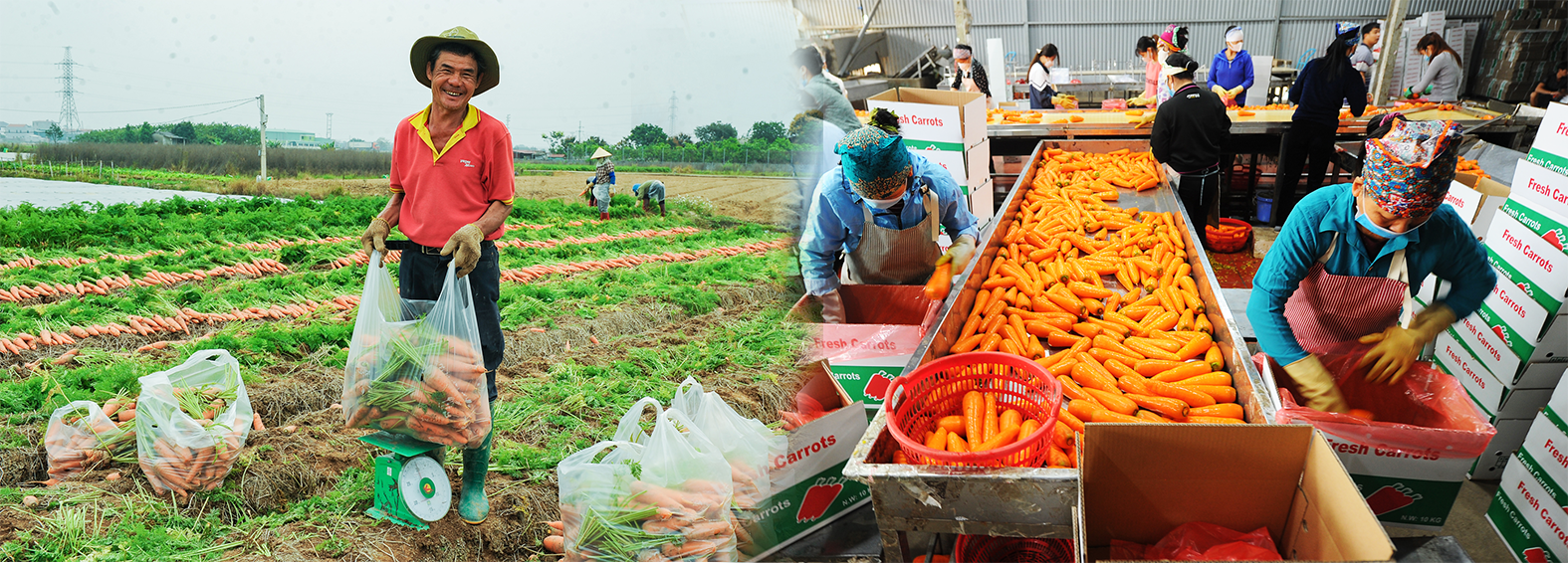
In Hai Duong, straw is basically collected and used for its intended purpose, significantly contributing to the formation and maintenance of efficient production in specialized areas for safe, high-economic-value vegetables according to VietGAP and GlobalGAP standards. The total area for carrot cultivation in the province is currently about 1,600 hectares with a production of over 80,000 tons per year. Of this, 80% of the production is processed and exported to many countries.
Following the "path" of straw, we visited many buffalo and cattle farms for meat production and mushroom cultivation facilities in Hai Duong. Everywhere we went, we saw the economic value that straw brings. At the warehouse of Hai Duong Mushroom Production Co., Ltd. in Quang Phuc commune (Tu Ky district), hundreds of tons of straw are stacked in bales reaching the ceiling. Every month, this company harvests tons of mushrooms from using 20 tons of straw.
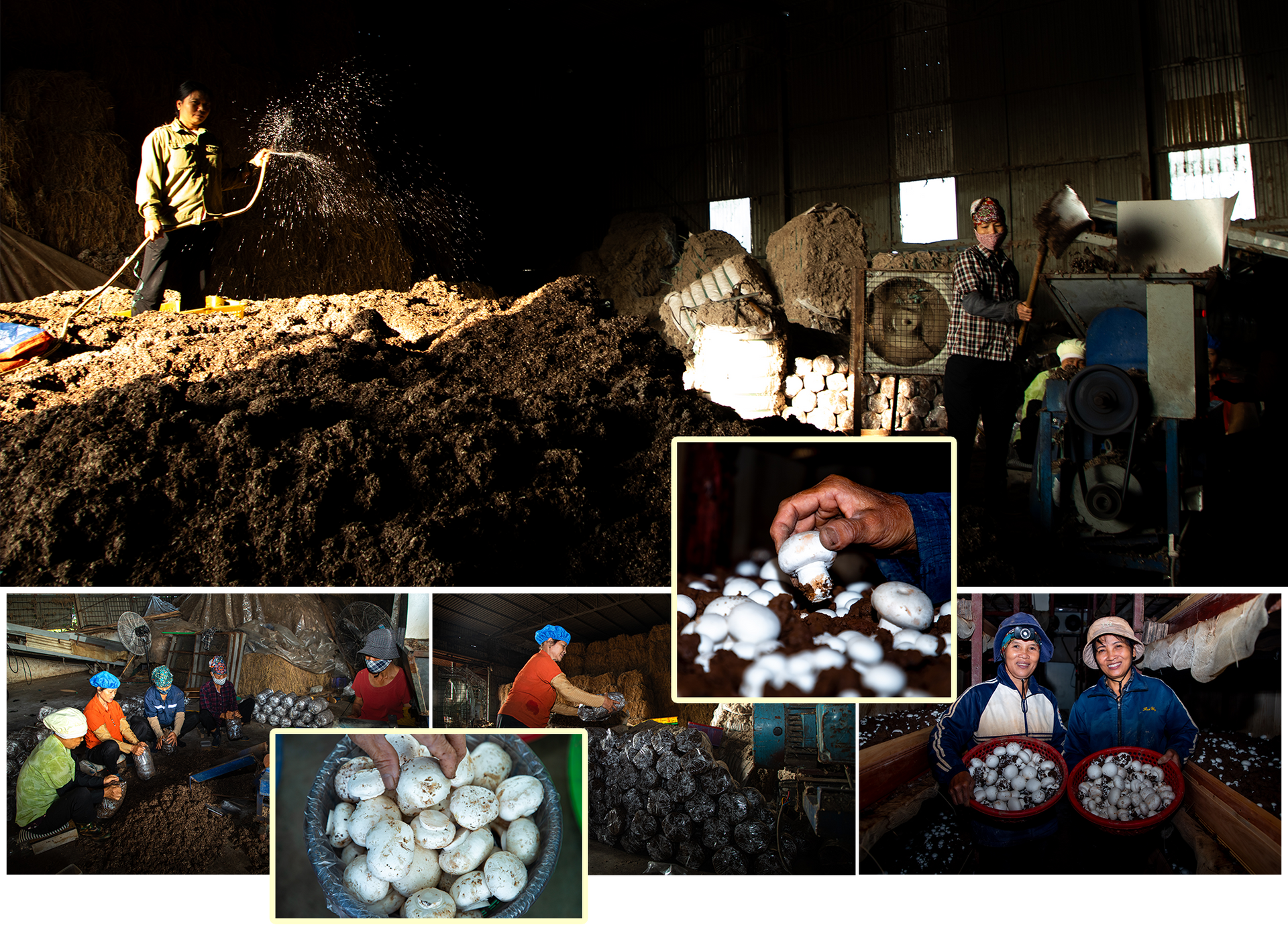
"Mushrooms grown in straw are very fragrant and delicious, popular in the market, and fetch good prices. We used to have to import straw from Quang Ngai to serve our production. However, since the straw collection teams in the province started operating, the local raw material supply has become abundant," said Ms. Nguyen Thi Thanh Xuan, manager of Hai Duong Mushroom Production Co., Ltd.
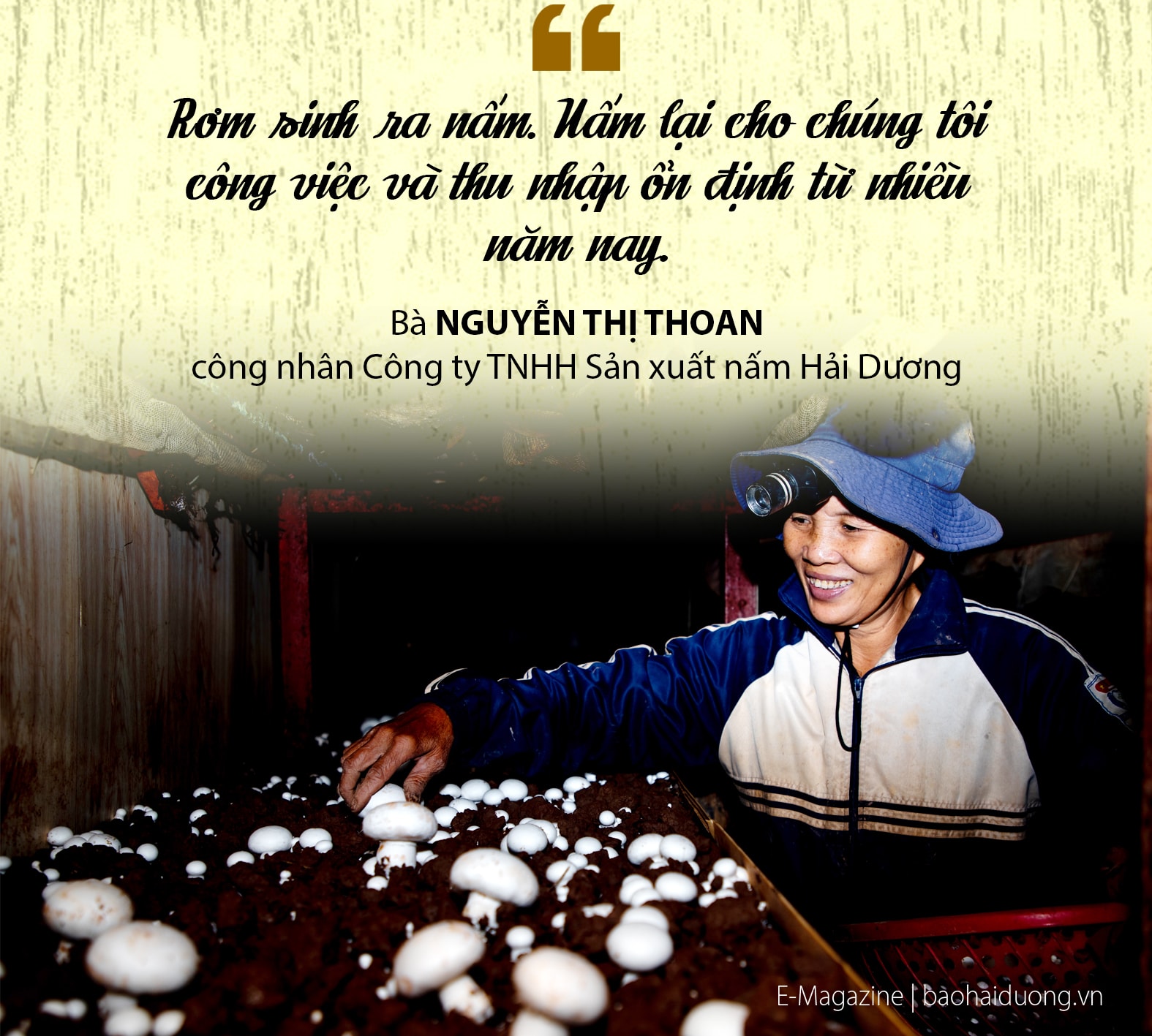
At the company's mushroom farm, Ms. Nguyen Thi Thoan enthusiastically shared: "Straw produces mushrooms. Mushrooms, in turn, provide us with work and salaries ranging from 7.5 to 9 million VND per person per month for many years now."
A significant amount of surplus straw and rice husks are also processed by farmers in many areas of Hai Duong into organic fertilizer to fertilize trees such as lychee, guava, kumquat, custard apple, dragon fruit, or for seedling propagation in specialized farming areas.
The area under rice cultivation in Hai Duong currently covers approximately 10,070 hectares, with a straw and rice stalk yield of about 650,000 tons. This is an abundant resource that effectively serves agricultural production, contributing to high and sustainable value.
Fourteen years ago, Hai Duong province issued a decision approving the framework plan for organizing the processing of excess post-harvest straw into organic fertilizer using biological preparations for agricultural purposes, contributing to the reduction of rural environmental pollution in Hai Duong province during the 2011-2015 period.
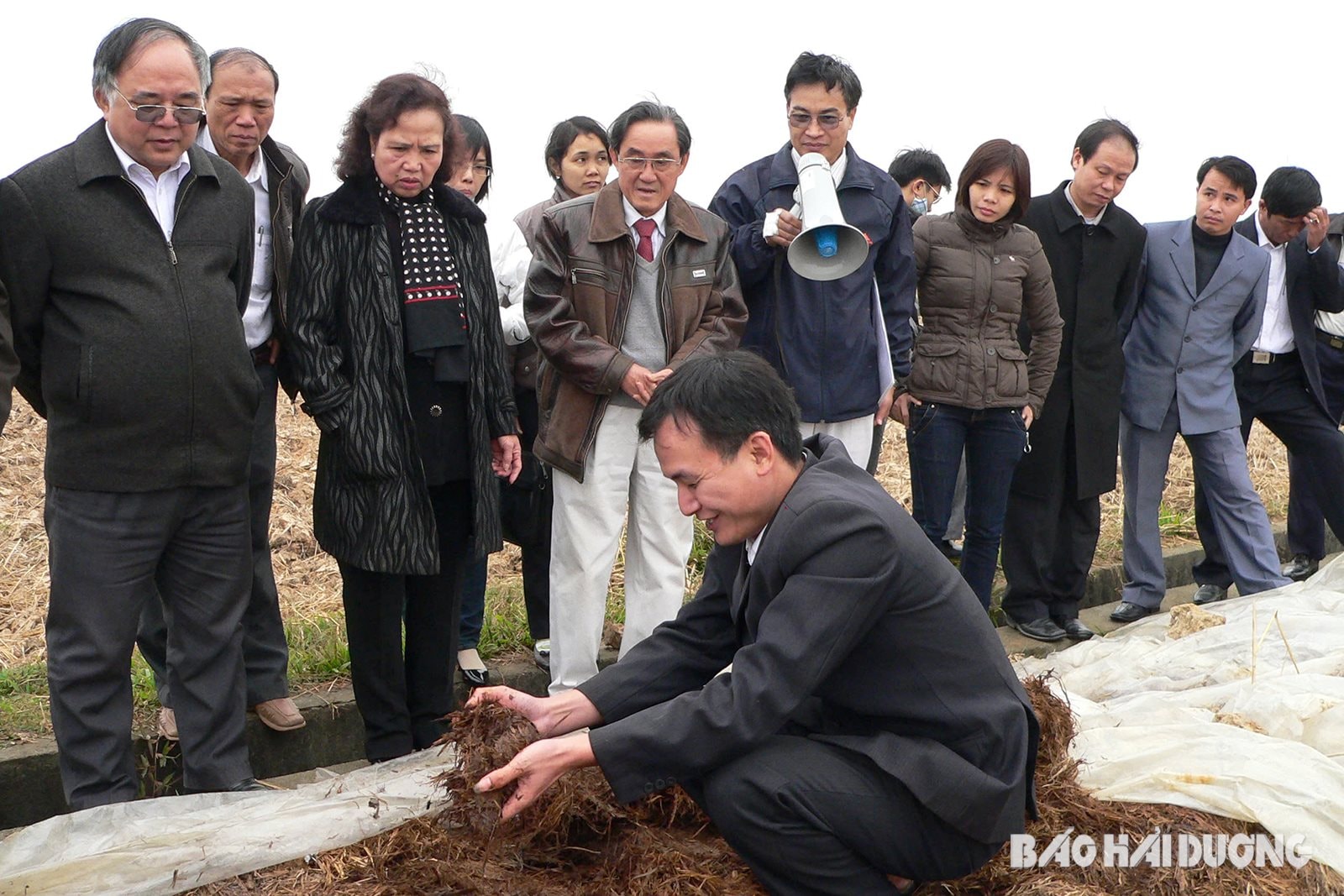
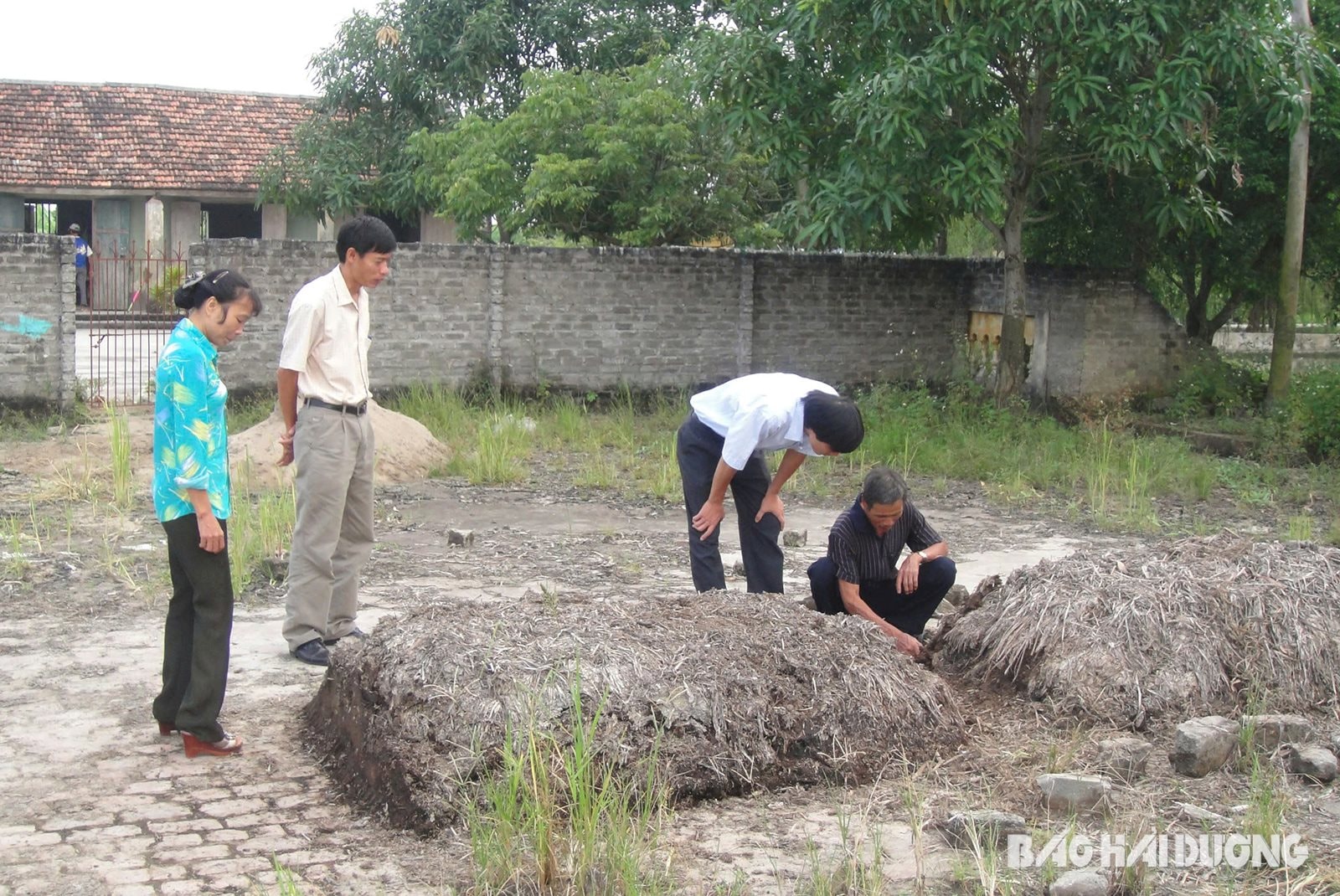
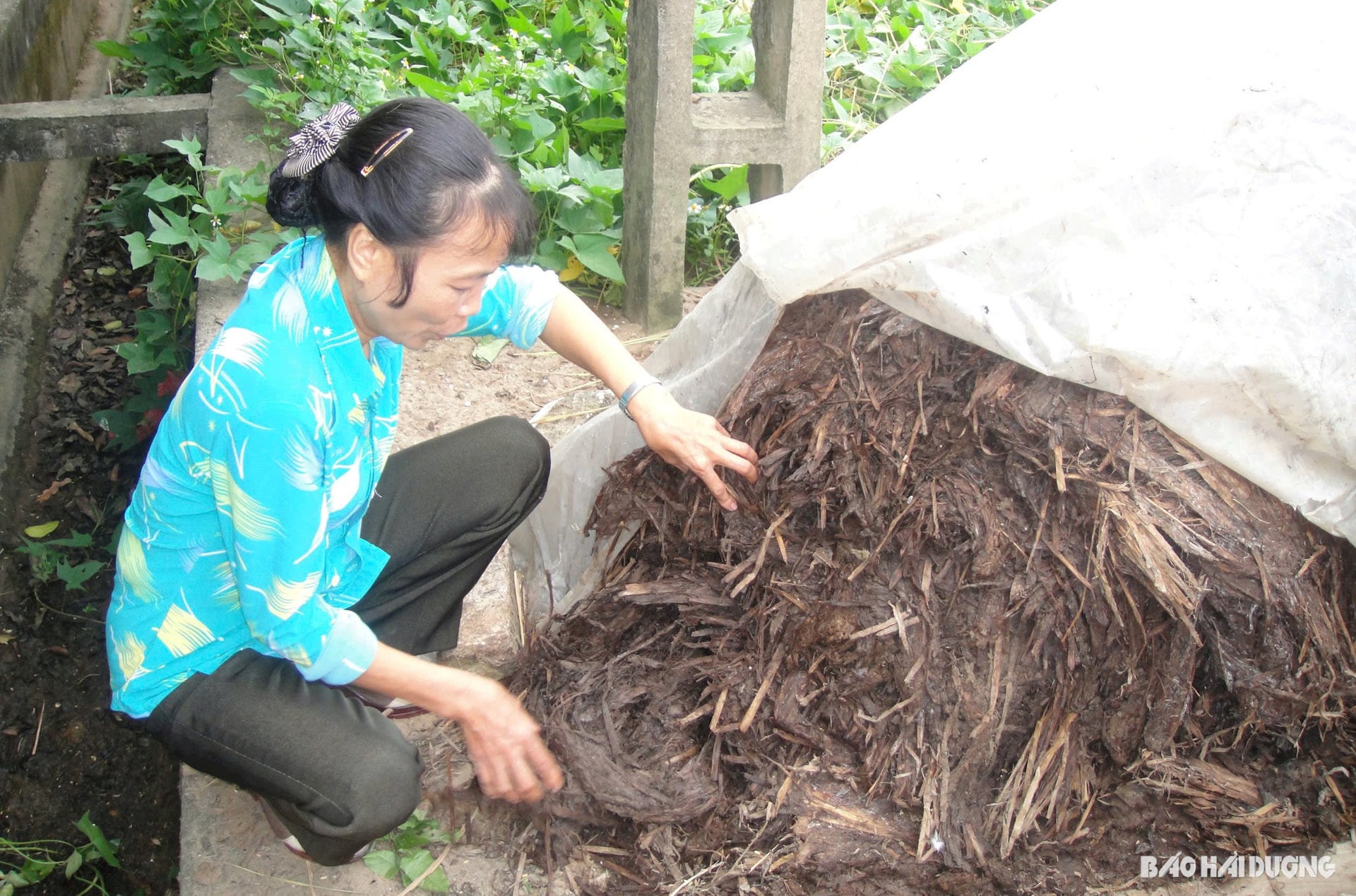
The entire province organized over 300 technical training courses and provided thousands of tons of biological products and chemical fertilizers to farmers to process excess straw and rice stalks into 379,000 tons of organic fertilizer.
After this period, the purpose of using straw in agricultural production changed. Farmers in Hai Duong rarely composted straw into organic fertilizer, nor did they use it as bedding or for cooking as before. The province shifted its focus to encouraging farmers to collect straw for use in vegetable and fruit production, mushroom cultivation, and cattle and buffalo farming. Straw collection teams were formed, and the burning of straw decreased significantly.
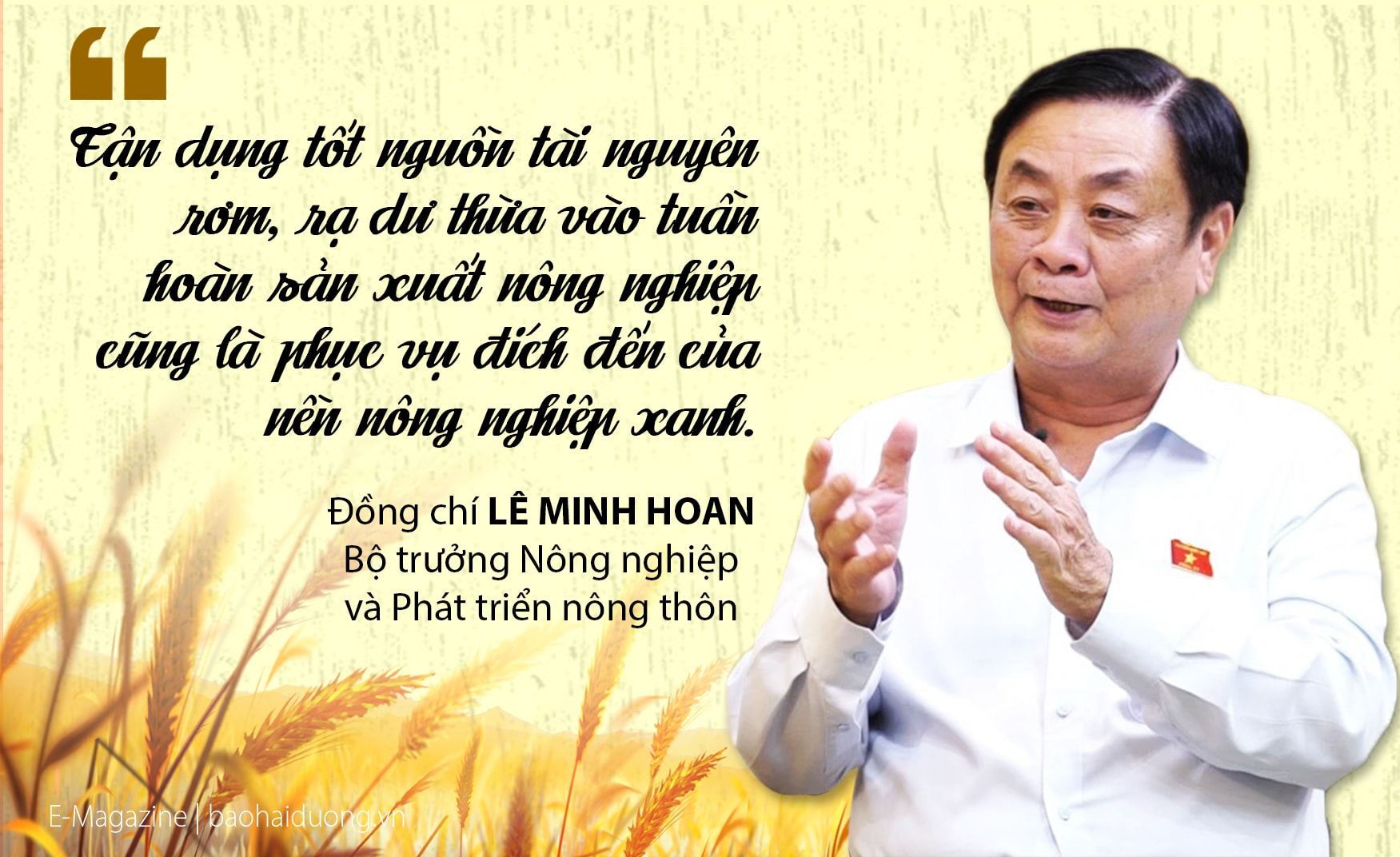
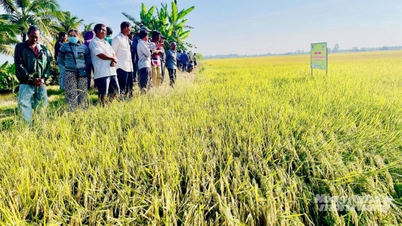
Minister of Agriculture and Rural Development Le Minh Hoan expressed his admiration for the approach that Hai Duong province has been implementing in handling excess straw and rice stalks. Hai Duong is currently one of the exemplary models in the North for green, sustainable, multi-layered, and multi-value agricultural production.
The province's winter crop area, yield, and value are also leading the region. In 2023, the average winter crop production value in Hai Duong reached 230 million VND/ha, 2.3 times higher than the average for the entire North. The effective collection and utilization of surplus straw and rice stalks is one of the reasons for these significant values.
The Minister noted that not only in Hai Duong, but also in many provinces and cities across the country, there is a large surplus of straw and rice stalks after each harvest. Making good use of this readily available resource in the circular economy of agriculture is also serving the goal of green agriculture.
"To ensure this is sustainable, Hai Duong province, as well as other localities nationwide, need mechanisms and policies to support the collection and processing of straw and stubble. We should strive to have as many straw and stubble collection machines in the fields as harvesters and tillage machines," Minister Le Minh Hoan emphasized.
According to Luong Thi Kiem, Deputy Director of the Department of Agriculture and Rural Development of Hai Duong province, the Hai Duong Provincial People's Committee has directed specialized departments to advise on policies to support the application of mechanization in all areas of agricultural production, including the collection of straw and rice stalks, which will soon be supported.
Content: TIEN MANH
Presented by: Tuan Anh
Source: https://baohaiduong.vn/duong-tuan-hoan-cua-rom-397265.html


















































































Comment (0)