

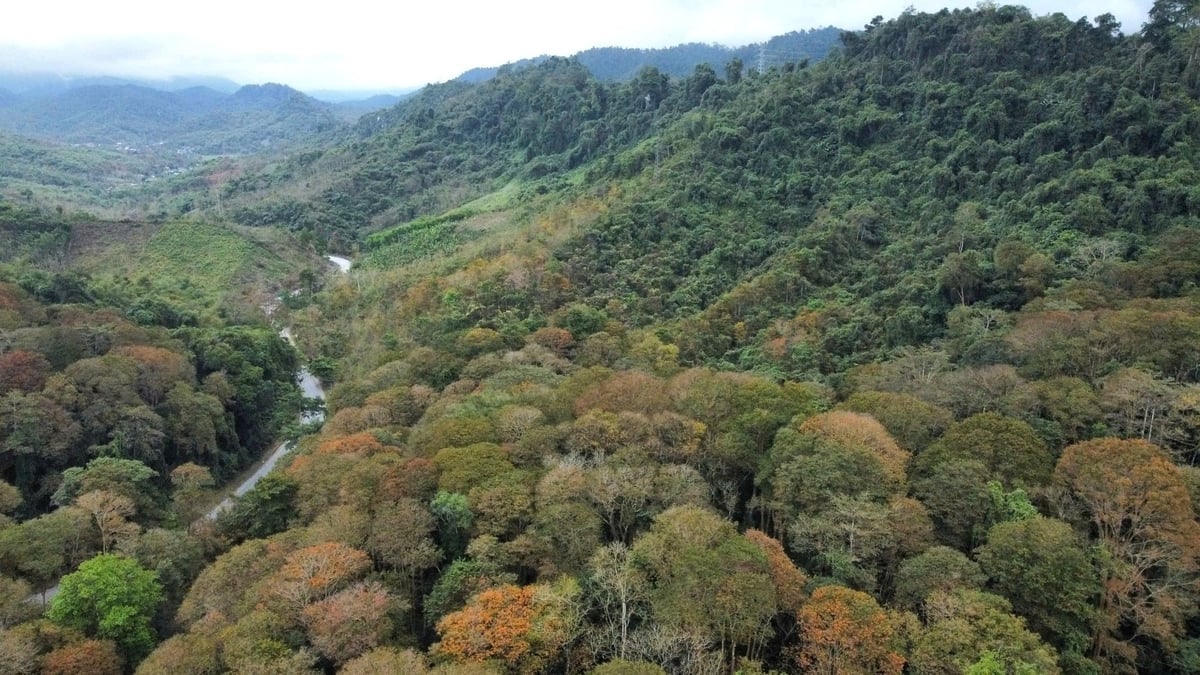
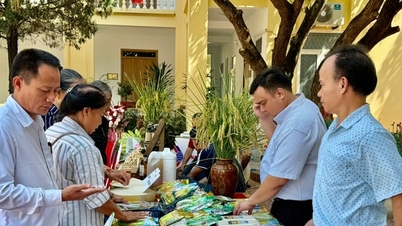
The mountainous region of Nghe An is benefiting greatly from the agreement on payments for greenhouse gas emission reductions in the North Central region. Photo: Viet Khanh.
Reducing the burden on the state budget.
Given the limited budgetary resources available for forest management and protection, revenue from forest environmental services, reforestation, and especially funding from the Economic Performance Approval Agreement (ERPA) for greenhouse gas emission reduction in the North Central region has made a significant difference in many aspects.
Local authorities, forest owners, and stakeholders affirm that ERPA is a practical policy with a positive impact on the social lives of ethnic minorities in mountainous areas. In fact, this policy has significantly reduced the burden on the state budget in forest management and protection by creating jobs, improving livelihoods, and increasing income for forest workers, thereby contributing to maintaining national security, social order and safety, and sustaining stable forest cover for the entire Nghe An province (over 58%).
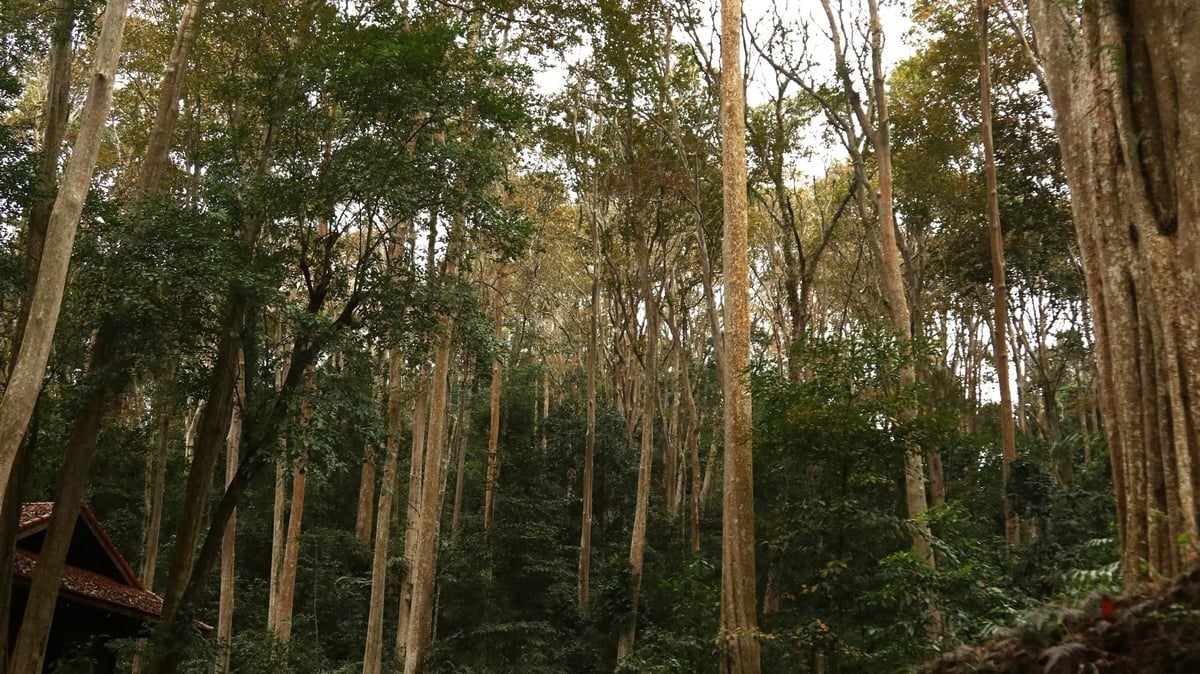
The more natural forests a country owns, the greater the cost of ERPA payments. Photo: Viet Khanh.
It should be reiterated that ERPA is a new policy with many unprecedented provisions, therefore requiring caution and a step-by-step implementation to minimize legal risks. During the implementation process, the Nghe An Forest Protection and Development Fund provided close advice to the Department of Agriculture and Rural Development (now the Department of Agriculture and Environment), leading to the issuance of a series of guiding and operational documents to ensure smooth implementation.
That doesn't mean everything went smoothly from start to finish; on the contrary, there were quite a few obstacles and difficulties affecting the overall progress. This was predictable from the beginning, especially since Nghe An possesses the largest forest area in the country, but the area of natural forest fluctuates significantly compared to the 2023 status figures published by the Provincial People's Committee.
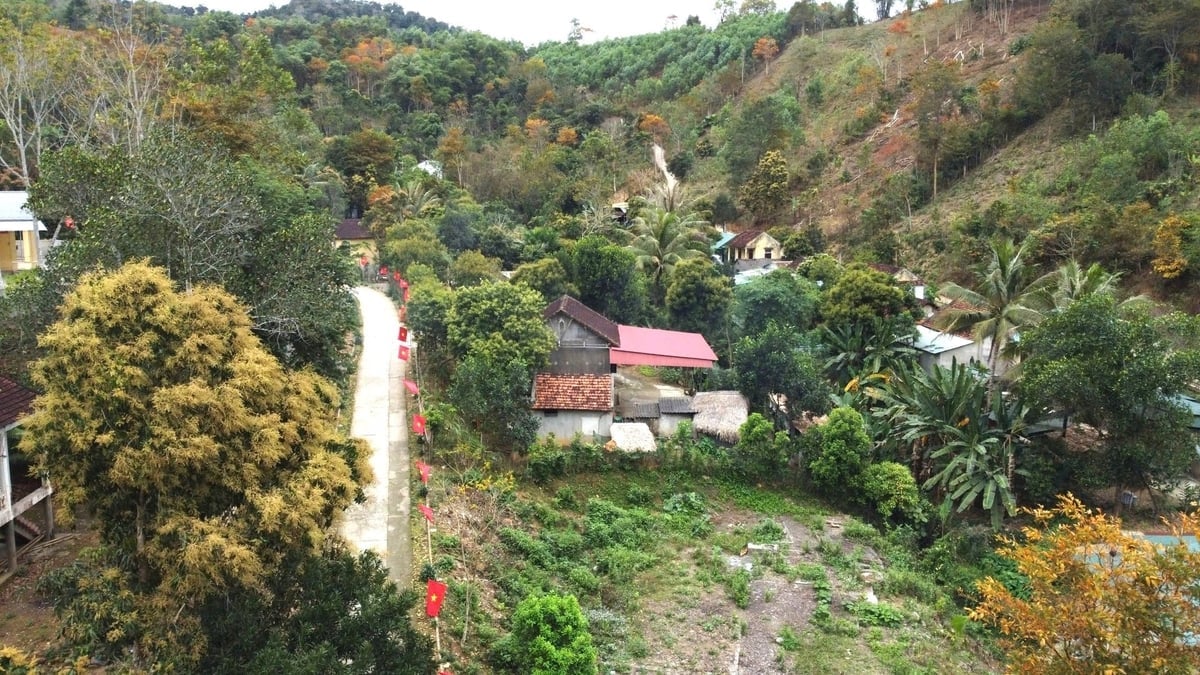
The appearance of new rural areas in the mountainous region of Nghe An is brighter thanks to the ERPA policy. Photo: Viet Khanh.
This is not to mention the widespread overlapping, encroachment, and disputes over forest land; or the fact that many forest owners, including households, individuals, and communities, possess natural forest areas but are not included in the 2023 forest status report, or the actual surveyed area "shifts," making it impossible to make payments in 2024…
Opportunities are intertwined with difficulties and challenges, but it is undeniable that the agreement on payments for greenhouse gas emission reductions in the North Central region has created positive signals for the mountainous areas of Nghe An province, clearly demonstrated in districts with extensive natural forest areas such as Tuong Duong, Ky Son, Con Cuong, and Que Phong.
Statistics don't lie; on the contrary, they have proven the widespread impact of ERPA. By the end of 2024, Nghe An province had disbursed over 173 billion VND to beneficiaries, reaching 85.4% of the target.
Voices from the grassroots
Based on the guidelines for implementing ERPA, the Forest Protection Department of Tuong Duong district advised the People's Committee of Tuong Duong district to issue Official Letter No. 1221/UBND-NL directing the People's Committees of relevant communes and towns to open bank accounts and guide village communities with forest protection agreements with forest owners (organizations) to prepare plans and budget estimates for support funds as stipulated in Decree No. 107/2022/ND-CP.
According to statistics, the total area of natural forests benefiting from ERPA in Tuong Duong district is over 90,975 hectares. Of this, nearly 60,810 hectares are managed by households, individuals, and local communities, while the remainder is under the management of the commune-level People's Committees.
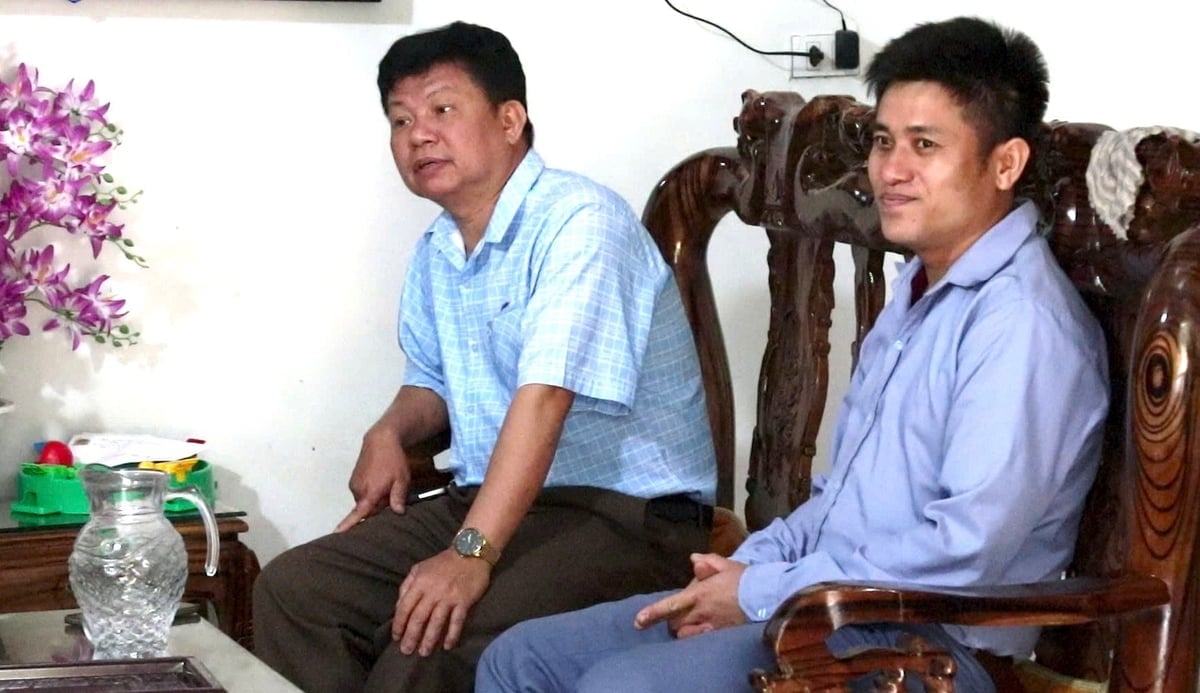
Mr. Vi Van Nhi, a resident of Co Phao village (on the right), affirms that the ERPA policy has brought many practical benefits. Photo: Viet Khanh.
Mr. Le Dinh Tu, Deputy Head of the Tuong Duong Forest Ranger Station, provided an overview, stating that the entire district has 236,646 hectares of forest with a forest cover rate of 84.28%. From this characteristic, it is evident that the lives of the indigenous people still depend on the forest economy , specifically on protecting natural forests to benefit from the policies of the Party and the State.
“Over the years, the district has effectively implemented forestry policies such as payment for forest environmental services; support policies under Sub-project 1 of Project 3 of the National Target Program for socio-economic development in ethnic minority and mountainous areas; the Sustainable Forestry Development Program; and forest protection support policies under Resolution 02 of the Provincial People's Council. Most recently, there is the policy on agreements for payment for greenhouse gas emission reduction in the North Central region.”
Following the guidance of the Government, the Ministry, the Department, the Forest Protection Sub-department, and especially the direct direction of the entire political system of Tuong Duong district, the Forest Protection Unit, as the lead agency, has coordinated seamlessly with the beneficiary communes to conduct reviews and prepare dossiers for widespread implementation. The 23.3 billion VND from the ERPA policy in 2024 has created a comprehensive impetus, thereby raising responsibility and spreading awareness of forest management and protection throughout the community.”
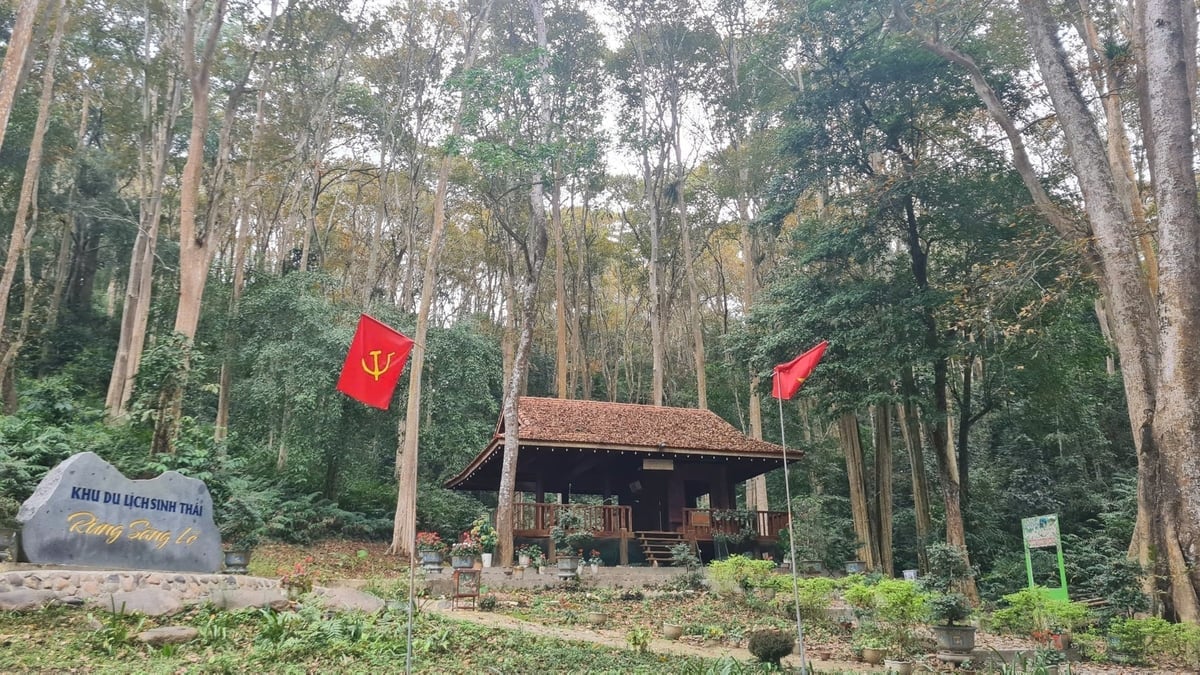
In Tuong Duong district, over 90,000 hectares of natural forest are eligible for payments from greenhouse gas emission reduction agreements. Photo: Tam Phung.
This viewpoint was echoed by Mr. Luong Ba Truyen, Vice Chairman of the People's Committee of Yen Na commune: "The terrain here is unfavorable, surrounded by high mountains and dense forests. The people here basically lack stable employment, so most still rely on natural resources. Along with the policy of paying for forest environmental services, reforestation, and agreements to reduce greenhouse gas emissions, a breath of fresh air has been brought to the majority. Thanks to ERPA, all parties have found the necessary harmony, reducing professional pressure and acting as a catalyst to accelerate the process of building new rural areas."
Sitting next to him, Vi Van Nhi, a resident of Co Phao village, Yen Na commune, nodded in agreement. With a hearty laugh and a joyful expression on his face, Nhi recounted: “From our ancestors' time to the present day, generations have lived off the forest. In this highland area, our people have always been surrounded and protected by the forest. My family has been entrusted by the State with protecting over 3 hectares of natural forest, and now, with the ERPA policy, the burden of providing for our daily needs has been somewhat eased. Recognizing that the forest is our breath, our reason for living, everyone, young and old, is working together to preserve and protect it.”
As the forest management unit entrusted with overseeing over 86,000 hectares of various types of forests, spread across 16 out of 17 communes and towns in Tuong Duong district, the Tuong Duong Protective Forest Management Board has, over 20 years of arduous and tireless efforts in forest conservation, deeply understood the immense burden of its professional duties. With dense forest defenses and numerous access points, maintaining security requires relying on the strength of the local population through the effective implementation of government support policies.
Without hesitation, Mr. Nguyen Sy Hieu, Deputy Head of the Tuong Duong Protective Forest Management Board, emphasized: “In 2024, the unit disbursed over 2 billion VND from the agreement on reducing greenhouse gas emissions to four communes: Tam Quang, Tam Thai, Xa Luong, and Thach Giam town. In 2025, the policy will certainly spread even more widely with a budget of over 5 billion VND, including approximately 1.8 billion VND for forest protection contracts with communes in Zone I, and the remainder will be used to support livelihood development for 68 communities. Rights come with responsibilities, and with the support of the people, the pressure to protect the forest has been shared appropriately and effectively.”
Source: https://nongnghiep.vn/erpa-la-be-do-cua-dong-bao-vung-cao-nghe-an-d743382.html
![[Photo] Secretary of the National Assembly Party Committee, Chairman of the National Assembly presides over the meeting of the Standing Committee and Executive Committee of the National Assembly Party Committee.](https://vphoto.vietnam.vn/thumb/1200x675/vietnam/resource/IMAGE/2026/06/03/1780480353201_ndo_br_bnd-2585-jpg.webp)


![[Photo] General Secretary and President To Lam presides over a meeting with the Central Organizing Committee.](https://vphoto.vietnam.vn/thumb/1200x675/vietnam/resource/IMAGE/2026/06/03/1780482764658_a1-bnd-4741-3342-jpg.webp)
![[Photo] First session of the 14th Congress of the Vietnam Trade Union](https://vphoto.vietnam.vn/thumb/1200x675/vietnam/resource/IMAGE/2026/06/03/1780465947883_ndo_br_img-3852-jpg.webp)



![Transforming from Resolution 57: [Part 3] High-tech agricultural center](https://vphoto.vietnam.vn/thumb/402x226/vietnam/resource/IMAGE/2026/06/03/1780491765550_2928-4922-img_7193-010813_454-010814.jpeg)




![The Essence of Viet Bac Villages: [Part 3] The Precious Fragrance of Nghinh Tuong](https://vphoto.vietnam.vn/thumb/402x226/vietnam/resource/IMAGE/2026/05/29/1780020600366_5237-tinh-tuy-ban-lang-viet-bac-bai-3-chuyen-o-nghinh-tuong-050626_700.jpeg)
![The Quintessence of Northern Vietnam's Villages: [Part 2] The Famous Cassava Noodles of Kunming](https://vphoto.vietnam.vn/thumb/402x226/vietnam/resource/IMAGE/2026/05/28/1779937455892_3929-3144-mien-dong-15-nongnghiep-023138.jpeg)
![The Essence of the Village: [Part 1] Wine on the mountain, tea in the clouds - Bang Phuc](https://vphoto.vietnam.vn/thumb/402x226/vietnam/resource/IMAGE/2026/05/27/1779841729178_3821-1jpg-nongnghiep-103814.jpeg)



























![[Video] Sunset at Lap An Lagoon – Where the sun sets over the fishing nets](https://vphoto.vietnam.vn/thumb/1200x675/vietnam/resource/IMAGE/2026/05/31/1780192137701_beach-landscape-sea-water-nature-grass-745871-pxhere-com.jpeg)


































Comment (0)