

Understanding Gen Z is becoming an increasingly urgent task not only for scientists , sociologists, and managers, but also for policymakers. According to the General Statistics Office, Gen Z is projected to contribute one-third of Vietnam's workforce by 2025.
Gen Z is facing psychological and physiological challenges.
Early exposure to digital platforms and being the most active users of these platforms, especially social media, has contributed to making Gen Z (those born between approximately 1997 and 2012) a very elusive group in terms of behavior and expectations regarding information consumption, shopping, entertainment, and learning.
Research by Dr. Dang Vu Canh Linh, Director of the Vietnam Youth Research Institute, shows that Gen Z is the generation born and raised during a period of strong national development. They are the ones who have benefited greatly from the achievements of the country's reform process.
Generation Z has access to education, material needs, entertainment, modern science and technology, and the internet. They are considered a dynamic, creative generation that is always receptive to new things.
Besides their strengths, Gen Z also faces psychological and physiological "crises" of adulthood that differ from other generations. These include being practical (pragmatic), having a high need for enjoyment, being easily discouraged, being changeable, and needing parental respect leading to an overly democratic mindset.
Gen Z is the generation of "internet citizens," considered to be dependent on the internet, easily following social trends, excessively idolizing famous (even infamous) figures, and readily absorbing and learning negative influences…
That explains why some Gen Z members succeed and adapt quickly to the digital society, while others fall into a state of disorientation, depression, and despair…
Dr. Dang Vu Canh Linh added: "In reality, not only Gen Z but any generation of teenagers faces strong psychological and physiological changes, especially during the transition from childhood to adulthood."
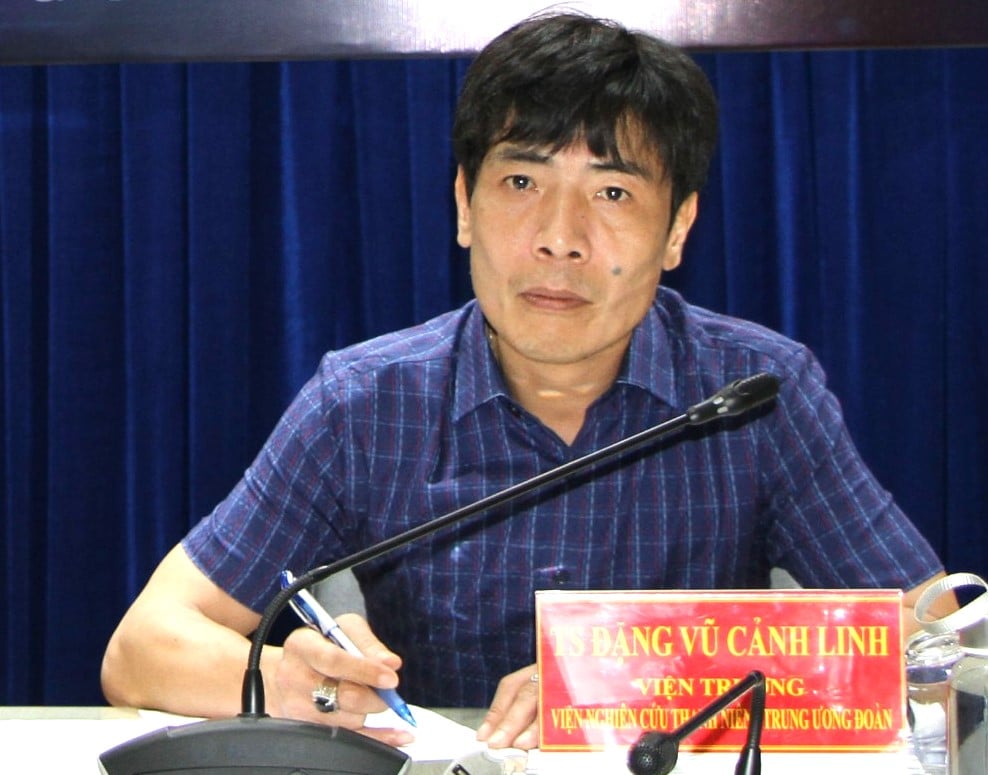
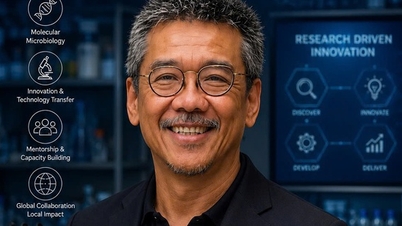
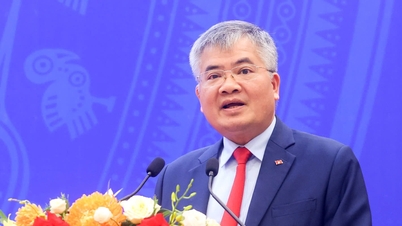
Dr. Dang Vu Canh Linh
Many researchers believe that common characteristics of adolescence include puberty, physiological and psychological changes, a desire to explore, assert oneself, express oneself, experience new things, a desire to gradually break away from family discipline , and expand one's social circle to learn about and adapt to society.
However, it is not only individual psychophysiological characteristics but also social and historical factors that always influence and create the distinct characteristics of generations throughout different periods."
What should we do to win the race of the times?
One of the reasons for the high rate of psychophysiological disorders among young people stems from their need to "race" against the pace of modern development. According to Dr. Dang Vu Canh Linh, many researchers worldwide use the term VUCA to describe this state, which includes Volatility, Uncertainty, Complexity, and Ambiguity.
Today's youth, under the impact of the Fourth Industrial Revolution and rapid social change, are striving to adapt, compete, assert their self-worth, and achieve success.
However, they are also susceptible to VUCA, or psychosomatic crisis, when faced with obstacles, difficulties, or failures in work and life. A crisis of belief and values will directly lead to psychosomatic crisis and consequently, the emergence of unhealthy and negative behaviors. It can even spread like a "disease" among young people.
In fact, not only Gen Z but any generation of teenagers faces significant psychological and physiological changes, especially during the transition from childhood to adulthood.
Dr. Dang Vu Canh Linh, Director of the Vietnam Youth Research Institute
"However, we shouldn't be overly pessimistic about this issue. Adolescents are still a period of intense social development, constantly learning, improving their awareness, and shaping their values and personalities. We need to actively strengthen social institutions and create a healthy and positive educational environment for young people, in which the roles of family, school, and the community are indispensable."

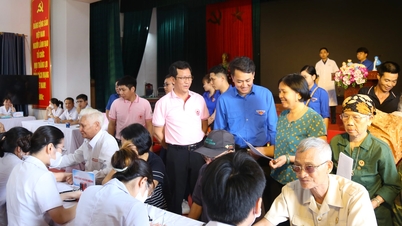
Illustrative image
"Besides providing knowledge, it is necessary to mobilize the participation of the whole society in improving legal education, life skills education, traditional values education, social ethics, and highlighting more good examples and good deeds for young people; at the same time, we must mobilize young people themselves to participate in these activities," emphasized Dr. Dang Vu Canh Linh.
According to the Director of the Vietnam Youth Research Institute, Gen Z, or young people in general, need to be aware of and practice positive thinking and lifestyles.
Generation Z has the advantage of unlimited access to knowledge and diverse learning and self-learning methods, so they need to proactively filter knowledge and become the best filter to eliminate negative perceptions.
He also noted that, nowadays, some young people still have a tendency to blame others when they fail, blaming circumstances, other people, fate, or bad luck, rarely recognizing themselves correctly.
Self-awareness is the process of recognizing and evaluating oneself, primarily by objectively assessing one's strengths, weaknesses, talents, and shortcomings, so as not to harbor illusions or delusions about oneself. Self-awareness also means the need for rigorous self-adjustment and positive change.
Finally, before each success or failure, take another moment to reflect on yourself, accurately assess what you have done, and not evade responsibility. This is a positive psychological process that helps guide your behavior and actions in a positive way.
Blaming others or avoiding responsibility will hardly lead to future success. Therefore, Gen Z needs to be more "straightforward" when positioning their self-identity in plans and social relationships.
Having led and directed over 20 state-level, ministerial-level, provincial-level, and international scientific research projects, Dr. Dang Vu Canh Linh has a deep interest in culture and human resources, especially adolescents. His book, "Adolescence and Policies for Adolescents," was published by the Social Labor Publishing House in 2003. This was the first book on adolescents in Vietnam. He plans to release another book researching the adolescent generation and Gen Z in the near future.
Source: https://pnvnweb.dev.cnnd.vn/gen-z-va-trang-thai-vuca-20250110140422727.htm

![[Image] Nearly 125,000 Hanoi students completed the Literature exam for the 10th grade entrance exam.](https://vphoto.vietnam.vn/thumb/1200x675/vietnam/resource/IMAGE/2026/05/30/1780117233041_ndo_br_thiet-ke-chua-co-ten-2-png.webp)










![[Video] Nearly 125,000 Hanoi students begin the 10th grade entrance exam.](https://vphoto.vietnam.vn/thumb/402x226/vietnam/resource/IMAGE/2026/05/30/1780130133514_dung00-16-28-24still006-png.webp)










![[Photo] Admire the coral "masterpiece" amidst the million-year-old heritage of Dak Lak province.](https://vphoto.vietnam.vn/thumb/1200x675/vietnam/resource/IMAGE/2026/05/30/1780107638639_y25-jpg.webp)




















































Comment (0)