

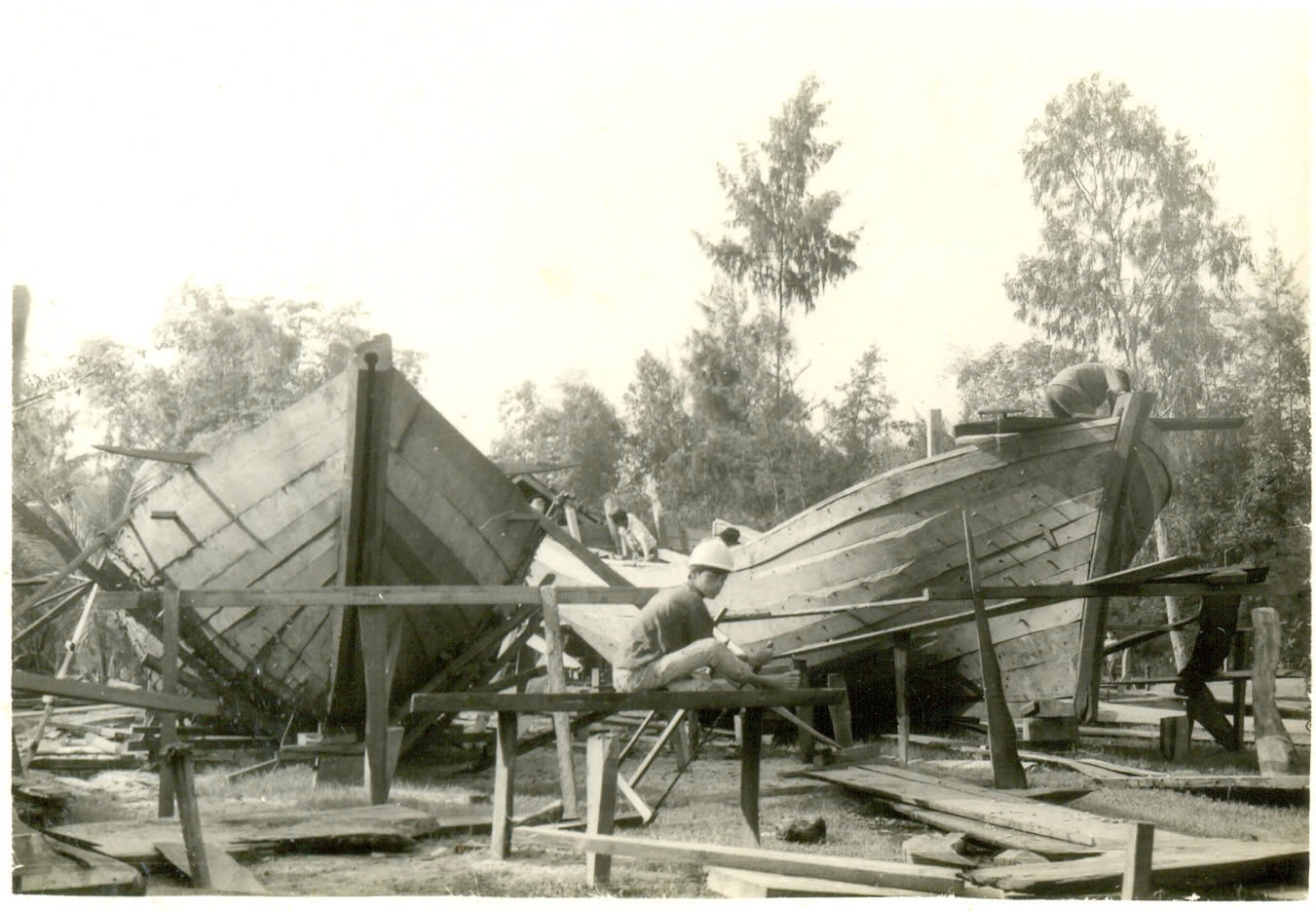
The imprint of boats and ships in Quang Nam province.
Quang Nam province has long been defined by its dense network of rivers and canals, vast sea areas, and numerous coastal islands. Throughout history, especially when Hoi An became a bustling international port city during the Middle Ages, boats and ships were not only a means of transportation and livelihood but also an important part of the cultural life of the riverine inhabitants. From trading boats and fishing boats to boats used in festivals, they all created a rich tapestry reflecting the economic and cultural exchange of a land that once served as a gateway connecting East and West.
In the early 20th century, in his monograph *Voiliers d'Indochine* (Sailing Boats of Indochina), JB Piétri vividly described the Hoi An trading port: "All kinds of Vietnamese ships were present at this Hoi An port; it was a diverse and colorful collection of sea and river boats of all sizes and tonnages."
He further emphasized: "This is precisely the prestigious shipbuilding area where, on both banks, the shouts of boatmen, merchants traveling on the waterways, and porters mingle with the sounds of hammers plastering boats and the murmurs of operating factories."
In the lives of the people of Quang Nam province, boats have long transcended their role as a means of livelihood to become symbols of community culture.
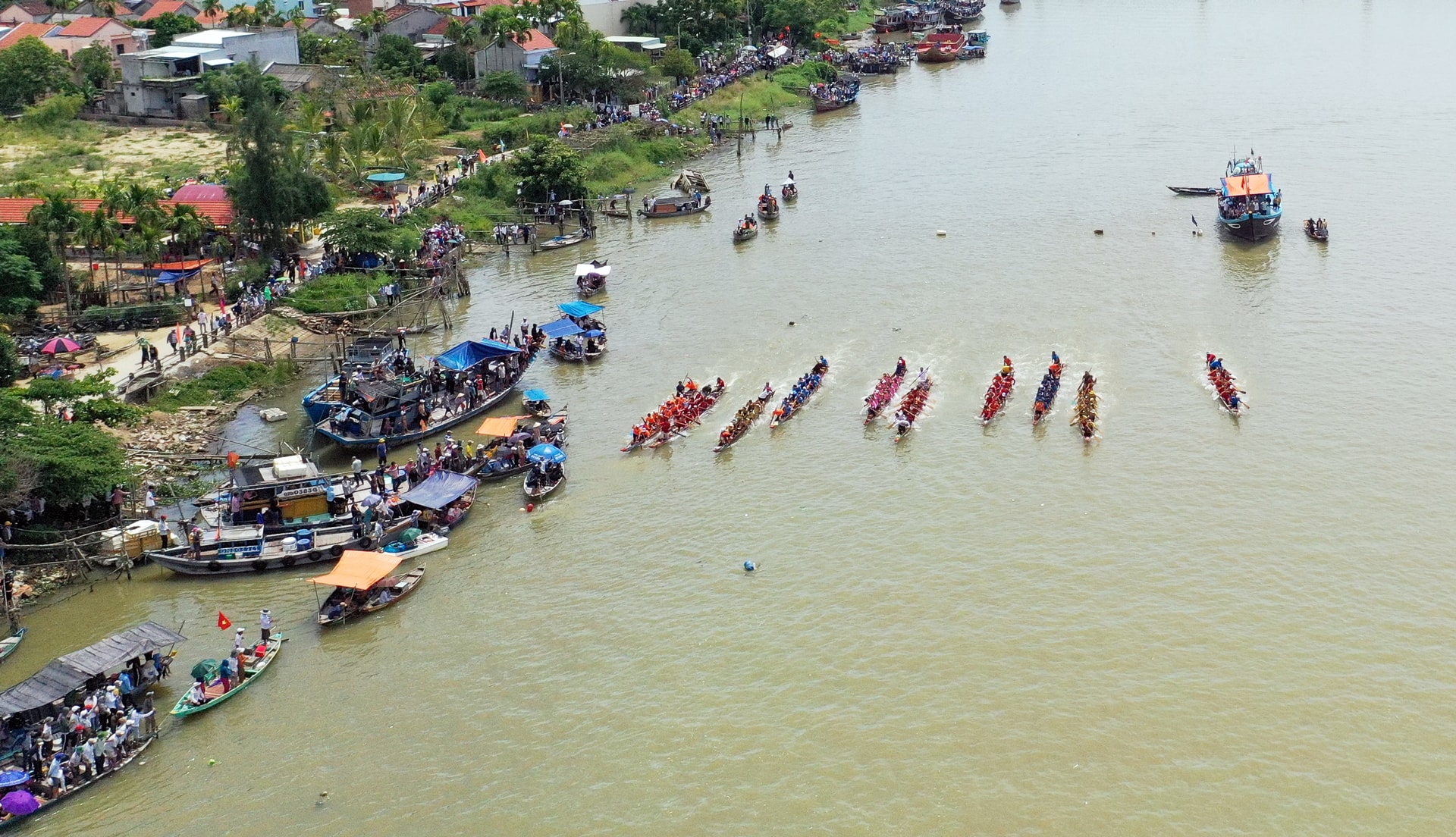
During holidays, festivals, or important events, boat races are always the center of excitement in the riverside villages.
Piétri once described the scene as a "magical spectacle of many colors," where the sounds of drums, gongs, and firecrackers mingled with the vibrant flags of all kinds of boats, from small boats and canoes to longboats and sailing boats. This lively atmosphere reflected both the rich spiritual life and the aspirations to conquer the waterways, as well as the strong sense of community among the people of Central Vietnam.
From this, it can be seen that boat racing is not simply a recreational activity during festivals, but has become a cultural activity deeply rooted in the cultural identity of Quang Nam province, passed down through many generations along with the customs, rituals, and distinctive skills of the riverine inhabitants.
The craft of building racing boats and the aspirations on the racetrack.
Closely associated with boat racing is the craft of building racing boats – a special profession requiring high skill, years of experience, and many trade secrets passed down through generations.
Famous artisans of the late 20th century, such as Mr. Do Thanh Ly in Hoi An, once built boats over 20 meters long with a capacity of up to 52 oarsmen. Traditional racing boats are quite elaborately made, with bamboo or aluminum frames and components such as hulls, supports, beams, oars, and girders. For wooden boats, the frame, girders, and oars are usually made from ironwood to ensure durability, while the supports are made from jackfruit or mahogany, creating a distinctive look compared to many other types of boats made from ironwood.
The process of building a racing boat involves many meticulous steps, such as preparing materials, making the hull, assembling the frame, making the latches, assembling the aluminum, assembling the frame and girders, until completion.
Each stage of the process is meticulously crafted by the artisans, who believe that racing boats are not just a means of transportation but also carry the soul of the entire village. The boat-building process typically involves three rituals: the wood-cutting ceremony, the nailing ceremony, and the water release ceremony, along with many taboos, especially when making the boat's eyelets – a detail considered the "soul" of the boat.
Quang Nam racing boats have a long, slender shape, curving sharply towards the bow and slightly towards the stern. The bow section is often attractively decorated with black and white boat eyes in various styles such as the "roof-shaped," "long," or "convex" bows.
The size of the racing boat depends on the number of swimmers and the swimming style. Previously, when the style was standing while swimming, there were boats over 20 meters long with 52 swimmers; nowadays, with the shift to sitting while swimming, the boats are more compact, commonly around 9-15 meters with 9-15 swimmers.
A racing boat team always requires seamless coordination between positions from the front rower (bowman), second rower, oarsmen, rowers, to the helmsman (main helmsman).
Besides the strength and agility of the oarsmen, the technique of maintaining rhythm, steering the boat, and choosing the right course plays a decisive role in determining performance on the race track. Therefore, the boat race is not only a competition of speed but also a place to showcase the experience, teamwork, and courage of each team.
In villages with a tradition of boat racing, people often set aside land along the riverbank to store their boats and build a shrine to worship the Water Goddess (Water Dragon Goddess) to pray for peace and safety.
When launching the boats in preparation for the race, they usually display festival flags, banners, and slanted flags, and the rowers wear vibrant traditional costumes amidst the river scenery.
After the rituals of offering sacrifices to the navel, east, and west to pray for peace, the boats gradually gather at the main table to await departure. Each team, depending on the current and starting position, will devise its own strategy to gain an advantage on the race track.
Through generations, boat racing has held a special place in the cultural life of Quang Nam province. It is not only a unique cultural activity but also embodies the aspirations for a peaceful and prosperous life, along with the spirit of unity and the will to succeed of the people living along the river.
Source: https://baodanang.vn/ghe-thuyen-trong-doi-song-van-hoa-xu-quang-3339153.html
![[Photo] Secretary of the National Assembly Party Committee, Chairman of the National Assembly presides over the meeting of the Standing Committee and Executive Committee of the National Assembly Party Committee.](https://vphoto.vietnam.vn/thumb/1200x675/vietnam/resource/IMAGE/2026/06/03/1780480353201_ndo_br_bnd-2585-jpg.webp)
![[Photo] General Secretary and President To Lam presides over a meeting with the Central Organizing Committee.](https://vphoto.vietnam.vn/thumb/1200x675/vietnam/resource/IMAGE/2026/06/03/1780482764658_a1-bnd-4741-3342-jpg.webp)
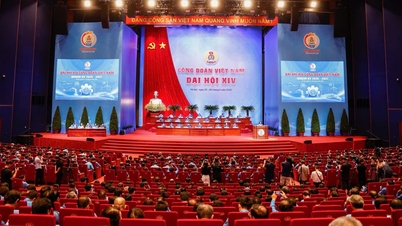
![[Photo] First session of the 14th Congress of the Vietnam Trade Union](https://vphoto.vietnam.vn/thumb/1200x675/vietnam/resource/IMAGE/2026/06/03/1780465947883_ndo_br_img-3852-jpg.webp)




































![[Video] Sunset at Lap An Lagoon – Where the sun sets over the fishing nets](https://vphoto.vietnam.vn/thumb/1200x675/vietnam/resource/IMAGE/2026/05/31/1780192137701_beach-landscape-sea-water-nature-grass-745871-pxhere-com.jpeg)





















Comment (0)