

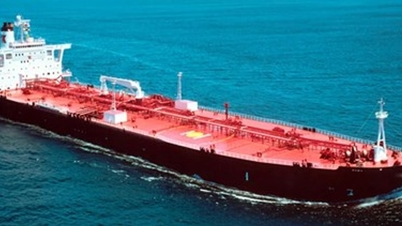
World oil prices plunged on May 27th following reports that Iran might resume shipping through the Strait of Hormuz under a potential agreement with the United States.
According to the Vietnam News Agency correspondent in the US, the price of WTI light sweet crude oil fell by more than 5%, to $88.84 per barrel in early trading this morning, Eastern US time. Meanwhile, the price of international Brent crude oil fell by more than 4%, to $95.09 per barrel.
Earlier, Iranian state television reported that Tehran had pledged to restore commercial shipping traffic through the Strait of Hormuz to pre-conflict levels within a month of reaching an agreement with the United States.
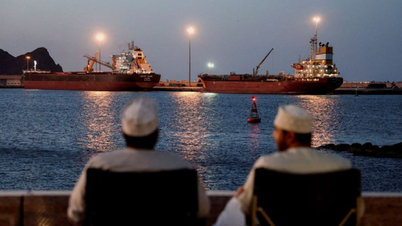
Iran will cooperate with Oman in managing and coordinating maritime traffic through this strategic shipping route. Meanwhile, US military forces will withdraw from the area near Iran and lift the current naval blockade.
These developments come as relations between Iran and the US face two opposing possibilities: either continued military escalation or a de-escalation agreement.
This week, the U.S. military conducted airstrikes in southern Iran, a move the Pentagon described as defensive. Iran subsequently vowed retaliation for these attacks. However, on May 27, the Iranian Islamic Revolutionary Guard Corps (IRGC) stated that a renewed conflict with the U.S. was unlikely.
Despite the market's positive reaction to the prospect of de-escalating tensions in the Gulf region, many oil and gas experts remain skeptical about the ability of energy supplies to quickly return to normal.
Sultan Ahmed Al Jaber, CEO of Abu Dhabi National Oil Co. (ADNOC) of the United Arab Emirates (UAE), stated last week that even if the US-Iran conflict ended immediately, the global oil market would still need at least four months to recover to approximately 80% of pre-conflict shipping volumes.
According to him, it will not be until the first or second quarter of 2027 that oil transportation through the region can fully return to normal levels.
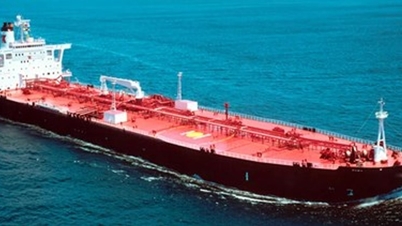
The Strait of Hormuz is currently the world's most strategic shipping lane, handling approximately 20% of global oil consumption. Therefore, any security developments in this region have a significant impact on the international energy market.
Source: https://www.vietnamplus.vn/gia-dau-the-gioi-giam-manh-cho-dam-phan-my-iran-post1112976.vnp

![[Photo] Standing Committee member of the Party Central Committee Tran Cam Tu working with the Central Inspection Committee](https://vphoto.vietnam.vn/thumb/1200x675/vietnam/resource/IMAGE/2026/05/28/1779969579668_ndo_br_bnd-2495-jpg.webp)
























































































Comment (0)