

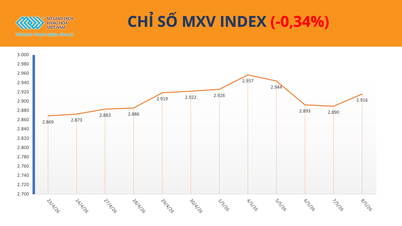
The global commodities market continued its volatile trading session on May 21st, with a clear divergence between different commodity groups. At the close, the MXV-Index edged down 0.6% to 2,906 points. Selling pressure continued to dominate the agricultural market, while the energy sector experienced significant fluctuations amid new developments related to US-Iran tensions and the outlook for global oil supply.
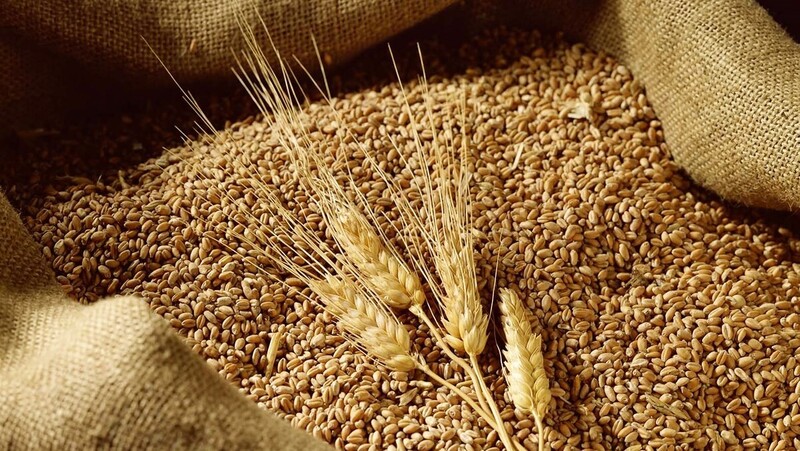
World wheat prices reversed course and fell again as supply prospects continued to improve amidst a lack of significant signs of demand growth. (Illustrative image)
In the agricultural commodities market, world wheat prices reversed course and fell again as supply prospects continued to improve amidst a lack of significant signs of demand. At the close of yesterday's trading session, Chicago July wheat futures fell nearly 2% to $238 per ton. Kansas wheat futures for the same period also fell nearly 1.7%, to $252.4 per ton.
According to the Vietnam Commodity Exchange (MXV), the biggest pressure on the market currently comes from the favorable crop outlook in the US. Recent field surveys by the Illinois Wheat Association show that average yields could reach approximately 6.91 tons/ha, significantly higher than previous forecasts. At the same time, expected rainfall in the Southern Plains region next week is expected to improve soil moisture for the winter wheat crop, thereby alleviating concerns about damage from previous droughts and frosts.
Meanwhile, in terms of demand, wheat continues to face competitive pressure as it is not expected to benefit significantly from the US-China trade agreements. Compared to corn and soybeans, wheat is currently not among the commodities considered likely to benefit greatly from China's agricultural import commitments.
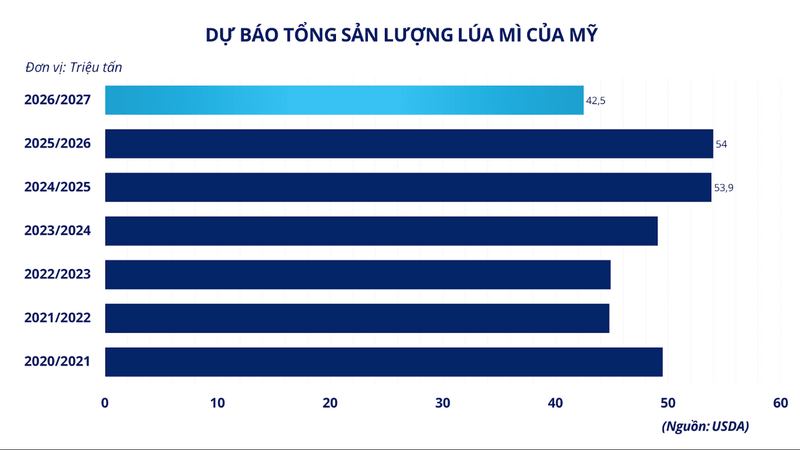
Forecast of US wheat production. Source: MXV
Notably, the price difference between Chicago wheat and July corn futures remains high at nearly $68 per ton. This gap reduces wheat's competitiveness in animal feed formulations, forcing many mills to prioritize corn to optimize production costs.
Furthermore, the latest report from the U.S. Department of Agriculture (USDA) shows that U.S. wheat sales for the new crop year reached only 130,500 tons, reflecting relatively weak future demand. Given the continued abundance of global supply, the wheat market is expected to remain under downward pressure in the short term.
Source: https://congthuong.vn/gia-lua-mi-the-gioi-giam-khi-nguon-cung-phuc-hoi-manh-457738.html

![[Image] Nearly 125,000 Hanoi students completed the Literature exam for the 10th grade entrance exam.](https://vphoto.vietnam.vn/thumb/1200x675/vietnam/resource/IMAGE/2026/05/30/1780117233041_ndo_br_thiet-ke-chua-co-ten-2-png.webp)






























![[Photo] Admire the coral "masterpiece" amidst the million-year-old heritage of Dak Lak province.](https://vphoto.vietnam.vn/thumb/1200x675/vietnam/resource/IMAGE/2026/05/30/1780107638639_y25-jpg.webp)












































































Comment (0)