In recent years, Ca Mau 's poverty reduction efforts have yielded impressive results, not only in isolated areas but also in increasingly large regions where all households have been completely eradicated from poverty. These significant transformations stem from the continuous efforts to implement the Party's policies and resolutions, inspiring a spirit of self-improvement and spreading confidence among the people.
Motivation from the resolution
Recognizing this reality, the Party Committee of the commune determined that poverty reduction is not merely an economic goal but also a political task, linked to social stability and strengthening the people's trust. The commune Party Committee issued eight specialized resolutions, among which Resolution No. 06 on sustainable poverty reduction is considered the " xuyên suốt" ( xuyên suốt means "throughout"), shifting from support to unleashing internal strengths, from solving immediate problems to creating long-term livelihoods. This is a fundamental shift, clearly demonstrating the comprehensive leadership role of the Party.
The entire political system was "activated" in a synchronized manner, closely monitoring each household, identifying the root causes to provide support "to the right people, for the right purposes": from housing, capital, and livestock to technology transfer and mindset change. As a result, the entire commune now has only 26 poor households and 33 near-poor households; 12 out of 25 hamlets no longer have poor or near-poor households. The "areas completely free of poverty" are gradually expanding, along with a clear shift in awareness: people no longer rely on support from the State and society, but proactively seek ways to do business and boldly innovate.
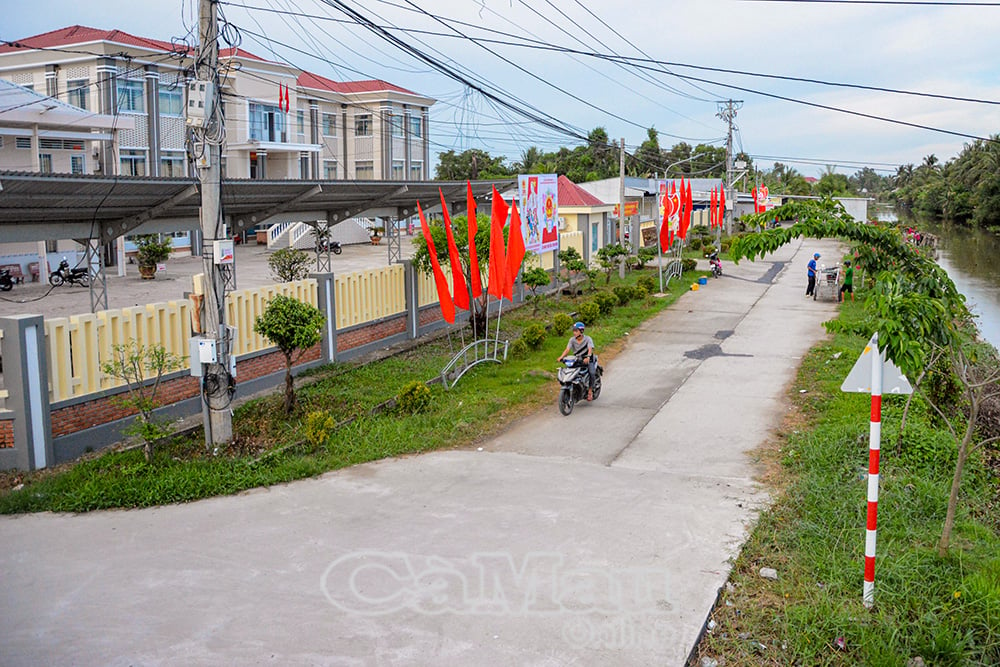
The Party Committee of Khanh Hung commune is committed to the goal of reducing the number of poor households by an average of 10 per year, aiming to "eliminate all poor households" by 2029.
Comrade Nguyen Quoc Tien, Secretary of the Party Committee and Chairman of the People's Council of Khanh Binh commune, affirmed: From the beginning of the term, the commune's Party Committee has resolutely led and mobilized the entire political system, while promoting the leading role of the people, thus achieving positive results in poverty reduction. In the coming time, the commune will continue to implement the effective solutions of the past with the determination to " eradicate all poor households ," striving to complete the task ahead of schedule in the 2026-2027 period.
Enhancing the role of the Party organization
While Khanh Binh commune stands out for its systematic approach, Khanh Hung commune demonstrates the strong spread of the sustainable poverty reduction movement.
Within the commune, there are four hamlets inhabited by ethnic minorities that were once classified as extremely disadvantaged, but are now changing day by day: infrastructure has been invested in and improved, production and trade are flourishing, and people's lives are gradually stabilizing. From the story of Mr. Danh Rươl, who received capital to redeem his land, build a house, escape poverty, and then continue to rent land to grow crops, we can see that the change is not only in living conditions but also in awareness: people believe in the Party's policies and are proactively striving to improve their lives.
The poverty reduction movement is no longer just isolated bright spots but has spread throughout the entire commune. In Khanh Hung, out of 26 hamlets, 18 have completely eradicated poverty, with 5 hamlets having neither poor nor near-poor households. Places like Kenh Moi, Duong Ranh, Trum Thuat, Lung Tram... are prime examples of change and striving for progress.
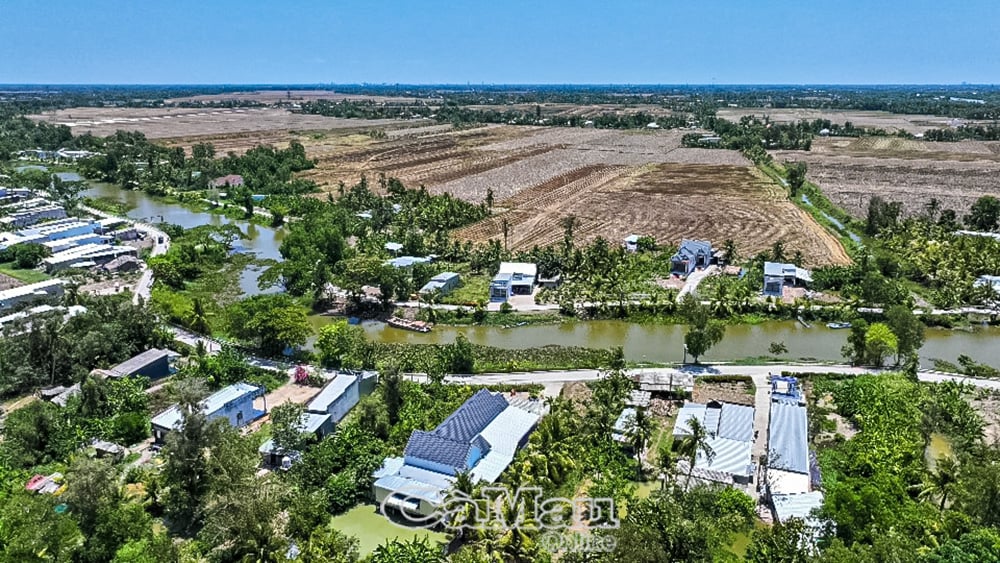
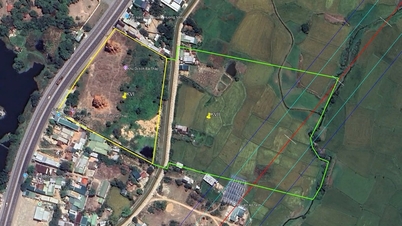
Khanh Binh commune viewed from above. Photo: CHIEU VUONG
Currently, the commune still has 34 poor households (0.45%) and 79 near-poor households (1.04%). Looking ahead, according to Mr. Nguyen Vu Bang, Vice Chairman of the Commune People's Committee, Khanh Hung aims to reduce the number of poor households by at least 10 each year, with the goal of eliminating poverty by 2029. This is a challenging goal, but with the foundation already built and the consensus of the people, it is entirely achievable.
In Vinh Thanh commune – the only locality in the province to achieve the model new rural standard – the goal of "eradicating poverty" is closely linked to livelihood support and improving access to basic services. Currently, the commune has 43 poor households and 293 near-poor households; by 2026, it aims to support 91 households to escape poverty through comprehensive solutions such as: developing production, vocational training, and job creation...
Vinh Binh A hamlet (Vinh Thanh commune) is considered a shining example of practical implementation. The model of assigning Party members to oversee poor households has proven highly effective: directly providing capital, technical assistance, production guidance, and market access. By 2025, only 3 households in the hamlet will remain in difficult circumstances. This result not only demonstrates the effectiveness of poverty reduction but also affirms the pivotal role of the Party organization in translating policies into reality and creating sustainable changes at the grassroots level.
The mark of belief
The picture of poverty reduction in Ca Mau by 2026 is reflected in impressive figures: over 545,000 households, more than 2.3 million people, with poor households accounting for 0.63% and near-poor households 1.37%. This is not only an achievement but also a testament to a persistent journey with clear direction. In particular, the ethnic minority areas, with over 26,000 households, continue to be a priority focus, aiming to ensure harmonious development and that no one is left behind.
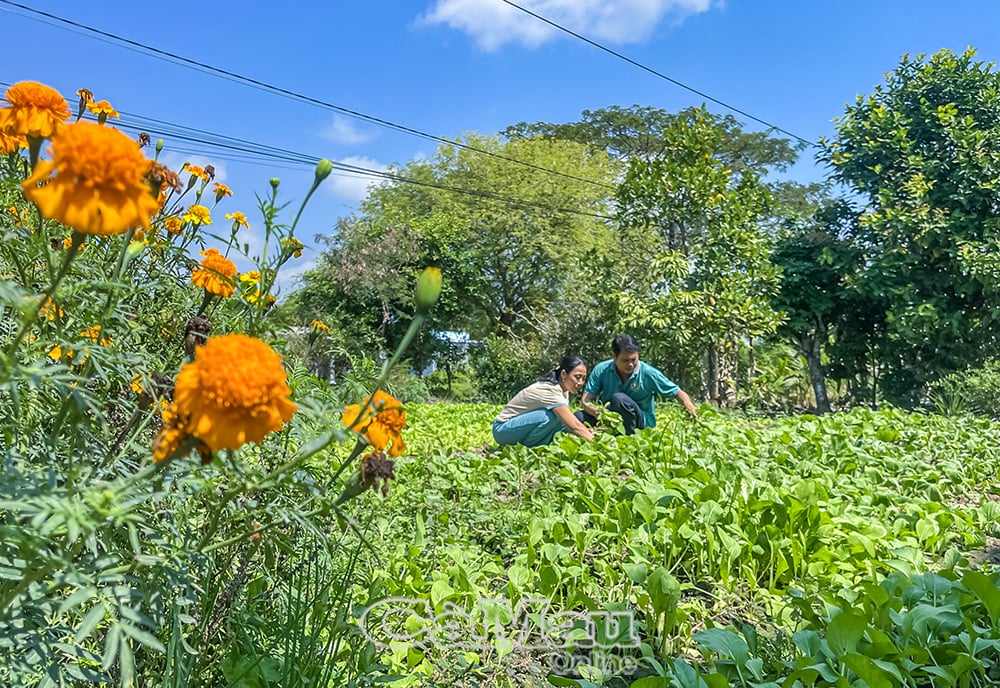
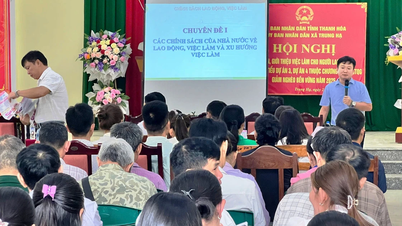
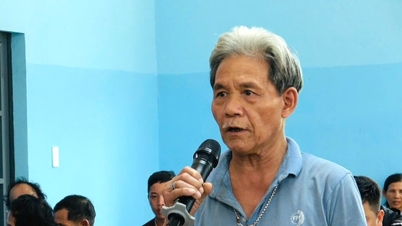
Ethnic minority people in Khanh Hung commune trust the Party's policies, proactively develop their livelihoods, and strive to escape poverty sustainably.
In 2026 – the beginning of the new 2026-2030 period – poverty reduction efforts will be concretized through a systematic and comprehensive plan from the provincial level to the grassroots. Each goal and target will be assigned directly, linked to the specific responsibilities of each sector and locality. The coordinating role of departments and agencies will be clearly demonstrated, creating a strong connection between policy and practice. From planning and resource allocation to inspection and supervision, everything is forming a "unified flow," where the Party's will is concretized through action and integrated into daily life.
Experience shows that when the right policies are applied flexibly and appropriately to the people, they create a powerful impetus. In this context, economic development is linked with Party building, cultural development, ensuring social security, maintaining stability, and ultimately aiming to improve the quality of life for the people.
Source: https://sonnmt.camau.gov.vn/phat-trien-nong-thon/giam-ngheo-ben-vung-khi-y-ang-hoa-nhip-long-dan-299168





![[Photo] First session of the 14th Congress of the Vietnam Trade Union](https://vphoto.vietnam.vn/thumb/1200x675/vietnam/resource/IMAGE/2026/06/03/1780465947883_ndo_br_img-3852-jpg.webp)












































![[Video] Sunset at Lap An Lagoon – Where the sun sets over the fishing nets](https://vphoto.vietnam.vn/thumb/1200x675/vietnam/resource/IMAGE/2026/05/31/1780192137701_beach-landscape-sea-water-nature-grass-745871-pxhere-com.jpeg)




















Comment (0)