

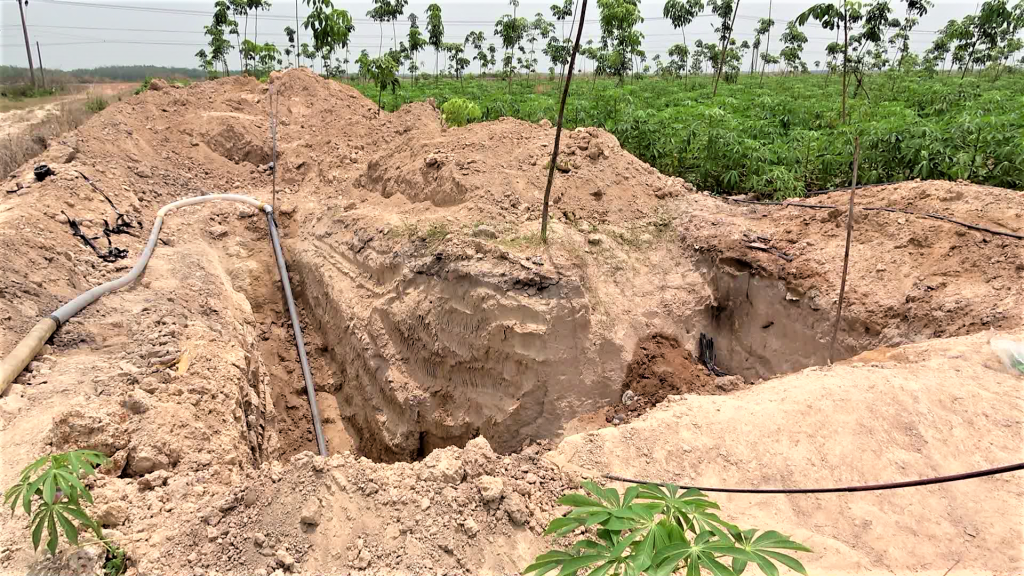
To save their crops, farmers have no choice but to dig "underground wells." They dig 2-3 meters deep into the ground to lower the elevation for the pumps, hoping to find a water source from the groundwater to serve their production. Even then, one well isn't enough; they have to drill double wells in the excavated pits and connect them to a single source to provide sufficient water for the pumps. It's an incredibly arduous and costly endeavor.

Ms. Huynh Thi Thu, a cassava farmer in Dong Rum hamlet, Tan Thanh commune, said that during this season, if the water pump isn't lowered to a suitable height, there won't be enough water to irrigate the crops. The cost of drilling a well, digging a hole, and installing the pump ranges from 4-5 million VND per well, depending on whether the land has a favorable groundwater source.
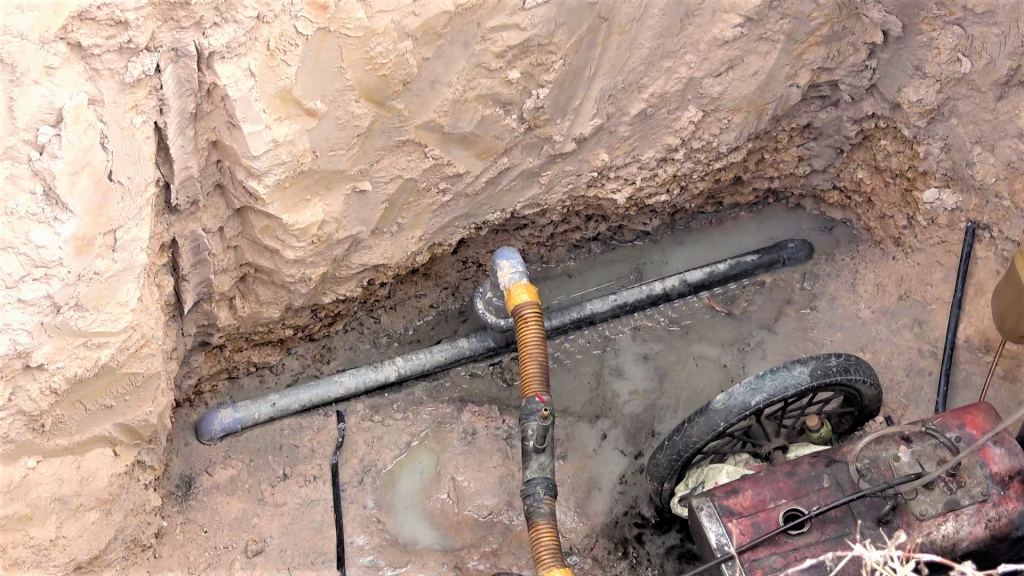
According to Ms. Thu, because the groundwater level drops low during the dry season, most farmers have to drill two wells in one hole. These are then connected to a single source to prevent the pump from running out of water. However, the water flow is still not strong enough for wide-area irrigation using rotating sprinklers, so farmers have opted to invest in a drip irrigation system to control water usage at the base of the plants.
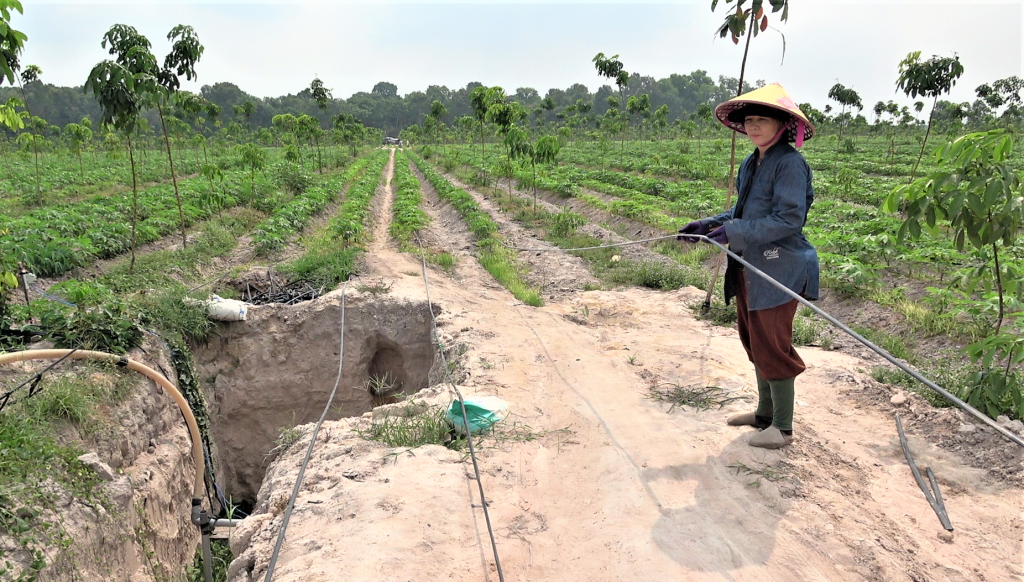

Moreover, drilling and digging underground wells depends heavily on luck. In many cases, wells are abandoned after being drilled because they don't hit a reliable groundwater source. Some people have to abandon 2-3 wells before finding one with a relatively stable water source, and the costs increase accordingly.
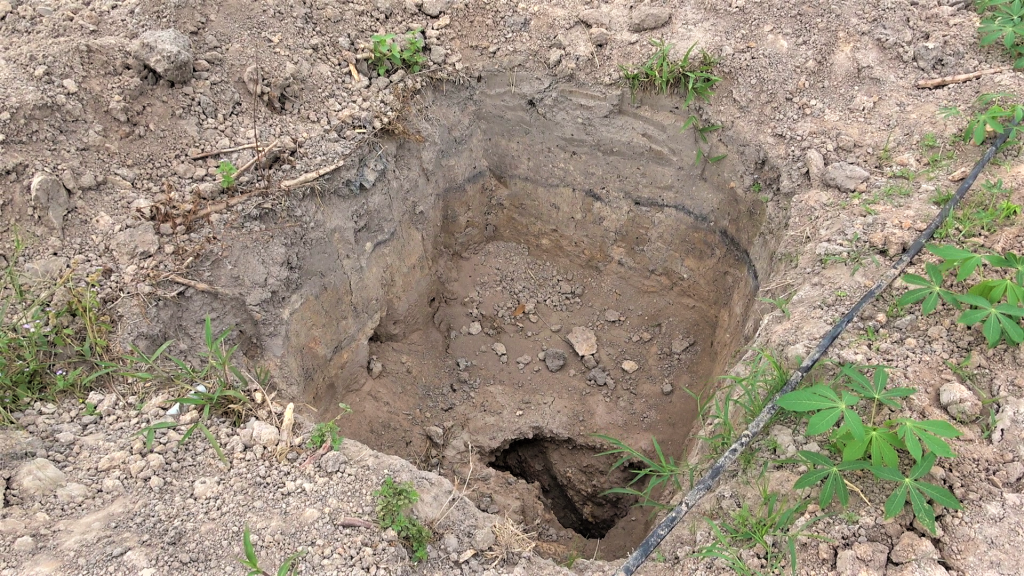
"Often, well drillers spend the whole day struggling without drilling a single satisfactory well, getting tired, exhausted, and wasting fuel on their drilling equipment... Although the agreement states that payment is only made if the well yields 'good' water, most employers still cover the additional costs incurred when the well is unsuccessful," shared Mr. Vo Ngoc Minh, a cassava farmer in Hamlet 6, Tan Thanh Commune.

That's not to mention other investments such as fuel for the pumps, wear and tear on machinery that has to operate continuously at high capacity to pump water from deep pits to the surface, along with the irrigation pipeline system covering the entire field.


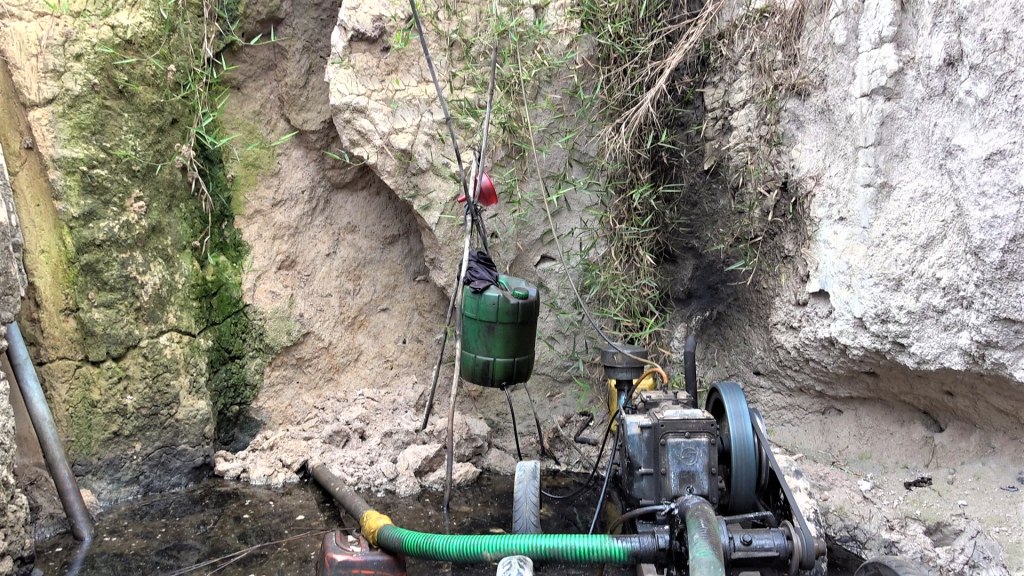
The hardship and expense are not the only challenges. Deep pits, 2-3 meters deep with sheer cliffs, pose a constant risk of landslides, especially in confined spaces and amidst the constant vibrations from machinery. Farmers in these areas are gambling with these risks in exchange for water to save their crops. Every meter dug represents a meter of hardship and danger.
Driven by the need to earn a living, farmers persevere, working tirelessly and striving to find water sources to ensure agricultural production. The journey to find underground water sources is truly arduous.
Source: https://baotayninh.vn/gian-nan-tim-mach-nuoc-ngam-144019.html
![[Photo] Admire the coral "masterpiece" amidst the million-year-old heritage of Dak Lak province.](https://vphoto.vietnam.vn/thumb/1200x675/vietnam/resource/IMAGE/2026/05/31/1780221235105_anh-man-hinh-2026-05-31-luc-16-53-27.png)
![[Image] Hanoi Police officially crowned champions of V-League 2025/2026](https://vphoto.vietnam.vn/thumb/1200x675/vietnam/resource/IMAGE/2026/05/31/1780244769054_ndo_br_039d561b692be875b13a-jpg.webp)

![[Photo] Solemn bathing ceremony and Buddha procession in Hue](https://vphoto.vietnam.vn/thumb/1200x675/vietnam/resource/IMAGE/2026/05/31/1780228263543_1-jpg.webp)
![[Photo] The General Secretary, President and his wife begin their state visit to the Philippines.](https://vphoto.vietnam.vn/thumb/1200x675/vietnam/resource/IMAGE/2026/05/31/1780230559452_anh-man-hinh-2026-05-31-luc-19-28-11.png)
















![[Video] Sunset at Lap An Lagoon – Where the sun sets over the fishing nets](https://vphoto.vietnam.vn/thumb/340x192/vietnam/resource/IMAGE/2026/05/31/1780192137701_beach-landscape-sea-water-nature-grass-745871-pxhere-com.jpeg)








































![[Photo] Admire the coral "masterpiece" amidst the million-year-old heritage of Dak Lak province.](https://vphoto.vietnam.vn/thumb/402x226/vietnam/resource/IMAGE/2026/05/31/1780221235105_anh-man-hinh-2026-05-31-luc-16-53-27.png)




























Comment (0)