

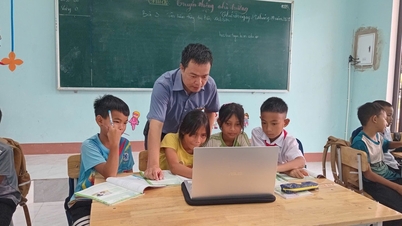
Many people believe that tutoring and extra classes are a natural need stemming from the students themselves, aimed at meeting their learning needs and enhancing their knowledge.
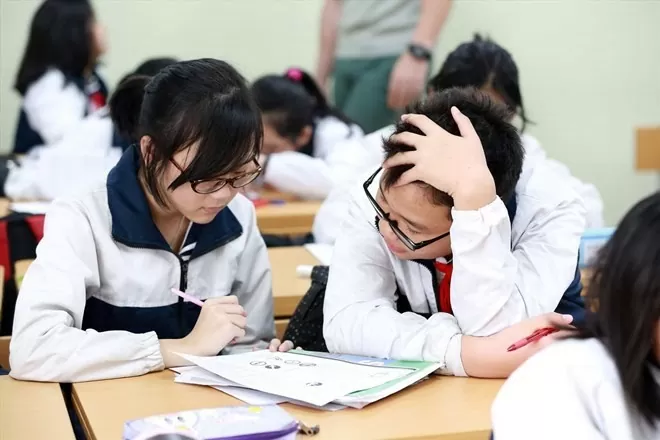 |
| Many experts believe that extra classes and tutoring are necessary activities to meet the legitimate needs of students. (Source: Lao Dong newspaper) |
The draft Circular on supplementary teaching and learning issued by the Ministry of Education and Training is currently receiving significant public attention, especially from parents and students. While many opinions agree with it, there are still dissenting views, indicating the need for practical solutions to ensure transparency in this activity, build credibility for teachers, and improve the quality of education for students.
Among its notable contents are: principles in tutoring and supplementary learning; limits on the duration of tutoring and supplementary learning within schools; regulations on tutoring outside of school... When officially issued, this Circular will replace Circular No. 17 dated May 16, 2012, of the Minister of Education and Training.
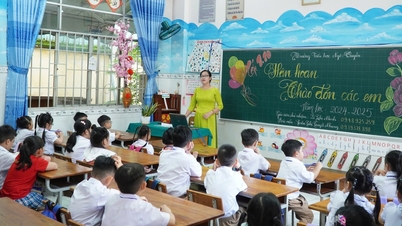
Extra tutoring and supplementary classes remain a hot topic in the general education system. In today's society, extra tutoring and supplementary classes have become an indispensable part of education for many students, a necessary need stemming from the students themselves to meet their learning needs and enhance their knowledge. So what is the real meaning of extra tutoring and supplementary classes, and how should we view this issue?
It can be said that extra classes and tutoring are among the solutions that many parents and students turn to in order to improve their academic results. With the increasingly heavy curriculum and vast amount of knowledge, extra classes help students consolidate their knowledge and supplement parts that teachers haven't had time to teach or can't cover in depth in class.
In particular, for students with weaker academic abilities, this becomes an opportunity for them to access fundamental knowledge. In the context of increasingly competitive exams, extra tutoring can help students become familiar with different types of exercises and exam questions, and better prepare for tests and exams.
Furthermore, this activity reflects the law of supply and demand in society. Particularly at higher levels of education, the need for tutoring increases due to pressure from exams and the desire to improve personal abilities. Therefore, tutoring, in a certain sense, is considered necessary to meet these legitimate desires.
However, alongside its benefits, extracurricular tutoring can create immense pressure on students, especially those from disadvantaged families. Because students spend so much time attending tutoring, they lack time for rest, recreation, or outdoor activities, which can hinder their holistic development.
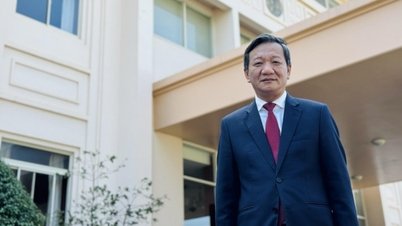
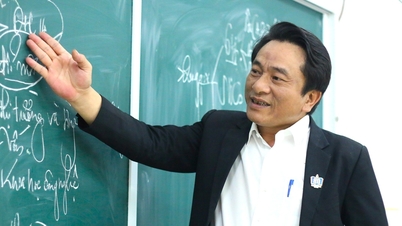
Dr. Hoang Ngoc Vinh, former Director of the Department of Professional Education (Ministry of Education and Training), believes that to ensure tutoring is conducted in accordance with regulations, there needs to be synchronized and serious management from all levels. This includes standardizing the curriculum and exam questions to prevent the situation of "tutoring for high scores."
At the same time, establishing a hotline to receive feedback from parents is also an effective solution. In addition, educational programs for parents should be implemented to help them understand the impact of tutoring on their children's holistic development, enabling them to make informed decisions and avoid situations where students are forced to attend unsuitable classes.
Meanwhile, Dr. Nguyen Tung Lam, Vice President of the Vietnam Association of Educational Psychology, expressed his view that the draft regulations on tutoring have positive points such as creating conditions for teachers to provide legal and fair tutoring, comparable to other professions, and offering solutions to prevent the coercion of students into taking extra classes.
However, there are still issues that need clarification in the circular, especially in the context of the 2018 general education program, which aims to develop students' competencies and qualities. Currently, education still focuses too much on rote memorization and chasing grades, leading to students having to attend many extra classes without developing real skills and abilities. The pressure from extra classes robs children of their childhood and leaves them feeling exhausted.
To improve this situation, tutoring management needs to ensure voluntary participation from students and parents, while also changing the perceptions of teachers, parents, and students about the true value of education. Excessive tutoring does not guarantee future success; tutoring solely for the purpose of achieving high grades should be avoided.
Furthermore, admission methods for specialized and high-quality schools need to change to reduce the pressure of extra tutoring and focus on exams. The government should have policies to support extra tutoring within schools to ensure fairness and effectiveness.
With the goal of education being to develop students' thinking and abilities rather than simply cramming knowledge, the current situation of extra tutoring and supplementary classes needs to be rectified. This is because abilities and thinking skills are formed through many activities, not just sitting in the classroom solving problems and improving grades. Reforming testing and examinations is also a strong solution to prevent the unnecessary practice of extra tutoring and supplementary classes as it currently exists.
So how can we address the problems related to extra classes and tutoring? First, authorities need to implement stricter management measures for these classes. These classes should be organized transparently, under the supervision of educational agencies, to ensure teaching quality and fairness among students.
At the same time, extra tutoring should not be considered the optimal solution. Students need to be encouraged to develop self-learning and research skills, instead of relying solely on extra tutoring to pass exams. Teachers in schools also need to create an interesting, creative, and welcoming learning environment so that students can absorb knowledge naturally and effectively.
Parents need to recognize that extra tutoring is not the only path to their children's success. They should focus on the holistic development of their children, including social, physical, and mental skills. Only when students achieve balanced development in all aspects can they achieve lasting and sustainable success in life.
Learning is a long process that requires a balance between knowledge acquisition and holistic development. Therefore, changes are needed in the way we perceive and organize extracurricular learning, not only to help students achieve high academic results but also to help them develop well in all aspects, becoming useful members of society.
Source


![[Photo] Enchanting ancient rose garden on the mountainside in Nghe An](/_next/image?url=https%3A%2F%2Fvphoto.vietnam.vn%2Fthumb%2F1200x675%2Fvietnam%2Fresource%2FIMAGE%2F2025%2F12%2F19%2F1766109900916_vuon-hong-chin-do-thu-hut-du-khach-toi-check-in-o-ha-noi-3-20162778-1671624890024-1671624890104198100259.jpeg&w=3840&q=75)

![[Photo] General Secretary To Lam visits the exhibition space showcasing books, photo exhibitions, and achievements of digital transformation in journalism.](/_next/image?url=https%3A%2F%2Fvphoto.vietnam.vn%2Fthumb%2F1200x675%2Fvietnam%2Fresource%2FIMAGE%2F2025%2F12%2F19%2F1766110879215_1766110240024-jpg.webp&w=3840&q=75)












































































Comment (0)