

Through expanding connections with international partners, many schools have built modern learning environments, helping students develop global integration skills while preserving their national identity.
International integration is a driving force for educational innovation.
"Developing modern education and training, and deeply integrating into the international community" is one of the key tasks outlined in Resolution 02-NQ/TW of the Politburo on building and developing Hanoi in the new era. Adhering to this direction, Hanoi's Education and Training sector is gradually concretizing it through many practical programs and plans aimed at expanding international cooperation, accessing advanced educational models, and improving the quality of human resources.
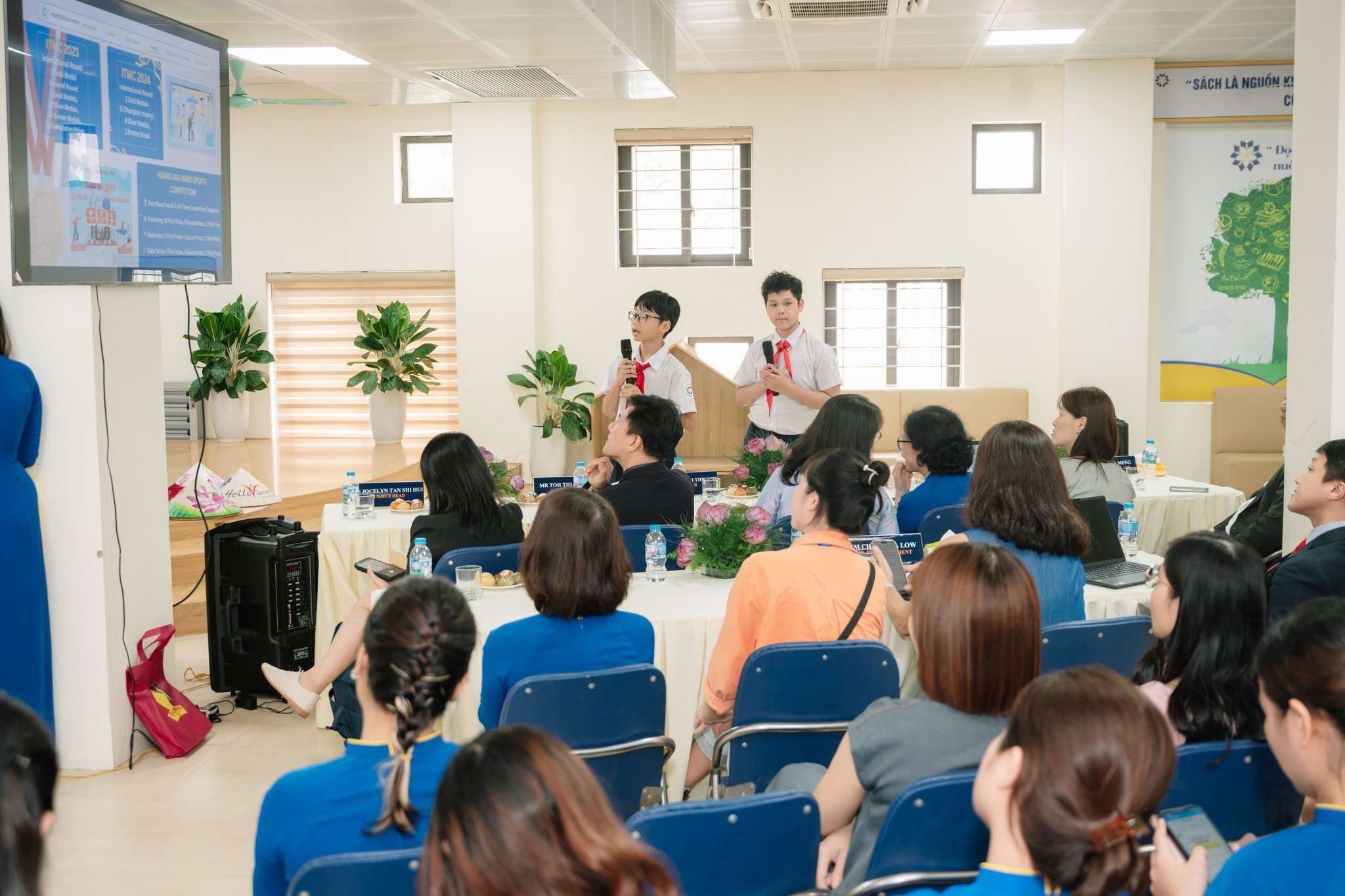
International integration in education is not just about adopting training programs from abroad, but more importantly, it's about creating an open learning environment that helps students develop comprehensively in terms of knowledge, skills, and global thinking. This is also an opportunity for students in Hanoi to hone their foreign language skills, critical thinking, communication skills, and adapt to a multicultural environment.
Along with reforming the curriculum and teaching methods, Hanoi's education sector focuses on building a team of teachers with the capacity for international integration.
For many years, the Hanoi Department of Education and Training has organized short-term training courses in Australia for English teachers. These courses not only provide knowledge on school management, modern teaching methods, STEM/STEAM education, and innovative assessment methods, but also help teachers access advanced educational thinking, school culture, and the effective operational models of international educational institutions.
Through collaborative programs, teachers broaden their horizons and enhance their expertise, thereby directly contributing to improving the quality of education in the capital city.
Alongside improving teacher capacity, many educational institutions in Hanoi are also proactively expanding cooperation with international schools and educational organizations, aiming to create more practical learning spaces and help students access the world through vivid experiences instead of just through textbooks.
In particular, current international cooperation activities are becoming increasingly diverse, ranging from cultural and artistic exchanges to scientific research, STEM, and teacher and student exchanges. This shows that Hanoi's education system is gradually making international integration an indispensable part of the overall educational process.
International exchange activities are becoming more in-depth.
A clear example of the proactive integration spirit of schools is the international cultural exchange programs that many schools in Hanoi have connected with and organized.
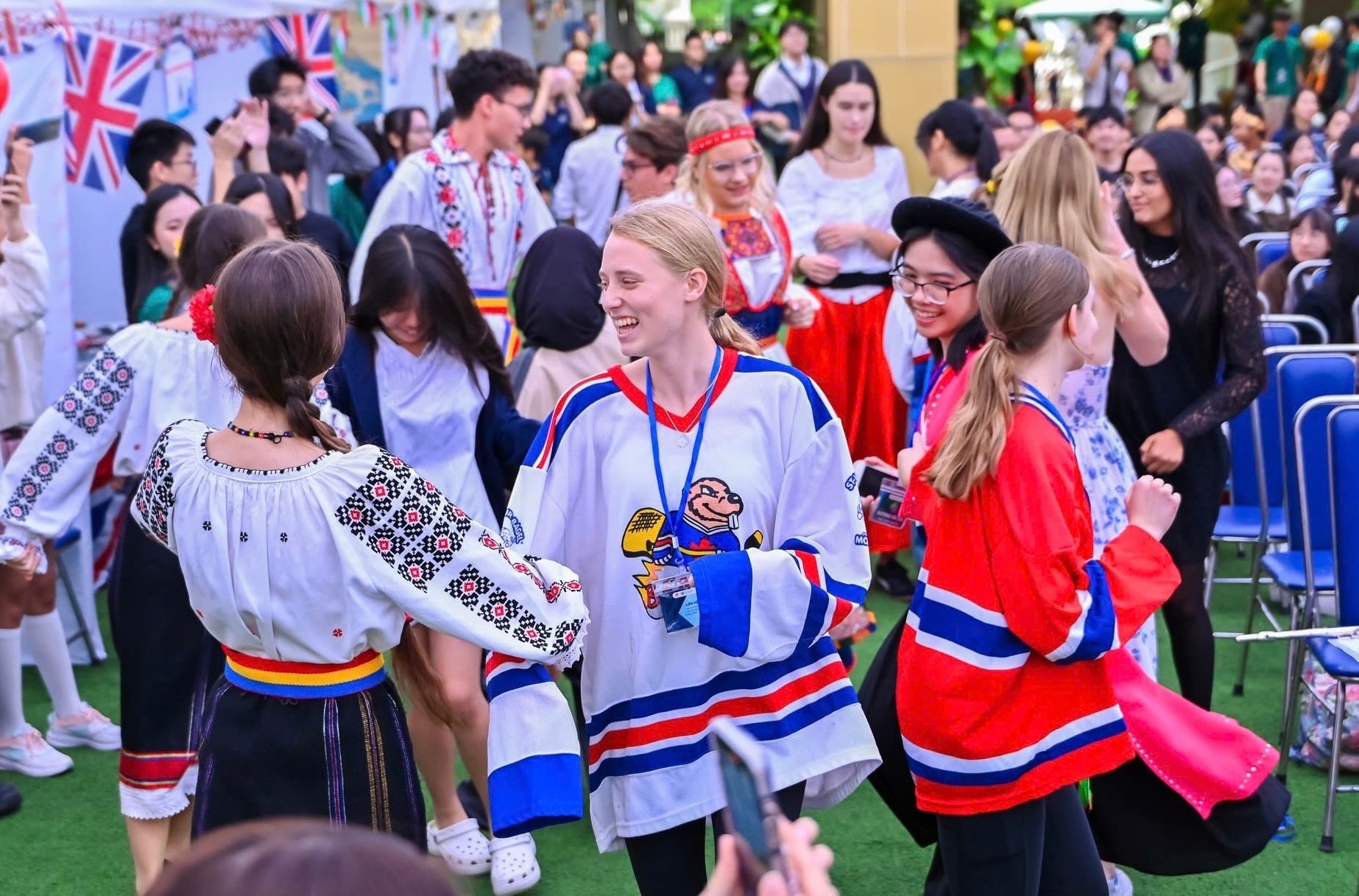
On May 19th, an international cultural exchange program took place at Hoang Mai Secondary School, attended by the school's administration and representatives from schools in Singapore. The program not only provided an opportunity for students from both countries to meet and exchange ideas, but also contributed to enhancing understanding, strengthening friendship, and promoting the image of dynamic and confident Hanoi students to international friends.
On the same day, Cau Giay Secondary School also welcomed a delegation of teachers and students from Dunman High School (Singapore) in a warm and open atmosphere. Students from Cau Giay Secondary School acted as "guides," introducing learning spaces such as the STEM room and gymnasium, and participating in many experiential activities with international students. These practical activities helped students develop communication and teamwork skills and increase their confidence in a multicultural environment.
Previously, the World School International Forum (WSIF) 2025, held for the first time in Vietnam and hosted by Newton Secondary School, made a significant mark on the educational integration activities of the capital city.
The event brought together approximately 70 students and teachers from 17 countries and territories such as the UK, Germany, Canada, Japan, South Korea, Spain, Thailand, New Zealand, etc. More than just an international exchange platform, WSIF 2025 also opened up a multicultural learning space where students could directly present their views, debate, perform traditional arts, and introduce the beauty of their country's culture.
Through these activities, students not only improve their foreign language skills but also develop presentation skills, critical thinking, adaptability, and a spirit of international cooperation – essential competencies for global citizens in today's integration context.
Notably, many exchange activities are organized with a focus on increasing practical experience, allowing students to participate directly rather than simply observing. This approach helps students proactively access knowledge, foster creativity, and develop an integrated mindset from the secondary school level.
Viet Duc High School, a school with a history of over 70 years, is also a shining example of expanding international cooperation in Hanoi's education system. Every year, the school welcomes many international student delegations for exchange and study.
According to Principal Nguyen Boi Quynh, cultural and academic exchange programs not only contribute to promoting friendly cooperative relations between Vietnam and other countries but also create opportunities for Vietnamese students to broaden their understanding of world culture, while introducing the beauty of Vietnamese culture to international friends.
Through these exchange activities, students become more proud of their national traditions and develop an awareness of preserving their cultural identity in the process of integration. This is also an important goal that Hanoi's education system aims for when implementing international cooperation activities.
In addition, many schools in Hanoi are actively implementing international cooperation activities in various forms, such as online classes with foreign teachers, student exchanges, cultural exchanges, and participation in international academic competitions.
With the attention and guidance of the Education sector and the proactive and creative efforts of schools, international cooperation in education in Hanoi is increasingly deepening, bringing many practical values to students. This is also an important prerequisite for building a modern and humane educational environment, contributing to the training of global citizens while still retaining a strong national identity.
Source: https://hanoimoi.vn/giao-duc-thu-do-chu-dong-hoi-nhap-quoc-te-972235.html
![[Photo] General Secretary and President To Lam presides over the meeting to approve the draft report on the results of the second inspection by the Politburo of the Standing Committee of the Hanoi City Party Committee.](https://vphoto.vietnam.vn/thumb/1200x675/vietnam/resource/IMAGE/2026/05/26/1779789811432_a2-bnd-4430-9620-jpg.webp)


![[Photo] The "Students with 3 Qualities" and "Students with 3 Virtues" festival set a record for the number of participants.](https://vphoto.vietnam.vn/thumb/402x226/vietnam/resource/IMAGE/2026/04/11/1775885382290_bb2723726429e577bc384-jpg.webp)







































Comment (0)