

We arrived in Phu Hai village, Phu Mo commune, Dong Xuan district (Phu Yen province) on a chilly morning in mid-November. Many adults were still gathered around the fire, waiting for the sun to rise so they could go to the fields, while at the schools, students had already arrived in full force. Establishing such a learning routine in these remote highland schools is no easy feat… In the mountainous district of Van Canh (Binh Dinh province), there are two remote villages, isolated and without roads, electricity, or medical facilities… the lives of the people there are extremely difficult. Determined to bridge the gap between the mountainous and lowland areas, Binh Dinh province has invested in building and opening roads to these two villages. Improved transportation infrastructure has realized the long-held dreams of the people, while also opening up opportunities for development in the most remote and difficult areas of the province. With the theme "Ethnic groups of Lang Son province unite, innovate, leverage advantages and potential, integrate and develop sustainably," on November 19th, Lang Son province held its 4th Provincial Congress of Ethnic Minorities, 2024. We visited Phu Hai village, Phu Mo commune, Dong Xuan district (Phu Yen province) on an early morning in mid-November, a light drizzle making the weather even chillier. Many adults were still gathered around the fire waiting for the sun to rise before going to the fields, while at the schools, students had already arrived in full attendance. Creating such a learning environment in schools in mountainous areas is not an easy task... Over the years, closely following directives from the central government, Vinh Phuc province has effectively implemented ethnic policies, gradually building increasingly modern and prosperous areas for ethnic minorities. The People's Committee of Ninh Thuan province recently organized the launching ceremony for the Action Month for Gender Equality and Prevention and Response to Gender-Based Violence in 2024 with the theme: “Ensuring social security, empowering and creating opportunities for women and girls to achieve gender equality and eliminate gender-based violence.” This is also part of Project 8 - National Target Program for socio-economic development in ethnic minority and mountainous areas, giai đoạn 2021-2030, currently being implemented in Ninh Thuan province. The summary bulletin of the Ethnic Minorities and Development Newspaper, dated November 19th, includes the following noteworthy information: The National Unity Day has profound humanitarian significance. A community cultural experience tour in Op village. A young teacher in the remote Phước Sơn area. Along with other current events in ethnic minority and mountainous areas. From clearing and burning forests for slash-and-burn agriculture, in recent years, the Xơ Đăng people in Tu Mơ Rông district, Kon Tum province, have actively replanted forests. Because they understand that greening barren hills and mountains, keeping the forests ever green, will bring practical benefits to the community and, above all, protect their own villages and ensure peace. The summary news from the Ethnic and Development Newspaper, dated November 18th, includes the following noteworthy information: The Week of National Unity - Vietnamese Cultural Heritage 2024; Discovery of a new plant species in the Dakrong Nature Reserve; The Sinh Ca artisan of Gieng Do village; and other current events in the ethnic minority and mountainous regions. Kbang district, Gia Lai province currently has 74 influential figures among ethnic minorities. Over the past period, the team of influential individuals has played a responsible role in the community, contributing to building national unity, maintaining security and order, and promoting socio-economic development in the locality. Over two days (November 19th and 20th), in Ia Grai district (Gia Lai province), the Department of Cultural Heritage (Ministry of Culture, Sports and Tourism) coordinated with the Department of Culture, Sports and Tourism of Gia Lai province to organize a training course on "Professional training and skills in transmitting intangible cultural heritage" and "Model of heritage connected with tourism itineraries to develop communities of ethnic minorities with similar heritage." On November 19th, in the city... In Pleiku, the Gia Lai Provincial Committee for the Advancement of Women organized the launching ceremony for the "Month of Action for Gender Equality and Prevention and Response to Gender-Based Violence" in 2024. 59 provinces and cities will directly participate in organizing "Specialty Booths" at the Vietnam Regional Specialty Fair. These booths will showcase characteristic products of each locality, such as "smoked buffalo meat" from the Northwest highlands or "sun-dried beef" from the Central Highlands. On the morning of November 19th, at the Central Party Headquarters, the Central Steering Committee for summarizing the implementation of Resolution No. 18-NQ/TW, dated October 25, 2017, of the 12th Central Committee on some issues concerning the continued reform and restructuring of the political system's organizational apparatus to be streamlined, effective, and efficient (Steering Committee) held its first meeting. General Secretary To Lam, Head of the Steering Committee, chaired the meeting.
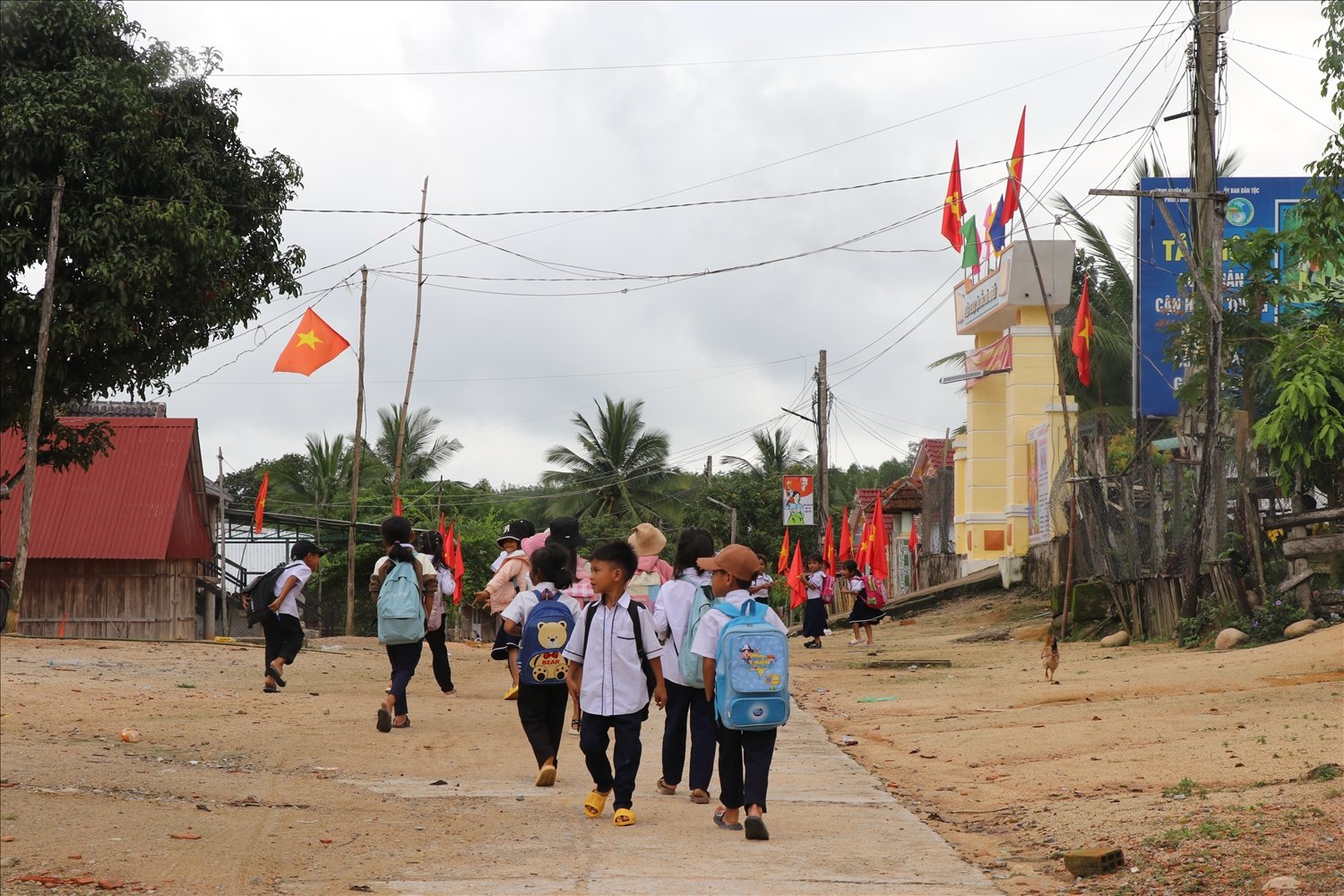
Trekking through forests and wading through streams to go teach.
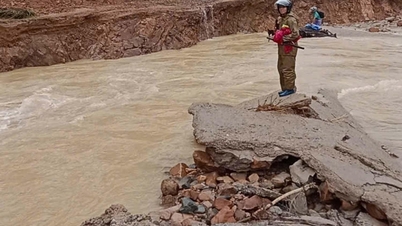
In the highlands, many teachers have to trek through forests and cross streams to reach their classrooms and teach their students, braving dangers. However, driven by their love for the profession, these teachers have strived to overcome these obstacles to fulfill their mission of "nurturing future generations," igniting the flame of knowledge and building a brighter future for their students. Only by visiting Phu Hai village during the rainy season can we truly appreciate the hardships faced by the teachers there.
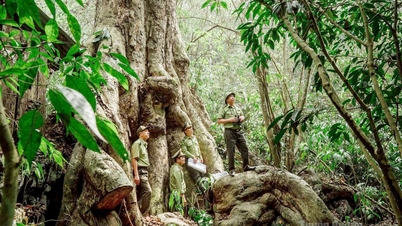
Phu Mo commune, Dong Xuan district, borders Gia Lai and Binh Dinh provinces and is primarily inhabited by the Cham Hroi (a branch of the Cham ethnic group). While Phu Mo is considered the highest, most remote, and most difficult commune in Phu Yen province, Phu Hai is the furthest hamlet, more than 10 km from the center of Phu Mo commune. The road leading to Phu Hai hamlet remains a dirt road, crossing old forests, with steep sections and fast-flowing streams.
Phu Hai school currently has a total of 36 students from grades 1 to 5, mostly children of the Cham Hroi ethnic minority. Some classes have only 4 students, while others have to be combined to ensure the curriculum is covered.
The school currently has 5 teachers, 4 of whom are from the lowlands and live in the school's dormitory. Every week, the teachers trek more than 10 km through the forest to reach the school. Despite the lack of basic necessities, the teachers remain dedicated, passionate about their profession, and committed to caring for and teaching their students.
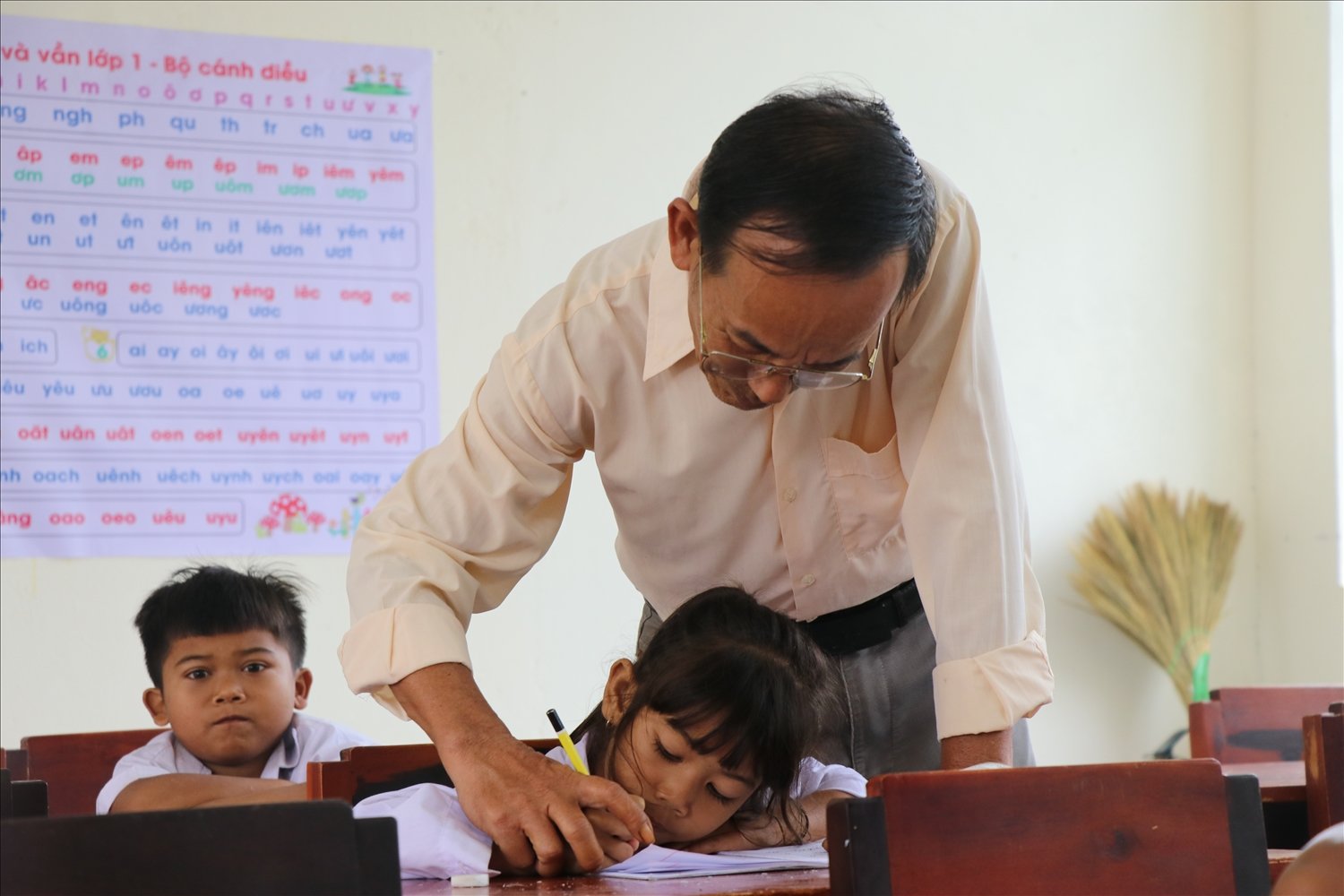
Having worked at Phu Hai branch school (part of Phu Mo Primary School) for nearly 15 years, teacher Tran Van Duong (born in 1963) is loved and respected by many generations of students and local people. Teaching first-grade students, Mr. Duong patiently guides them in learning each letter and spelling in every sentence and poem.
Teacher Tran Van Duong said: "The teaching and learning conditions here are very difficult. I've worked here for many years, so I'm used to it. As for the younger teachers, they have to be far from home and travel long distances, so I care about helping and encouraging them so that many generations of young teachers can work with peace of mind."
Teacher Phung Quang Thanh (born in 1974) has worked in primary education for 25 years, including more than 4 years at Phu Hai school. Teacher Thanh shared: "In recent years, life in the mountainous Phu Mo commune has changed and developed significantly. However, transportation remains inconvenient. It's better in the dry season, but the rainy season is very difficult. Many times, the roads are muddy, and by the time we get to school, our clothes are covered in mud, just like after plowing a field."
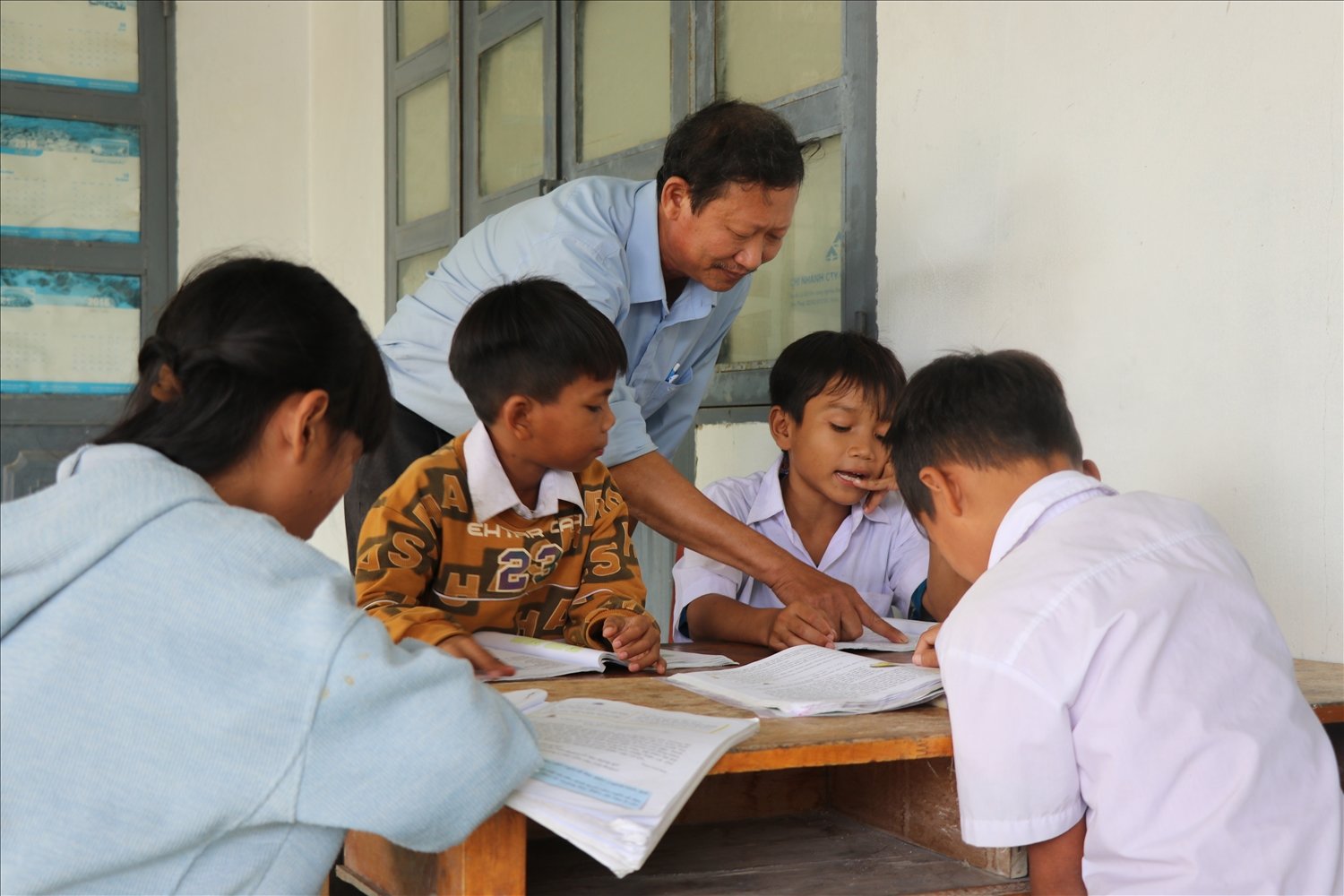
Bonded by love
It can be said that, given such difficult conditions, without a love for the profession and a heart for children, it would be very difficult for teachers to stay here for the long term. Teacher Duong confided: "Although life for teachers in remote mountainous areas is still difficult, my love for the students has helped me overcome challenges and stay here for many years."
It is known that, despite having only a few years left until retirement, Mr. Duong remains determined to stay and "plant the seeds of knowledge" and sow hope for a bright future for generations of students. Mr. Duong says that he considers his students as his own children, wishing them better lives and to become good citizens for society.
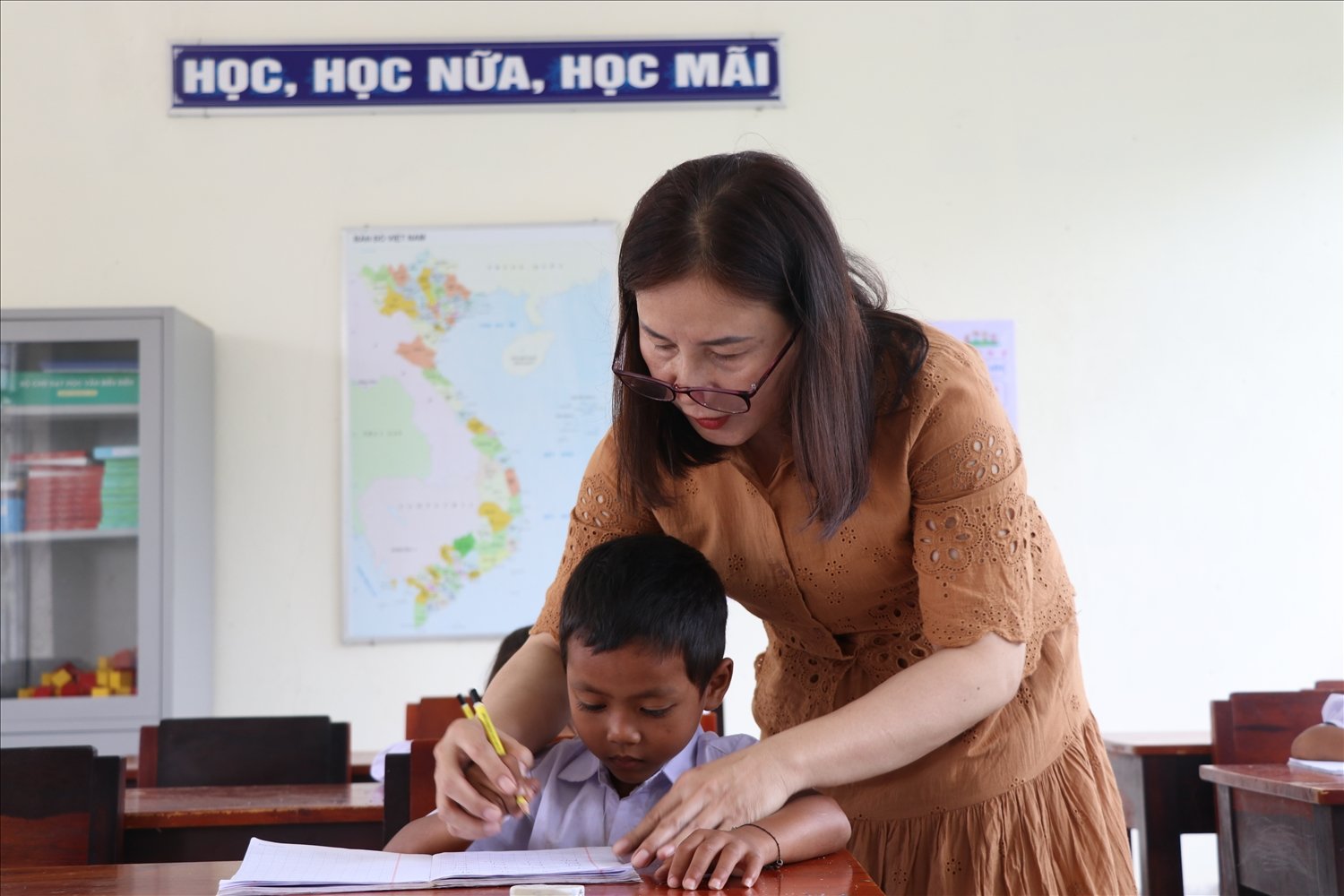
Sharing his thoughts on education in disadvantaged areas, teacher Phung Quang Thanh confided: "Having to struggle with a 10-kilometer stretch of muddy, slippery road can be discouraging at times. But thinking about how disadvantaged the children of ethnic minorities are compared to those in other places in terms of education, I feel compassion and become even more determined to stay committed."
"Due to the significant difference in academic level compared to students in the lowlands, we have to actively seek appropriate teaching methods. Language is also a major barrier, so teachers have to eat, live, and interact with the villagers to become proficient in the local language and understand the thoughts and feelings of the people," Mr. Thanh said.
Ms. Nguyen Thi Kim Trinh (born in 1976) shared: "Students in mountainous areas face many difficulties in their studies. Therefore, in addition to regular classroom teaching, teachers also select weaker students for private tutoring. The joy of the teachers is that all the students have a solid foundation of knowledge at the primary school level to continue their education in subsequent levels."
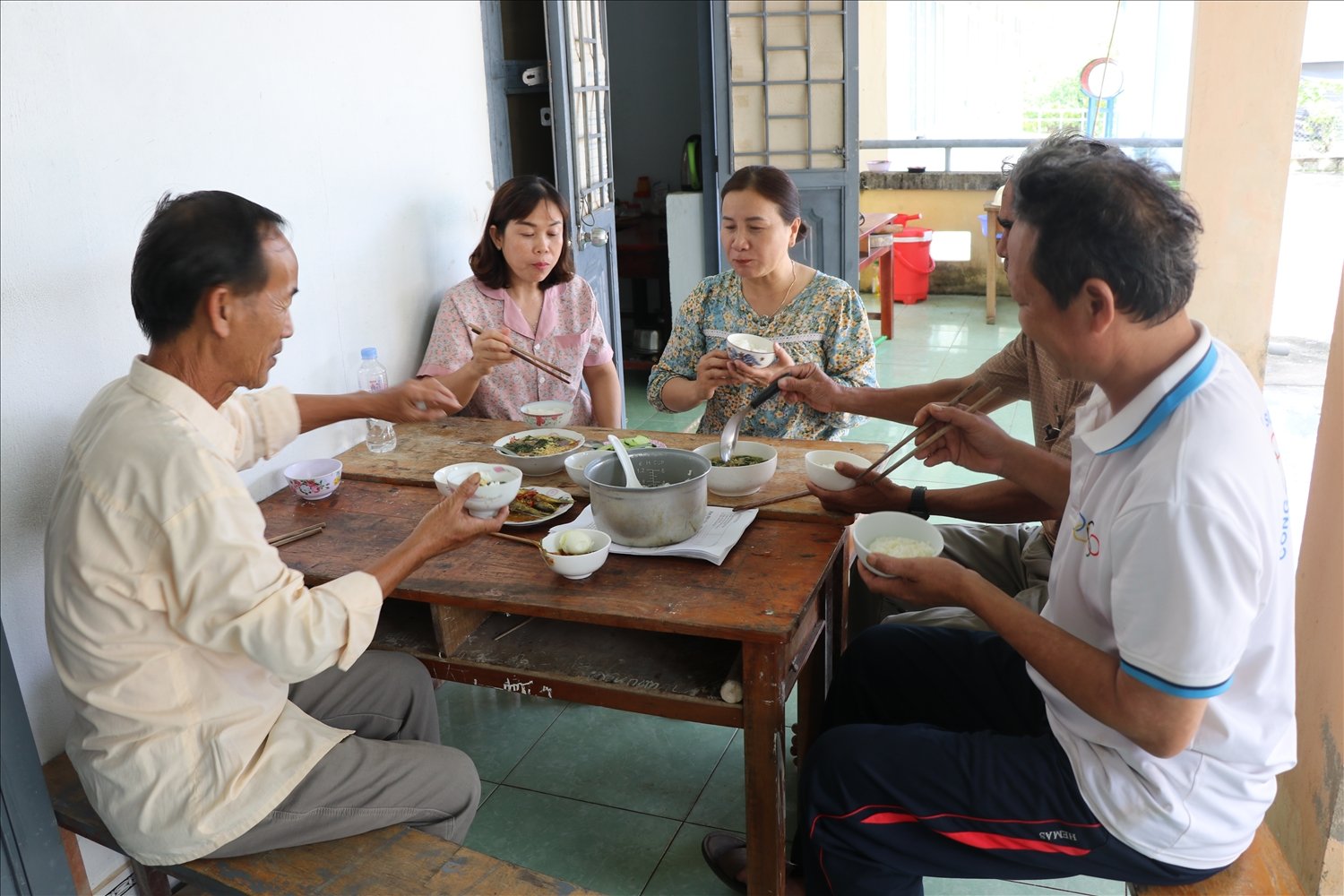
Speaking with us, Mr. Le Ngoc Hoa, Principal of Phu Mo Primary School, said: Phu Hai school branch, along with Lang Dong school branch (Phu Dong village), are the two most remote and challenging school branches of the school. Teachers at these school branches face many difficulties regarding transportation, facilities, and teaching equipment.
However, many teachers have worked here for many years and have requested to remain at the school. Some older teachers, when assigned to teach here, always happily accept the job and fulfill their assigned duties. Despite many difficulties, thanks to the dedication of the teachers, most students at Phu Hai school achieve good academic results, meeting the requirements.
“With the noble responsibility of the teaching profession, the teachers here always care for, share with, and support students, especially those from disadvantaged backgrounds. The joy of the school's leaders and teachers is that the academic quality of the students in this mountainous region is constantly improving. Although there are still many difficulties, with the efforts of the teachers, I believe that the children here will have a brighter future,” Mr. Hoa added.
Source: https://baodantoc.vn/gieo-chu-o-vung-cao-phu-mo-1732002820659.htm


![[Image] National Assembly discusses the implementation of the socio-economic development plan.](https://vphoto.vietnam.vn/thumb/1200x675/vietnam/resource/IMAGE/2026/04/20/1776696707422_ndo_br_img-20260420-185419-jpg.webp)
![[Photo] General Secretary and President To Lam meets with National Assembly delegates from ethnic minorities.](https://vphoto.vietnam.vn/thumb/1200x675/vietnam/resource/IMAGE/2026/04/20/1776696701056_a1-bnd-8331-3342-jpg.webp)



































































Comment (0)