

Gio Nay - A rustic specialty with a rich taste of the countryside.
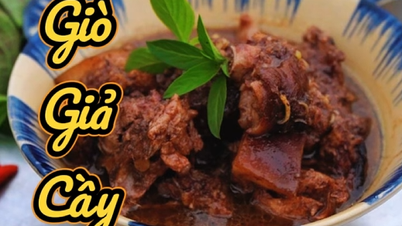
Pork sausage (Giò nây) is not only a traditional dish but also a cultural culinary symbol of the people of Thai Binh , Nam Dinh, Hai Duong, and other provinces. From simple ingredients to meticulous preparation, this dish has a pure flavor, reminiscent of the Northern Vietnamese countryside.
1. Name and origin
- Various names : Gio Nay is also known by other names such as Gio Lay , Gio Mo , Gio Cuon , or Gio Thuc , depending on the region.
- Origin : A famous specialty of Thai Binh, Nam Dinh , and Hai Duong provinces, often found on Tet (Lunar New Year) feast tables, weddings, and ancestral worship ceremonies.
2. Ingredients and preparation method
This type of Vietnamese sausage is made from simple, traditional ingredients but requires skillful techniques:
- Main ingredients : Pork shoulder, mixed with spices including pepper, salt, and ground galangal.
- Wrapping process : The meat mixture is spread evenly on fresh banana leaves that have been softened by heating over a fire, then tightly rolled into a cylindrical shape about 30cm long, and tied with bamboo string.
- Boiling the pork leg : The pork leg is boiled in boiling water for 4 hours, then drained to create the perfect binding consistency.
3. Distinctive Flavor
Gio Nay has a soft texture , a harmonious blend of the sweetness of the meat, the richness of the fat, and the strong aroma of banana leaves. When sliced, each piece of gio glistens with a layer of translucent fat like jelly, and is delicious served with pickled onions or hot rice.
4. Cultural significance
- A symbol of abundance : This dish, often featured during the Lunar New Year celebrations, represents the wish for a prosperous new year.
- Traditional craft : In Nguyen Xa village (Thai Binh province), many families still preserve the secret of making gio nay (a type of Vietnamese sausage) through generations, considering it their "ancestral craft".
- A traditional gift from the countryside : Pork sausage is a popular gift due to its distinctive flavor and handcrafted packaging.
5. Enjoying Vietnamese pork sausage the right way.
- Serve cold : Slice into pieces and dip in traditional fish sauce or chili sauce.
- Pairing : Serve with banh chung (Vietnamese sticky rice cake), new rice sticky rice, or glutinous rice wine.
- Storage : Fresh pork sausage can be used for 5–7 days if kept in the refrigerator.
Conclusion
Pork sausage is not only a delicious dish but also a bridge between the present and the past, preserving the essence of Northern Vietnamese cuisine . Join "School Garden" in making this dish to fully experience the flavors of our homeland.
![[Photo] Closing Ceremony of the 10th Session of the 15th National Assembly](/_next/image?url=https%3A%2F%2Fvphoto.vietnam.vn%2Fthumb%2F1200x675%2Fvietnam%2Fresource%2FIMAGE%2F2025%2F12%2F11%2F1765448959967_image-1437-jpg.webp&w=3840&q=75)
![[Photo] Prime Minister Pham Minh Chinh holds a phone call with the CEO of Russia's Rosatom Corporation.](/_next/image?url=https%3A%2F%2Fvphoto.vietnam.vn%2Fthumb%2F1200x675%2Fvietnam%2Fresource%2FIMAGE%2F2025%2F12%2F11%2F1765464552365_dsc-5295-jpg.webp&w=3840&q=75)





































![[OFFICIAL] MISA GROUP ANNOUNCES ITS PIONEERING BRAND POSITIONING IN BUILDING AGENTIC AI FOR BUSINESSES, HOUSEHOLDS, AND THE GOVERNMENT](https://vphoto.vietnam.vn/thumb/402x226/vietnam/resource/IMAGE/2025/12/11/1765444754256_agentic-ai_postfb-scaled.png)















































Comment (0)