

Hung Kings Commemoration Day, also known as Hung Temple Festival or National Day, is a day for Vietnamese people to remember the contributions of the Hung Kings and other ancestors who helped build the nation.

Elderly people in Chu Hoa commune, Viet Tri city, Phu Tho province perform a traditional sacrificial ritual. (Photo: Trung Kien/VNA)
"No matter where one goes, remember the Ancestor Commemoration Day on the tenth day of the third lunar month" is a folk verse deeply ingrained in the Vietnamese consciousness, expressing the pride in the "Descendants of the Dragon and the Immortal" origins of the Vietnamese people.
Every year on the 10th day of the 3rd lunar month, no matter where they are, all Vietnamese people turn their thoughts towards their nation and seek their roots. This year, the Hung Kings Commemoration Day falls on Thursday, April 18th.
Cultural and religious symbols connect the past with the present.
Hung Kings Commemoration Day, also known as Hung Temple Festival or National Day, is a day for Vietnamese people to remember the nation-building contributions of the Hung Kings.
The Hung Kings worship tradition is observed annually on the 10th day of the 3rd lunar month at the Hung Kings Historical Relic Site (a complex of relics including the Upper Temple, Middle Temple, Lower Temple, Au Co Mother Temple, and the Mausoleum...) on Nghia Linh Mountain, Viet Tri City; affirming that the Vietnamese people share a common origin, creating a strong spiritual belief, and fostering a tradition of unity, love, and mutual support.
The worship of Hung Kings has become a cultural and religious symbol connecting the past with the present, fostering family, village, and national bonds.
The Hung Kings worship belief – the worship of the common ancestor of the entire nation – is perhaps unique to the Vietnamese people worldwide . It is a distinctive and characteristic cultural identity of the Vietnamese people and also a representative cultural heritage of humanity. Previous studies have shown that the Hung Kings worship belief originated from a layer of belief in the worship of natural deities, mountain gods.

According to legend, the Upper Temple on Nghia Linh Mountain is where the Hung Kings used to ascend to perform rituals to worship heaven and earth, venerate the rice god, and pray for favorable weather, prosperity, and happiness for the people.
Until the end of the 19th century and before the restoration of the Upper Temple in 1917, the religious beliefs here were a blend of worshipping the mountain god, the rice god, and the Hung Kings.
According to legends and inscriptions at the temple, An Duong Vuong Thuc Phan was so grateful to Hung Vuong for yielding the throne that after Hung Vuong's death, An Duong Vuong went to Nghia Linh mountain to build a temple in his honor. With sincere reverence and gratitude for his merits, for thousands of years, generations of Vietnamese people have created, practiced, nurtured, and passed down the belief in worshipping Hung Vuong.
From the Later Le Dynasty onwards, the worship of the Hung Kings was performed by the local people themselves. From the Hong Duc era during the reign of King Le Thanh Tong, the Hung Temple festival was elevated to a national level, granted international status, and the rituals were subsequently presided over by the provincial governor on behalf of the imperial court.
During the Nguyen Dynasty, King Minh Mang ordered the ancestral tablets of the Hung Kings from Hung Temple to be brought to Hue to be worshipped at the Temple of the Great Emperors, while still granting permission for the local people to worship at Hung Temple. In the second year of Khai Dinh's reign (1917), the 10th day of the 3rd lunar month was officially designated as the main festival day, with solemn ceremonies organized.
Continuing the traditions of our ancestors, especially the tradition of "drinking water, remembering the source," immediately after the successful revolution, President Ho Chi Minh signed Decree No. 22/SL-CTN on February 18, 1946, allowing civil servants to take a day off on March 10 (Lunar Calendar) each year to participate in organizing activities commemorating the Hung Kings' Ancestral Anniversary, honoring the nation's origins.
The 10th day of the 3rd lunar month each year has become a major national holiday, a national celebration with significant cultural identity. |
And He visited Hung Temple twice, the first time on September 19, 1954, and the second time on August 19, 1962. During that second visit, He uttered the immortal words: "The Hung Kings had the merit of founding the nation - we, their descendants, must together preserve it."
Since 1995, the Hung Kings Commemoration Day has been designated as a major holiday by the Party Central Committee in its announcements. Subsequently, on April 2, 2007, the National Assembly approved amendments and additions to Article 73 of the Labor Law, granting employees the right to take a day off with full pay on Hung Kings Commemoration Day.
From then on, the 10th day of the 3rd lunar month each year became a major national holiday, a national holiday with significant meaning reflecting the cultural identity of the nation.

And on December 6, 2012, the United Nations Educational, Scientific and Cultural Organization (UNESCO) recognized the "Hung King worshiping belief in Phu Tho," a symbol of the spirit of national unity and the traditional moral principle of "drinking water, remembering the source" of the Vietnamese people, as a Representative Intangible Cultural Heritage of Humanity.
According to UNESCO experts, the "Hung Kings Worship Belief" has met the most important of the five criteria, which is: it is a heritage of outstanding global value, encouraging a shared awareness among all nations in promoting that value.
Spreading throughout contemporary life
The Hung Kings worship belief originated in the ancient land of Phu Tho, then spread throughout the country, especially to the provinces of the Northern Delta, Central Vietnam, and southward following the footsteps of the Vietnamese people.
Today, the worship of Hung Kings is practiced in many countries around the world where Vietnamese communities live.
Currently, the whole country has more than 1,410 relics dedicated to Hung Kings and related to the Hung King era, spread across various regions, from Hanoi, Hai Phong, Bac Ninh, Thai Nguyen, Lang Son, Nghe An, Thua Thien-Hue, Lam Dong, Binh Phuoc, Khanh Hoa, Dong Nai, Ho Chi Minh City, Ben Tre, Kien Giang, Can Tho...
Therefore, Hung Kings Commemoration Day has become a national festival with many traditional cultural and artistic programs and folk cultural activities. In Phu Tho province alone, there are more than 340 historical sites associated with the worship of Hung Kings.

Mr. Nguyen Quoc Hoang, Vice President of the Malaysia-Vietnam Friendship Association, presided over the ceremony of offering incense to the National Ancestor Hung Vuong in Malaysia. (Photo: Hang Linh/VNA)
Along with their compatriots at home, Vietnamese people abroad have for many years sincerely turned their hearts towards their roots. However, not everyone has the honor of returning to attend the Hung Kings Commemoration Day in their homeland. Therefore, organizing Hung Kings Commemoration Day abroad to give people the opportunity to connect with their national origins is an extremely necessary need.
Activities for the Hung Kings Commemoration Day - Hung Temple Festival 2024
In 2024, Phu Tho province organized many rich and diverse activities with the desire to bring tourists new experiences when attending the Hung Kings Commemoration Day - Hung Temple Festival.
According to Mr. Ho Dai Dung, Vice Chairman of the People's Committee of Phu Tho province, the Hung Kings Commemoration Day - Hung Temple Festival and the Ancestral Land Culture and Tourism Week in 2024 will take place from April 9th to April 18th (i.e., from the 1st to the 10th day of the 3rd lunar month) in Viet Tri city, the Hung Temple Historical Relic Site, and districts, towns, and cities in the province.
The ceremonial part of the event will be organized in a solemn, dignified, respectful, communal, safe, civilized, and economical manner, with many important rituals such as the Commemoration Ceremony for National Ancestor Lac Long Quan and the offering of incense to commemorate Ancestress Au Co on the 6th day of the 3rd lunar month (April 14, 2024); the Commemoration Ceremony for Hung Kings and the laying of flowers at the relief sculpture "Uncle Ho speaking with officers and soldiers of the Vanguard Army" on the 10th day of the 3rd lunar month (April 18, 2024); and the incense offering ceremony to commemorate the Hung Kings by districts, towns, and cities in the province from the 1st to the 10th day of the 3rd lunar month (April 9-18).
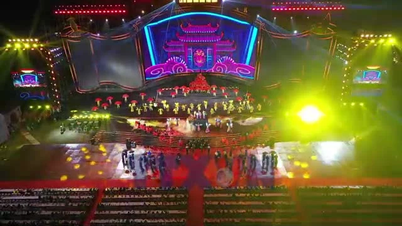
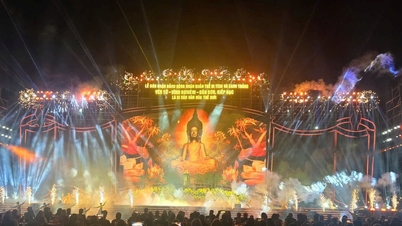
Many attractive activities were also organized, including the opening ceremony of the Hung Temple Festival and the Ancestral Land Culture and Tourism Week in the Year of the Dragon 2024, held at the Central Festival Stage - Hung Temple Historical Site.

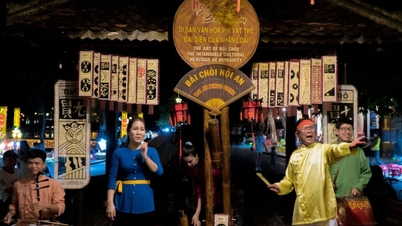
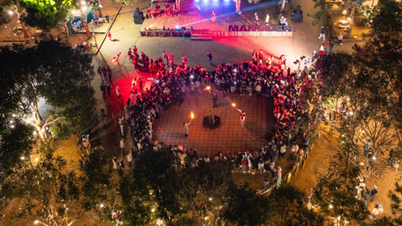
Original Xoan folk singers perform Xoan singing at Hung Lo communal house, Hung Lo commune, Viet Tri city, attracting a large crowd of locals and tourists. (Photo by VNA)
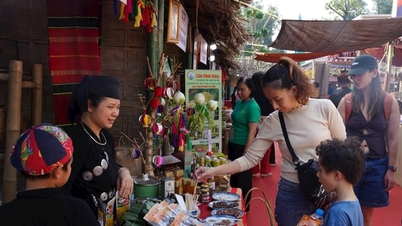
Other activities organized at the Hung Temple Historical Site throughout the festival include a cultural camp and exhibitions promoting and introducing typical products; a folk art and Phu Tho folk song festival; an art orchid exhibition; a competition for wrapping and cooking banh chung (traditional Vietnamese rice cakes) and pounding banh giay (traditional Vietnamese rice cakes); lion-dragon dance performances (on the 7th day of the 3rd lunar month) in the ceremonial axis area - the festival center; and traditional folk games and sports activities; and a procession of palanquins from surrounding communes, wards, and towns to Hung Temple on the 7th day of the 3rd lunar month (April 15, 2024)...
Many activities are taking place in the center of Viet Tri city, such as exhibitions of artifacts, world documentary heritage, books, newspapers, and photographic documents at the Hung Vuong Museum - Phu Tho Provincial Library and the Hung Vuong Museum; a Trade Fair and OCOP product exhibition at Bao Da Stadium (Duu Lau ward, Viet Tri city); the "Viet Tri Livemusic" street music program at Van Lang Park; performances of ancient Xoan singing from March 6-10 (Lunar calendar) in the ancient Xoan singing wards of Viet Tri city; an open boat race competition at Van Lang Park lake on March 6 (Lunar calendar); and the Hung Vuong Cup volleyball tournament from March 3-6 (Lunar calendar).
In particular, the art program and high-altitude fireworks display at the South Stage of Van Lang Park on the evening of March 9th (Lunar Calendar) brought a joyful atmosphere, entertaining a large number of people and tourists visiting the ancestral land.

According to VNA
Source











































Comment (0)