

"The midwife" of the free-range pig herd
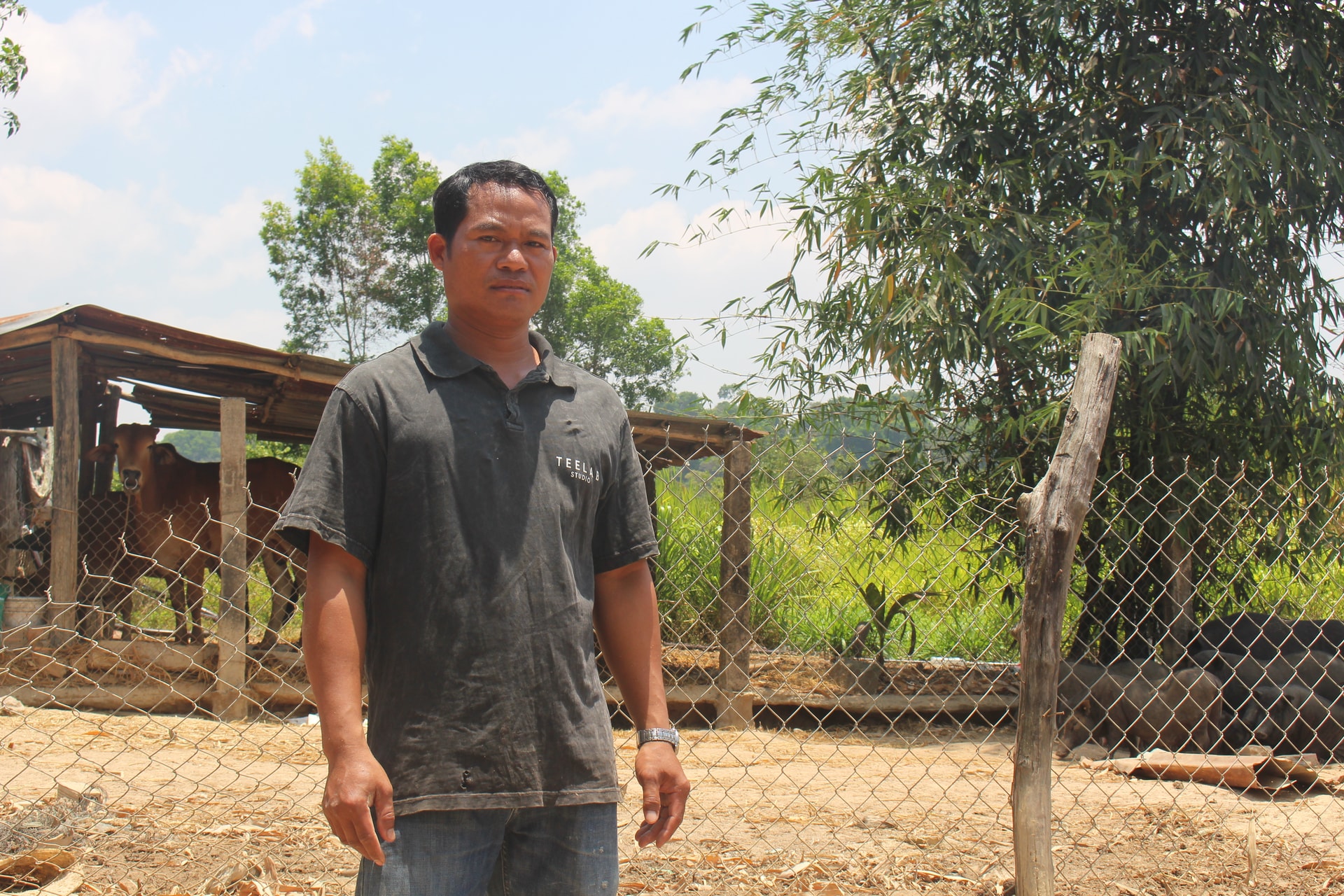
The midday sun was high in the sky. Under the cool shade of bamboo in the spacious 1,000-square - meter farm behind the house, a herd of jet-black pigs lay stretched out, occasionally stirring and making low, guttural snorts. Not far away, a man bent over, skillfully rearranging the straw bedding. His hands moved swiftly, his eyes fixed on the sow as if calculating something.
K'Van Tinh is a K'ho ethnic minority man from Hamlet 1 - one of the well-known free-range pig farmers in Dong Giang. Of average height, with sun-tanned skin and a faded, dust-covered t-shirt, Tinh openly pointed to a sow separating from the herd, walking slowly with its belly sagging, and said: "That one is about to give birth."
I watched, not yet noticing anything different. But for him, it was a familiar sign, like reciting a phrase he knew by heart.
In this region, people used to raise pigs in a free-range system. The pigs roamed freely around the house, in the fields, and in the forest, reproducing on their own. Their survival was often left to instinct. "Before, when a sow gave birth, we didn't dare go near it. It was like a wild boar, very aggressive. If you touched it, it would bite its piglets or abandon them. Many litters almost all died, which was heartbreaking, but there was nothing we could do. Piglets suffered high mortality rates, grew slowly, and selling them was very uncertain," Mr. Tinh recounted.
But there was one thing he always carefully observed, "you learn by raising them," he said succinctly. His "knowing" wasn't learned from books. It came from the times he spent in the backyard watching sows give birth, the times he didn't know how to make a nest and crushed his piglets, losing the entire litter. He began to recognize the timing of a sow's impending birth, how she moved, how she stopped eating, how she scratched the ground looking for a place to give birth. From then on, he did something that people rarely did before: he proactively "assisted" in the sow's delivery.
Mr. Tinh gradually became a skilled midwife. Before the sows gave birth, he lined the nest with dry straw, chose a secluded corner, and guided the sows into it. He knew when to observe from a distance and when to intervene to prevent the mother pig from stepping on her piglets. As a result, the survival rate of piglets increased significantly. From losing more than half of his litter, now he almost always keeps the entire herd alive, and they grow up healthier.
In recent years, through agricultural extension programs and national target programs for ethnic minority areas, the family has received support in the form of breeding sows (female and male) from the Southern Livestock Research Institute. However, during the breeding and development of the herd, he has to selectively breed, keeping only the best sows that meet the criteria of being healthy, fertile, and good at caring for their piglets, in order to produce a good litter of piglets with minimal risk.
But breeding pigs are different. Just a few months later, as soon as the piglets are strong enough, people have already placed orders. Sometimes, they haven't even grown big enough yet, and people are already asking to buy them, yielding a higher profit.
Mr. K' Van Tinh
Transporting free-range pigs to other provinces via digital platforms.
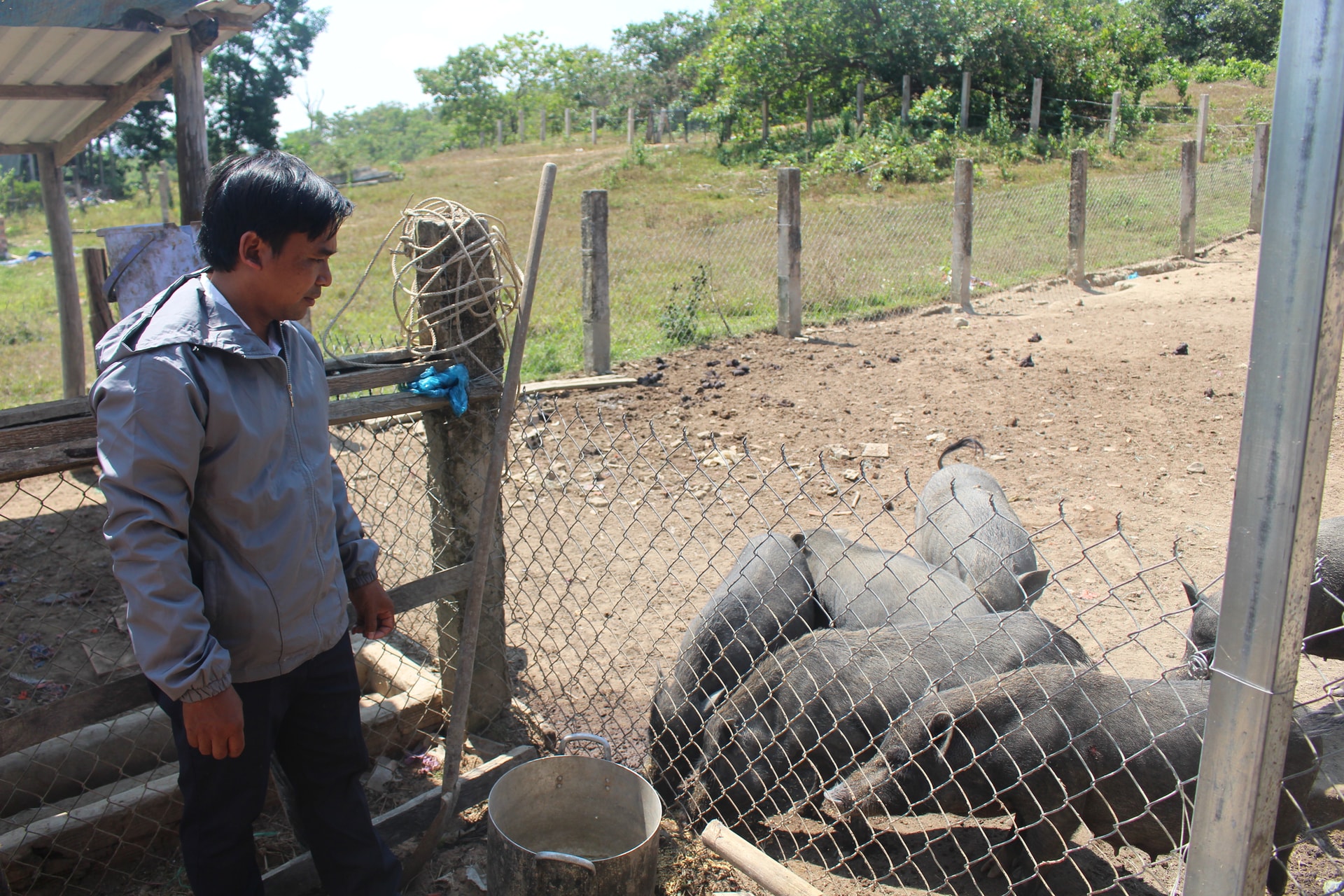
Mr. Tinh's pigsty is located in the backyard, spacious and airy. He raises pigs primarily using readily available garden produce such as bananas, wild vegetables, and fermented rice bran as organic feed. He resolutely refuses to feed them industrial feed; the pigs grow slowly but their meat is firm.
From just a few pigs raised around the house, he has gradually built up a large herd of sows, with one litter following another. Each year, he sells the piglets to traders in several batches. During peak seasons like Tet (Lunar New Year), the number of pigs in the pens noticeably decreases. Mr. Tinh explains that raising free-range pigs requires patience; you can't rush it. The pigs grow slowly, taking more than half a year to be ready for market, but their meat is firm, so many people seek them out.
When asked about the output of his pig herd, the most interesting thing was hearing him recount the process of selling the pigs. Short videos showing the sturdy black pigs running on the hillside and him personally preparing organic feed were posted on Facebook and Zalo. The quality of the pork was excellent, and word spread. Traders from Dong Nai and Binh Duong no longer waited through intermediaries but followed his phone number to the farm to place orders. Piglets, priced at 150,000 VND/kg, were always in high demand, while the supply from the three breeding farms in the commune was still insufficient. "People are ordering a lot, but we don't have enough piglets to sell," Mr. Tinh added.
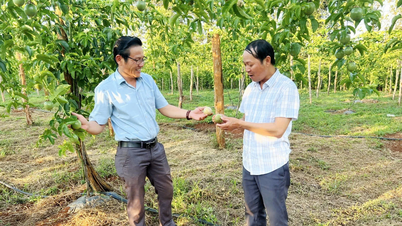
It's not just Mr. Tinh; around the commune, several other households have also started keeping sows and breeding them themselves. In Hamlet 3, K' Van Vinh's farm is enclosed with B40 mesh fencing, stretching across the hillside. Nearly 150 pigs are scattered under the trees, sometimes foraging, sometimes resting. In the farm, the pens are neatly built in one corner, the rest left open for the pigs to run and jump, and cameras are installed for monitoring when he's away. The best pigs are kept for breeding. Now, he not only sells pork but also breeding stock to people in the area and traders from outside the province,” Mr. Vinh said.
Preserving native breeds is linked to cultural life.
From free-range pig herds, Dong Giang has begun to develop family farms. Raising free-range pigs in Dong Giang is not only a matter of livelihood but also a way to preserve indigenous genetic resources closely linked to the K'ho culture. For the K'ho people, black pigs are not just livestock; in religious ceremonies, they are sacred offerings to the spirits, conveying their hopes for prosperity and well-being.
The shift from free-range farming to controlled farming, with regular vaccinations while preserving the natural habitat and selling farm facilities, is a step that both changes farming practices and preserves the identity of the local people. Many households, such as those of Mr. K'Van Vinh, Mr. K'Van Tinh, and Ms. K'Thi Yen, have developed herds to hundreds of pigs, mainly supplying breeding pigs to other provinces. They are the first to write the story of a unique product, closely linked to ecotourism and sustainability.
As evening fell, the sun gradually set over the hillsides. In the corner of the pigsty, the sow lay still, her piglets nestled against her belly, searching for milk. K'Van Tinh stood watching, gently brushing off the straw still clinging to his hands. Outside, the dirt road leading down the hill was still dusty from the trucks carrying the pigs away.
Mr. Phung Nhu Ho, Chairman of the Dong Giang Commune People's Committee, affirmed that the locality is aiming for 1,000 free-range pigs by 2030. Agricultural officials are visiting households to encourage remaining small-scale farmers to commit to switching from free-range to controlled farming, ensuring environmental hygiene. The commune will continue to preserve and develop the black pig herd, aiming for a distinctive product.
Source: https://baolamdong.vn/giu-heo-co-tren-trien-doi-ong-giang-435492.html












![[Photo] Reception to welcome General Secretary and President To Lam and his wife on their State visit to the Philippines](https://vphoto.vietnam.vn/thumb/1200x675/vietnam/resource/IMAGE/2026/06/01/1780295488620_vna-potal-chieu-dai-chao-mung-tong-bi-thu-chu-tich-nuoc-to-lam-va-phu-nhan-tham-cap-nha-nuoc-toi-philippines-8798060-7855-jpg.webp)








































Comment (0)